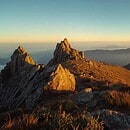

Image generated with Ai
Switzerland’s Adventure Tourism sector got a boost in 2026 when a guided Alpine e-bike company reported an estimated 100% increase in customers over the previous year. Their main trip is a 7 day adventure spanning 240 km and takes customers through an alpine route from Chamonix to Zermatt. The unverified business growth number is likely due to an increase in tourism with the opening of this route. The proof that this route exists, the 12,100 m elevation gain, and the extensive cycling network in Switzerland all point towards an opening of a new market for the guided e-bike tours. Longer stays and extended travel to other areas of the Alps can be expected with this new way to adventure tourism. Customers will still need appropriate bicycle touring skills, insurance and a valid travel document for the Schengen area.
The current development reflects growing interest in Adventure Tourism through an organised e-mountain-bike holiday crossing the French and Swiss Alps. Its flagship itinerary begins in Chamonix, continues through Alpine destinations including Verbier and finishes in Zermatt. The seven-day programme combines guided riding, accommodation, meals, bicycle rental, luggage transfers and local transport assistance. Official destination information confirms that the complete journey covers around 240 kilometres and involves approximately 12,100 metres of accumulated ascent. Riders therefore complete substantial climbs over consecutive stages, although electric assistance reduces some physical effort.
The reported expansion of Adventure Tourism must be interpreted carefully. Promotional information states that guest numbers doubled in 2026 after average annual growth of 50% during the previous three years. It also claims that approximately 3,000 customers have completed the route since operations began. Swiss public authorities have not independently verified these figures. They represent one operator’s reported performance rather than confirmed growth across Switzerland’s entire cycling-tourism sector. Official evidence supports the route’s existence, distance and structure, but does not verify the associated commercial participation claims.
The following table provides an editorial evidence breakdown of the story. The percentages show how much of the confirmed subject concerns each travel component. They are an editorial assessment, not government statistics. The largest share belongs to tourism because the central development involves a multi-day visitor experience. Cycling infrastructure, accommodation, transport and border planning form the supporting components.
Advertisement
| News component | Share of story | Officially verified finding | Relevance to travellers | Official source |
|---|---|---|---|---|
| Adventure Tourism | 40% | A seven-day Chamonix–Zermatt e-bike experience covers about 240 kilometres and 12,100 metres of ascent | Confirms the trip’s duration, geographical reach and physical scale | Swiss national tourism board |
| Cycling infrastructure | 20% | Switzerland offers more than 10,800 kilometres of signposted cycling routes | Supports independent and organised cycling holidays | Swiss national tourism board |
| Hotel demand | 15% | Swiss hotels recorded 43.9 million overnight stays in 2025 | Shows the strength of the wider visitor economy | Swiss Federal Statistical Office |
| Public transport | 10% | More than 29,000 kilometres of interconnected rail, bus and boat services support domestic mobility | Helps travellers reach Alpine regions and connect between stages | Swiss national tourism board |
| Cross-border travel | 10% | France and Switzerland apply Schengen rules for short stays | Affects passports, visas and permitted stay lengths | Swiss migration authority and French visa authority |
| Visa-policy change | 5% | No new visa or passport measure was introduced with the e-bike development | Prevents the commercial announcement being mistaken for immigration reform | Swiss migration authority |
| Total | 100% | Editorial assessment | Tourism remains the principal subject | Official public evidence |
The evidence establishes that this is mainly a cycling and mountain-tourism story. It has secondary relevance for hotels, restaurants, transport providers and cross-border travel planning. It does not establish that national e-bike participation doubled or that Alpine communities have already received measurable economic gains. Readers should separate the confirmed characteristics of the journey from the unverified commercial growth figures used to promote it.
Switzerland entered 2026 with a strong accommodation market. The Swiss Federal Statistical Office recorded 43.9 million hotel overnight stays during 2025, exceeding the previous record. International visitors generated 22.8 million of those nights, representing nearly 52% of the total. The figures demonstrate the importance of overseas demand to the Swiss visitor economy. They do not reveal how many travellers participated in guided cycling holidays, but they show that international tourism remains capable of supporting specialised mountain products beyond conventional sightseeing and winter sports.
Summer travel data provides further context for Adventure Tourism. International visitors generated 13.4 million hotel nights during the 2025 summer season, an increase of 318,000 or 2.4% from the preceding summer. The subsequent November 2025 to April 2026 winter season produced 18.7 million hotel nights, while international demand increased by 0.5%. These official results show year-round interest in Switzerland. They also explain why destinations may seek activities that connect summer, autumn and winter demand. However, the statistics cannot prove that guided e-bike holidays caused any part of the increase.
A seven-day Adventure Tourism itinerary differs from a short recreational ride because it connects several destinations and services within one journey. Travellers may use hotels, restaurants, mountain guides, railway connections, luggage operators and bicycle-rental facilities. This structure can distribute visitor activity across multiple communities instead of concentrating it within one major resort. September departures may also support accommodation and tourism services after the busiest summer weeks. However, no public dataset currently measures the programme’s revenue or shows how widely visitor spending moves through local economies.
The e-bike format may make Adventure Tourism accessible to riders with different fitness levels because the motor provides assistance during steep climbs. However, it does not turn a technically difficult mountain route into an effortless excursion. Riders must still control a heavier bicycle, negotiate uneven surfaces, descend safely and complete consecutive days at altitude. Official route information includes examples of older adults and mixed-age groups completing adapted programmes, but this does not establish universal accessibility. Travellers should compare the route’s technical grade with their cycling experience rather than relying only on age or general fitness.
Planning must begin with the precise itinerary because not every programme follows the complete Chamonix–Zermatt route. Shorter versions may begin in Verbier or concentrate on an individual Swiss region. Weather, trail conditions and temporary closures can also change how a journey operates. Switzerland’s official mapping service recommends planning along recognised routes and following physical signs. It warns that digital maps may not always exclude every access restriction. Riders should therefore treat local closure notices and guide instructions as more important than a previously downloaded track.
Before confirming a booking, travellers should check the following points:
These checks are particularly important because electric assistance addresses only one element of Alpine cycling. It reduces the power needed for climbing but cannot prevent falls, weather exposure, navigation errors or mechanical problems. Guided support may reduce some practical difficulties, although individual travellers remain responsible for disclosing medical conditions, assessing their abilities and carrying suitable documents. No official source provides a standard price for these holidays, so travellers should compare inclusions rather than judging competing programmes by headline cost alone.
The route crosses from France into Switzerland, but the reported growth in Adventure Tourism has not introduced any new visa, passport or immigration rule. Switzerland has participated in the Schengen Area since December 2008. Third-country travellers may generally stay within the area for no more than 90 days in any rolling 180-day period. Arrival and departure dates both count towards that limit. Whether a visa is required depends on the traveller’s nationality, passport type, residence status and purpose of travel.
Visa-required visitors joining an Adventure Tourism trip generally need a Category C Schengen visa for a short stay. Applications may normally be submitted up to six months before travel. Swiss authorities recommend applying at least two months before departure where possible. For journeys covering several Schengen countries, applications usually go to the main destination’s consulate. This is normally the country where the longest stay will occur. Routine checks may not happen at every internal border, but travellers must carry valid documents and remain prepared for authorised inspections.
Switzerland’s creation of guided Alpine e-bike trips exhibits a clear commitment to Adventure Tourism and organized multi-day mountain trips. Official figures state that the Chamonix–Zermatt route comprises 240 kilometers and stands at 12,100 meters of positive elevation. The route benefits from Switzerland’s first-rate cycling and public transportation networks. However, Swiss statistics do not corroborate the doubling of guests in 2026. The project will not require the creation of new passport or visa rules. The developments will be completely dependent on timely access to verified trip participant data, the ability to manage routes safely, reduced impact on the environment, and dependable transportation. Travelers should seek updates on facility changes regarding seasonal opening, route changes, border requirements, and new conditions before they make reservations for planned Alpine trips.
Advertisement
Advertisement
Advertisement













Friday, September 4, 2026
Friday, September 4, 2026
Friday, September 4, 2026

Thursday, September 3, 2026

Wednesday, September 2, 2026

Friday, September 4, 2026
Friday, September 4, 2026