

England Follows Scotland and Wales into the Northern Lights Spotlight as Stunning Aurora Displays Transform UK Night Skies

Published
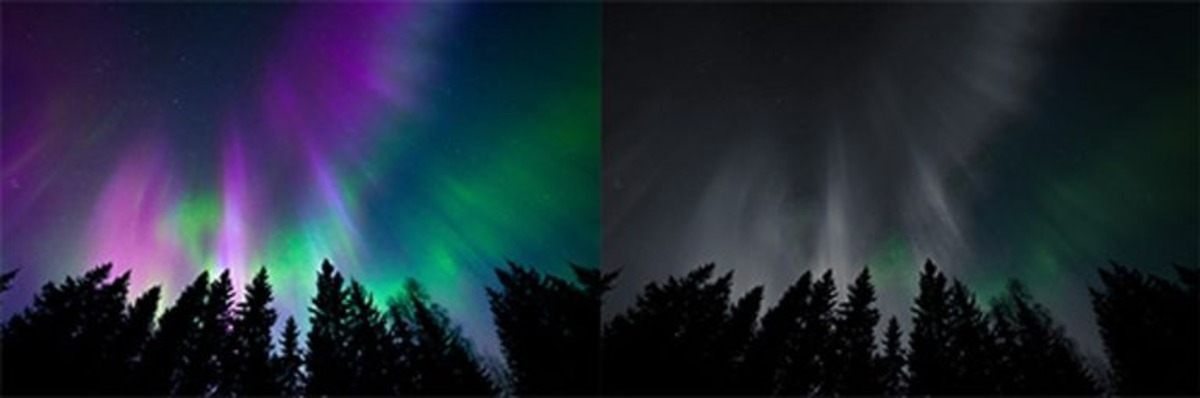
The United Kingdom is witnessing renewed Northern Lights activity across Scotland, England, Wales and Northern Ireland in October 2026, with the Met Office forecasting further opportunities to observe the aurora borealis between 11 and 13 October. Following heightened geomagnetic activity on 9 and 10 October, solar disturbances have increased the possibility of colourful displays reaching parts of Britain beyond their usual northern viewing areas. The phenomenon is drawing attention to the country’s dark-sky destinations, creating fresh opportunities for nature-based tourism, night photography, rural accommodation and astronomy experiences. However, actual sightings depend on clear skies, darkness and the strength of geomagnetic activity.
Northern Lights Across Britain Bring Fresh Attention to Scotland and England’s Dark-Sky Destinations
The latest Northern Lights activity has renewed interest in Britain’s countryside, remote coastlines and protected landscapes. Scotland remains among the country’s most promising aurora destinations because of its northern location and extensive areas with limited artificial lighting.
Advertisement
Advertisement
Northern England also provides favourable opportunities, particularly in rural Northumberland and other areas with open northern horizons. Northern Ireland and North Wales can experience sightings during sufficiently strong geomagnetic activity, while southern England generally requires more intense disturbances.
The October 2026 event has demonstrated why dark-sky tourism is increasingly relevant to the wider visitor economy. Aurora viewing can complement existing rural tourism products, including countryside stays, guided stargazing and landscape photography. Unlike conventional attractions, however, the Northern Lights cannot be scheduled or guaranteed. This makes accurate forecasting particularly important for visitors planning journeys around potential displays.
Advertisement
Advertisement
Met Office Forecast Signals Further Aurora Opportunities Between 11 and 13 October
The latest official Met Office space weather forecast provides important details about the conditions behind the current activity. Its aurora outlook, issued at 18:16 GMT on 10 October 2026, identifies two glancing coronal mass ejections followed by a high-speed solar wind stream from a coronal hole. Together, these disturbances could increase the size and intensity of the auroral oval. The forecast identifies Scotland and locations at comparable geomagnetic latitudes as potential viewing areas through 13 October, provided skies remain clear.
A subsequent forecast issued at 00:23 GMT on 11 October provides the following assessment.
Advertisement
Advertisement
| Period | Official geomagnetic outlook | Tourism and viewing implications |
|---|---|---|
| 11 October | G1 minor storms likely; G2 moderate storms possible; slight chance of G3 strong activity | Northern Britain has potential viewing opportunities under clear skies |
| 12 October | G1 storms likely, with possible G2 intervals and a slight chance of isolated G3 activity | Further opportunities may develop as solar wind conditions change |
| 13 October | Declining chance of minor storms, with a slight chance of moderate activity | Aurora visibility remains possible but uncertain |
| 14 October | Reduced storm potential | Continued monitoring is necessary before planning travel |
The Met Office also recorded a G2 geomagnetic alert covering 21:00 GMT on 10 October to 00:00 GMT on 11 October. These forecasts indicate the potential for further displays, not a guarantee that the aurora will be visible throughout Britain.
Geomagnetic Activity Reaches Southern Britain as Strong Solar Disturbances Expand the Aurora Oval
During particularly intense geomagnetic disturbances, Northern Lights can become visible hundreds of miles south of their normal viewing regions. The supplied reports describe activity reaching approximately 600 nanoteslas during the October 2026 weekend, compared with a reference level of around 200 nanoteslas associated with some northern UK sightings. These measurements refer to changes in Earth’s magnetic field rather than a universal threshold for aurora visibility. Actual viewing conditions depend on several factors, including latitude, storm intensity, cloud cover and background lighting.
Advertisement
Advertisement
Reports of southern visibility have included Kent, Hampshire and Devon. Such observations illustrate the exceptional geographical reach that auroras can achieve when geomagnetic activity becomes sufficiently strong. The Met Office confirms that severe disturbances can expand the auroral oval towards lower latitudes, allowing sightings across southern England that would be unusual under quieter solar conditions.
Scotland, Northern Ireland, Wales and England Offer Different Northern Lights Travel Experiences
Britain’s varied landscapes provide several possible settings for aurora tourism, although geographical position plays an important role in determining viewing prospects.
| UK destination | Potential aurora viewing appeal | Travel and tourism relevance |
|---|---|---|
| Scottish Highlands | Northern location, open landscapes and relatively dark rural areas | Nature tourism, photography and countryside accommodation |
| Orkney and Shetland | High northern latitude and coastal horizons | Island tourism and astronomy experiences |
| Northumberland, England | Rural landscapes and established dark-sky areas | Stargazing tourism and overnight countryside visits |
| Northern Ireland | Rural coastlines and locations away from urban lighting | Coastal tourism and night-sky photography |
| North Wales | Mountain landscapes and areas with limited light pollution | Outdoor tourism and astronomy-based travel |
| Kent, Hampshire and Devon | Possible sightings during stronger geomagnetic storms | Occasional opportunities for southern visitors |
These destinations should not be treated as equally likely viewing locations. Scotland and the far north generally offer stronger geographical advantages. Southern destinations become more relevant when geomagnetic storms expand the visible auroral region. For accommodation providers and destination managers, the phenomenon presents an opportunity to promote existing night-sky experiences without promising sightings that cannot be controlled.
Solar Cycle 25 Is Driving More Opportunities for Spectacular Northern Lights Displays
The scientific explanation for Britain’s recent aurora activity lies partly in Solar Cycle 25, the current period of changing magnetic activity on the Sun. Solar cycles last approximately 11 years. During each cycle, the Sun moves between relatively quiet conditions and periods of stronger magnetic activity. Solar Cycle 25 began after the solar minimum in December 2019. Activity subsequently increased, producing more sunspots, solar flares and coronal mass ejections. On 15 October 2024, NASA and NOAA announced that the Sun had reached its solar maximum phase.
Advertisement
Advertisement
This announcement followed an exceptionally active period that included a G5 extreme geomagnetic storm in May 2024 and a G4 severe storm in October 2024. The solar maximum is not a single event. It represents a broader period of heightened activity, and substantial geomagnetic storms can also occur as the cycle declines. The renewed October 2026 activity therefore fits within a wider period of significant solar variability, although it should not be described as proof that the Sun remains at its exact maximum.
How Solar Eruptions Create the Green, Pink and Purple Northern Lights Above Britain
The Northern Lights form when energy from the Sun interacts with Earth’s magnetic field and upper atmosphere. Coronal mass ejections release enormous clouds of magnetised plasma into space. When these disturbances reach Earth, they can transfer energy into the planet’s magnetic environment. Energetic particles then enter the upper atmosphere, particularly near the magnetic poles. Collisions with oxygen and nitrogen excite these gases, causing them to emit visible light.
Different atmospheric gases and altitudes create different colours.
| Aurora colour | Main atmospheric source | Typical explanation |
|---|---|---|
| Green | Atomic oxygen | Commonly produced around 100–150 kilometres above Earth |
| Red | Atomic oxygen | Often associated with higher-altitude emissions, above approximately 200 kilometres |
| Blue | Nitrogen | Produced through energetic interactions involving nitrogen |
| Purple and pink | Nitrogen and mixed emissions | Often visible along bright or active auroral structures |
During stronger storms, the auroral oval expands southwards, making displays possible across regions normally outside the main viewing zone. The same space weather processes can also affect satellites, radio communications and other technological systems.
Smartphone Cameras Reveal Aurora Colours That Human Eyes Often Cannot Detect
One of the most striking features of Northern Lights tourism is the difference between what visitors see directly and what their cameras record. During darkness, human vision relies heavily on rod cells, which are highly sensitive to low light but provide little colour information.
As a result, faint auroras can appear as grey, white or pale green shapes rather than brightly coloured curtains. Smartphone cameras use electronic sensors and longer exposures to collect more light. This can reveal greens, reds, pinks and purples that remain difficult to distinguish with the naked eye. For clearer photographs, visitors can use night mode, stabilise their phones, switch off the flash and select a wide view of the northern horizon. Photographs may appear considerably brighter than the actual visual experience, making realistic expectations important for travellers.
Advertisement
Advertisement
Northern Lights Tourism Creates Opportunities for Rural Hotels and Local Visitor Businesses
The growing interest in aurora observation could support several parts of Britain’s visitor economy. Rural hotels, guesthouses, campsites and self-catering accommodation can incorporate astronomy and dark-sky information into their visitor services. Local guides may also develop night-sky experiences that combine astronomy education, photography and responsible access to rural landscapes.
Destination marketing organisations can promote existing dark-sky assets alongside other outdoor activities, helping visitors discover lesser-known regions. However, the current October 2026 event has not been accompanied by verified national figures showing additional accommodation bookings, visitor arrivals or tourism spending. Therefore, the commercial benefits remain potential opportunities rather than confirmed economic outcomes. A sustainable approach also requires visitor safety, respect for private land and protection of sensitive natural environments.
Met Office, NOAA and British Scientific Institutions Provide Essential Aurora Tracking Information
Reliable forecasting is central to planning Northern Lights travel because geomagnetic activity can change quickly.
Several official scientific organisations provide useful information for visitors and tourism businesses.
| Official resource | Information available | Practical value |
|---|---|---|
| Met Office Space Weather Operations Centre | UK-specific space weather forecasts, warnings and aurora outlooks | Helps identify possible viewing periods across Britain |
| NOAA Space Weather Prediction Center | Geomagnetic storm scales, Kp forecasts and short-term aurora predictions | Helps assess storm intensity and possible auroral expansion |
| British Geological Survey | Geomagnetic measurements from UK observatories | Provides evidence of changes in Earth’s magnetic field |
| AuroraWatch UK, Lancaster University | Magnetometer-based aurora activity alerts | Offers additional UK-focused observational guidance |
| NASA | Solar cycle research and scientific observations | Explains broader changes in solar activity |
Visitors should combine space weather information with local cloud forecasts before travelling. A strong geomagnetic storm does not guarantee visible Northern Lights if the sky is cloudy or the disturbance peaks during daylight.
UK Northern Lights Outlook Reinforces Britain’s Potential as a Dark-Sky Tourism Destination
The October 2026 Northern Lights activity has once again demonstrated that Britain’s night skies can offer natural spectacles more commonly associated with Arctic destinations. Scotland remains particularly well placed for aurora observation, while northern England, Northern Ireland and North Wales offer additional possibilities during active geomagnetic periods. Exceptionally strong storms can extend visibility into southern England, broadening public interest in astronomy and outdoor travel.
Advertisement
Advertisement
The Met Office’s forecast through 13 October confirms that further viewing opportunities remain possible, although the geographical extent and intensity of any displays are uncertain. For Britain’s travel and tourism industry, the longer-term opportunity lies in developing responsible dark-sky experiences that combine scientific information, rural accommodation and nature-based activities. The Northern Lights remain unpredictable, but the country’s established dark-sky landscapes provide a foundation for astronomy tourism beyond any single geomagnetic event.
Advertisement
