Home»TRAVEL NEWS» Cyprus at the Forefront of Travel’s Immersive Revolution: State-Backed Theme Parks, Augmented Archaeological Sites, and Strategic Investments Transforming Global Tourism
Cyprus at the Forefront of Travel’s Immersive Revolution: State-Backed Theme Parks, Augmented Archaeological Sites, and Strategic Investments Transforming Global Tourism
Written By: Shreya Saha
Shreya Saha
I'm a content writer and storyteller passionate about creating engaging, informative, and audience-focused content. My experience spans copywriting, content strategy, journalism, social media marketing, and news analysis, allowing me to adapt my writing across industries and platforms. I enjoy transforming complex ideas into compelling narratives that educate, inspire, and drive meaningful engagement. From crafting SEO-friendly articles and marketing copy to writing news stories and digital campaigns, I believe every piece of content should have a purpose and leave a lasting impression. Constantly curious and eager to learn, I strive to blend creativity with strategy to deliver impactful content that connects with readers and supports brand growth in today's fast-evolving digital landscape.
July 29, 2026 1:37 PM
Image generated with Ai
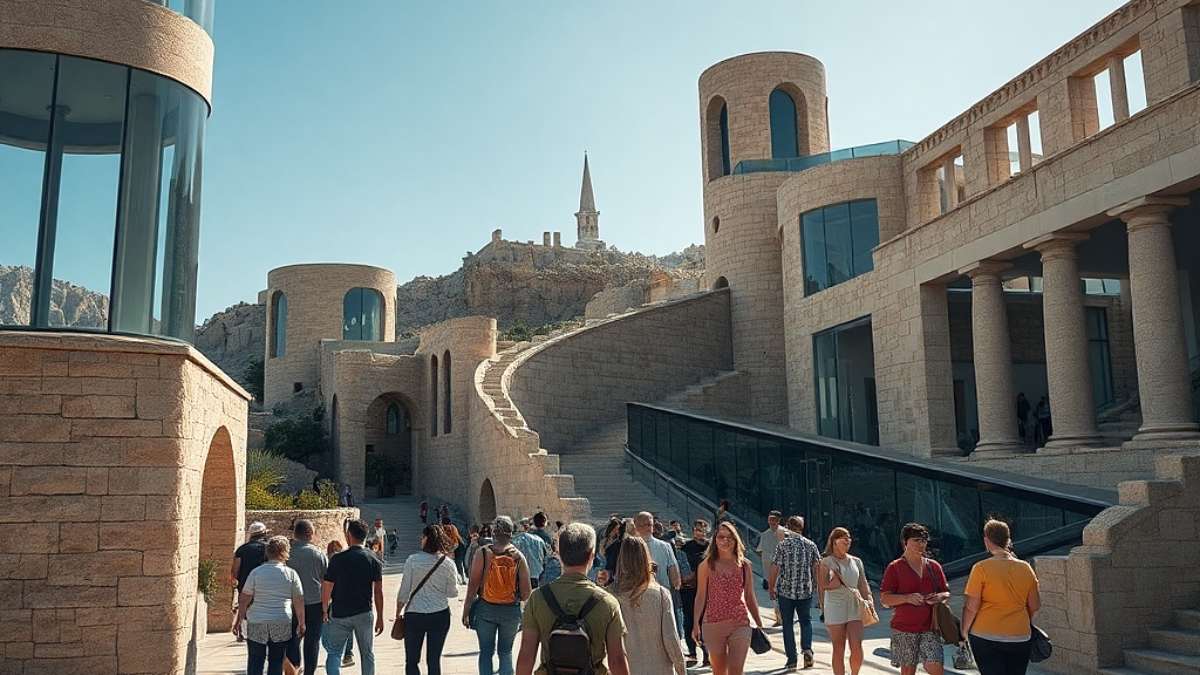
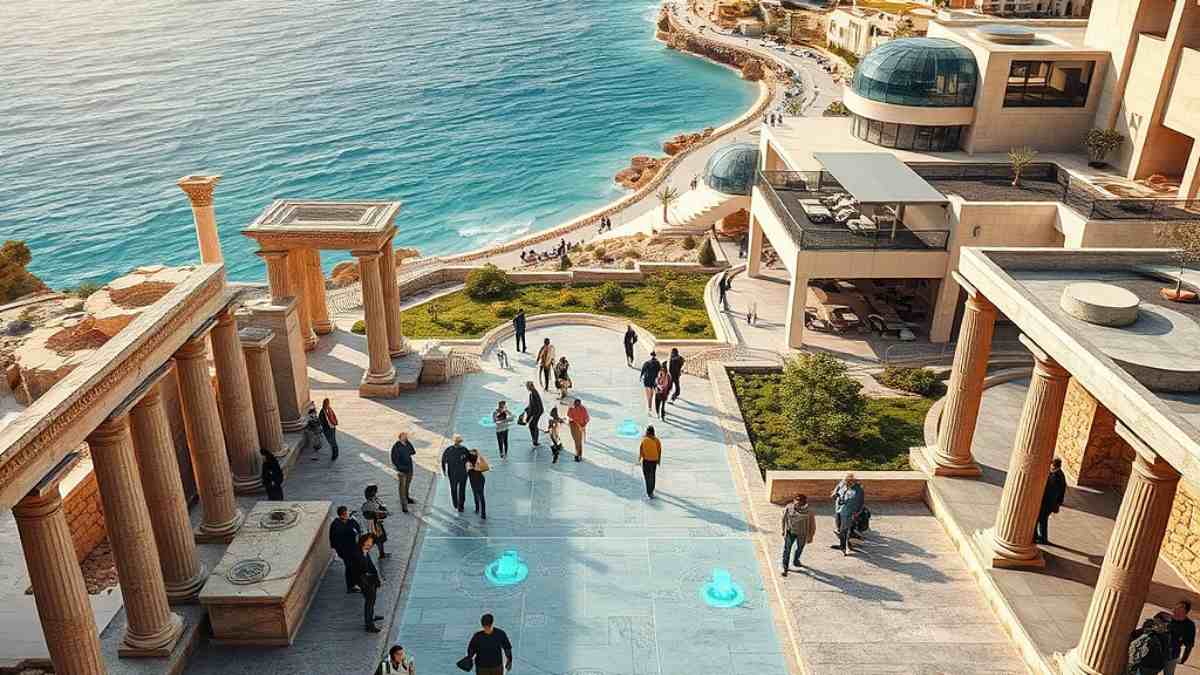
Cyprus is positioning itself at the forefront of travel’s immersive revolution as the island accelerates plans to reshape its tourism future through state-backed theme parks, augmented archaeological sites and strategic investments. The destination is moving beyond traditional holiday models by developing innovative experiences that connect heritage, technology and entertainment. Furthermore, Cyprus is exploring theme parks as a powerful tool to create year-round tourism demand while enhancing visitor engagement. Augmented archaeological sites are expected to introduce new ways of experiencing ancient history, while strategic investments aim to strengthen the country’s global tourism competitiveness. As immersive travel continues to transform the industry, Cyprus is actively building a modern tourism ecosystem where culture, digital innovation and entertainment combine to deliver memorable experiences for international travellers.
Macroeconomic Metrics and Sovereign Contributions Across Analyzed Regions
The quantitative contributions, capital outlays, and visitor impact metrics across the primary analyzed leisure economies are presented in the following table:
Advertisement
Jurisdiction & Policy Context
Sovereign Policy Framework
Capital Allocations & Outlays
Macroeconomic Yield & GDP Impact
Visitor Attendance & Employment Benchmarks
Cyprus & Mediterranean Basin
CYSTAT Strategic Masterplans & EU Heritage Digitalization Initiatives
Regional Infrastructure Grants & Directed EU Digital Funds
82% Variance in Tourist Loyalty Explained by Memorable Experiences
Off-season tourist retention & year-round cultural site monetization
United Kingdom
Special Development Order Framework & Modern Industrial Strategy
£5B Private Construction + £1B Operational Outlay + £1.3B Sovereign Infrastructure Package
£50B Net Economic Benefit projected for national economy by 2055
8.5M–12.5M Annual Visitors; 28,000 Total Lifecycle Jobs Created
Within the eastern Mediterranean region, the performance of the visitor economy in the Republic of Cyprus is continually tracked by the Statistical Service of Cyprus, officially designated as CYSTAT. The baseline amusement ecosystem in Cyprus has historically been anchored by coastal water parks and regional entertainment venues, including prominent facilities such as Fasouri Watermania in Limassol and Parko Paliatso in Ayia Napa. However, destinations reliant on conventional sun and sea travel face challenges associated with off-season drop-offs and intense regional market competition.
To counteract seasonal fluctuations, tech-enabled, year-round cultural immersions are increasingly being integrated into the tourism planning agenda by Cypriot stakeholders. Rather than committing vast public reserves to capital-intensive, mega-scale mechanical theme parks, the visitor economy of Cyprus is being modernized through non-intrusive digital layering applied directly over pre-existing historical and archaeological landscapes.
Advertisement
Strategic Layer
Key Focus
Details
Cyprus Visitor Economy Baseline
Existing Tourism Foundation
CYSTAT-tracked tourism performance and established anchor attractions, including assets such as Fasouri Watermania, provide the foundation for future tourism diversification strategies.
Memorable Tourism Experiences (MTEs)
Experience-Driven Tourism Growth
Memorable Tourism Experiences strengthen visitor engagement by improving emotional and cognitive attachment to destinations. EuroMed data indicates that MTEs explain 82% of destination loyalty variance, highlighting their role in repeat visits and destination preference.
Strategic Immersive & Digital Overlay (2026+)
Next-Generation Tourism Development
Future-focused tourism planning includes AR spatial overlays at archaeological and heritage locations, alongside year-round climate-controlled cultural and maritime hubs designed to enhance visitor experiences beyond traditional seasonal tourism.
A firm structural justification for this experiential transformation is provided by econometric research conducted across European destination networks. Structural equation modeling published in the EuroMed Journal of Business demonstrates that Memorable Tourism Experiences, commonly referenced as MTEs, directly account for 58% of the statistical variance in overall MTE perception and 82% of the variance in tourist destination loyalty.
Through the deployment of mobile Augmented Reality spatial overlays, complete visual reconstructions of damaged ancient structures can be displayed to visitors without causing physical degradation to delicate archaeological ruins. Furthermore, non-intrusive digital layering allows transit corridors and seasonal heritage assets to be converted into high-yielding, climate-resilient, year-round destinations.
In contrast to the light-footprint digital overlay strategy adopted in Mediterranean environments, the United Kingdom has established a policy benchmark for state-backed leisure megaprojects. Centralized planning legislation and dedicated infrastructure co-investments are actively deployed to secure large-scale tourism assets.
Universal United Kingdom Resort in Bedfordshire
The primary pillar of the government-backed theme park strategy in the UK is represented by the proposed Universal United Kingdom Resort in Bedford Borough. A vital statutory milestone was achieved when the Ministry of Housing, Communities and Local Government, known as MHCLG, officially granted planning permission through a Special Development Order, or SDO, on December 15, 2025. This statutory order legally entered into force on January 12, 2026, enabling preliminary groundworks and on-site transport infrastructure preparation to commence in 2026, with a targeted public opening planned for 2031.
The project is structured as a comprehensive public-private partnership designed to de-risk commercial leisure capital while maximizing total macroeconomic spillovers:
Private Capital Investment: Direct capital expenditure exceeding £5 billion during the five-year construction phase was committed by Comcast NBCUniversal, alongside an additional £1 billion in dedicated capital investment across the first ten operational years of the resort.
Sovereign Infrastructure and Grant Package: Direct public support amounting to £1.3 billion was committed by the United Kingdom Government. This fiscal package includes a £400 million grant allocated through the Regional Growth Fund, a £438 million grant from the Department for Culture, Media and Sport (DCMS) earmarked for local community infrastructure (contingent upon operational delivery), and £474 million from the Department for Transport dedicated to expanding regional highway capacity along the A421 and constructing the new Wixams railway station.
Macroeconomic Yield: A net economic benefit of nearly £50 billion is projected to be delivered to the UK economy by 2055. This outcome aligns directly with targets established under the UK Modern Industrial Strategy, which seeks an increase in creative industry business investment from £17 billion to £31 billion by 2035.
Workforce Creation: Across its lifecycle, 28,000 total jobs are expected to be supported by the development, encompassing nearly 20,000 construction roles and 8,000 permanent operational positions in creative, technical, and hospitality fields. Approximately 80% of all operational personnel will be recruited locally from Bedfordshire and surrounding areas.
Visitor Turnout Projections: Annual attendance between 8.5 million and 12.5 million visitors is forecasted for the complex, including an incremental influx of over 1 million net-new international tourists per year.
Live-Action Historical Parks and Immersive Art Destinations
Beyond conventional ride-based destinations, the British tourism economy is being further diversified through non-ride, live-action historical developments and large-scale art installations:
Kynren: The Storied Lands (Bishop Auckland, Durham): Slated for launch on July 18, 2026, this multi-award-winning historical production is being expanded into a standalone live-action theme park. By replacing mechanical rides with extensive live sets, stunt choreography, and temporal narrative design, visitors are immersed in British history spanning from Neolithic eras through the Victorian age.
Wake The Tiger (Bristol and London): The footprint of Bristol immersive art park was expanded in June 2026 through the addition of its Junkyard outdoor social space. Simultaneously, development was advanced for Wake The Tiger London at Westfield White City, an 80,000-square-foot site designed to become the largest indoor immersive art attraction in Europe.
Australia: First Nations Tourism & Economic Growth
The theme park, experiential, and regional tourism sectors in Australia operate within the framework of the THRIVE 2030 national visitor economy strategy. Moving through its Consolidation Phase spanning 2025 through 2027, the strategy sets a long-term target of $230 billion in total annual visitor expenditure by 2030.
Macroeconomic Tourism Performance Benchmarks
Official data published by Tourism Research Australia, or TRA, highlights significant growth indicators across the national visitor economy:
Direct Tourism GDP: Reached $78.1 billion in recent national accounts, representing 2.9% of total Australian GDP and marking a 9% ($6.5 billion) increase over the preceding reporting period.
Capital Investment Pipeline: A total of 346 major projects valued at $63.4 billion is currently encompassed within the national tourism investment pipeline across aviation, accommodation, and recreation sectors.
Labor Output: Tourism-filled jobs expanded to 713,500, representing 1 out of every 23 jobs nationwide.
Visitor Expenditure Turnout: Total visitor spend reached $214 billion, with $80 billion captured directly within regional Australian communities.
First Nations Experiential Programs and Spatial Visualization
First Nations-led cultural experiences are positioned by Australian tourism authorities as a fundamental strategic differentiator. Under THRIVE 2030, federal grant mechanisms directly fund Indigenous-owned immersive tourism enterprises:
Finke River Culture and Adventure: Operating in Central Australia and the West MacDonnell Ranges, guided cultural immersions are conducted to convey Indigenous heritage, traditional ecological knowledge, and environmental stewardship.
Mandingalbay Authentic Indigenous Tours: Supported under the Reviving International Tourism Grant initiative in Cairns, guided environmental tours are delivered, driving regional employment and cultural preservation.
Spatial Visualization Technologies: Australian developers and operators are increasingly applying digital twin modeling, CAD drafting, drone photogrammetry, and 3D environment visualization to simulate attraction layouts, event spaces, and cultural routes prior to physical construction. Paid activities, including theme parks, guided cultural tours, and regional venues, remain major drivers of high-yield travel.
India: Secondary Comparative Overview of State-Funded Heritage Parks
As a secondary comparative case study within international leisure policy, India demonstrates a development model driven by central public capital funding applied to cultural interpretation and historical edutainment.
Central Sector Capital Allocation Frameworks
Public capital allocation across India tourism sector is administered by the Ministry of Tourism through three central sector schemes operating through 2026:
Swadesh Darshan 2.0 (SD 2.0): Approved through March 2026, this scheme reorients public funding away from basic circuit construction toward sustainable destination management. Under SD 2.0, 53 major projects valued at ₹2,208.31 crore have been sanctioned nationwide.
Special Assistance to States for Capital Investment (SASCI): Focused on the Development of Iconic Tourist Centres to Global Scale program, SASCI has approved 40 projects across 23 states with a central fiscal outlay of ₹3,295.76 crore.
Challenge-Based Destination Development (CBDD): Formed as a specialized sub-scheme under SD 2.0, CBDD has sanctioned 38 projects totaling ₹697.94 crore focused on eco-tourism, spiritual immersions, and cultural heritage.
Image generated with Ai
Cultural and Historical Theme Park Initiatives
Central and state investments in India reflect an emphasis on historical narratives, architectural recreations, and national identity:
Shivsrushti Historical Theme Park (Pune, Maharashtra): Sanctioned under SD 2.0 with an approved cost of ₹76.22 crore, Phase 3 of this historical park uses sound and light systems, live historical reenactments, and architectural sets to depict Maratha history.
National Maritime Heritage Complex (Lothal, Gujarat): Developed at an overall cost of approximately ₹4,500 crore, this installation incorporates four thematic parks: a Memorial theme park, Maritime and Navy theme park, Climate theme park, and Adventure theme park. The complex features a mini Harappan architectural recreation, 14 heritage galleries, a lighthouse museum, and an open aquatic gallery.
Ramayana Theme Park Garden (Goa): Inaugurated alongside a 77-foot bronze statue of Prabhu Shri Ram, this development forms part of over ₹197 crore in coastal theme-based tourism investments funded under central schemes.
Additional Cultural Interventions: Other active state projects include Mahabharata-themed storytelling attractions in Kurukshetra (Haryana), floating log hut eco-resorts at Tehri Lake (Uttarakhand), and the rejuvenation of Yadavindra Garden in Panchkula (Haryana).
Private Commercial Amusement Sector Growth
Parallel to public heritage projects, the commercial amusement park sector in India is undergoing expansion. Currently operating over 120 theme and water parks (including major operators such as Imagicaa, VGP Universal Kingdom, and KidZania), private capital inflows exceeding $1 billion are expected to support the construction of approximately 200 new parks nationwide. Technical partnerships with international suppliers are routinely utilized, such as WhiteWater West providing specialized aquatic equipment for domestic parks like Wet N Joy in Lonavala.
Technological Convergence and Structural Economic Mechanics
Across all analyzed jurisdictions, the global growth of theme parks and experiential attractions is reliant on emerging spatial and digital technologies:
Augmented Reality Overlays: Mobile AR systems allow historic sites to present accurate architectural reconstructions over damaged ruins, increasing educational value while protecting physical assets.
Virtual Reality Previews: VR preview experiences are utilized to stimulate multisensory mental imagery in prospective travelers, directly increasing digital booking intent.
Digital Twin Visualization: Advanced CAD drafting, drone photogrammetry, and 3D spatial modeling allow master planners to simulate crowd movements, ride mechanics, and safety protocols prior to physical construction.
Climate-Controlled Urban Enclosures: Fully climate-controlled traditional cities equipped with suspended transit systems and multi-sensory performance venues are increasingly constructed to guarantee consistent visitor turnout regardless of weather extremes.
Structural Economic Insights
An evaluation of state-supported leisure projects reveals several structural economic principles:
Planning De-Risking and Private Capital Aggregation: Theme park megaprojects require extensive land assembly, high-capacity utility connections, and lengthy planning reviews. When governments intervene with centralized statutory mechanisms—such as the UK Special Development Order—or direct civil infrastructure grants, financial risks are mitigated for private investors. This public commitment encourages major media and entertainment conglomerates to allocate multi-billion-pound private capital investments.
Domestic Demand Retention as an Economic Buffer: Sovereign support for domestic experiential leisure assets helps insulate national economies against international disruptions. By offering high-quality leisure options domestically, leisure capital is retained within the home economy, stabilizing regional business networks and tax revenues.
Infrastructure Spillovers and Urban Regeneration: Major leisure developments frequently act as catalytic anchor assets that accelerate regional civil infrastructure upgrades. The £474 million transport infrastructure package supporting the Universal UK Resort—funding the new Wixams railway station and upgrades to the A421 highway—delivers long-term accessibility benefits to local populations and regional supply chains well beyond the resort boundaries.
Strategic Policy Recommendations for Tourism Planning Authorities
Based on comparative analysis across Mediterranean, European, Australian, and Asian leisure markets, several strategic policy recommendations are established for tourism planning authorities:
Establish Centralized Statutory Pathways: Dedicated, centralized statutory pathways—modeled after the Special Development Order framework in the UK—should be created for leisure megaprojects that exceed defined capital expenditure and employment thresholds. Statutory clarity reduces investment risk, accelerates construction schedules, and attracts foreign direct investment.
Structure Targeted Infrastructure Grants: Public capital support should focus primarily on off-site transport and civil infrastructure connections, such as railway stations, highway links, and utility grid upgrades. Public grant distributions should remain strictly conditional upon developers achieving binding local hiring targets, apprenticeship programs, and regional supply chain integration goals.
Leverage Authentic Cultural Narratives: As demonstrated by Australia First Nations initiatives and Mediterranean digital heritage projects, tourism authorities should prioritize developments rooted in regional history, authentic local culture, and national identity. Authentic storytelling combined with spatial technology generates higher repeat visitation and destination brand value than un-themed commercial assets.
Deploy Non-Intrusive Spatial Technologies: In space-constrained or ecologically sensitive destinations such as Cyprus, priority should be given to spatial AR layers, digital twin modeling, and interactive light installations. These technologies enable historic destinations to offer year-round, high-value immersive experiences without requiring intrusive or damaging physical construction on protected land.
We use cookies on our website to give you the most relevant experience by remembering your preferences and repeat visits. By clicking “Accept”, you consent to the use of ALL the cookies.
This website uses cookies to improve your experience while you navigate through the website. Out of these, the cookies that are categorized as necessary are stored on your browser as they are essential for the working of basic functionalities of the website. We also use third-party cookies that help us analyze and understand how you use this website. These cookies will be stored in your browser only with your consent. You also have the option to opt-out of these cookies. But opting out of some of these cookies may affect your browsing experience.
Necessary cookies are absolutely essential for the website to function properly. These cookies ensure basic functionalities and security features of the website, anonymously.
Cookie
Duration
Description
cookielawinfo-checkbox-analytics
11 months
This cookie is set by GDPR Cookie Consent plugin. The cookie is used to store the user consent for the cookies in the category "Analytics".
cookielawinfo-checkbox-functional
11 months
The cookie is set by GDPR cookie consent to record the user consent for the cookies in the category "Functional".
cookielawinfo-checkbox-necessary
11 months
This cookie is set by GDPR Cookie Consent plugin. The cookies is used to store the user consent for the cookies in the category "Necessary".
cookielawinfo-checkbox-others
11 months
This cookie is set by GDPR Cookie Consent plugin. The cookie is used to store the user consent for the cookies in the category "Other.
cookielawinfo-checkbox-performance
11 months
This cookie is set by GDPR Cookie Consent plugin. The cookie is used to store the user consent for the cookies in the category "Performance".
viewed_cookie_policy
11 months
The cookie is set by the GDPR Cookie Consent plugin and is used to store whether or not user has consented to the use of cookies. It does not store any personal data.
Functional cookies help to perform certain functionalities like sharing the content of the website on social media platforms, collect feedbacks, and other third-party features.
Performance cookies are used to understand and analyze the key performance indexes of the website which helps in delivering a better user experience for the visitors.
Analytical cookies are used to understand how visitors interact with the website. These cookies help provide information on metrics the number of visitors, bounce rate, traffic source, etc.
Advertisement cookies are used to provide visitors with relevant ads and marketing campaigns. These cookies track visitors across websites and collect information to provide customized ads.