
Uluṟu Leads Tourism’s New Era as Destinations Protect Fragile Details While Sharing Cultural Wonders Online

Published
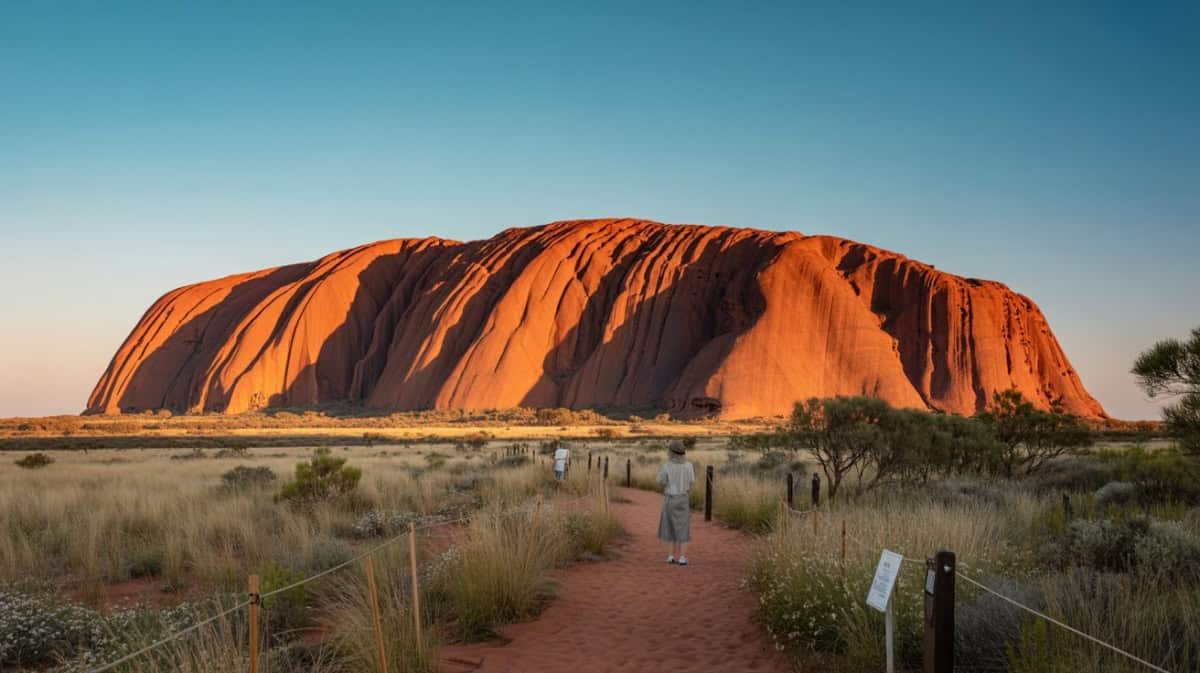
Image generated with Ai
This is the way for Uluṟu to usher the coming generation of tourism as destinations look at ways to share cultural wonders on the internet. Now, tourism boards are making sure that the delicate information is not compromised even as the destinations are still being shared with travelers all over the world. This is evident in the Australian wonder, which is making sure that the destination does not compromise the protection of the sacred places as it still shares its powerful cultural story with the tourists.
United States Takes the Lead in Protecting Hidden Locations
The United States provides some of the strongest examples of how destinations are changing their approach to digital sharing. Several National Park Service locations now encourage visitors to think carefully before posting exact locations online. The goal is not to stop travellers from sharing their experiences. Instead, it is about preventing fragile natural areas from being overwhelmed by sudden online popularity.
Advertisement
Advertisement
Glacier National Park encourages visitors to share locations responsibly. Bryce Canyon warns that geotagging places away from official trails can encourage unofficial paths, which may damage plants, wildlife habitats and sensitive landscapes. Big Bend National Park also advises travellers not to publish directions to fragile off-trail areas.
The principle is straightforward. Destinations want people to experience and appreciate beautiful places, but they do not want thousands of visitors receiving a digital map that leads directly to a vulnerable location.
Advertisement
Advertisement
Utah has expanded this approach further. Tourism guidance in the state encourages visitors to share wider regions, local communities, guides and businesses while keeping some lesser-known natural locations private. Jackson Hole in Wyoming has introduced another creative solution by promoting broader destination tags instead of exact location tags. Visitors can still share their journey without revealing sensitive areas that may struggle with sudden crowds.
Advertisement
Advertisement
Australia Protects Sacred Landscapes While Keeping Tourism Open
Australia follows a different model at Uluṟu-Kata Tjuṯa National Park. The destination does not restrict all photography. Visitors can still capture many moments from their journey. However, photography is prohibited at specific culturally sensitive locations where images may conflict with the traditions and beliefs of the Aṉangu people.
Official signs, visitor maps and tourism information clearly explain where photography restrictions apply. This approach avoids a complete photography ban and focuses only on protecting the most important cultural areas.
The lesson from Australia is significant. A destination does not need to remove cameras everywhere to protect heritage. It can identify specific vulnerable places and create focused restrictions. This allows tourism promotion to continue while ensuring that cultural values receive proper respect.
Vatican City Shows How Strict Photography Rules Can Protect Heritage
Vatican City demonstrates how targeted photography restrictions can work effectively. Visitors are allowed to take personal photographs throughout much of the Vatican Museums. However, inside the Sistine Chapel, photography and filming are prohibited.
Selfie sticks are also restricted throughout the museums. Visitors who break the rules may be asked by staff to remove images taken inside the chapel.
Advertisement
Advertisement
Although these measures appear strict, they apply only to one highly sensitive area rather than the entire visitor experience. Travellers can still photograph other parts of the museums, share their experiences and promote Vatican City.
The example shows that tourism authorities do not always need to choose between complete freedom and complete restriction. Protecting one important space can preserve heritage while allowing visitors to continue documenting their journeys.
Bhutan and Japan Place Culture and Privacy Above Viral Images
Bhutan takes a softer approach to controlling photography. Official tourism guidance encourages visitors not to photograph inside sacred sites and asks travellers to seek permission before taking pictures of local people.
The policy is not designed as an anti-social media measure. Instead, it focuses on respect, cultural understanding and responsible travel behaviour.
Japan is following a similar path, particularly in Kyoto. Official guidance released in March 2026 addressed concerns around unwanted photography involving geiko and maiko, private homes and local residents. Visitors are encouraged not to photograph performers without permission, while some areas now limit photography to designated locations.
Advertisement
Advertisement
Kyoto highlights a wider issue. The challenge is not only protecting landscapes. Human communities can also become overwhelmed when viral images transform peaceful neighbourhoods into crowded photography zones. A destination is not simply a backdrop for photographs. It is also a place where people live, work and maintain traditions.
Costa Rica and Peru Are Redefining Responsible Photography
Costa Rica has chosen to work with social media rather than against it. Its Stop Animal Selfies campaign encourages travellers to avoid harmful wildlife interactions and promote more responsible ways of sharing nature experiences.
The message is not that tourists should stop taking photographs. Instead, the focus is on changing behaviour. The ideal wildlife image should show respect rather than risky interaction.
Peru applies another strategy at Machu Picchu. Selfie sticks, tripods, monopods and some stabilising equipment are restricted because they can obstruct movement and create problems in narrow heritage areas.
Visitors can still take personal photographs. The aim is to prevent certain behaviours from turning a historic site into a place dominated by long photo sessions and equipment use.
Advertisement
Advertisement
Both examples show how tourism authorities are moving away from simple bans. They are encouraging travellers to become more responsible digital storytellers.
Palau Uses Tourism Responsibility Instead of Digital Restrictions
Palau has created one of the world’s most recognised visitor responsibility systems through the Palau Pledge. Connected to the immigration process, the pledge asks visitors to respect the country’s environment, culture and communities.
However, the system is not a photography ban or a restriction on geotagging. It is a wider agreement about responsible tourism behaviour.
Palau demonstrates that destinations do not need to disappear from social media to protect themselves. Instead, they can use digital platforms to educate visitors and encourage better decisions.
The country’s approach shows a new direction for tourism management. The internet is not necessarily the problem. Poor visitor behaviour is the challenge.
Advertisement
Advertisement
Faroe Islands Reduce Pressure by Spreading Visitors Across the Destination
The Faroe Islands have developed another solution through the “Closed for Maintenance, Open for Voluntourism” programme. The initiative responds to environmental damage and safety concerns at popular natural locations.
Some areas can be temporarily protected while repair work takes place. At the same time, visitors are encouraged to explore alternative routes and lesser-known attractions.
The strategy does not attempt to stop tourism. Instead, it spreads visitors across a wider area.
This is increasingly important because social media algorithms can quickly transform one scenic viewpoint into a global hotspot. A single viral image can create pressure that local infrastructure and ecosystems cannot handle.
The Faroe Islands are attempting to break this cycle by encouraging discovery beyond the most photographed locations.
Advertisement
Advertisement
Could Fewer Photos Create Better Travel Experiences?
There is no strong official evidence proving that photography restrictions automatically make travellers happier. Research has not shown that visitors enjoy destinations more simply because they cannot take pictures.
However, destination managers associate responsible photography practices with other benefits, including greater immersion, quieter experiences and better protection of natural and cultural environments.
At Uluṟu, restrictions around photography support deeper engagement with the cultural landscape. Bryce Canyon highlights that limiting exact location sharing can allow future visitors to discover places independently rather than following overcrowded digital trails.
The real benefit may not come from removing cameras. It may come from protecting silence, discovery and personal connection with a destination.
Tourism in 2026 Is Learning to Hide the Fragile Detail
Traveling in 2026 knows how to keep the secret of the fragile details by creating intelligent destination planning. Along with growing global travel, the way of protection of delicate areas has changed. Instead of taking those destinations out of the spotlight, they tell their stories and direct tourists to appropriate actions. Consequently, today’s tourism planners know about balance, preservation, and exploration. They realize that any trail, any religious place, or any wilderness area is of great value. That is why the purpose is not to keep secrets of nature, but to preserve fragile details which will help to enjoy the amazing sites in the future.
Advertisement
