
Rhodes, Greece Turns Its Medieval Heart Into a Grand Stage for Music, Art and Cinema This Autumn: All You Need to Know

Published
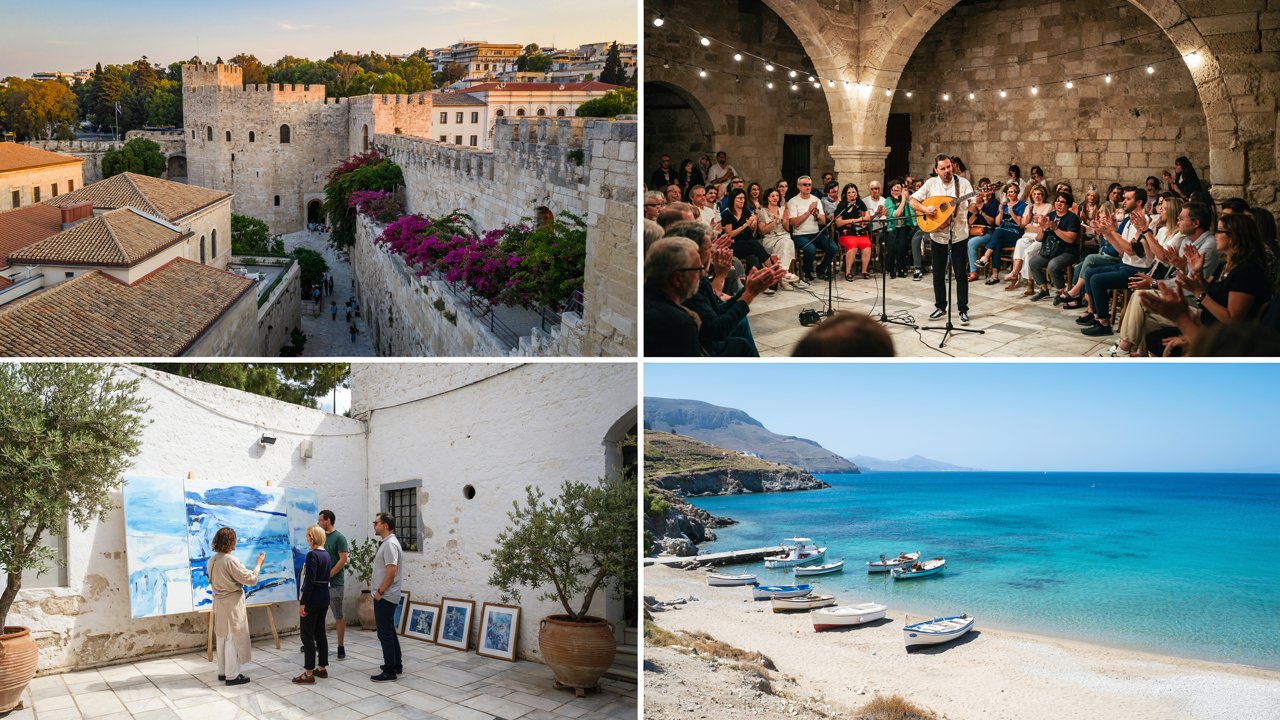
Image generated with Ai
Rhodes is giving autumn travellers another reason to look beyond its famous beaches as the 8th European Polyphony Festival fills the Greek island with music, visual art, cinema and cultural experiences from 28 September to 10 October 2026.
The multidisciplinary festival places artistic events within the extraordinary cultural landscape of Rhodes, including its historic urban spaces. Concerts, exhibitions, screenings, musical and historical walks, educational workshops and an outdoor aerial music performance form part of the 2026 programme.
All festival activities offer free public admission, although reservations are required for selected events to manage attendance. The event is held under the auspices of Greece’s Ministry of Culture and General Secretariat for the Aegean and Island Policy and is co-organised by the South Aegean Region, Municipality of Rhodes and Arts Spontanés.
For travellers, the festival creates an opportunity to experience Rhodes as both an island holiday destination and a living cultural stage.
Advertisement
Advertisement
What Makes the European Polyphony Festival Different in 2026?
The European Polyphony Festival reaches its eighth Rhodes edition with a programme deliberately extending beyond conventional concerts.
Classical music remains central, but visual arts and cinema broaden the experience. The programme includes concerts, interactive workshops, exhibitions, screenings and musical and historical walks.
Advertisement
Advertisement
An open-air aerial music performance adds another dimension.
This multidisciplinary structure allows visitors to encounter art in several forms rather than sitting through a succession of conventional performances.
Advertisement
Advertisement
The festival’s setting strengthens that experience. Rhodes combines ancient heritage, medieval fortifications and contemporary island life, allowing cultural programming to unfold against a backdrop dramatically different from a traditional concert hall.
The official programme describes the event as running for fourteen consecutive days.
Rhodes’ Medieval City Gives Music an Extraordinary Setting
The Medieval City of Rhodes provides one of the island’s greatest cultural assets.
UNESCO inscribed the fortified city on its World Heritage List in 1988. The Knights of St John occupied Rhodes from 1309 until 1523 and transformed the city into a formidable stronghold.
Advertisement
Advertisement
Its surviving heritage includes the Palace of the Grand Masters, Street of the Knights and former Great Hospital, alongside later Ottoman buildings.
Approximately four kilometres of walls surround the medieval city.
This layered architectural environment creates an unusual setting for a festival dedicated to European artistic exchange. Visitors moving between festival activities can simultaneously encounter Gothic architecture, Byzantine traces, Ottoman heritage and later additions.
Rhodes therefore becomes more than the location of the festival. Its historic environment forms part of the experience itself.
What Can Travellers Experience During the Festival?
The programme has been designed around several artistic formats.
| Festival experience | What visitors can expect |
|---|---|
| Concerts | Classical and polyphonic musical performances |
| Musical walks | Music combined with exploration of Rhodes |
| Historical walks | Cultural discovery through historic locations |
| Workshops | Interactive musical and educational experiences |
| Exhibition | Visual and photographic artistic programming |
| Cinema | Screenings within the festival programme |
| Aerial performance | Open-air music and visual spectacle |
| Educational activities | Programmes connecting audiences with music |
The diversity makes the event accessible even to visitors who would not normally organise a holiday around classical music.
Advertisement
Advertisement
Travellers should check individual schedules before attending because locations and timings vary. Some activities also require advance reservations despite being free.
Why Rhodes Works Naturally as a Cultural Festival Destination
Rhodes is the largest island in the Dodecanese and combines archaeological sites, fortified settlements, traditional villages, mountains and extensive coastline.
Greece’s official tourism organisation describes Rhodes as a destination where medieval and traditional elements meet beaches, pine-covered mountains, villages and archaeological sites.
That variety is important for festival visitors.
A traveller can attend a morning cultural programme before exploring the Old Town, continue towards the coast later in the day and return for an evening performance.
The island’s heritage also stretches across numerous historical periods.
Advertisement
Advertisement
Ancient Greeks, Byzantines, the Knights of St John, Ottomans and Italians all left traces that remain visible in its architecture and cultural landscape.
The Palace and Street of the Knights Add Depth to a Festival Visit
Festival visitors spending time inside Rhodes Town can explore several major landmarks without travelling far.
The Palace of the Grand Master remains one of the most prominent structures from the Knights’ period.
Nearby, the Street of the Knights preserves another striking section of the medieval settlement. Historic inns associated with different divisions of the Order once stood along the route.
The Archaeological Museum occupies the former Hospital of the Knights, further concentrating significant heritage within the Old Town.
The Municipality of Rhodes also highlights religious and cultural monuments reflecting the different communities that shaped the city through successive centuries.
Advertisement
Advertisement
For travellers, this concentration makes it practical to combine scheduled festival activities with independent sightseeing.
Lindos Extends the Journey Beyond Rhodes Town
Visitors with additional time can travel beyond the festival’s urban setting to Lindos, one of Rhodes’ best-known historic settlements.
Whitewashed buildings spread beneath its elevated ancient acropolis, producing a landscape very different from the fortified character of Rhodes Town.
Greece’s national tourism organisation identifies Lindos and its imposing acropolis among the island’s defining historic attractions.
The contrast makes it particularly useful for travellers staying several days.
Rhodes Town reveals the island’s medieval and later history, while Lindos provides a strong connection with its ancient past and traditional Aegean architecture.
Advertisement
Advertisement
Together, the two destinations demonstrate why Rhodes can support a longer cultural holiday rather than merely a short festival visit.
Beaches and Nature Keep the Festival Trip From Becoming Only About History
Rhodes remains one of Greece’s major island destinations because cultural heritage represents only one dimension of the visitor experience.
The island combines sandy and pebbled beaches with coves, forests, hills and traditional inland communities.
Official Greek tourism information highlights turquoise waters, pine-covered landscapes, orange groves and vine-covered slopes, while Mount Attavyros forms the island’s highest mountain.
The Municipality of Rhodes additionally identifies natural attractions including the Valley of the Butterflies, Seven Springs, Filerimos and the forests of Prophet Elias.
This means travellers attending the festival can build a wider itinerary around heritage, nature and the coast without leaving Rhodes.
Advertisement
Advertisement
How Can Travellers Reach Rhodes?
Rhodes has direct domestic air connections with mainland Greece.
Visit Greece lists flights from Athens International Airport to Rhodes at approximately one hour, while flights from Thessaloniki take around one hour and twenty minutes.
International air connectivity varies by season, airline and departure market, so travellers should confirm schedules directly before booking.
The island also has ferry connections, making Rhodes part of wider Aegean and Dodecanese itineraries.
Travellers attending specific festival events should check venue locations and reservation requirements in advance rather than relying on a single central festival site.
Why the Festival Matters for Autumn Travel to Rhodes
The European Polyphony Festival gives Rhodes a different identity as the peak Mediterranean summer season begins to recede.
Advertisement
Advertisement
Instead of presenting the island purely through beaches, resorts and warm-weather recreation, the programme puts music, cinema, visual art and heritage at the centre of the visitor experience.
That positioning complements the island’s historic strengths.
Rhodes’ Medieval City is not a reconstructed attraction created for tourists. It remains a living urban environment whose architectural layers reflect centuries of political, cultural and religious change.
UNESCO specifically recognises the site for its outstanding architectural ensemble and historical development.
Bringing contemporary European artistic programming into that setting connects present-day cultural life with one of Greece’s most important historic destinations.
Frequently Asked Questions
1. When is the European Polyphony Festival in Rhodes in 2026?
Advertisement
Advertisement
The official festival programme gives the dates as 28 September to 10 October 2026.
2. Is admission free?
Yes. The festival states that entrance is free for all activities, although reservations are necessary for some events.
3. What does the festival include?
Visitors can expect concerts, musical walks, workshops, a photographic exhibition, screenings, educational activities and other multidisciplinary performances.
4. Is Rhodes Old Town a UNESCO World Heritage Site?
Advertisement
Advertisement
Yes. UNESCO inscribed the Medieval City of Rhodes on the World Heritage List in 1988.
5. Can travellers combine the festival with sightseeing?
Yes. Major attractions including the Palace of the Grand Master, Street of the Knights and Archaeological Museum are concentrated around the Medieval City. Visitors can also explore Lindos, beaches and natural attractions elsewhere on Rhodes.
6. Is the festival only for classical-music enthusiasts?
No. Although music is central, the programme incorporates visual arts, cinema, historical walks, workshops and other cultural experiences.
Rhodes Gives Autumn Travellers a Different Greek Island Experience
The 8th European Polyphony Festival changes the rhythm of an autumn trip to Rhodes.
Advertisement
Advertisement
Between 28 September and 10 October 2026, music, visual art, cinema and interactive experiences add contemporary cultural energy to an island already shaped by thousands of years of history.
Travellers can experience performances before walking through the UNESCO-listed Medieval City, explore the Palace of the Grand Master and Street of the Knights, travel south towards Lindos or spend time discovering the island’s beaches and landscapes.
That combination gives Rhodes an appeal extending well beyond the traditional Mediterranean summer holiday.
For autumn visitors, the festival provides a compelling way to experience Greece through both its enduring heritage and its living contemporary culture.
Advertisement
