
Latvia and Estonia Tourism Pushes Beyond Short Breaks to Unlock Longer, Higher-Value Baltic Holidays

Published
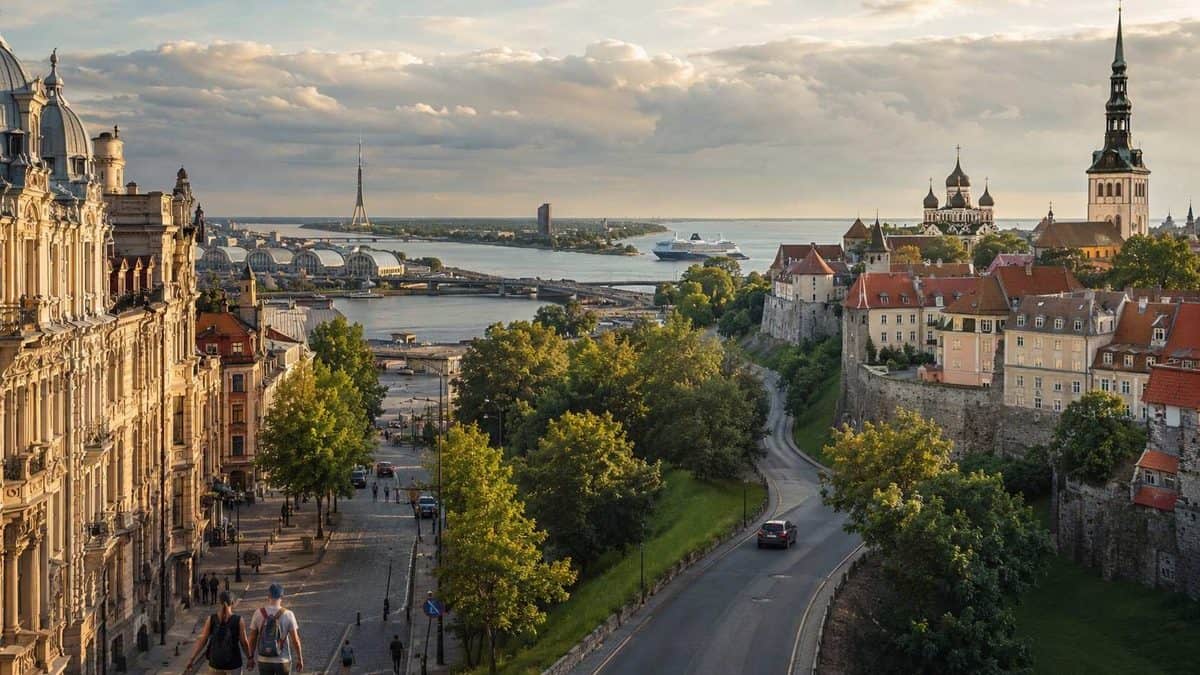
Both Latvia and Estonia are now intent on shifting their tourism focus from Baltic city breaks to longer, more substantive holiday provision for Riga and Tallinn. The 2026 strategies for both countries set goals of year-round demand, better sustainable transport, and increased spending per visitor. It is worthwhile to shift the focus away from the city break model due to the current tendency to view both capitals as a one-night or even weekend stops which creates limits for the surrounding regional communities and businesses. The aim of sustainable tourism for Latvia and Estonia is to extend the spending opportunities away from the central historic districts by creating extended itineraries that sustain the wider maritime regional economy.
Two Baltic capitals are moving beyond a simple city-break contest
Riga and Tallinn are often presented as rival weekend destinations. That framing is easy to understand, but it misses the bigger commercial story.
Both capitals are gateways to national tourism economies. Both have UNESCO-listed historic centres, strong regional links and compact urban cores that allow visitors to see major landmarks quickly.
That convenience is also a weakness. Travellers can arrive, photograph the principal squares, visit a museum, eat one evening meal and leave before their spending reaches neighbourhood businesses or destinations outside the capital.
Advertisement
Advertisement
The new policy direction is therefore based on value, not volume alone. Longer stays, year-round products and greater visitor expenditure matter more than simply adding another short arrival.
Riga has the scale to combine medieval heritage, Art Nouveau architecture, food markets, wooden neighbourhoods and Daugava river experiences. Tallinn can combine its preserved medieval core with Kalamaja, Kadriorg, Pirita, maritime attractions and ferry-based extensions.
Advertisement
Advertisement
Together, they can support a broader Baltic holiday. A visitor can move between Latvia and Estonia without an internal Schengen border check under normal conditions, use the same euro currency and build one journey around two different national identities.
Historic strengths give Riga and Tallinn different reasons to stay
The historic centres of Riga and Tallinn reflect their shared Hanseatic past, but they offer different visitor experiences. That distinction is useful for tour operators seeking to build a multi-night programme without repetition.
UNESCO describes Tallinn as an exceptionally complete and well-preserved medieval northern European trading city. Its upper town, lower town, defensive structures, narrow streets, guild buildings and merchant houses create a concentrated heritage landscape.
Riga offers a wider architectural timeline. Its protected centre includes its medieval core, nineteenth-century boulevards, wooden buildings and an exceptional concentration of Art Nouveau architecture.
This difference creates a natural itinerary. Tallinn can anchor a medieval and maritime programme, while Riga supports architecture, food, markets and urban cultural exploration across several districts.
The capitals also have strong cultural assets beyond their postcard views. Tallinn’s story includes Estonian independence, the Singing Revolution and the country’s relationship with the Baltic Sea. Riga connects Latvian national culture with trading history, design, food and the Daugava.
Advertisement
Advertisement
That depth is central to higher-value Baltic holidays. It gives guides, museums and experience providers enough material to replace a checklist visit with themed days.
Official visitor data show growth but also reveal the conversion challenge
Official figures show that both destinations have momentum. They also reveal why overnight value has become so important.
According to Latvia’s Central Statistical Bureau, Latvian tourist accommodation hosted 2.8 million guests in 2025. That was 4.5% more than in 2024, while nights rose 6.1% to five million.
Non-resident accommodation guests reached 1.7 million, an increase of 5.3%. Their nights rose 8.3% to 3.1 million, but the average foreign stay remained 1.8 nights.
Riga received 71.8% of Latvia’s non-resident accommodation guests. The concentration confirms the capital’s power as the country’s main international gateway, but the short national average highlights the opportunity to retain travellers for another night or send them into Latvia’s regions.
Estonia’s first-half 2026 data also point to expanding demand. Statistics Estonia counted 1.66 million accommodated tourists, 4% more than in the first half of 2025.
Advertisement
Advertisement
Foreign guests increased by 5% to more than 874,900. Their nights climbed 7% to more than 1.72 million, showing that overnight demand grew faster than visitor numbers.
Tallinn accounted for 51% of all accommodated tourists in Estonia and 72% of accommodated foreign tourists. Holiday travel represented 78% of foreign accommodation guests, compared with 18% travelling for business.
The city’s wider international reach is even larger when day visitors are counted. Tallinn reported 3.42 million foreign visits in 2025 based on mobile-positioning analysis, while accommodation data recorded roughly 3.4 million foreign nights.
These measures are not directly comparable because visits, guests and nights describe different things. Used carefully, they show a destination with a large visitor funnel and a clear opportunity to convert more arrivals into paid stays.
| Official indicator | Latvia and Riga | Estonia and Tallinn | Tourism meaning |
|---|---|---|---|
| Latest broad accommodation period | Latvia, full-year 2025 | Estonia, first half 2026 | Different periods must not be directly ranked |
| Accommodated tourists | 2.8 million in Latvia | 1.66 million in Estonia | Both markets were growing year on year |
| Change in accommodated tourists | Up 4.5% | Up 4% | Demand growth is steady rather than explosive |
| Foreign guest trend | 1.7 million, up 5.3% | More than 874,900, up 5% | International demand is strengthening |
| Foreign nights trend | 3.1 million, up 8.3% | More than 1.72 million, up 7% | Nights are rising faster than foreign guest counts |
| Capital concentration | Riga held 71.8% of foreign guests | Tallinn held 72% of foreign guests | Both capitals dominate national inbound accommodation |
Latvia targets tourism exports and valuable year-round products
Latvia’s national direction is explicit. The Cabinet considered the tourism and events export promotion strategy to 2027 in March 2024, setting a goal of lifting tourism exports to €1.52 billion in 2027.
The Latvian Ministry of Economics strategy prioritises international competitiveness, visibility, innovation, sustainability and efficiency. It calls for personalised products with higher added value and describes Latvia as an attractive destination in every season. genui{“citation”:{“ref”:”turn2search0″}}
Advertisement
Advertisement
The policy supports investment in internationally attractive projects, marketing Latvia as a safe destination and helping tourism businesses improve their export capacity. Longer stays fit directly into that model because each additional night can create spending across accommodation, dining, cultural admission, guiding and local transport.
Riga’s recent market performance provides a base for that work. In 2025, Latvia recorded 272,500 accommodation guests from Lithuania, 188,100 from Estonia, 165,200 from Germany, 121,200 from Finland and 113,400 from the United Kingdom.
The British market grew by 19.7%, while Poland increased 9.4% and Finland rose 7.9%. These markets offer practical targets for city-plus-region packages because they already demonstrate demand.
Riga can lengthen visits by linking its historic centre to the Art Nouveau district, Central Market, Āgenskalns, wooden architecture and river experiences. National itineraries can then add Jūrmala, Sigulda, Cēsis or other destinations according to the visitor’s interests and available time.
Estonia places higher value, access and regional spread at the centre
Estonia’s policy has moved from a broad long-term vision to a time-bound action plan. Its 2025–2035 outlook seeks to make the country a recognised, sustainable and innovative destination while doubling tourism’s added value by 2035.
The Estonian Tourism Action Plan 2026–2029 sets an interim target of €3.248 billion in tourism added value by 2029. It also aims to increase tourism-service exports from €1.86 billion to €2.7 billion and raise the business-tourism share from 23.3% to 24.5%. genui{“citation”:{“ref”:”turn2search73″}}
Advertisement
Advertisement
The plan covers year-round appeal, transport and digital connectivity, regional development, employment, sustainability and innovation. Food, culture, heritage, nature and business tourism are named areas of focus.
This has clear implications for Tallinn. The capital is Estonia’s main inbound platform, but national success depends on moving some demand beyond it.
Longer holidays create that possibility. A traveller staying only one night may never leave Tallinn, while a four- or five-night programme can include another county, island, spa destination or nature experience.
The policy therefore connects two goals that may appear to compete. Tallinn must remain internationally attractive while also functioning as the starting point for more geographically distributed spending.
Transport access will decide whether travellers add another night
Easy arrival is one of Tallinn’s strongest advantages. Its passenger and cruise terminals sit within walking distance of the Old Town, while ferries connect the city with Helsinki several times per day.
That convenience creates substantial visitor traffic, but it also makes a same-day excursion easy. Hotels and attractions must give ferry passengers a clear reason to remain after the last planned sightseeing stop.
Advertisement
Advertisement
Estonia’s action plan treats smooth international, domestic and digital connections as prerequisites for tourism. Its 2029 targets include 39 regularly served international flight destinations during the high-season reference week, 340 scheduled international departures in that week and nine million international ferry passengers, excluding cruises.
Riga is strengthening the other end of the city-break journey. An hourly N22 night bus between the city centre and Riga Airport began operating in April 2026, covering the period when standard daytime schedules previously offered fewer choices.
The service matters for travellers using late arrivals or early departures. It reduces dependence on private transfers and makes an extra final evening in Riga easier to manage.
Future Rail Baltica infrastructure is strategically important to the regional vision, but the project’s delivery timetable must be treated separately from services available today. Travellers should plan current Riga–Tallinn journeys using operating coach, air or mixed transport options and verify schedules before departure.
Visa rules make a combined Latvia and Estonia holiday straightforward
There is no new Latvia–Estonia tourist visa reform to report. Both countries are members of the European Union and Schengen area, so normal travel between them does not involve a routine internal border checkpoint.
EU, European Economic Area and Swiss citizens can travel under applicable free-movement rules. Many non-EU nationalities can visit the Schengen area visa-free for short stays, while others need a Schengen visa.
Advertisement
Advertisement
The standard short-stay limit for eligible non-EU visitors is generally 90 days in any 180-day period across the Schengen area, not 90 days in each country. Time spent in Latvia, Estonia and other Schengen states normally counts towards the same allowance.
Visa applicants need a valid travel document and may need evidence of their itinerary, accommodation, funds and medical insurance. Border officers retain authority over admission even when a traveller holds a visa or qualifies for visa-free entry.
Visitors should check the rules for their own nationality before booking. They should also monitor the European Union’s implementation timetable for any new border-registration or travel-authorisation systems rather than relying on an old article or social-media post.
Hotels gain most when demand moves from one night to three
Accommodation providers have the clearest commercial interest in longer stays. An extra night increases room demand without requiring the destination to acquire an entirely new visitor.
It can also improve the economics of quieter weekdays and shoulder seasons. Hotels can combine rooms with museum entry, food tours, ferry journeys, spa visits or guided neighbourhood walks without turning the offer into an inflexible package.
Riga’s December 2025 hotel room occupancy reached 53.5%, according to Latvia’s statistics office. That was higher than the national rate of 40.9%, but it still leaves space for winter demand.
Advertisement
Advertisement
Tallinn’s year-round agenda similarly seeks stronger low-season transport and visitor flows. Cultural events, food, museums, business meetings and wellness products can support demand when summer leisure traffic eases.
Higher value should not be confused with luxury alone. A budget traveller who stays four nights, uses public transport, visits paid attractions and eats locally may distribute more value than a hurried premium visitor who leaves within hours.
Airlines, airports and ferries need itineraries that work in both directions
Transport operators benefit when Latvia and Estonia are sold as an open-jaw journey. A visitor can arrive in Riga, travel north and depart from Tallinn, or follow the route in reverse.
This reduces the need to backtrack and makes a longer trip more convenient. It also allows airlines, airports, ferry operators and ground-transport companies to serve different stages of one itinerary.
Tallinn’s ferry connection with Helsinki expands the concept into a Baltic–Nordic route. Riga is better positioned as the central anchor for a Latvia–Estonia–Lithuania land itinerary.
Tour operators should match schedules carefully. Short connection windows, seasonal services and separate tickets can create risk when delays occur, so itineraries need adequate buffers and clear responsibility for disrupted segments.
Advertisement
Advertisement
The opportunity is strongest when transport becomes part of the holiday rather than dead time. Waterfront arrivals, scenic road sections and stopovers can encourage travellers to see the journey between the capitals as an experience.
Restaurants, guides and neighbourhood businesses can capture wider spending
Longer stays distribute tourism revenue through a broader supply chain. The first evening may support an Old Town restaurant, but later days can bring customers to neighbourhood cafés, markets, museums, independent shops and specialist guides.
Riga Central Market is especially well placed for food tourism. It sits close to the Old Town, central railway station and international bus terminal, making it easy to include on an arrival or departure day.
Tallinn can use Kalamaja, Kadriorg, Pirita and other districts to ease the concentration of visitors in the medieval core. The Tallinn Card already combines admission to more than 50 museums and attractions with public transport, giving travellers a practical tool for wider exploration.
Visitor dispersal must remain useful to residents. Products that support local businesses, respect residential areas and avoid overwhelming small sites will create more durable economic benefits than simply redirecting large groups.
Sustainability is tied to time, distance and visitor behaviour
Longer holidays do not automatically become sustainable. The impact depends on transport choices, accommodation, consumption and the pressure created at individual sites.
Advertisement
Advertisement
However, extending one trip can be more efficient than taking several separate weekend flights, particularly when travellers use ferries, coaches or rail for part of the route. A longer itinerary can also justify visiting places beyond the most crowded historic streets.
Both national strategies connect tourism growth with sustainability. Latvia links high-value product development with sustainable principles, while Estonia includes environmental performance, innovation and regional balance in its long-term direction.
Climate also affects the “coolcation” appeal of the Baltic region. Riga and Tallinn may feel milder than parts of southern Europe at certain times, but neither city can promise cool conditions.
Heatwaves, storms and heavy rain can affect northern Europe too. Travellers need flexible plans, suitable clothing and official weather information rather than a marketing label alone.
What international travellers should know before combining Riga and Tallinn
A two-capital itinerary is administratively simple, but good planning can prevent wasted time. The route works best when arrival and departure points, intercity transport and hotel locations are considered together.
Travellers should:
Advertisement
Advertisement
- Check passport and Schengen eligibility for their nationality.
- Remember that the 90-in-180-day rule normally covers the whole Schengen area.
- Compare an open-jaw airfare with the cost of returning to the first capital.
- Verify intercity schedules directly with the operating transport provider.
- Allow extra time when separate tickets are used.
- Reserve popular attractions and guided experiences during peak periods.
- Explore neighbourhoods beyond Riga Old Town and Tallinn Old Town.
- Consider at least three nights in each country if regional excursions are planned.
Public transport is useful in both capitals, although their tourism patterns differ. Tallinn’s port proximity helps ferry visitors, while Riga’s airport bus network supports air arrivals, including overnight connections.
For official accommodation context, travellers and businesses can use the Statistics Estonia first-half 2026 release, which explains guest numbers, purposes of travel and the strong concentration of foreign stays in Tallinn. genui{“citation”:{“ref”:”turn1search3″}}
Future outlook follows published targets rather than promises
Latvia’s published direction runs to 2027 and focuses on reaching €1.52 billion in tourism exports, improving international competitiveness and developing higher-value, year-round products. The immediate test is whether rising foreign nights translate into longer average stays and broader regional spending.
Estonia’s 2026–2029 plan is more detailed in its interim metrics. It targets €3.248 billion in tourism added value by 2029, €2.7 billion in tourism-service exports and stronger international connections.
Its long-term 2035 vision seeks twice the tourism added value and 1.5 times the overnight stays of foreign and domestic tourists. It also tracks overnight demand outside Tallinn, recognising that national gains cannot remain concentrated in the capital.
None of these targets guarantees delivery. They provide transparent benchmarks against which future official data can be assessed.
Advertisement
Advertisement
The most credible story is therefore not that Riga and Tallinn have suddenly abandoned short breaks. It is that Latvia and Estonia are building policy frameworks intended to turn convenient gateways into richer, longer and more widely distributed holidays.
Frequently Asked Questions
Do travellers need a separate visa for Latvia and Estonia?
No separate national tourist visa is normally required for a combined short visit because both countries are in the Schengen area. Travellers who require a visa generally use a valid Schengen visa, while eligible nationalities may enter visa-free subject to the common short-stay rules. Each visitor must confirm requirements for their passport before travel.
How many days should travellers allow for Riga and Tallinn?
A hurried trip can cover both capitals in four days, but that recreates the short-break problem. Six to eight days gives travellers time for the historic centres, neighbourhoods, museums and food experiences, with space for one regional excursion. More time is needed if Helsinki or Lithuania is added.
What is the most practical way to travel between Riga and Tallinn?
Scheduled coaches are currently a common direct surface option, while air services may suit some itineraries. Travellers should compare total journey time, luggage terms and hotel locations rather than headline travel time alone. Rail Baltica should not be treated as an operating intercity option until official passenger services actually begin.
Conclusion
Latvia and Estonia are using Riga and Tallinn as gateways to a more valuable Baltic visitor economy. Official data show rising foreign demand and overnight stays, yet short visits and capital-city concentration still limit how widely tourism income is shared. Their strategies now favour year-round products, smoother connections, sustainable growth and experiences that encourage travellers to remain longer. Latvia and Estonia tourism can gain when visitors combine heritage, food, neighbourhoods and regional excursions within one journey. Success will be measured through targets, longer stays, stronger exports and wider local benefits, not simply by counting more arrivals at historic squares alone
Advertisement
