

Bonaire Teams Up With Belize and More as Caribbean Diving Destinations Beckon Global Travellers for Extraordinary Underwater Adventures!

Published
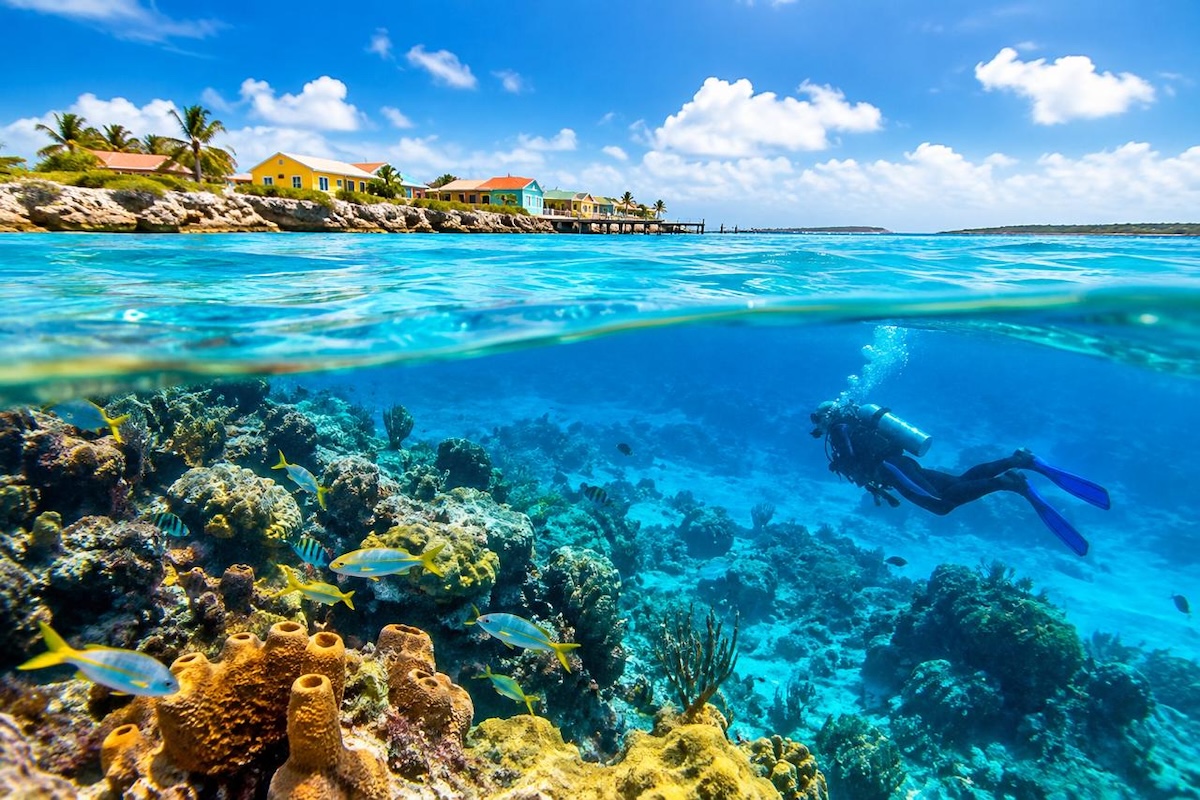 Image generated with Ai
Bonaire teams up with Belize and more Caribbean diving destinations to beckon global travellers seeking extraordinary underwater adventures. From colourful coral reefs to fascinating shipwrecks, these Caribbean destinations offer unforgettable experiences beneath crystal-clear waters. Bonaire teams up with Belize, the Cayman Islands, Curaçao, Aruba, Barbados and Saint Lucia to showcase the remarkable diversity of Caribbean diving holidays. Moreover, each destination brings unique marine encounters, tropical scenery and exciting activities for adventurous travellers. Travel And Tour World invites readers to discover these extraordinary underwater adventures, compare spectacular diving destinations and explore essential travel tips before planning their next unforgettable Caribbean escape.
Bonaire Diving Holidays and Six Caribbean Alternatives: Visitor Statistics, Top Dive Sites, Food, Hotels and a Complete Travel Guide
Bonaire has become an especially compelling choice for travellers who want their Caribbean holiday to revolve around underwater exploration rather than simply relaxing on a beach. The island’s diving appeal is supported by an extensive network of marine sites, shore-accessible reefs and specialist diving services.
Advertisement
Advertisement
The latest figures reported on October 9, 2026, offer a useful starting point for planning. Preliminary Tourism Corporation Bonaire data, 48.1% of American visitors to Bonaire in September 2026 identified diving as their primary reason for travelling. General holidays accounted for another 40.5% of American visitors. Bonaire received 12,758 stayover visitors overall during the month, compared with 12,196 in September 2025.
For international travellers comparing underwater experiences, six other destinations deserve consideration: Belize, the Cayman Islands, Curaçao, Aruba, Barbados and Saint Lucia. Each offers a different combination of coral reefs, walls, wrecks, marine life, beaches and cultural experiences.
Advertisement
Advertisement
The following guide combines verified tourism statistics with practical destination advice. Annual visitor totals are identified by year and category wherever official figures are available. Stayover visitors, cruise passengers and total arrivals are kept separate because they measure different types of tourism.
Bonaire’s Diving Appeal in Numbers
Bonaire’s tourism proposition is unusually specialised. The official destination website lists more than 85 dive sites, including 54 described as readily accessible from shore. It also identifies more than 350 fish species and 57 coral species in the island’s marine environment. These figures explain why divers can build an itinerary around multiple underwater locations without depending entirely on boat excursions.
Advertisement
Advertisement
Table 1: Bonaire tourism and diving statistics
| Indicator | Verified figure | What it means for travellers |
|---|---|---|
| Stayover visitors, September 2026 | 12,758 | Monthly overnight tourism volume |
| Stayover visitors, September 2025 | 12,196 | Comparison baseline |
| Year-on-year change | +4.6% | More stayover arrivals than a year earlier |
| American visitors, September 2026 | 2,613 | Second-largest source market |
| Americans travelling primarily to dive | 48.1% | Diving was the leading reported motivation |
| Americans travelling for a general vacation | 40.5% | A substantial additional leisure market |
| American visitors staying in hotels | 58.1% | Most common accommodation category |
| Diving sites listed by the destination authority | More than 85 | Broad choice of underwater locations |
| Shore-accessible diving sites | 54 | Opportunities to dive without relying exclusively on boats |
| Fish species cited by the destination authority | More than 350 | Diverse marine life |
| Coral species cited by the destination authority | 57 | Variety of coral habitats |
One distinction matters when interpreting these numbers. The 48.1% figure applies to American visitors, not all international arrivals. It should not be presented as evidence that nearly half of every visitor to Bonaire travels specifically to dive.
The monthly figures also cannot establish how many individual dives were completed, how much each visitor spent or how much diving contributed to the island’s total tourism revenue. Those measures require separate data.
Advertisement
Advertisement
Six Caribbean Diving Destinations to Compare With Bonaire
1. Belize — Blue holes and barrier reefs
Belize is a strong alternative for travellers who want to combine reef diving with wildlife, islands and mainland exploration. The Belize Barrier Reef system offers access to coral habitats, while the Great Blue Hole is a distinctive excursion for suitably experienced divers. Ambergris Caye and Caye Caulker provide convenient bases for arranging boat trips.
What to do: Arrange a guided reef excursion, explore marine reserves and add a mainland trip to Mayan archaeological sites or rainforest landscapes.
What to eat: Try rice and beans, stewed chicken, fresh fish and conch when in season and legally available.
Advertisement
Advertisement
Where to stay: Consider San Pedro on Ambergris Caye for a broad choice of accommodation and tour operators, or Caye Caulker for a smaller-island atmosphere.
Best suited to: Divers who want to combine marine adventures with cultural and nature-based travel.
2. Cayman Islands — Dramatic walls and wrecks
The Cayman Islands appeal to divers seeking clear-water boat excursions, underwater walls and wreck exploration. Grand Cayman offers the broadest range of visitor services, while Little Cayman is known for access to the Bloody Bay Wall area. Cayman Brac offers another option for divers interested in deeper underwater landscapes.
What to do: Book a guided wall dive, explore suitable wreck sites and leave time for beaches and marine excursions.
What to eat: Look for traditional turtle-free seafood dishes, conch preparations where legally sourced, and Cayman-style fish dishes.
Advertisement
Advertisement
Where to stay: Grand Cayman is practical for first-time visitors seeking transport, restaurants and accommodation choices. Little Cayman suits travellers prioritising a quieter dive-focused stay.
Best suited to: Divers interested in underwater topography, guided boat trips and established tourism infrastructure.
3. Curaçao — Reefs alongside colourful city life
Curaçao combines underwater activities with a historic capital, colourful architecture and a lively dining scene. Its southern coast offers numerous diving opportunities, including reef sites and the popular Tugboat area. Travellers can balance mornings underwater with afternoons exploring Willemstad.
What to do: Arrange a guided reef dive, visit Willemstad’s historic waterfront and explore beaches around the island.
What to eat: Sample keshi yena, a local dish traditionally prepared with cheese and a savoury filling, alongside fresh fish and other island specialities.
Advertisement
Advertisement
Where to stay: Willemstad works well for travellers who want restaurants and cultural attractions nearby. Coastal accommodation can be more convenient for a beach-centred itinerary.
Best suited to: Couples and independent travellers who want diving, food, history and nightlife in one trip.
4. Aruba — Wreck diving and beach escapes
Aruba is attractive to travellers who prefer to combine diving with a conventional beach holiday. The island’s underwater experiences include wreck sites, reef habitats and guided boat excursions. Its developed resort areas also make it practical for visitors travelling with non-divers.
What to do: Explore suitable wrecks with a qualified operator, spend time on Eagle Beach and organise a land excursion to see Aruba’s drier, rugged interior.
What to eat: Try keshi yena, fresh seafood and pastechi, a filled pastry commonly eaten as a snack.
Advertisement
Advertisement
Where to stay: Palm Beach offers a concentration of resort accommodation, restaurants and visitor services. Eagle Beach is another option for travellers prioritising a beachside setting.
Best suited to: Families, couples and mixed-interest groups who want diving without making every day an underwater activity.
5. Barbados — Wrecks, reefs and food culture
Barbados offers a useful combination of diving, beaches and local culinary experiences. Carlisle Bay is known for underwater wrecks that can be explored on organised excursions appropriate to the diver’s certification. On land, Bridgetown and the island’s coastal communities provide opportunities to explore Barbadian history and cuisine.
What to do: Book a guided wreck or reef dive, visit Bridgetown and schedule a beach day between excursions.
What to eat: Sample flying fish with cou-cou, fish cakes and traditional Bajan dishes.
Advertisement
Advertisement
Where to stay: The south coast offers access to restaurants and nightlife, while the west coast has a range of beach resorts and hotels.
Best suited to: Travellers looking for a balanced holiday that combines diving, culture, dining and beaches.
6. Saint Lucia — Volcanic scenery and marine life
Saint Lucia offers a different landscape from the flatter southern Caribbean islands. Its mountainous interior, volcanic scenery and coastal reefs create opportunities to combine diving with hiking and scenic excursions. The Soufrière area is a useful base for travellers interested in both underwater activities and views of the Pitons.
What to do: Arrange a guided reef dive, visit the Soufrière area and explore the island’s volcanic attractions with authorised local guides.
What to eat: Look for green fig and saltfish, fresh seafood and traditional Creole dishes.
Advertisement
Advertisement
Where to stay: Soufrière suits travellers prioritising scenery and access to the island’s southwestern attractions. The Rodney Bay area offers a wider choice of dining and visitor services.
Best suited to: Couples, nature enthusiasts and divers who want mountain scenery alongside Caribbean marine experiences.
Five-Year Visitor Statistics and Tourism Performance
Tourism statistics need to be compared carefully because islands publish different measures. Some count overnight arrivals, others report cruise passengers, and some combine both categories. A cruise passenger who spends several hours ashore is not equivalent to a visitor staying for a week.
Table 2: Turks and Caicos Islands — annual visitor arrivals, 2021–2025
The official destination statistics provide a complete five-year series separating overnight and cruise arrivals.
| Year | Overnight visitors | Cruise visitors | Total arrivals |
|---|---|---|---|
| 2021 | 404,664 | 26,573 | 431,237 |
| 2022 | 619,268 | 734,448 | 1,353,716 |
| 2023 | 662,707 | 939,028 | 1,601,735 |
| 2024 | 641,767 | 1,233,807 | 1,875,574 |
| 2025 | 640,754 | 1,301,512 | 1,942,266 |
Source: Visit Turks and Caicos Islands tourism statistics. Totals are the published annual figures.
The table shows two different tourism patterns. Overnight arrivals reached 662,707 in 2023 before settling at approximately 641,000 in each of the following two years. Cruise arrivals, meanwhile, continued to climb, reaching more than 1.3 million in 2025.
Advertisement
Advertisement
Total arrivals increased from 431,237 in 2021 to 1,942,266 in 2025. This represents an increase of approximately 350.2%, although the comparison begins during the pandemic recovery period. It should not be interpreted as a normal annual growth rate.
For divers, these figures demonstrate the scale of the wider tourism market, not the number of people undertaking underwater activities. Travellers planning an overnight diving holiday should focus on accommodation-based tourism and book excursions separately.
Table 3: Barbados — annual stayover arrivals, 2021–2024
| Year | Stayover visitors | Statistical status |
|---|---|---|
| 2021 | 144,833 | Published official dashboard figure |
| 2022 | 539,746 | Published official dashboard figure |
| 2023 | 636,603 | Published official dashboard figure |
| 2024 | More than 735,000 | Figure reported by Barbados Tourism Marketing Inc. |
Sources: Barbados government tourism statistics and a ministry press release reporting the 2024 result. The 2024 figure is rounded and should not be treated as an exact count.
Barbados’ published dashboard shows a sharp recovery in stayover arrivals between 2021 and 2023. The government subsequently reported more than 735,000 long-stay visitors for 2024.
For January–August 2025, the tourism ministry reported 503,000 stayover arrivals, compared with 477,891 during the corresponding period in 2024. The difference was approximately 25,109 visitors, or 5.25% using the published figures.
This partial-year result must not be compared directly with a full calendar year. It also measures the entire stayover market rather than diving-specific visitors.
Advertisement
Advertisement
Table 4: Belize — overnight tourism performance
| Year | Overnight visitor arrivals | Interpretation |
|---|---|---|
| 2021 | Not reproduced here without a verified annual total | Official tourism digest available |
| 2022 | Not reproduced here without a verified annual total | Official tourism digest available |
| 2023 | 465,084, calculated from the Belize Tourism Board’s reported 2024 figure and 21% year-on-year increase | Derived estimate, not a separately quoted final total |
| 2024 | 562,405 in the January 2025 announcement | Preliminary figure in the original announcement |
| 2025 | 551,698 projected in the February 2026 announcement | Preliminary projection |
Sources: Belize Tourism Board annual tourism announcements and official statistics portal.
Important statistical qualification: Belize’s published announcements contain different figures for 2024. The January 2025 announcement reported 562,405 overnight visitors, while the February 2026 announcement used 547,370 as the 2024 comparison figure. These figures should not be combined as if they were the same final series. The implied 2023 figure above is calculated from the earlier announcement’s stated 21% increase and is therefore approximate.
Belize’s official tourism statistics portal provides annual statistical digests from 2021 onwards. Those reports are the appropriate source for a final, consistently revised five-year series.
Table 5: Curaçao — stayover tourism and wider visitor activity
| Indicator | 2023 | 2024 |
|---|---|---|
| Stayover arrivals | 582,405 | 700,249 |
| Cruise arrivals | Not reproduced here | 834,922 |
| Day-tripper arrivals | Not reproduced here | 35,498 |
| Total arrivals reported in the 2024 industry report | Not reproduced here | 1,570,669 |
| Average stayover visitor nights | Not reproduced here | 8.7 nights |
| Average hotel occupancy | Not reproduced here | 71.0% |
| Average daily hotel rate | Not reproduced here | US$249.35 |
| Estimated economic impact, including cruise tourism | Not reproduced here | US$2.7 billion |
Source: Curaçao Tourist Board, State of the Industry Report 2024.
Curaçao’s stayover arrivals increased by approximately 20.2% between 2023 and 2024, based on the published totals. The 2024 report also records an average stay of 8.7 nights, which is useful for travellers deciding how much time to allocate to diving and island exploration.
The reported economic impact includes cruise tourism and should not be confused with direct spending by overnight visitors alone. Hotel occupancy and average daily rates are accommodation indicators, not measures of diving expenditure.
Advertisement
Advertisement
Table 6: Bonaire — confirmed visitor statistics available for comparison
| Period | Stayover visitors | American visitors | American travel motivation |
|---|---|---|---|
| September 2025 | 12,196 | Full monthly breakdown not reproduced here | Not available in the cited September comparison |
| August 2026 | 13,701 | 3,738 | 36.2% cited diving |
| September 2026 | 12,758 | 2,613 | 48.1% cited diving |
The August and September 2026 figures show why a single month’s results should not be treated as a complete annual trend. Bonaire recorded fewer stayover visitors in September than in August, yet diving accounted for a larger share of American visitors’ stated travel motivation.
This distinction is especially useful for travellers: the island’s appeal depends not only on the number of visitors, but also on the activities they want to experience.
A complete, comparable five-year annual series for all six alternative destinations, plus Bonaire, cannot be responsibly assembled from the verified figures cited above alone. In particular, annual diving-specific visitor totals are not established by these general tourism reports. Missing figures should be obtained from the respective tourism authorities’ annual reports rather than estimated from unrelated monthly data.
How the Six Destinations Compare for Divers
Table 7: Diving experience and trip-planning comparison
| Destination | Signature experience | Suggested stay | Best travel style |
|---|---|---|---|
| Bonaire | Shore diving and coral reefs | 5–7 nights | Dive-focused holiday |
| Belize | Barrier reef and Great Blue Hole excursions | 7–10 nights | Diving plus nature and culture |
| Cayman Islands | Wall dives and wrecks | 5–7 nights | Specialist diving holiday |
| Curaçao | Reefs, wrecks and historic Willemstad | 5–7 nights | Diving plus city exploration |
| Aruba | Wrecks, reefs and beaches | 4–7 nights | Resort and diving combination |
| Barbados | Wreck diving and coastal experiences | 5–7 nights | Food, culture and diving |
| Saint Lucia | Reef diving and volcanic scenery | 5–7 nights | Diving plus outdoor adventure |
Suggested durations are itinerary-planning recommendations, not official tourism statistics. The appropriate length depends on flight connections, certification, weather and the number of dives planned.
Bonaire is the most natural starting point for travellers who want to spend much of their holiday underwater. Belize is attractive for those who want marine exploration alongside mainland nature and cultural excursions. The Cayman Islands are worth considering for divers interested in walls and wrecks.
Curaçao and Barbados offer stronger combinations of diving and urban or culinary experiences. Aruba is well suited to mixed-interest groups, while Saint Lucia appeals to visitors who want mountainous scenery alongside their marine activities.
Advertisement
Advertisement
A Detailed Seven-Day Bonaire Travel Plan
A week gives visitors time to explore several diving locations without rushing every day. The following itinerary is illustrative and should be adjusted to local conditions, operator advice and flight schedules.
Day 1: Arrive in Kralendijk
Settle into your hotel, apartment or dive resort. Visit Kralendijk’s waterfront, explore the town and arrange your diving activities with a qualified local operator.
Confirm equipment needs, certification documents, insurance coverage and local marine-conservation requirements. Avoid scheduling demanding dives immediately after a long journey if you are tired or dehydrated.
For dinner, look for local fish, Caribbean-style rice dishes and restaurants serving regional ingredients.
Day 2: Begin with a guided reef dive
Start with a site suitable for your experience level. A local instructor or dive guide can explain entry points, currents, marine life and the practical considerations associated with Bonaire’s shore-diving environment.
Allow time to check equipment and become familiar with local procedures. Snorkelling can provide a gentler alternative for companions who do not scuba dive.
Advertisement
Advertisement
Spend the evening relaxing rather than planning an intensive excursion after diving.
Day 3: Explore another coastal diving area
Choose a different site based on visibility, weather and your interests. Ask your operator about coral formations, reef fish and locations suitable for your certification.
Photographers should use responsible techniques and avoid touching coral or disturbing marine animals. If you prefer not to dive, consider a beach visit or a guided island excursion.
Day 4: Visit Washington Slagbaai National Park
Dedicate the day to Bonaire’s terrestrial environment. Washington Slagbaai National Park offers opportunities to explore rugged landscapes, viewpoints and natural habitats.
Check park access, road conditions, entry arrangements and opening hours before departure. Bring drinking water, sun protection and suitable footwear.
If you have been diving during the preceding days, discuss your activity schedule with a qualified professional before combining diving and strenuous excursions.
Advertisement
Advertisement
Day 5: Enjoy a marine excursion or snorkelling
Arrange another guided dive if appropriate, or choose a snorkelling trip to experience the marine environment from the surface.
This is also an opportunity to learn more about reef conservation. Follow all local rules regarding protected areas, wildlife encounters and permitted activities.
For dinner, seek out a local restaurant offering fresh seafood or Caribbean-inspired dishes.
Day 6: Discover local culture and cuisine
Spend the day exploring Kralendijk and other accessible parts of the island. Look for local food, crafts and opportunities to learn about Bonaire’s cultural heritage.
Visitors can also arrange an additional guided activity, depending on weather and personal interests. Avoid adding a final dive simply to complete a target number if conditions or fatigue make it unsuitable.
Day 7: Prepare for departure
Use the final day for a relaxed breakfast, shopping or a short land-based excursion. Follow recognised guidance on the interval required between the final scuba dive and flying.
Advertisement
Advertisement
There is no universal waiting period suitable for every dive profile. Divers should obtain advice from qualified professionals and follow established diving safety recommendations before booking their departure schedule.
Where to Stay and What to Eat Across the Caribbean
Accommodation and food choices can shape the character of a diving holiday as much as the reefs themselves.
| Destination | Accommodation area to consider | Local food to seek out |
|---|---|---|
| Bonaire | Kralendijk or a dive-oriented resort | Fresh fish and Caribbean-influenced dishes |
| Belize | San Pedro or Caye Caulker | Rice and beans, stewed chicken and fresh seafood |
| Cayman Islands | Grand Cayman or Little Cayman | Local fish dishes and legally sourced conch |
| Curaçao | Willemstad or coastal accommodation | Keshi yena and local seafood |
| Aruba | Palm Beach or Eagle Beach | Keshi yena and pastechi |
| Barbados | South or west coast | Flying fish with cou-cou and fish cakes |
| Saint Lucia | Soufrière or Rodney Bay | Green fig and saltfish, Creole dishes |
These are suggested areas and dishes rather than endorsements of individual hotels or restaurants. Travellers should compare current accommodation rates, transfer costs, meal prices and the location of their preferred dive operators before booking.
Responsible Diving and Essential Safety Advice
A successful Caribbean diving holiday depends on preparation as much as destination choice.
- Check certification: Match every dive to your training and experience. Use qualified instructors for introductory dives.
- Review conditions: Ask operators about currents, visibility, weather, entry points and exit arrangements.
- Protect marine life: Never stand on coral, touch wildlife or remove marine organisms.
- Check insurance: Confirm that your policy covers the planned diving activities and relevant emergency treatment.
- Plan flights carefully: Follow recognised recommendations concerning surface intervals before flying after scuba diving.
- Verify entry requirements: Check passport validity, visa rules, local taxes and any required arrival documentation with official authorities.
- Review current conditions: Consult official weather, marine-park and travel-advisory information before departure.
The US National Oceanic and Atmospheric Administration provides educational resources about coral reefs and marine ecosystems, while local marine authorities and qualified dive operators can explain destination-specific rules.
Final Outlook for Caribbean Diving Holidays
Bonaire’s September 2026 visitor figures highlight a clear travel trend: diving can be the principal reason for choosing a Caribbean island, rather than merely one activity within a wider holiday. The finding that 48.1% of American visitors identified diving as their primary motivation demonstrates the importance of underwater experiences in Bonaire’s appeal.
Advertisement
Advertisement
Belize, the Cayman Islands, Curaçao, Aruba, Barbados and Saint Lucia provide alternatives for travellers seeking different combinations of reefs, wrecks, beaches, cuisine and cultural attractions.
The tourism statistics also show why comparisons need careful interpretation. Overnight arrivals, cruise passengers, partial-year totals and diving-specific visitor motivations are different measures. They should not be combined into a single ranking without consistent definitions and comparable reporting periods.
For travellers, the best choice ultimately depends on the type of underwater experience they want, the time available, their diving qualifications and their preferred balance of marine activities with life on land. Planning around those priorities can turn a Caribbean escape into a rewarding and responsible diving holiday.
Conclusion
Bonaire teams up with Belize and more Caribbean diving destinations to inspire global travellers with extraordinary underwater adventures, vibrant coral reefs and unforgettable marine encounters. From the Cayman Islands’ dramatic underwater walls to Curaçao’s colourful coastal charm, each destination offers a distinctive reason to explore the Caribbean. Moreover, Aruba, Barbados and Saint Lucia combine diving experiences with beautiful beaches, local cuisine and exciting cultural discoveries. With careful planning, travellers can choose the ideal destination for their interests, budget and diving experience. Travel And Tour World encourages readers to explore these remarkable Caribbean destinations and plan an unforgettable underwater adventure filled with tropical beauty and discovery.
Advertisement
