

US G20 Summit 2026 Brings Together Russia, Poland, Qatar and More Nations as Miami Prepares for Global Leaders

Published
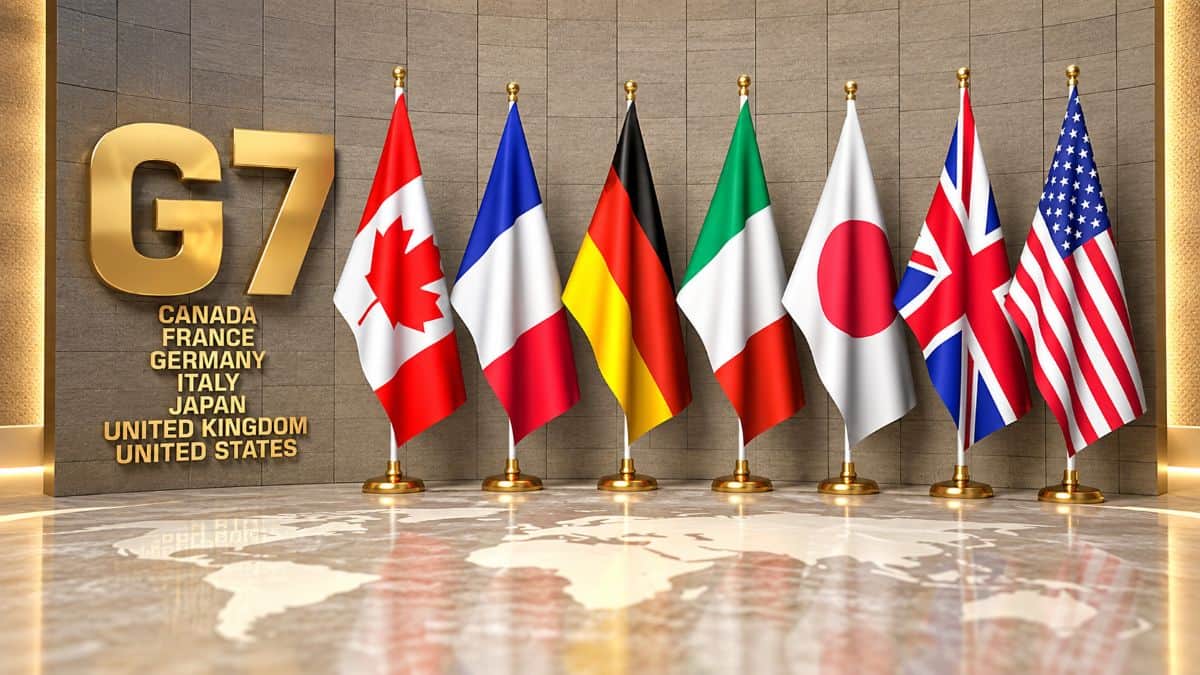
US G20 Summit 2026 Brings Together Russia, Poland, Qatar and More Nations as Miami Prepares for Global Leaders. Scheduled for 14–15 December, the summit will focus on economic cooperation, international trade and investment. The gathering comes amid diplomatic tensions, with potential implications for global tourism, aviation connectivity and financial stability.
The United States is preparing to host the G20 Summit 2026 in Miami, bringing together major economies including India, China, Russia, Japan, Germany, France and Brazil, alongside invited countries such as Poland, Qatar and Singapore. The December gathering will focus on economic cooperation, international trade, investment and global challenges affecting travel and tourism.
Advertisement
Advertisement
United States Prepares to Welcome Global Leaders to Miami for G20 Summit 2026
The United States will host the G20 Leaders’ Summit on 14–15 December 2026 at Trump National Doral in Miami, Florida. The international gathering will bring together representatives of some of the world’s largest economies during a period marked by trade disagreements, geopolitical tensions and changing economic priorities.
The G20 comprises 19 member countries and two regional organisations, the European Union and African Union. The United States has also extended invitations to 12 additional countries, including Poland, Spain, Azerbaijan, Finland, Ireland, Kazakhstan, the Netherlands, Norway, Qatar, Singapore, the United Arab Emirates and Uzbekistan.
Advertisement
Advertisement
However, the participation arrangements have attracted diplomatic attention because South Africa, a permanent G20 member, has been excluded from the US-hosted summit invitation process. Russia has also faced political scrutiny, although it remains a member of the organisation.
The summit will provide an important platform for discussions on economic growth, international investment, financial stability and trade cooperation. These issues are closely connected to the global travel industry, which depends on international connectivity, predictable economic conditions and strong commercial relationships.
Advertisement
Advertisement
Complete List of G20 Member Countries and Invited Nations for 2026
The 2026 summit participation arrangements cover 30 countries, comprising 18 G20 member countries included in the US-hosted process and 12 additional invited countries. South Africa remains a permanent G20 member despite its exclusion from the host’s invitation arrangements.
| Category | Countries and organisations |
|---|---|
| Host country | United States |
| G20 members | Argentina, Australia, Brazil, Canada, China, France, Germany, India, Indonesia, Italy, Japan, Mexico, Russia, Saudi Arabia, South Korea, Türkiye, United Kingdom |
| Permanent regional members | European Union, African Union |
| Special invited country | Poland |
| Additional invited countries | Spain, Azerbaijan, Finland, Ireland, Kazakhstan, Netherlands, Norway, Qatar, Singapore, United Arab Emirates, Uzbekistan |
| Permanent member excluded from US invitation arrangements | South Africa |
The inclusion of countries from Europe, Asia, the Middle East and Central Asia gives the Miami gathering a broad international dimension.
Nevertheless, invitations do not guarantee attendance by individual presidents or prime ministers. Final representation will depend on each government’s decisions and diplomatic circumstances closer to December.
India and China Bring Major Asian Economies Into Focus
India and China will be among the most economically significant countries represented in the G20 process.
India has become an important market for international tourism, aviation investment and hospitality development. Rising demand for domestic and international travel has encouraged airlines, airports and hotel groups to expand their operations.
China remains a major global manufacturing economy and an important international tourism market. Its economic policies influence supply chains, consumer demand, international trade and investment flows.
Advertisement
Advertisement
The participation of both countries is important because their economic relationships with other G20 members affect global business conditions.
For the tourism sector, stronger economic cooperation could support international flight connectivity, investment in airports and improved commercial relationships between destinations.
However, differences over trade practices, industrial production and market access remain significant challenges.
The Miami summit will provide another opportunity for major Asian economies to discuss these issues within a wider international framework.
Japan and South Korea Strengthen East Asian Representation
Japan and South Korea will contribute additional perspectives on international trade, technology, manufacturing and economic development.
Japan is an established international tourism destination and an important source market for outbound travellers. Its aviation industry connects major cities across Asia, Europe, North America and the Pacific.
Advertisement
Advertisement
South Korea has also developed a strong international tourism profile, supported by its cultural industries, modern transport infrastructure and expanding hospitality sector.
Both economies have substantial interests in stable international supply chains and predictable trade arrangements.
Discussions concerning technological innovation, digital payments and financial regulation could have indirect implications for tourism businesses operating across these markets.
Digital transactions are particularly important for international travel because airlines, accommodation providers and travel agencies regularly process payments across different currencies and jurisdictions.
More efficient financial systems could help simplify these operations, although specific benefits would depend on future policy decisions.
Germany, France, Italy and the United Kingdom Represent Major European Economies
Europe will have substantial representation through Germany, France, Italy and the United Kingdom, alongside the European Union.
Advertisement
Advertisement
These economies are important international travel markets and home to major aviation, hospitality, tourism and transport businesses.
Germany is a significant source of international leisure and business travellers. France remains one of the world’s leading tourism destinations, while Italy attracts visitors through its cultural heritage, cities and coastal regions.
The United Kingdom is an important aviation hub and international travel market, connecting Europe with North America, Asia and other regions.
European countries are expected to bring their own economic priorities to discussions on trade, financial stability and international cooperation.
Differences between European governments and Washington over climate policy, trade restrictions and geopolitical issues could complicate negotiations.
Nevertheless, maintaining cooperation remains important because the European and American economies are closely connected through investment, tourism and commercial activity.
Advertisement
Advertisement
Poland Gains Special Attention Through Its G20 Invitation
Poland’s invitation is one of the notable developments surrounding the 2026 summit.
The country is not currently a permanent G20 member, but its participation reflects Washington’s interest in giving Poland a greater role in international economic discussions.
Poland has developed into an important European economy, supported by manufacturing, services, infrastructure investment and expanding international business relationships.
Its tourism industry includes major destinations such as Warsaw, Kraków and Gdańsk, alongside cultural attractions and regional travel experiences.
Participation in the G20 process provides Poland with an opportunity to engage directly with major economies on international investment, trade and economic development.
However, an invitation to the Miami summit does not automatically change the country’s membership status.
Advertisement
Advertisement
Any expansion of permanent G20 membership would require a separate decision involving the organisation’s members.
Spain, Finland, Ireland, Netherlands and Norway Expand European Participation
Five additional European countries have been included among the invited participants: Spain, Finland, Ireland, the Netherlands and Norway.
Spain is a major international tourism destination, attracting travellers to Madrid, Barcelona, the Balearic Islands and the Canary Islands.
The Netherlands is an important European aviation and logistics centre, with Amsterdam serving as a major international gateway.
Ireland has strong economic connections with North America and Europe, supported by aviation, technology and international business investment.
Finland and Norway contribute perspectives on innovation, energy, infrastructure and economic resilience.
Advertisement
Advertisement
Their participation adds further European representation to the summit discussions.
For the travel industry, these countries illustrate the importance of maintaining reliable air connections, efficient international trade and investment in sustainable infrastructure.
Although tourism may not feature prominently in every G20 discussion, economic decisions affecting transport, energy and technology can influence how destinations develop their visitor economies.
Qatar, Saudi Arabia and United Arab Emirates Highlight Middle East Economic Influence
The Middle East will be represented through Saudi Arabia, a permanent G20 member, and invited countries Qatar and the United Arab Emirates.
All three countries have made substantial investments in aviation, tourism, hospitality and international infrastructure.
Saudi Arabia has placed tourism development at the centre of its economic diversification strategy, investing in destinations, accommodation and transport facilities.
Advertisement
Advertisement
Qatar has strengthened its international profile through aviation connectivity, major events and hospitality development.
The United Arab Emirates is a major international aviation and tourism hub, with Dubai and Abu Dhabi serving as important centres for leisure travel, business tourism and international investment.
Their participation demonstrates the growing economic influence of Gulf countries.
Discussions on energy security, investment and technological development will be particularly relevant to the region.
For global tourism, the Gulf’s international airports and airline networks play an important role in connecting travellers between continents.
Singapore, Indonesia and Australia Bring Asia-Pacific Priorities to Miami
Singapore, Indonesia and Australia will contribute perspectives from the Asia-Pacific region.
Advertisement
Advertisement
Indonesia and Australia are permanent G20 members, while Singapore has been invited as a guest country.
Singapore is an international aviation, financial and business centre, with strong connections across Asia and beyond.
Indonesia is a major emerging economy with an expanding tourism industry, including destinations such as Bali and Jakarta.
Australia combines a developed economy with a significant international tourism sector and strong economic relationships across the Asia-Pacific.
These countries share interests in international trade, aviation connectivity, digital innovation and economic stability.
Regional travel demand depends on accessible air routes, investment and consumer confidence.
Advertisement
Advertisement
The summit’s discussions could therefore have implications for the operating environment of airlines, hotels and tourism businesses serving Asia-Pacific markets.
Azerbaijan, Kazakhstan and Uzbekistan Expand Central Asian Participation
The invitations extended to Azerbaijan, Kazakhstan and Uzbekistan provide an opportunity for countries connected to important Eurasian trade and transport corridors to participate in the G20 discussions.
Azerbaijan has developed its international profile through energy, infrastructure and tourism investment, particularly in Baku.
Kazakhstan is an important Central Asian economy with interests in trade connectivity, transport and economic diversification.
Uzbekistan has been expanding its international tourism industry, supported by cultural destinations such as Samarkand, Bukhara and Khiva.
Participation in the G20 process allows these countries to engage with larger economies on investment, infrastructure and economic development.
Advertisement
Advertisement
Improved international connectivity could support their longer-term tourism ambitions.
However, summit participation should not be interpreted as a guarantee of new aviation agreements, tourism investment or infrastructure funding.
Such outcomes would require specific negotiations and commitments.
Russia’s Participation Remains Politically Sensitive
Russia remains a permanent member of the G20, but its involvement in the 2026 summit process has attracted international attention.
The continuing war in Ukraine has created significant disagreements between Moscow and several Western governments.
Russian representatives have participated in G20 discussions, although political objections have accompanied some meetings.
Advertisement
Advertisement
President Vladimir Putin’s personal attendance at the December summit has not been confirmed.
The situation highlights the difficulty of maintaining economic dialogue among countries with sharply different geopolitical positions.
International tourism has already been affected by wider geopolitical tensions through changes in aviation connectivity, sanctions and travel arrangements.
The G20 provides a forum for economic discussion, but it cannot independently resolve the political disputes affecting these areas.
South Africa’s Exclusion Creates Questions About Global Representation
South Africa’s exclusion from the US-hosted summit invitation arrangements remains one of the most controversial aspects of the 2026 presidency.
The country hosted the G20 summit in Johannesburg in 2025 and remains a permanent member.
Advertisement
Advertisement
Washington’s decision followed disagreements with Pretoria over domestic political issues and the priorities of South Africa’s presidency.
The South African government has rejected the US administration’s allegations and defended its position within the G20.
The dispute has also raised questions about African representation in international economic governance.
The African Union became a permanent G20 member in 2023, increasing the continent’s institutional representation.
South Africa’s situation therefore creates an unusual distinction between permanent membership and participation in a summit hosted by another member.
Miami Prepares for a Major International Diplomatic Gathering
Miami will be the centre of global diplomatic attention when the G20 Leaders’ Summit takes place in December.
Advertisement
Advertisement
The city is an established international tourism destination with major aviation connections, hotels, convention facilities and business infrastructure.
The arrival of government delegations, diplomatic teams and international media will create demand for accommodation, transport and event services.
However, security arrangements and official travel restrictions may also affect local movement during the summit.
Tourism businesses will need to follow official announcements concerning access, transport arrangements and operational changes.
The summit provides an opportunity for Miami to demonstrate its international event-hosting capabilities.
Nevertheless, any claims about additional tourism revenue or economic benefits should be supported by official assessments after the event.
Advertisement
Advertisement
G20 Economic Discussions Could Shape the Future of Global Travel and Tourism
The G20’s influence extends beyond diplomacy because its members account for a substantial share of global economic activity, trade and population.
International tourism depends on the same economic conditions discussed by G20 leaders, including financial stability, investment, energy security and international trade.
Stable economic conditions can support airline expansion, hotel development and tourism infrastructure.
Improved financial systems may also help travel businesses manage international transactions.
Conversely, prolonged trade disagreements and geopolitical uncertainty can create challenges for investors, transport operators and destinations.
The December summit will therefore be closely watched by industries that depend on cross-border economic activity.
Advertisement
Advertisement
While tourism-specific agreements are not guaranteed, broader economic cooperation could help create a more predictable environment for international travel.
The G20 Summit 2026 in Miami will bring together major economies and invited nations during a challenging period for international cooperation. With India, China, Russia, Poland, Qatar and other countries involved, the gathering will test diplomatic relationships while placing economic stability, investment and global trade at the centre of discussions.
South Korean Ministry of Foreign Affairs — Official 2026 participant and guest list
G20 United States Presidency — Official summit website
Government of Canada — Official G20 membership
G20 South Africa — Permanent member countries
Advertisement
