
Tokyo and Yokohama Are Leading the Way as Japan Gets Closer to Integrating Autonomous Taxis into Daily Transportation

Published
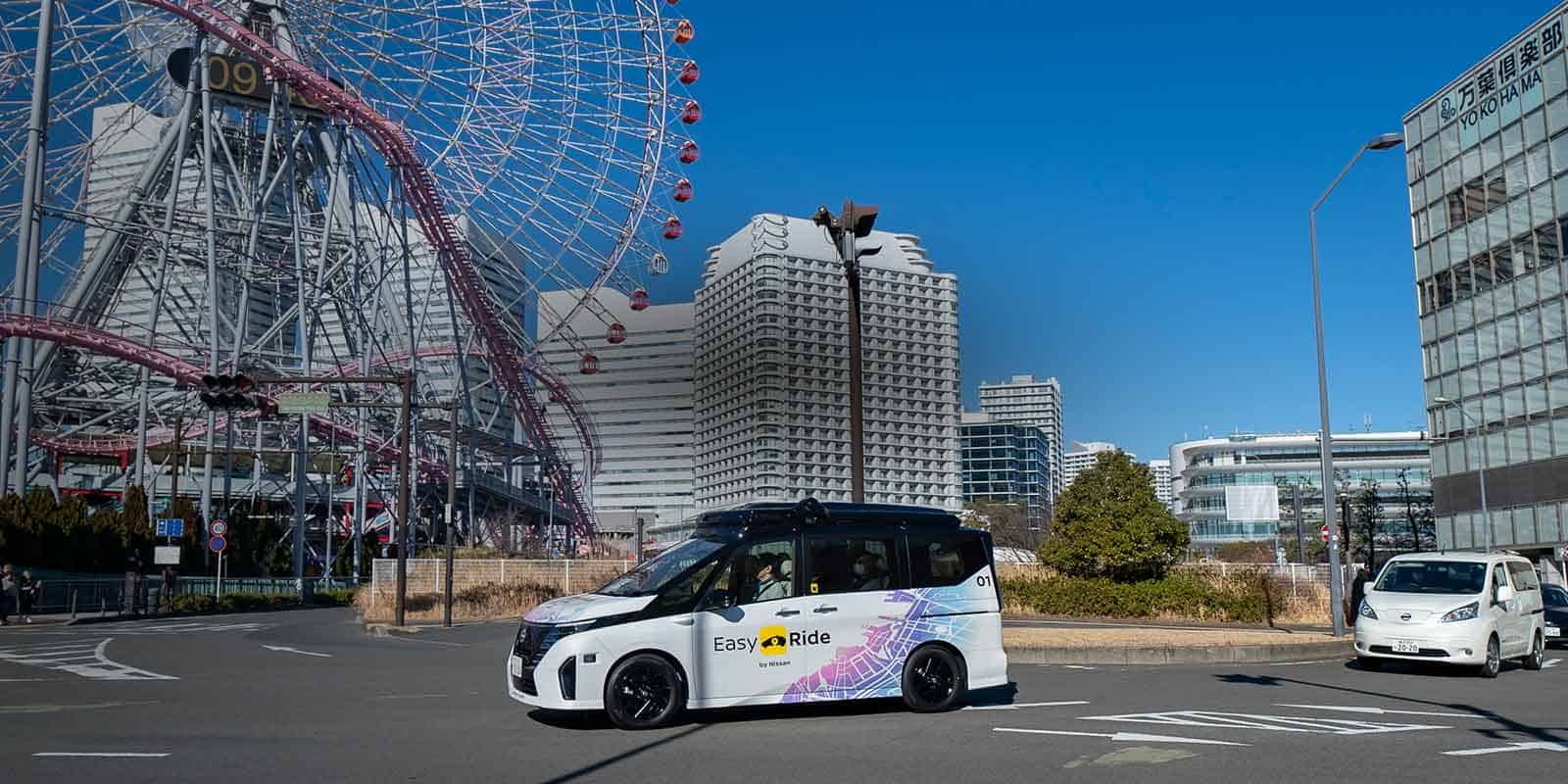
Image generated with Ai
Japan is moving closer to making autonomous taxis a practical part of everyday transportation, with Tokyo and Yokohama leading the transition toward commercial services in 2027. Tokyo has the clearest plan, with Waymo, Nihon Kotsu and GO targeting a fully driverless commercial taxi launch during 2027. Yokohama is also preparing for autonomous mobility services from fiscal 2027 through Nissan’s long-running development program. Nagoya, Osaka and Sakai are following with advanced trials, city partnerships and regulatory preparation. Together, these projects show how Japan is using automation not only to test new technology, but also to respond to driver shortages, an aging population, regional mobility gaps and the growing transportation demands created by tourism.
Japanese Cities Moving Towards Autonomous Taxi Commercialisation in 2027
| Japanese city / area | 2027 position | Main companies / authorities | Autonomous level / model | Fleet or operating scale | Current testing / preparation | Commercialisation timetable | Main transport problem addressed | Tourism relevance |
| Tokyo | Confirmed commercialisation target | Waymo, Nihon Kotsu, GO; coordination with Japanese authorities | Level 4, fully driverless commercial taxi | Initial fleet expanding towards around 100 vehicles | Waymo vehicles have been operating in Tokyo with trained Nihon Kotsu personnel; testing has covered seven Tokyo wards since 2025 | Commercial unmanned taxi operations targeted during 2027, subject to regulatory approval and validation | Taxi-driver shortages, ageing population, late-night mobility, transport capacity | Very high. Could supplement rail and conventional taxis for international visitors, business travellers and late-night passengers |
| Yokohama | Commercial autonomous mobility targeted from FY2027 | Nissan, Yokohama stakeholders, transport operators; cooperation with METI and MLIT | Targeting Level 4-equivalent driverless mobility with remote monitoring | Earlier roadmap: tens of vehicles; 2025–26 demonstrations involve up to about 20 vehicles | Demonstrations centred on Minato Mirai, Sakuragi-cho and Kannai; Nissan continues service testing and operational-framework development | Nissan intends to provide autonomous mobility services from FY2027, initially across 3–4 municipalities, with Yokohama serving as its main development base | Driver shortages, ageing society, accessibility and local mobility gaps | High. Minato Mirai, Sakuragi-cho and Kannai are major waterfront, hotel, shopping and visitor districts |
| Nagoya | Advanced pre-commercial robotaxi pathway | Aichi Prefecture and technology/transport partners | Current service is on-demand autonomous operation; future robotaxi commercialisation is an explicit policy ambition | 3 vehicles in the 2026–27 central-city demonstration | Runs between five central-city boarding points, across 20 routes totalling about 33 km | Current demonstration continues until 19 March 2027. Aichi says it wants robotaxi practical deployment in central Nagoya as early as possible, but no firm 2027 commercial-launch date has been announced | Labour shortages, urban mobility, technology adoption and public acceptance | Strong. Stops include Nagoya Station, Aichi Arts Center, IG Arena area and science-museum district |
| Osaka | Commercialisation preparation / social implementation programme | Osaka City, newmo, Yumeshima Kotsu | Autonomous taxi system under development | Fleet size not officially fixed | Osaka City signed a formal cooperation agreement in April 2026 covering testing, route areas, institutional coordination and deployment | Osaka is officially pursuing social implementation, but its municipal sources reviewed do not yet specify a firm 2027 commercial launch date | Taxi-driver shortages, ageing population and expanding urban transport demand | Very high. Autonomous taxis could strengthen connectivity between tourism, convention, entertainment and waterfront districts |
| Sakai, Osaka Prefecture | Implementation planning towards Level 4 | Sakai City, newmo and local taxi companies | Autonomous taxi / eventual Level 4 service | Not yet fixed | Sakai has received cooperation requests from newmo and is supporting test areas, institutional coordination and preparation for approvals | City documentation links the broader sector to autonomous-taxi rollout around 2027, while current local activity remains preparatory | Driver shortages and maintaining local taxi services | Moderate. Could improve local visitor movement and links within southern Osaka |
Why Is Tokyo Emerging as Japan’s Strongest 2027 Robotaxi Market?
Tokyo has become the clearest example of Japan’s shift from autonomous vehicle testing to commercial driverless taxi operations. Waymo, GO and Nihon Kotsu have announced plans to begin Level 4 fully driverless taxi services in the Japanese capital during 2027, subject to regulatory approvals and final safety validation. The project is expected to begin with a limited number of vehicles before expanding toward a fleet of around 100 units.
Advertisement
Advertisement
The strategy is especially significant because Tokyo presents one of the world’s most complex urban driving environments. Narrow streets, heavy pedestrian activity, bicycles, taxis, buses and dense intersections create difficult conditions for autonomous systems.
The city also has unusually high demand for flexible transport. Travelers regularly move between airports, rail stations, hotels, commercial districts and nightlife areas. A successful autonomous taxi network could help reduce pressure on conventional taxi operators while providing additional options during late-night and high-demand periods.
Advertisement
Advertisement
How Could Tokyo’s Autonomous Taxis Change Everyday Travel?
Tokyo’s proposed robotaxi service could have a direct impact on both residents and visitors by adding another on-demand mobility option to the city’s extensive transportation network. Rail remains the backbone of movement in Tokyo, but trains cannot meet every travel need. Passengers carrying luggage, travelers arriving after train services end and people heading to destinations away from major stations often depend on taxis.
Autonomous vehicles could supplement that system rather than replace it.
Advertisement
Advertisement
Waymo’s technology is designed to operate without a human driver under approved Level 4 conditions. If regulatory clearance is secured, passengers could eventually request autonomous vehicles through ride-hailing platforms associated with GO and Waymo.
The model may also help taxi companies confront labor shortages. Japan’s transport sector continues to face difficulty recruiting enough professional drivers. Automated fleets could allow operators to increase transportation capacity without depending entirely on expanding the human workforce, especially in areas where demand remains strong.
Advertisement
Advertisement
Why Is Yokohama Central to Nissan’s Autonomous Mobility Strategy?
Yokohama is developing a different, but equally important, pathway toward autonomous mobility. Nissan has used the city as a major testing ground for advanced self-driving technology and intends to begin offering autonomous mobility services from fiscal 2027.
The company’s development program has focused heavily on districts such as Minato Mirai, Sakuragicho and Kannai. These areas are suitable for testing because they combine wide boulevards, busy intersections, tourism attractions, hotels, office towers, shopping areas and major rail connections.
Nissan’s broader objective goes beyond a simple taxi trial. The company has outlined plans to introduce commercial autonomous mobility services across three or four municipalities, beginning with fleets numbering in the tens of vehicles.
Remote monitoring is expected to play a central role. Instead of placing a human driver in every vehicle, operators could eventually supervise multiple autonomous cars from centralized facilities. That could improve efficiency while maintaining oversight during early commercial deployment.
Advertisement
Advertisement
How Does Yokohama Connect Autonomous Driving With Tourism Demand?
Yokohama’s autonomous mobility program has strong tourism relevance because much of the testing is centered in visitor-heavy districts. Minato Mirai is one of Japan’s best-known waterfront destinations, featuring hotels, conference venues, shopping centers, museums and entertainment facilities. Nearby Sakuragicho and Kannai also attract heavy pedestrian and visitor traffic.
For tourists, autonomous vehicles could solve a familiar last-mile problem. Rail systems can move large numbers of people efficiently, but visitors still need transportation between stations and hotels, cruise terminals, conference centers and waterfront attractions.
Self-driving vehicles could provide that connection on demand.
They may also become useful during events when taxis are difficult to secure. Yokohama regularly hosts conventions, concerts and large public gatherings, creating sudden spikes in mobility demand.
Nissan’s program therefore reflects a broader strategy: autonomous driving is not being treated as a technology showcase alone. It is being developed as a potential mobility service that could support tourism, business travel and local transportation needs.
Why Is Nagoya Becoming an Important Autonomous Taxi Testing Ground?
Nagoya is moving closer to commercial autonomous mobility through a taxi-style demonstration that continues into March 2027. Aichi Prefecture has positioned the city as an important test market for on-demand automated transport rather than limiting experiments to fixed shuttle routes.
Advertisement
Advertisement
The current program uses three autonomous vehicles and connects five boarding locations across central Nagoya. Passengers can choose from 20 routes covering approximately 33 kilometers, creating an operating pattern that resembles an urban taxi service.
The boarding points connect important destinations including the Nagoya Station area, STATION Ai, Aichi Arts Center, the IG Arena area and the science museum district.
This approach matters because it tests more than vehicle movement. Authorities are studying reservation systems, passenger behavior, operational procedures and public acceptance.
Nagoya’s project does not yet have the same firm 2027 commercial launch commitment as Tokyo. However, the city is clearly testing how autonomous taxis could function in real urban conditions.
Could Nagoya Move Quickly From Testing to Commercial Service?
Nagoya has the potential to accelerate from demonstration to practical deployment if the current trials deliver positive results. Aichi Prefecture has made autonomous mobility one of its key technology priorities and has repeatedly emphasized the goal of moving robotaxi services toward practical use in central Nagoya.
The city’s testing environment gives officials valuable information that conventional closed-course experiments cannot provide. Vehicles must interact with traffic lights, pedestrians, cyclists, buses and other cars. They must also handle real passenger bookings and unpredictable road conditions.
Advertisement
Advertisement
That operational experience could shorten the distance between pilot projects and commercial service.
Still, Nagoya should not yet be described as having a confirmed 2027 commercial robotaxi launch. The current demonstration runs until March 19, 2027, and officials have not committed to a specific commercial start date.
For now, Nagoya occupies an important middle position. It is beyond the earliest experimentation stage but has not yet reached Tokyo’s level of commercial certainty.
Why Is Osaka Building Autonomous Taxi Infrastructure Before Launching Services?
Osaka is taking a more institutional approach by building the regulatory and operational framework needed for future autonomous taxi deployment. In April 2026, Osaka City formalized cooperation with newmo and Yumeshima Kotsu to support autonomous taxi demonstrations and eventual social implementation.
The agreement covers testing areas, coordination with government agencies, operational procedures and preparation for deployment.
This approach reflects the complexity of introducing driverless taxis in a major metropolitan area. Autonomous vehicles require more than software and sensors. Cities must determine where they can operate, how incidents will be managed, how remote supervision will work and how services will interact with existing taxi operators.
Advertisement
Advertisement
Osaka also faces strong transportation demand from tourism, conventions, entertainment and large-scale redevelopment.
The city has not yet announced a firm commercial autonomous taxi launch for 2027. However, its agreements show that officials are preparing the institutional foundation needed for future deployment rather than waiting for technology to mature first.
What Role Could Sakai Play in the Kansai Autonomous Taxi Network?
Sakai is emerging as another important testing and planning location in the broader Osaka metropolitan area. The city has been working with autonomous taxi interests, including newmo and local transportation operators, to identify suitable testing zones and prepare regulatory procedures.
Sakai’s significance lies in its potential to demonstrate how driverless taxi technology can work outside the most heavily visited central business districts.
While Osaka provides a dense metropolitan environment, Sakai offers a different mobility pattern that includes residential areas, local commercial centers and transportation corridors connecting southern Osaka.
This makes the city useful for testing whether autonomous taxi services can operate sustainably in more varied settings.
Advertisement
Advertisement
Sakai’s work is still at an earlier stage than Tokyo’s commercial launch plan. The city has not confirmed that paid driverless taxis will begin operating during 2027.
Nevertheless, local preparation shows that autonomous mobility is spreading beyond Tokyo and Yokohama into a wider network of Japanese urban areas.
Why Is Japan Accelerating Autonomous Transport Before 2027?
Japan’s autonomous taxi push is driven by several structural problems that technology may help address. One of the most serious is the shortage of professional drivers. Taxi and bus operators across the country have struggled to recruit enough workers, while many experienced drivers are approaching retirement.
Japan’s aging population creates a second challenge. Older residents often need more flexible transportation options, especially in communities where conventional bus services are limited or declining.
Tourism adds another layer of pressure. International visitor numbers have returned strongly, increasing demand for airport transfers, taxis, regional transportation and last-mile connections.
The national government has therefore set a wider goal of establishing driverless autonomous mobility services in more than 100 locations by fiscal 2027.
Advertisement
Advertisement
Those services will not all be robotaxis. They will include buses, regional shuttles and other autonomous vehicles.
The common objective is to use automation to keep transportation available when traditional labor-intensive models become difficult to maintain.
How Could Autonomous Taxis Strengthen Japan’s Tourism Transportation Network?
Autonomous taxis could become especially useful for tourism because visitors often need flexible transport beyond the reach of rail systems. Japan has one of the world’s most efficient public transportation networks, but travelers still face gaps between stations, hotels, attractions and airports.
Robotaxis could help fill those gaps.
In Tokyo, autonomous vehicles may eventually provide late-night transportation after trains stop running. In Yokohama, they could move travelers between hotels, waterfront attractions and convention facilities. In Nagoya, existing demonstrations already connect major cultural and transportation destinations.
The technology may also improve service availability during peak tourism periods, when conventional taxis can become difficult to book.
Advertisement
Advertisement
Language support could provide another advantage. Autonomous ride-hailing platforms can integrate multilingual booking, digital navigation and cashless payment systems, potentially reducing communication barriers for foreign travelers.
However, widespread tourism use will depend on reliability, pricing, regulatory approval and public trust. Autonomous taxis will have to prove they can offer service as safely and conveniently as conventional alternatives.
What Does Japan’s 2027 Robotaxi Push Mean for the Future?
Japan’s autonomous taxi movement is entering a decisive phase. Tokyo is closest to a genuine commercial breakthrough, with a Level 4 driverless taxi service targeted for 2027. Yokohama is preparing to move Nissan’s autonomous mobility program into commercial operations from fiscal 2027. Nagoya is running one of the country’s most advanced taxi-style demonstrations, while Osaka and Sakai are developing the frameworks required for future deployment.
Together, these cities reveal a national strategy that extends far beyond experimental vehicles.
Japan is using autonomous driving to address real economic and social problems. Driver shortages are worsening. The population is aging. Tourism demand continues to grow. Some communities are losing conventional transportation services.
Autonomous taxis will not solve every mobility challenge, and commercial expansion will depend on safety, regulation and public acceptance.
Advertisement
Advertisement
However, 2027 may mark the year when Japan begins moving decisively from autonomous vehicle trials toward practical, everyday driverless transportation.
Japan’s autonomous taxi push is accelerating because traditional transport systems are under growing pressure from worker shortages, demographic change and rising visitor numbers. Tokyo currently has the strongest commercial pathway, while Yokohama is building a broader autonomous mobility model. Nagoya, Osaka and Sakai are strengthening the national testing network. The answer is clear: Japan sees driverless transport as a practical mobility solution, not simply an experiment. If regulations, safety standards and public confidence remain on track, 2027 could become a turning point. Autonomous taxis may soon support everyday commuting, tourism movement and last-mile travel across major Japanese cities.
Advertisement
