

UNEP and World Travel and Tourism Council Forge Global Alliance to Transform Tourism into a Circular, Climate Resilient and Nature-Positive Industry by 2028: All You Need to Know

Published
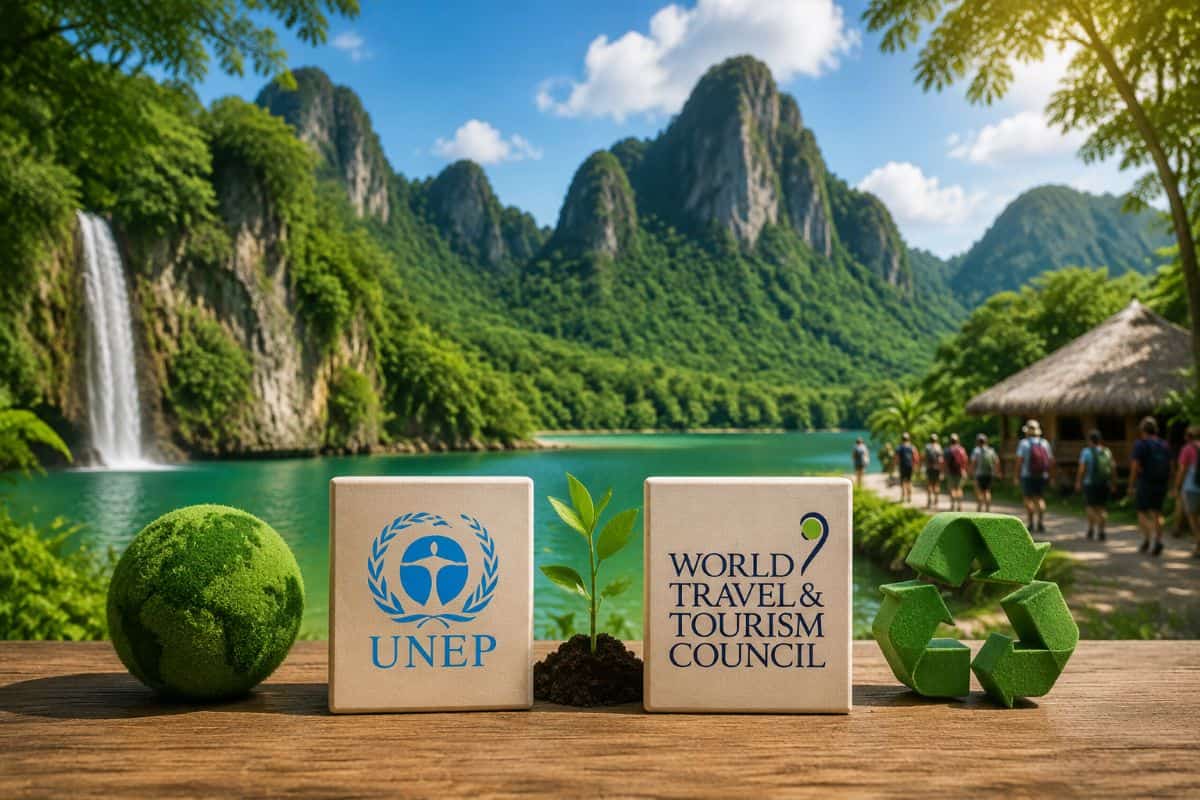
The global Travel & Tourism sector is entering a decisive phase of transformation following a new cooperation agreement between the United Nations Environment Programme (UNEP) and the World Travel & Tourism Council (WTTC). The two organisations have established a formal framework aimed at accelerating the shift of tourism towards a more sustainable, circular and environmentally responsible future.
According to announcements aligned with United Nations environmental frameworks, the partnership is designed to move beyond policy commitments and focus on real-world implementation. It targets key environmental priorities including biodiversity protection, waste reduction, climate resilience, sustainable food systems and the elimination of harmful plastics across global tourism operations.
Advertisement
Advertisement
This collaboration reflects growing international recognition that tourism growth must be decoupled from environmental degradation, ensuring long-term resilience for destinations, ecosystems and local communities.
A Landmark Collaboration Between Global Tourism Leadership and UN Environmental Authority
The agreement brings together UNEP’s global environmental governance role with WTTC’s extensive network of leading private-sector tourism companies. By combining policy expertise with industry influence, the partnership aims to create a stronger bridge between environmental science, international sustainability frameworks and commercial tourism operations.
Advertisement
Advertisement
This structured cooperation establishes a long-term mechanism for joint action, enabling both organisations to coordinate strategies, share technical knowledge and scale sustainability initiatives across borders. The focus is not limited to guidance but extends to implementation support, ensuring tourism businesses can actively participate in measurable environmental improvements.
The collaboration is set to run until June 2028, with regular technical consultations, strategic dialogue and coordinated programme development forming the backbone of the initiative.
Advertisement
Advertisement
Driving Circular Economy and Nature-Positive Tourism Practices
A central objective of the partnership is the advancement of circular economy principles within the tourism sector. This includes reducing waste generation, improving resource efficiency and promoting systems where materials are reused, recycled or responsibly managed throughout the tourism value chain.
Another key focus is the promotion of nature-positive tourism models. These approaches aim to protect and restore biodiversity while ensuring tourism activities contribute to ecosystem regeneration rather than degradation. This includes stronger conservation efforts, protection of coastal and marine environments, and investment in nature-based solutions.
The partnership also prioritises sustainable food systems within tourism operations. This involves reducing food waste, improving supply chain efficiency and encouraging responsible sourcing practices that align with global environmental standards.
Expanding Industry Participation in Global Environmental Initiatives
One of the most practical outcomes of the agreement is the creation of structured opportunities for WTTC member companies to engage with UNEP-led sustainability programmes. Participation will be voluntary but designed to accelerate corporate action on environmental priorities.
These programmes include initiatives targeting plastic pollution reduction, food waste management and sustainable resource use. By opening access to these global frameworks, the partnership enables tourism businesses to transition more rapidly from sustainability commitments to measurable environmental performance.
The collaboration also supports capacity-building efforts, helping companies adopt internationally recognised sustainability standards and integrate them into daily operations. This is expected to improve consistency across the global tourism industry and strengthen accountability mechanisms.
Advertisement
Advertisement
Strengthening Global Policy Leadership and Environmental Advocacy
Beyond operational implementation, the partnership places strong emphasis on global policy engagement. UNEP and WTTC will work together to influence international tourism policy, ensuring sustainability considerations are embedded in future regulatory and development frameworks.
Joint advocacy efforts will focus on creating enabling environments for sustainable tourism growth. This includes recommendations for governments and international bodies on environmental governance, resource management and sustainable industry expansion.
By aligning private-sector action with public-sector policy development, the partnership aims to close existing gaps between environmental ambition and real-world execution. This coordinated approach is expected to improve policy coherence across regions and support global sustainability targets.
Key Environmental Action Areas Under the Agreement
The collaboration identifies several priority areas for joint action:
- Promotion of regenerative tourism models that actively restore ecosystems and biodiversity
- Elimination of unnecessary plastics and expansion of circular economy solutions
- Reduction and improved management of food waste across tourism operations
- Strengthening water conservation, energy efficiency and ocean protection measures
- Development of pilot sustainability projects and scalable implementation tools
- Alignment of tourism practices with UNEP’s global environmental frameworks
These focus areas reflect a comprehensive approach to sustainability, addressing both operational and systemic challenges within the tourism ecosystem.
Structured Governance and Long-Term Implementation Framework
To ensure effective delivery, the partnership is supported by a structured governance system. This includes designated focal points from both organisations, coordinated work planning and regular high-level meetings.
Advertisement
Advertisement
A joint work programme will guide implementation, outlining priority projects and measurable outcomes. Technical working groups will also play a key role in translating sustainability goals into practical industry solutions.
This governance model is designed to maintain continuity, accountability and progress tracking over the duration of the partnership. It also ensures that both organisations remain aligned in their objectives and responsive to emerging global environmental challenges.
Industry Perspective and Long-Term Tourism Transformation
Leadership from WTTC has emphasised that tourism is one of the world’s most powerful drivers of sustainable development when properly aligned with environmental priorities. The partnership with UNEP is expected to accelerate industry-wide transformation by combining leadership, expertise and practical tools.
As global tourism demand continues to rise, the need to ensure environmental resilience becomes increasingly urgent. This agreement reflects a strategic shift towards embedding sustainability into the core structure of tourism growth rather than treating it as an external objective.
By 2028, the collaboration aims to demonstrate measurable progress in reducing environmental impact, improving resource efficiency and enhancing ecosystem protection across destinations worldwide.
Conclusion: A Defining Step Towards Sustainable Global Tourism
The agreement between UNEP and WTTC represents a significant milestone in global tourism governance. It establishes a coordinated pathway for aligning industry growth with environmental protection, ensuring that tourism contributes positively to climate resilience, biodiversity conservation and sustainable development goals.
By combining international environmental leadership with private-sector execution capacity, the partnership sets a foundation for long-term transformation. It signals a clear global direction: tourism must evolve into a system that supports ecosystems, empowers communities and operates within planetary boundaries.
Advertisement
