
Japan’s Haneda Smartphone Fire Scare Puts London-Bound Flight Safety, Lithium Battery Rules and Passenger Device Risks Under Global Travel Spotlight

Updated
Published
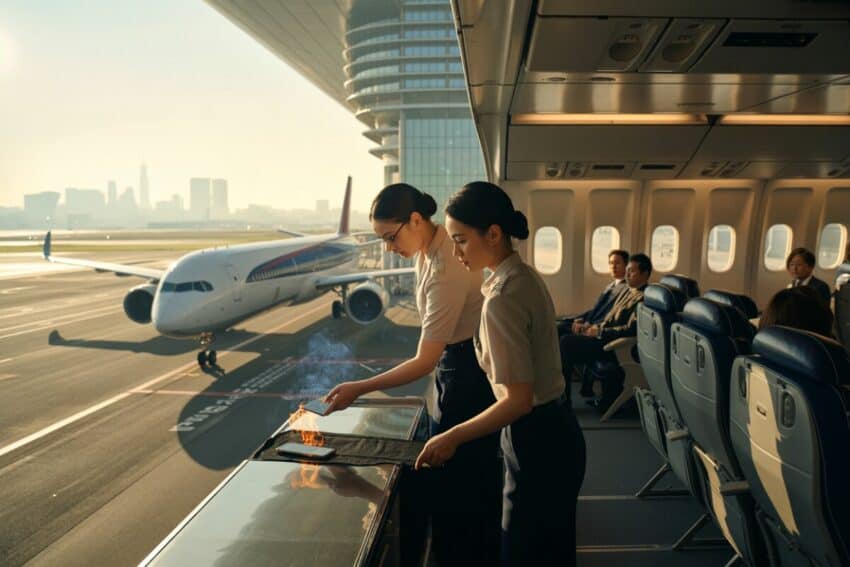
Image generated with Ai
Japan has become the main focus of a fresh aviation safety discussion after a smartphone fire was reported inside a London-bound aircraft while it was leaving Tokyo Haneda Airport. The event caused no reported injuries, but it has raised strong concern across the travel industry because Haneda is one of the world’s busiest passenger airports. The case also points to a wider issue. Lithium battery devices are now carried by almost every traveller, and airlines, airports and regulators must manage this growing cabin fire risk with faster awareness, clearer rules and stronger onboard response.
Japan’s Tokyo Haneda Airport Faces New Attention After Cabin Fire Scare
Tokyo Haneda Airport sits at the centre of this story because the incident happened during departure activity at Japan’s most important aviation gateway. For airlines, travel sellers and corporate travel managers, the key issue is not only one smartphone. The larger issue is how fast a small personal device can become a cabin safety concern in a packed aircraft.
Haneda is a high-density airport. It handles domestic, regional and long-haul traffic. It links Japan with London, Europe, North America and major Asian markets. Any safety event at such a hub gains global attention because even a short aircraft return to stand can affect gate planning, departure sequencing, crew duty time and passenger confidence.
The reported fire was contained. No injuries were reported. That is the strongest operational point. It suggests the cabin crew response worked as intended. Yet the event still matters because lithium battery risks are now part of the everyday aviation environment.
Advertisement
Advertisement
Why This Japan Flight Incident Matters for Global Travel
Smartphones, laptops, tablets, wireless headphones and power banks are now basic travel items. They support boarding passes, translation apps, payment wallets, hotel confirmations and work communication. This makes them essential to passengers and difficult to control through simple bans.
Advertisement
Advertisement
The risk comes from lithium-ion batteries. These batteries store high energy in small spaces. They usually work safely. However, damage, pressure, heat, charging faults or manufacturing defects can trigger overheating. In serious cases, this can lead to smoke, flame or thermal runaway.
Thermal runaway is dangerous because it can spread quickly inside the battery cell. It may continue even after the first flame is knocked down. This is why cabin crew must cool the device and monitor it after the first response.
For the B2B travel sector, the lesson is clear. Device safety is no longer only a passenger education topic. It is now a route reliability, airport operations, insurance, compliance and customer communication issue.
Advertisement
Advertisement
Key Incident Profile for Travel Industry Readers
| Category | Detail |
|---|---|
| Main focus country | Japan |
| Main location | Tokyo Haneda Airport |
| Travel context | London-bound international departure |
| Reported trigger | Smartphone fire or smoke inside the cabin |
| Safety outcome | No reported injuries |
| Operational concern | Aircraft safety check, possible delay, return to stand and cabin inspection |
| Wider issue | Lithium battery fire risk from passenger electronic devices |
| B2B relevance | Airline safety messaging, airport preparedness, corporate travel guidance and passenger confidence |
Japan’s Mobile Battery Rules Show Why The Timing Is Important
Japan had already tightened rules for mobile batteries before this incident. The country introduced new cabin carriage requirements in April 2026, following international aviation safety changes. These rules focus mainly on power banks, but the same safety logic applies to many rechargeable travel devices.
Passengers may carry mobile batteries only within strict limits. They must not place them in checked baggage. They must protect terminals from short circuits. They must not store them in overhead lockers where detection can be delayed. They must not charge power banks in flight. They must not use power banks to charge other electronic devices during flight.
Advertisement
Advertisement
This matters because many passengers do not understand the difference between installed batteries and spare batteries. A phone contains an installed battery. A power bank is treated differently because it is a spare energy source and can be harder to monitor if packed loosely.
Official Battery Rules Travellers Need To Know
| Item | Cabin baggage | Checked baggage | Main safety condition |
| Smartphone with installed lithium battery | Allowed | Allowed with protection and power off rules | Protect from damage and overheating |
| Laptop or tablet | Allowed | Allowed with protection and power off rules | Avoid pressure, impact and accidental activation |
| Power bank | Allowed within limits | Not allowed | Keep nearby, protect terminals and do not charge in flight |
| Spare lithium battery | Allowed within capacity rules | Not allowed | Prevent short circuit and physical damage |
| Damaged or swollen device | Not safe for travel | Not safe for travel | Replace or seek airline guidance before travel |
| Device trapped in seat | Do not move seat yourself | Not applicable | Call cabin crew immediately |
Why Smartphones Can Become A Cabin Risk
A smartphone may catch fire for several reasons. The battery may have been damaged before travel. It may have been crushed between seat parts. It may have overheated due to a fault. It may have suffered internal short circuiting. It may also have been affected by low-quality charging equipment used before boarding.
The danger rises when passengers try to fix the issue themselves. Moving a hot device can spread the problem. Crushing a trapped device can make the battery fail. Throwing or dropping it can cause more damage. The safest response is simple. Tell cabin crew at once.
Cabin crew are trained to respond. They can isolate nearby passengers, control flames, cool the device and place it in a safe monitored position. This fast response is why cabin events often end without injury.
How Airlines Must Manage The Risk
Airlines have a difficult balance. They cannot remove digital devices from modern travel. They must instead reduce risk through better rules, clearer passenger messaging and crew training.
Advertisement
Advertisement
Pre-flight announcements should be direct. Passengers should know where to keep power banks. They should know that smoking, swelling or overheating devices must be reported immediately. They should know not to move seats when a phone slips into a seat gap.
Cabin crew training also matters. A lithium battery event is not the same as a paper or fabric fire. The flame may stop, but heat can remain inside the device. Water cooling and monitoring are essential.
Airlines also need consistent policy across routes. Confusing rules create weak compliance. A passenger flying between Japan, Europe and Asia should see simple, repeated instructions at booking, check-in, security, boarding and onboard.
What Airports Like Haneda Must Do Next
Airports have a major role before passengers board. Haneda and other high-volume gateways can reduce confusion through stronger terminal messaging. Safety information should appear at check-in zones, security lanes, gate areas and airline apps.
The message should be simple. Keep power banks in cabin baggage. Do not check them. Keep them close. Do not put them in overhead storage. Do not charge them in flight. Tell crew if a device becomes hot, damaged or starts smoking.
Advertisement
Advertisement
For international passengers, multilingual signage matters. Haneda receives travellers from across the world. Many may not read Japanese. Battery safety messaging should be visual, clear and repeated.
Operational Impact For Airlines, Airports And Travel Managers
| Stakeholder | Impact | Required action |
| Airlines | Cabin safety risk and possible delays | Improve battery messaging and crew response training |
| Airports | Terminal safety education responsibility | Add visible multilingual battery guidance |
| Corporate travel managers | Duty of care exposure | Include battery safety in traveller briefings |
| Travel agencies | Passenger expectation management | Explain device rules during itinerary support |
| Insurers | Potential claim and disruption exposure | Track device-related onboard incidents |
| Regulators | Need for harmonised rules | Align national rules with ICAO guidance |
| Passengers | Personal device risk | Carry devices safely and report problems early |
Why This Is A B2B Travel Issue, Not Just A Passenger Problem
A single cabin fire scare can affect a full travel chain. A delayed long-haul departure can disrupt onward trains, meetings, hotel arrivals, airport transfers and cruise connections. For premium business travellers, the effect can be expensive. For leisure travellers, it can damage trust.
Travel companies should not treat battery safety as technical fine print. It should appear in pre-trip emails, mobile app alerts and corporate travel advisories. This is especially important for routes involving long sectors, high-value business travel and major hubs such as Tokyo Haneda.
Tour operators sending groups to Japan should also brief travellers before airport arrival. Group leaders should remind passengers that power banks must stay accessible and must not be used for charging onboard where rules prohibit it.
Passenger Guidance After The Japan Haneda Fire Scare
Travellers should check every power bank before flying. They should avoid carrying damaged or swollen devices. They should check the watt-hour rating before packing. They should keep batteries in a case or pouch. They should avoid mixing spare batteries with coins, keys or metal items.
Advertisement
Advertisement
They should also avoid placing phones deep inside seat pockets if the device is hot or charging. If a phone slips beside a seat, they should not adjust the seat mechanism. Seat pressure can crush the device and increase fire risk.
Most importantly, passengers must act early. A warm device is a warning sign. A smoking device is an emergency sign. Cabin crew should be told at once.
What The Incident Means For Japan’s Aviation Reputation
Japan’s aviation system is known for discipline, precision and strong passenger handling. This reported incident does not weaken that reputation. Instead, it shows why even advanced aviation markets face new risks from consumer technology.
Haneda’s importance makes the event more visible. Japan’s response environment, airport procedures and passenger education will now be watched more closely by global aviation stakeholders.
The message for the industry is direct. The next phase of cabin safety will depend on how well airports and airlines manage ordinary objects that millions of passengers carry every day.
Advertisement
Advertisement
Conclusion
The smartphone fire scare at Tokyo Haneda places Japan at the centre of a wider aviation safety debate. The event appears to have ended without injury, but its significance is larger than one device and one flight. It highlights a fast-growing challenge for global aviation.
Lithium battery devices are now essential to travel. They support work, payments, navigation and communication. Yet they also bring risk when damaged, poorly packed, overheated or misused.
For airlines, airports and travel companies, the priority is clear. Passenger education must become sharper. Cabin response must remain fast. Rules must be easy to understand. At major gateways such as Haneda, even a small device can create a major safety lesson for the global travel industry.
Advertisement
