
SWISS Airbus A330 Bound for India Returns to Switzerland After Cockpit Crew Detects Mysterious Rumbling Noise, Triggering Precautionary Safety Inspection and Replacement Flight—What International Travellers Need to Know

Published
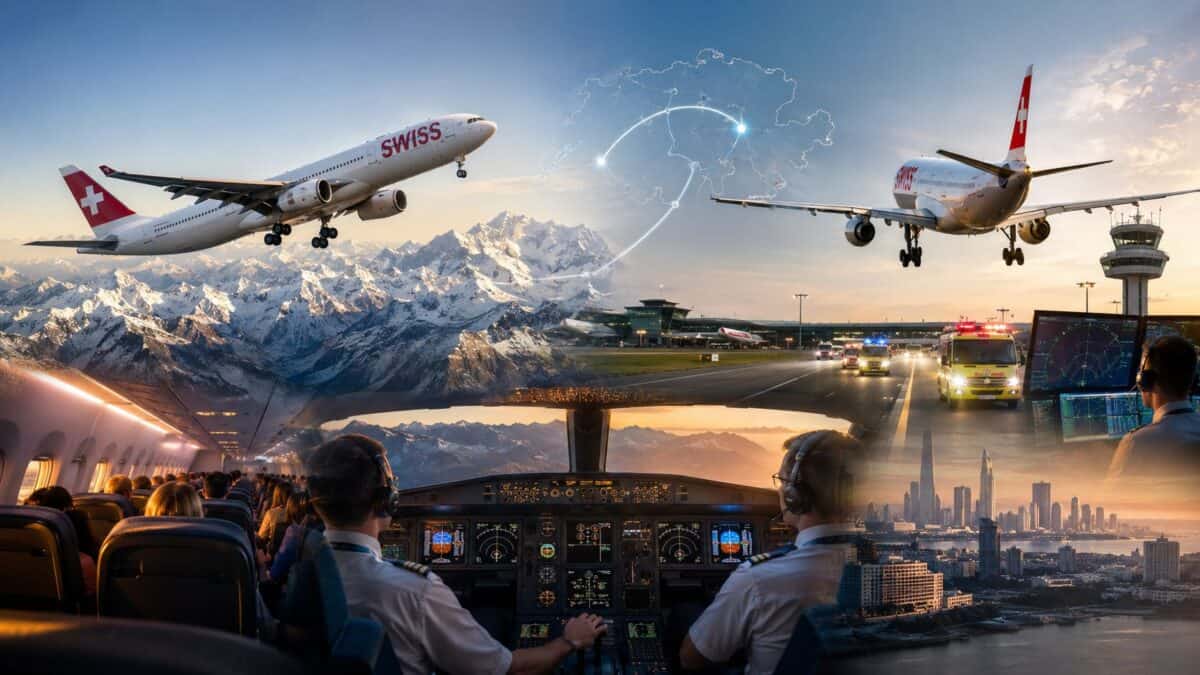
A SWISS Zurich Mumbai flight returned safely to Zurich shortly after departure after the cockpit crew detected an unusual rumbling noise during the initial climb, prompting the airline to activate its standard precautionary safety procedures. The Airbus A330 abandoned its journey to Mumbai, entered holding patterns over eastern Switzerland to reduce landing weight, and landed without incident at Zurich Airport before undergoing a comprehensive technical inspection. The airline subsequently arranged a replacement aircraft to minimise disruption for affected travellers, reinforcing aviation’s long-established principle that operational safety always outweighs schedule integrity.
The incident, although resolved without injuries or an emergency evacuation, once again demonstrates how modern commercial aviation relies on conservative decision-making whenever crews encounter unexplained technical indications. Initial concerns that the aircraft may have experienced a tail strike during departure were subsequently ruled out, yet the flight crew still elected to discontinue the long-haul service to India until engineers could thoroughly examine the aircraft. For international travellers, the event serves as another reminder that precautionary returns are a sign of robust safety management rather than operational failure, especially on long-haul sectors where technical certainty is essential before crossing multiple international airspaces.
Advertisement
Advertisement
SWISS Zurich-Mumbai Flight Returns Shortly After Departure
Passengers travelling from Zurich to Mumbai on Friday experienced an unexpected interruption after their Airbus A330 returned to Switzerland shortly after take-off.
Flight tracking data indicated that the aircraft departed Zurich before turning back over the Innsbruck region. Instead of immediately returning to the airport, the aircraft remained airborne while performing several holding patterns over eastern Switzerland. Such manoeuvres are routinely conducted to reduce landing weight because long-haul aircraft often depart with significant fuel loads intended for intercontinental operations.
Advertisement
Advertisement
After completing the necessary airborne procedures, the aircraft landed safely at Zurich Airport, where engineering teams prepared to inspect the aircraft in accordance with established maintenance protocols.
The airline subsequently confirmed that passengers would continue their journey aboard a replacement aircraft later the same day, reducing the impact on onward travel plans.
Advertisement
Advertisement
Cockpit Crew Responded to an Unexplained Rumbling Noise
According to information released by the airline, flight crew members became aware of an unusual rumbling sound shortly after departure.
Although an initial assessment briefly raised the possibility of runway contact involving the aircraft’s tail during take-off, subsequent evaluation eliminated that concern. Even so, pilots and airline operations jointly determined that returning to Zurich represented the safest operational course.
Advertisement
Advertisement
In commercial aviation, unexplained sounds, abnormal vibrations or unexpected system indications are treated with considerable caution. Even when no warning systems indicate an immediate emergency, flight crews are trained to avoid unnecessary risk, particularly before long-haul flights crossing multiple countries and operating far from the airline’s maintenance base.
Because the aircraft had departed only minutes earlier, returning to Zurich allowed engineers with direct access to airline maintenance facilities to carry out a comprehensive inspection before the aircraft resumed commercial service.
Why Long-Haul Aircraft Often Circle Before Landing
For many passengers, one of the most noticeable aspects of the incident was the aircraft’s extended holding patterns before returning to Zurich.
Rather than indicating escalating danger, these manoeuvres are often part of standard operating procedures.
Advertisement
Advertisement
Unlike many short-haul aircraft, long-haul widebody aircraft such as the Airbus A330 frequently depart close to their maximum authorised take-off weight because they carry large fuel reserves for journeys exceeding eight hours.
Landing immediately after departure may exceed the aircraft’s preferred landing weight. Consequently, flight crews may:
| Operational Step | Purpose |
|---|---|
| Holding patterns | Reduce aircraft landing weight through fuel burn |
| Return to departure airport | Access airline maintenance and engineering support |
| Technical inspection | Identify or eliminate possible mechanical issues |
| Passenger re-accommodation | Minimise disruption while maintaining safety |
This sequence reflects internationally accepted operational procedures rather than an emergency response.
Safety Decisions Override Commercial Pressures
One of the defining characteristics of modern airline operations is that safety-related decisions remain independent of commercial considerations.
Whenever flight crews encounter abnormal technical indications, airlines evaluate numerous factors before deciding whether to continue or discontinue a flight.
These typically include:
Advertisement
Advertisement
| Operational Assessment | Importance |
|---|---|
| Nature of abnormal indication | Determines potential technical risk |
| Aircraft performance | Confirms continued controllability |
| Distance from maintenance facilities | Influences inspection options |
| Flight duration remaining | Important for long-haul operations |
| Availability of engineering support | Enables rapid troubleshooting |
| Passenger safety considerations | Highest operational priority |
Although many precautionary returns ultimately reveal no significant mechanical defect, airlines generally adopt a conservative approach because uncertainty itself represents an operational risk.
A Critical Route Linking Switzerland and India
The affected service forms part of SWISS’ long-haul network connecting Europe with India’s commercial capital.
The Zurich-Mumbai route serves several important passenger segments, including business travellers, multinational corporations, financial institutions, pharmaceutical companies, tourists and members of the Indian diaspora.
According to the airline’s published schedules, the non-stop service generally operates with the Airbus A330 and typically requires around 8½ to 9 hours, depending on seasonal winds and operational conditions.
Mumbai remains one of SWISS’ established destinations in South Asia alongside its growing India operations, where demand has remained strong throughout 2026. The airline has also expanded capacity on the Zurich-Delhi market in response to increased passenger demand.
SWISS Continues to Expand India Operations
Despite the precautionary return involving the Mumbai service, SWISS has continued strengthening its presence in the Indian market.
Advertisement
Advertisement
The carrier recently confirmed additional capacity on its Zurich-Delhi network, citing sustained demand for travel between India and Europe. Additional Airbus A330 services have been introduced on the Delhi route during periods of heightened passenger demand, illustrating India’s strategic importance within the airline’s long-haul network.
This broader network context indicates that the Zurich-Mumbai incident should be viewed as an isolated operational event rather than evidence of wider service disruption across the airline’s India operations.
Operational Snapshot
| Category | Details |
|---|---|
| Airline | SWISS International Air Lines |
| Aircraft | Airbus A330 |
| Route | Zurich – Mumbai |
| Incident | Unusual rumbling noise detected after take-off |
| Initial concern | Possible tail strike (later ruled out) |
| Crew action | Returned to Zurich as precaution |
| Landing | Safe |
| Passenger arrangements | Replacement aircraft provided |
| Aircraft status | Undergoing technical inspection |
What the Incident Means for International Travellers
For passengers, the most significant takeaway is that a precautionary return should not automatically be interpreted as an emergency. Modern airline operations are designed around layered safety systems, and flight crews are trained to act conservatively whenever an unexplained technical indication arises.
In this case, the aircraft landed safely, passengers remained on board throughout the return, and SWISS arranged a replacement aircraft to continue the journey later the same day. The disruption primarily affected departure schedules rather than passenger safety.
Travellers booked on long-haul flights should recognise that aircraft occasionally return to their departure airport for reasons ranging from technical indications and weather to medical emergencies or operational issues. Such decisions demonstrate the effectiveness of airline safety management systems rather than signalling a major aviation hazard.
| Traveller Question | What It Means |
|---|---|
| Why did the aircraft return? | Crew detected an unusual rumbling noise requiring precautionary inspection. |
| Was there an emergency landing? | No. The aircraft returned safely under controlled conditions. |
| Were passengers safe? | Yes. The aircraft landed normally and no injuries were reported. |
| What happened next? | SWISS scheduled a replacement aircraft to complete the Zurich–Mumbai service. |
| Will luggage remain checked through? | Airlines generally transfer checked baggage to the replacement aircraft, although some delays may occur. |
How Aviation Safety Protocols Protect Long-Haul Operations
Commercial aviation remains one of the world’s safest modes of transport because airlines operate under strict regulatory oversight and conservative operational procedures.
Advertisement
Advertisement
Whenever flight crews detect unexpected sounds, vibrations or system abnormalities, they follow comprehensive checklists developed jointly by aircraft manufacturers, airlines and aviation regulators. These procedures are designed to eliminate uncertainty before a flight continues, particularly on intercontinental routes where diversion options may be limited.
Even after initial concerns about a possible tail strike were ruled out, SWISS chose to inspect the Airbus A330 thoroughly before returning it to commercial service. This reflects industry best practice, where the absence of a confirmed fault does not automatically justify continued operation without engineering verification.
India Continues to Be a Strategic Long-Haul Market for SWISS
The temporary interruption comes against the backdrop of sustained growth in air travel between Switzerland and India.
India has emerged as one of the fastest-growing international aviation markets, driven by expanding business travel, tourism, higher disposable incomes and stronger economic ties with Europe. Zurich serves as an important gateway for passengers travelling onward across Europe, North America and selected intercontinental destinations.
SWISS has responded by strengthening its India network, particularly on routes serving Mumbai and Delhi, reflecting increasing premium and leisure demand. The airline’s parent company, Lufthansa Group, has similarly continued investing in the Indian market through multiple carriers operating between Europe and India.
| Route Importance | Passenger Segments Served |
|---|---|
| Zurich–Mumbai | Business travellers, financial sector, tourism, VFR (visiting friends and relatives) |
| Zurich–Delhi | Government travel, corporate traffic, tourism, onward European connections |
| Zurich Hub | Connections to more than 100 European and long-haul destinations |
Operational Reliability Depends on Conservative Decision-Making
Although flight disruptions attract significant public attention, they remain relatively uncommon compared with the volume of daily airline operations worldwide.
Advertisement
Advertisement
According to the International Air Transport Association (IATA), airlines collectively transport billions of passengers every year, while scheduled flights achieve exceptionally high completion rates. When precautionary returns do occur, they are typically the result of airlines choosing to investigate potential technical issues before they develop into larger operational concerns.
This safety-first philosophy has contributed to continuous improvements in global aviation safety over recent decades, supported by advances in aircraft engineering, predictive maintenance, digital monitoring systems and crew training.
For airlines, a delayed arrival is considered far preferable to accepting unnecessary operational uncertainty.
Practical Advice for Passengers Experiencing Similar Flight Disruptions
Unexpected returns or technical delays can interrupt carefully planned itineraries, particularly for international travellers with connecting flights.
Passengers affected by comparable situations should monitor airline notifications, remain at the departure gate until updated instructions are issued and retain boarding passes for any rebooking arrangements. Those with onward connections booked on separate tickets may also wish to contact subsequent airlines proactively if significant delays arise.
Travel insurance that includes trip interruption benefits can provide additional financial protection for accommodation, meals or alternative transport where applicable, although airline obligations vary according to jurisdiction and the specific circumstances surrounding the disruption.
Advertisement
Advertisement
Safety Culture Remains the Foundation of Global Aviation
The Zurich–Mumbai incident illustrates a fundamental principle that has shaped commercial aviation for decades: when uncertainty exists, safety decisions prevail.
Although the aircraft returned because of an unexplained rumbling noise rather than a confirmed technical failure, the crew’s decision enabled engineers to inspect the aircraft at the airline’s principal maintenance base before it resumed operations. The safe landing, rapid passenger re-accommodation and subsequent inspection underscore the resilience of modern airline operational procedures.
For travellers, the event should reinforce confidence rather than concern. Every precautionary return represents a deliberate application of internationally recognised safety practices that prioritise passengers, crew and aircraft above operational schedules. As global air travel continues to expand, such disciplined decision-making remains central to maintaining public confidence in long-haul aviation.
Frequently Asked Questions (FAQs)
Why did the SWISS Zurich–Mumbai flight return to Zurich after take-off?
The SWISS Airbus A330 returned to Zurich after the cockpit crew detected an unusual rumbling noise shortly after departure. Although an initial concern about a possible tail strike was later ruled out, the flight crew decided to return as a precaution so the aircraft could undergo a detailed technical inspection.
Was the SWISS Airbus A330 involved in an emergency landing?
No. The aircraft made a controlled and safe return to Zurich Airport. The landing was precautionary, and there were no reports of injuries or an emergency evacuation.
What route was affected by the SWISS flight disruption?
The affected service was the non-stop Zurich (Switzerland) to Mumbai (India) route, operated by a SWISS Airbus A330.
Advertisement
Advertisement
What caused the unusual noise on the SWISS flight?
The exact source of the rumbling noise had not been confirmed immediately after the incident. The aircraft was taken out of service for a comprehensive engineering inspection before returning to commercial operations.
Were passengers able to continue their journey to Mumbai?
Yes. SWISS arranged a replacement aircraft so that passengers could continue their journey to Mumbai later the same day, helping to minimise travel disruption.
Why do aircraft sometimes circle before returning to the airport?
Long-haul aircraft often depart with heavy fuel loads for intercontinental flights. If they need to return shortly after take-off, pilots may enter holding patterns to reduce the aircraft’s landing weight before making a safe landing.
Is a precautionary return common in commercial aviation?
Precautionary returns are relatively uncommon but are a recognised part of modern aviation safety procedures. Airlines routinely choose the safest option whenever crews detect an unexplained technical issue or abnormal indication during flight.
Does a precautionary return mean an aircraft is unsafe?
Not necessarily. In many cases, aircraft return out of an abundance of caution. Even if no major fault is ultimately found, airlines follow strict safety protocols to ensure every aircraft is thoroughly inspected before it resumes service.
What should passengers do if their flight returns to the departure airport?
Passengers should follow airline instructions, monitor official notifications, retain boarding documents, and check for updates regarding replacement flights, baggage transfers, and onward travel arrangements.
How important is the Zurich–Mumbai route for SWISS?
The Zurich–Mumbai service is one of SWISS’ key long-haul routes connecting Switzerland and India, serving business travellers, tourists, and passengers visiting friends and relatives, while also providing onward connections across Europe through Zurich.
Advertisement
