
Thailand Is Now Moving Alongside Asia to Unlock Better Astro Tourism as 15 Dark Sky Sites Are on the Rise

Published
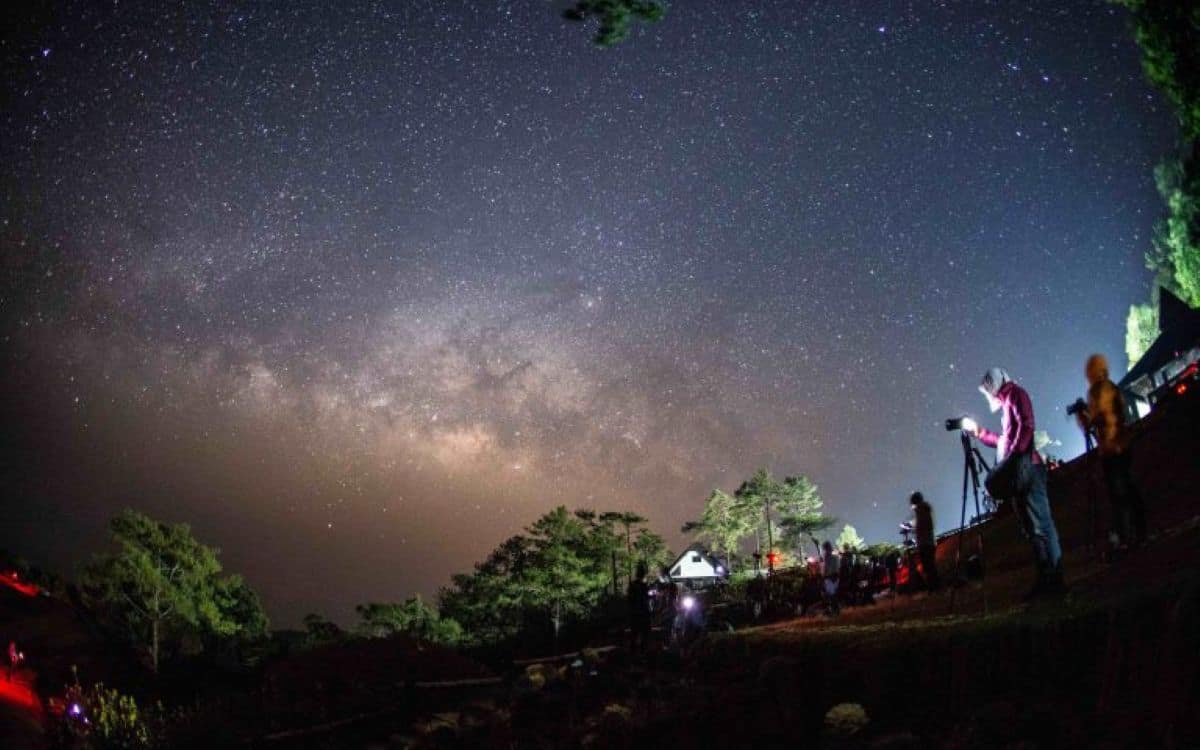
Image generated with Ai
Thailand registered 15 new protected stargazing locations on 28 August 2026 under the fifth season of its national dark-sky programme. The national astronomy institute and tourism authority selected them from 40 applicants across 12 provinces. The additions include parks, a community, private properties and a suburban science site. They immediately give travellers more officially assessed places for night-sky observation and astronomy learning. The development strengthens Astro Tourism while supporting responsible lighting, energy conservation and reduced ecological disturbance, but it creates no visa, passport, airline or border-policy change.
Verified News Focus: Astro Tourism Leads the Story
The evidence shows that this is primarily a destination-development and environmental-management story. The percentages below are an editorial assessment of the relative importance of each verified component. They are not government statistics or measurements of economic impact.
| News Component | Share of Story | Officially Verified Finding | Relevance to Travellers | Official Source |
|---|---|---|---|---|
| Stargazing destination expansion | 45% | Fifteen locations were registered across four categories | More officially recognised places for night-sky visits | National astronomy institute announcement |
| Environmental management | 25% | The programme promotes appropriate lighting, energy saving and lower ecological disturbance | Visitors must respect darkness and site-management rules | National tourism authority announcement |
| Provincial tourism | 20% | The sites extend across 12 provinces and include rural and protected settings | Travellers gain choices beyond major urban and beach destinations | Official Season 5 location list |
| Educational travel | 10% | The group includes a suburban science site alongside parks and properties | Astronomy learning can complement observation | Official designation categories |
| Total | 100% | Editorial assessment based on verified evidence | No quantified visitor or revenue outcome is available | Official Thai sources |
The evidence establishes a larger selection of assessed locations and a clear conservation purpose. It does not establish increases in arrivals, bookings, hotel occupancy, spending or employment. Travellers should understand the development as an expansion of destination choice, not proof that tourism demand has already changed.
Current Situation Across the New Locations
The 15 designations are complete and form the 2026 Season 5 group. They consist of five dark-sky parks, one community, eight privately managed properties and one suburban location. Five parks lie in Prachin Buri, Nan, Khon Kaen, Mukdahan and Loei. The community site is in Roi Et, while the private locations extend across Surat Thani, Ratchaburi, Chiang Mai, Songkhla, Prachin Buri and Chaiyaphum. The suburban science location is in Prachuap Khiri Khan.
Advertisement
Advertisement
Officials confirmed that the approved places manage lighting appropriately, offer sufficient darkness for astronomical observation and have potential to receive visitors. However, recognition does not mean that all locations offer identical access, telescopes, guides, accommodation or operating hours. Claims that the programme has already increased bookings or revenue require correction because the authorities published no such results. Night-sky travel is the intended direction; its measurable performance remains unknown.
Advertisement
Advertisement
Why the Development Matters to Travellers
Night-sky activities can add an evening component to trips centred on parks, rural landscapes or community experiences. Stargazers, families, students, campers and photographers now have a wider official network to consider. The inclusion of several destination types also distinguishes the programme from a single observatory opening or one-off astronomy event. It links public land, local areas, visitor properties and science education within one national framework.
The significance is national because the locations stretch across northern, north-eastern, central, eastern and southern Thailand. Possible beneficiaries include accommodation providers, local transport services, guides and food businesses when travellers stay after dark. Those benefits remain analytical possibilities rather than confirmed outcomes. No official data show that astronomy-led travel has changed visitor behaviour, prices or spending at the newly registered places.
Chronology of Thailand’s Dark-Sky Development
Thailand’s organised programme began in 2020 through cooperation between the national astronomy institute and national tourism authority. The first 12 locations were registered in 2022. An official tourism update published on 7 March 2026 reported 64 recognised locations at that time and described four categories covering parks, communities, private properties and suburbs. It also outlined technical and visitor-readiness considerations used within the programme.
On 28 August 2026, the astronomy authority announced the 15 Season 5 selections after assessing 40 applicants. The tourism authority published the development on its platform on 2 September. The later announcement did not provide a revised national total. It would therefore be misleading to add 15 to the March figure without confirmation that every earlier listing remains active and both releases use the same reporting basis.
How Astro Tourism Developed Through Lighting and Visitor Criteria
Darkness Was the Directly Confirmed Trigger
The immediate trigger was the successful assessment of 15 applicants. Official material says the selected locations used appropriate lighting and maintained skies dark enough for astronomical observation. The programme seeks to improve awareness of light pollution, encourage energy conservation and reduce ecological effects. These are direct, officially stated purposes rather than conclusions inferred from tourism trends.
Advertisement
Advertisement
Earlier Standards Created Supporting Conditions
Earlier official guidance described an open viewing area of at least 100 square metres and a view covering at least 70% of the sky. It also cited a darkness level of at least 19 magnitudes per square arcsecond. This technical unit measures the brightness of the sky over a defined area. The guidance also referred to visitor facilities and astronomy services. These standards provide background for understanding the programme, although the Season 5 release does not publish an individual score for each successful site.
Environmental Management Shapes the Travel Product
Darkness is both the attraction and a resource requiring protection. Upward-facing or excessive artificial light can reduce visibility and disturb nocturnal settings. Visitor activity can create its own pressures through vehicle lights, torches, noise and movement after sunset. Responsible management is therefore a supporting condition for Astro Tourism, not an optional addition to it.
The strongest verified explanation for the expansion is that the 15 sites met the programme’s lighting, darkness and visitor-potential assessment. The most important supporting condition is the national framework developed since 2020. The unresolved issue is performance: officials have not measured additional visits or spending attributable to the new designations.
Verified Figures and What They Mean
The central figure is 15 approved locations from 40 applicants in Thailand during the 2026 programme cycle. That produces a selection ratio of 37.5%. Private properties account for eight sites, or 53.3% of the new group. Parks represent five sites, or 33.3%. The community and suburban categories each contribute one site, equal to 6.7% apiece after rounding.
These percentages describe the composition of the new designations, not tourism-market shares. The sites cover 12 provinces, showing broad geographic reach. The earlier total of 64 applied in March 2026 and should not be treated as the current total without a later official confirmation. No suitable official figures exist for visitor arrivals, hotel demand, expenditure, investment, carrying capacity or employment linked specifically to the 15 additions.
Advertisement
Advertisement
What Official Statements Confirm
The astronomy authority’s published statement confirms the selection process, category breakdown and full location list. It says the programme encourages awareness of light pollution, energy saving and suitable use of artificial light while reducing effects on ecosystems. It also states that the selected places have potential to receive visitors and stimulate astronomy-related activities.
The tourism authority presents the protected darkness as a basis for creative travel and access to rural areas and communities. This position explains the programme’s intended tourism role. It is not evidence that demand has already increased. Neither authority provides a direct forecast, economic target or verified increase in accommodation use resulting from Astro Tourism.
Tourism and Traveller Impact
The confirmed immediate effect is expanded choice. Travellers can consider recognised observation settings in more provinces and across four destination types. National parks may combine stargazing with nature trips, while the science location offers an educational setting. Private properties may support organised stays, although facilities must be checked individually. Existing journeys do not need to change solely because of the announcement.
Longer stays, new guiding work and wider local spending are possible longer-term consequences, but they remain uncertain. The official releases offer no evidence of altered airline capacity, airport demand, hotel prices or international arrivals. The development directly concerns destinations and their night environments rather than the entire Thai travel industry.
Wider Travel-Industry Analysis
Analysis suggests that night-sky activities could extend a destination’s usable visitor hours without requiring a large attraction. A daytime park, rural or cultural itinerary can potentially gain an evening component. This may create opportunities for small-group tours, astronomy education and photography experiences. Success will depend on safe access, weather information, trained interpretation and reliable communication about facilities.
Advertisement
Advertisement
Operational challenges include limited transport after dark, varying site capacity and the need to protect sensitive environments. Cloud, rain, haze and moonlight can affect visibility even at a recognised location. Maintaining the attraction also requires control of artificial light around viewing areas. These conditions mean the sector must be managed as an environmental product rather than promoted only through images of clear skies.
Regional and Global Context
Japan officially promotes three internationally recognised dark-sky places: Bisei in Okayama, Kozushima Island in Tokyo and Iriomote–Ishigaki National Park in Okinawa. Its tourism platform also features guided observation, camping, mountain walks, observatories and night photography. Malaysia lists packaged activities involving telescopes, meteor observation, workshops and camping. South Korea uses public observatories, planetariums and science museums to connect astronomy with educational travel.
Hong Kong includes stargazing within a wider Sai Kung itinerary involving marine and geopark environments. These models are not directly equivalent. Thailand operates a national registration programme; Japan combines international recognition with guided nature products; Malaysia highlights bookable activities; and South Korea emphasises structured learning. The comparison shows several approaches to Astro Tourism without proving that any destination has stronger demand or better economic results.
Practical Information for Travellers
Travellers should check individual operating hours, booking arrangements, admission fees and nighttime access before leaving. Rural sites may have limited transport after sunset, while parks can restrict roads or trails because of weather, conservation work or safety conditions. Visitors should also confirm whether telescopes, guides, camping areas and accommodation are available rather than assuming that registration guarantees those services.
The programme creates no immigration change. Passport and visa requirements continue to depend on nationality, residence, itinerary and the rules applying on the travel date. Visitors should consult Thailand’s official immigration and consular authorities for entry information. No official announcement supports cancelling or rearranging an existing journey because of the new designations.
Advertisement
Advertisement
Steps Travellers Should Take Before a Stargazing Visit
These actions mainly apply to visitors planning an evening trip to one of the recognised locations. No immediate change is required for other Thailand travellers, but advance checks can prevent transport, access or weather problems.
- Confirm that the chosen site permits visitors on the intended night.
- Check whether reservations, park registration or admission fees apply.
- Review the weather forecast, cloud conditions and lunar phase.
- Arrange return transport before travelling to a rural location.
- Ask whether equipment, guides, accommodation or camping are provided.
- Follow local restrictions on torches, vehicle lights, noise and photography.
- Verify current passport and visa rules through the relevant official authority.
- Keep booking confirmations and site contact details available during the trip.
The designation alone does not require travellers to alter confirmed plans. Those intending to visit after dark should continue monitoring official site information because operating arrangements and natural viewing conditions can change.
Future Outlook
No Season 6 total, deadline or implementation timetable has been officially announced. The confirmed next stage is continued access to the national dark-sky directory, which identifies recognised locations and supports future registration activity. Individual destinations may publish their own visitor arrangements, but those details should only be treated as confirmed when released through responsible authorities or site operators.
Future government reporting could establish whether the programme produces additional visits, overnight stays or local participation. Environmental monitoring could also show whether lighting controls preserve sky quality and reduce unnecessary energy use. Until those findings appear, tourism growth should remain an informed possibility rather than a stated result.
Thailand’s Night-Sky Expansion Requires Careful Follow-Through
Thailand’s 15 new dark-sky locations expand its recognised network across parks, communities, properties and a science setting. Travellers gain more choices for stargazing, photography and astronomy learning, while existing immigration and transport rules remain unchanged. Official evidence confirms the selection process, environmental purpose and geographic reach, but it does not prove higher bookings, spending or visitor numbers. The longer-term value of Astro Tourism will depend on clear access information, responsible lighting, environmental
Advertisement
