
Colombia and More See Hidden River Cruises as Magdalena, Brahmaputra and Amazon Voyages Expand

Published
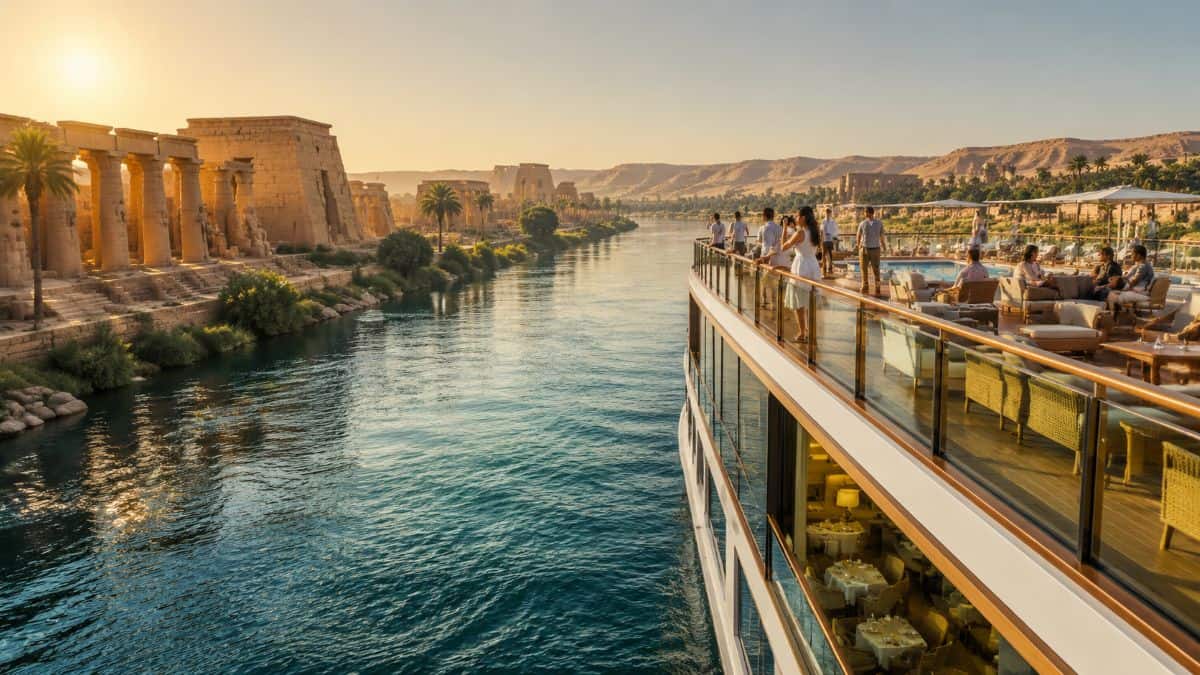
Colombia and more destinations are putting hidden river cruises in the global travel spotlight. As Magdalena, Brahmaputra and Amazon voyages expand, hidden river cruises are giving travellers new reasons to explore remote waterways. Colombia is opening the Magdalena to immersive river journeys, while the Brahmaputra offers wildlife, culture and unforgettable landscapes. Meanwhile, Amazon voyages take adventurous travellers deep into extraordinary rainforest regions. Together, Colombia, Magdalena, Brahmaputra and Amazon experiences show how hidden river cruises are changing modern travel. Furthermore, Travel And Tour World explores these expanding voyages, revealing what global travellers can expect from these remarkable destinations, river routes and unforgettable journeys.
Hidden River Cruises Open Remote Destinations to Global Travellers With Detailed Routes, Statistics and Travel Plans
River cruising is moving beyond the familiar Rhine and Danube corridors.
Advertisement
Advertisement
Smaller vessels are reaching waterways where navigation requires shallow drafts, flexible routes and fewer passengers.
For travellers, this changes the meaning of a river cruise.
Advertisement
Advertisement
The journey can now connect historic towns, wildlife areas, cultural communities and remote river landscapes.
The latest routes highlighted by the original report include the Loire, Guadalquivir, Vltava, Elbe, Venetian waterways, Magdalena, Brahmaputra, Upper Mekong, Red River, Halong Bay and Amazon.
Advertisement
Advertisement
Several Asian itineraries also extend into Cambodia and the Tonlé Sap region.
These destinations offer very different travel experiences.
Advertisement
Advertisement
Some focus on castles and food.
Others combine wildlife, indigenous culture, wetlands and expedition-style exploration.
The following guide provides destination details, tourism statistics, practical planning information and five-year visitor comparisons.
River Cruise Destinations Covered in the Latest Network
| River or waterway | Main countries | Key cruise destinations | Cruise character | Typical traveller interest |
|---|---|---|---|---|
| Loire | France | Nantes, Saint-Nazaire, Ancenis, Chalonnes-sur-Loire | Small-ship cultural cruise | Châteaux, food, wine, history |
| Guadalquivir | Spain | Seville, Cádiz, El Puerto de Santa María, Isla Mínima | Boutique European river cruise | Heritage, flamenco, food |
| Vltava–Elbe | Czechia, Germany | Prague, Bohemia, Dresden | Small-vessel European journey | Architecture, history, landscapes |
| Venetian waterways | Italy | Mazzorbo, Chioggia, Porto Viro, Canda, Mantua | Lagoon and canal cruise | Food, heritage, wetlands |
| Magdalena | Colombia | Cartagena, Barranquilla, Mompox, Magangué, Calamar and others | Boutique tropical river cruise | Culture, wildlife, communities |
| Brahmaputra | India | Guwahati, Kaziranga, Majuli, Silghat and Dibrugarh | Wildlife and cultural expedition | Rhinos, birds, tea, villages |
| Upper Mekong | Laos/Thailand | Vientiane, Luang Prabang, Golden Triangle | Small-ship expedition | Villages, cliffs, caves, culture |
| Red River | Vietnam | Halong Bay, Red River region, Hanoi | Cultural and coastal combination | Heritage, cuisine, landscapes |
| Mekong | Vietnam/Cambodia | Mekong towns, Kratie, Tonlé Sap, Siem Reap | Boutique river expedition | Markets, temples, wetlands |
| Amazon | Brazil, Colombia, Peru | Belém, Manaus region, Leticia, Pevas, Iquitos | Expedition cruise | Wildlife, rainforest, remote communities |
The original report confirms that these routes are being used to reach smaller destinations and waterways that are difficult for conventional vessels.
Advertisement
Advertisement
Loire River, France: A Slow Journey Through Châteaux, Food and Smaller Towns
The Loire offers an unusual European river-cruise experience because the river’s navigation conditions require specialised vessels.
The Loire Princesse operates between Nantes, Saint-Nazaire, Ancenis and Chalonnes-sur-Loire.
The route gives travellers access to the Loire Valley while avoiding a standard European river itinerary centred on major capitals.
For a traveller, Nantes is a useful starting point.
The city combines historic architecture, riverfront attractions and access to the wider Loire region.
Saint-Nazaire adds a maritime dimension.
Advertisement
Advertisement
Ancenis provides a quieter gateway into the Loire landscape.
Chalonnes-sur-Loire is particularly relevant for travellers interested in countryside, vineyards and smaller communities.
The wider Centre-Val de Loire region recorded 10.08 million overnight stays across collective tourist accommodation in 2024.
Hotels accounted for 5.93 million nights, campsites 2.56 million and other collective accommodation 1.59 million.
The region recorded 10.61 million nights in 2023.
That followed 10.28 million in 2022 when combining the reported hotel, camping and other collective accommodation categories.
Advertisement
Advertisement
In 2021, the corresponding published figures totalled about 7.55 million, although the accommodation observation periods differed between categories.
The summer of 2025 recorded 6.56 million overnight stays from May through September.
That was 1.9% above summer 2024.
Hotels accounted for 3.20 million nights, campsites 2.46 million and other collective accommodation 897,000.
International demand also showed interesting changes.
US visitors generated 93,600 nights during summer 2025, up 28.7% year over year.
Advertisement
Advertisement
German visitors generated 272,000 nights, up 6.3%.
British visitors generated 286,700 nights, while Dutch visitors remained the largest non-resident market at 531,700 nights.
For food, travellers should explore Loire Valley specialities including goat cheese, freshwater fish, regional pastries and local wines.
A practical plan is two nights in Nantes before embarking.
Spend one day exploring the city and another visiting nearby Loire attractions.
After the cruise, add two or three nights around the Loire Valley.
Advertisement
Advertisement
Stay near the river or in a château-style property for a more immersive experience.
Travellers seeking quieter scenery should allocate extra time around Ancenis and Chalonnes-sur-Loire.
Loire Tourism Statistics: Five-Year Benchmark
| Year | Centre-Val de Loire tourism nights | Key observation |
|---|---|---|
| 2021 | Approx. 7.55 million* | Pandemic recovery remained incomplete |
| 2022 | Approx. 10.28 million* | Hotel nights exceeded 6 million |
| 2023 | 10.61 million | 3.3% annual increase |
| 2024 | 10.08 million | 5.0% lower than 2023 |
| 2025 | 10.37 million | 2.9% higher than 2024 |
*Approximate combined figure because official accommodation categories use different observation periods in some years. 2025 is the full-year regional figure reported by INSEE.
Guadalquivir, Spain: Seville, Cádiz and Andalusian Heritage by River
The Guadalquivir gives travellers an opportunity to connect several Andalusian experiences within one journey.
Seville is the principal cultural anchor.
The official Andalusia tourism authority describes the Guadalquivir as a historic river connected with Seville’s development and cultural identity.
Advertisement
Advertisement
Cruise programmes can include Seville, Cádiz, El Puerto de Santa María and Isla Mínima.
Excursions may extend to Córdoba, Jerez and Granada.
That creates a strong combination of river scenery and inland heritage.
Seville deserves at least three nights.
Travellers can explore the cathedral area, historic quarters, palace architecture and riverfront before boarding.
Cádiz works well as a coastal contrast.
Advertisement
Advertisement
Jerez adds sherry culture and equestrian traditions.
Córdoba is useful for travellers interested in Islamic, Christian and Roman heritage.
Granada adds a longer inland excursion around its historic monuments.
Andalusia received 20.04 million tourists in 2021.
The number increased to 30.87 million in 2022.
It reached 34.28 million in 2023 and 36.09 million in 2024.
Advertisement
Advertisement
In 2025, the regional total reached 37.9 million tourists.
This provides a clear five-year picture of the wider destination environment around the Guadalquivir route.
The 2024 tourism balance recorded 56.70 million hotel overnight stays in Andalusia.
The wider regulated accommodation sector recorded 76.14 million nights.
The region also recorded 25.26 million travellers in regulated accommodation.
For food, travellers should try gazpacho, salmorejo, tapas, jamón, fried fish and regional pastries.
Advertisement
Advertisement
A seven-day plan works well.
Begin with three nights in Seville.
Take the cruise for the next four or five nights.
Add one or two nights in Cádiz or Jerez after disembarkation if time allows.
Travellers should reserve additional time for Córdoba or Granada rather than treating them as rushed excursions.
Andalusia Five-Year Tourism Comparison
| Year | Tourists visiting Andalusia | Main trend |
|---|---|---|
| 2021 | 20.06 million | Recovery from pandemic disruption |
| 2022 | 30.87 million | Strong reopening period |
| 2023 | 34.28 million | New high in the series |
| 2024 | 36.09 million | Continued high visitor volume |
| 2025 | 37.9 million | 5.2% above 2024 |
The figures represent tourism to Andalusia, not Guadalquivir river-cruise passengers.
Advertisement
Advertisement
Vltava and Elbe: Prague to Dresden Through Lesser-Known Central Europe
The Vltava and Elbe route provides another alternative for travellers who want European river cruising without relying entirely on the biggest waterways.
The journey can combine Prague with smaller Bohemian landscapes before continuing toward Dresden.
Prague is best treated as a pre-cruise destination rather than simply an embarkation point.
Three nights allow travellers to explore the historic centre, riverfront, architectural landmarks and traditional food.
Smaller communities along the route provide a slower contrast.
Dresden then adds museums, palaces and architectural heritage.
Advertisement
Advertisement
For travellers, the attraction is the changing landscape.
The itinerary moves from a major historic capital toward smaller towns and countryside.
A practical nine-day plan would include three nights in Prague.
The cruise can then occupy five or six nights.
One final night in Dresden provides time for a relaxed post-cruise stay.
Food should include Czech dumplings, goulash, roast pork, seasonal soups and traditional pastries.
Advertisement
Advertisement
In Dresden, travellers can explore Saxon cuisine and local bakeries.
The route is especially useful for repeat European visitors.
Instead of treating Prague as a standalone city break, travellers can use it as the gateway to a broader water-based journey.
The original report identifies paddlewheel vessels as a way to navigate sections that may be difficult for conventional river ships.
Because national and regional visitor statistics are not equivalent to river-cruise passenger counts, cruise-specific annual passenger totals should not be inferred from Prague or Dresden tourism arrivals.
Venetian Lagoon and Canal Bianco: Italy Beyond Venice
Italy’s lesser-known river and lagoon journeys demonstrate how a famous destination can become the beginning of a more unusual route.
Advertisement
Advertisement
The itinerary described in the source extends through the Venetian Lagoon and Canal Bianco.
Stops include Mazzorbo, Chioggia, Porto Viro, Canda and Mantua.
This is valuable for travellers who have already visited central Venice.
Mazzorbo provides a quieter lagoon experience.
Chioggia offers a more local maritime atmosphere.
Porto Viro and Canda introduce smaller communities and waterways.
Advertisement
Advertisement
Mantua adds a major cultural dimension through its Renaissance heritage.
A traveller could spend three nights in Venice before boarding.
The pre-cruise period should focus on the city’s historic core while avoiding an overloaded sightseeing schedule.
The cruise itself can provide the slower second stage.
After reaching Mantua, spend two nights exploring the city and surrounding countryside.
Food should include risotto, fresh lagoon seafood, cicchetti, pasta and regional cheeses.
Advertisement
Advertisement
Travellers interested in food should look beyond restaurants around the most crowded central attractions.
Local markets and smaller neighbourhood establishments can provide a more regional experience.
The route is also useful for travellers interested in wetlands and water landscapes.
The important distinction is that the experience is not simply a Venice cruise.
It turns Venice into the gateway for exploring a wider northern Italian water network.
The original report identifies Mazzorbo, Chioggia, Porto Viro, Canda and Mantua among the stops on these less conventional waterways.
Advertisement
Advertisement
Magdalena River, Colombia: A Nine-Destination Journey Through the Country’s River Heartland
The Magdalena is one of the most significant new river-cruise destinations in the source report.
AmaMagdalena carries 60 passengers.
AmaMelodia carries 64.
The vessels are designed for a small-scale experience rather than mass river tourism.
Colombia’s Ministry of Commerce, Industry and Tourism confirmed that the cruise operation connects nine destinations across Atlántico, Magdalena and Bolívar.
Government-supported investment around the route exceeded COP 37.549 billion.
Advertisement
Advertisement
The investment covered 83 projects.
The projects addressed infrastructure, promotion, competitiveness, responsible tourism and destination development.
The government-listed locations include Barranquilla, Sitio Nuevo, Santa Bárbara de Pinto, El Banco, Santa Cruz de Mompox, Magangué, Calamar, Cartagena and Mahates.
Cartagena received the largest allocation.
The city received 46 projects valued at COP 21.298 billion.
Mompox received 10 projects worth COP 6.227 billion.
Advertisement
Advertisement
Barranquilla received 13 projects worth COP 2.054 billion.
Travellers should spend at least two nights in Cartagena before embarking.
This provides time for the historic centre and Caribbean food.
Barranquilla adds music, culture and regional cuisine.
Mompox is particularly suited to travellers interested in heritage and slower travel.
The route can also expose visitors to wetland landscapes and smaller riverside communities.
Advertisement
Advertisement
Colombia’s tourism statistics show 4.4 million tourists in 2024 and about 4.6 million in 2025 in the tourism-receiving flow measured by DANE’s tourism satellite account.
DANE recorded 13.8% growth in the tourist flow in 2024 compared with 2023 and 3.8% in 2025 compared with 2024.
These national figures should not be treated as Magdalena cruise passenger counts.
For food, travellers can explore Caribbean dishes, fried fish, coconut rice, plantain, arepas, regional soups and local sweets.
A 10-day plan works well.
Spend two nights in Cartagena.
Advertisement
Advertisement
Take the seven-night cruise.
Finish with one additional night in Cartagena or continue to another Colombian destination.
Magdalena Cruise Investment Data
| Destination | Government-supported projects | Investment |
|---|---|---|
| Barranquilla | 13 | COP 2.054 billion |
| Sitio Nuevo | 2 | COP 1.856 billion |
| Santa Bárbara de Pinto | 2 | COP 1.856 billion |
| El Banco | 1 | COP 1.106 billion |
| Santa Cruz de Mompox | 10 | COP 6.227 billion |
| Magangué | 3 | COP 0.784 billion |
| Calamar | 3 | COP 1.220 billion |
| Cartagena | 46 | COP 21.298 billion |
| Mahates | 3 | COP 1.148 billion |
| Total | 83 | COP 37.549 billion |
The figures come directly from Colombia’s Ministry of Commerce, Industry and Tourism.
Brahmaputra River, India: Assam’s Wildlife and Village-Focused Cruise
The Brahmaputra provides one of the strongest wildlife-oriented river experiences in this network.
Assam Tourism describes cruises that combine wildlife viewing, birdwatching, villages, tea gardens, cultural performances and river islands.
Cruise itineraries can connect Guwahati with Kaziranga, Majuli, Silghat and other parts of the river system.
Advertisement
Advertisement
The state’s tourism department highlights Kaziranga National Park and Majuli among the major attractions accessible through Brahmaputra cruises.
Travellers should allow two nights in Guwahati before boarding.
This provides time for Kamakhya Temple, riverfront experiences and local cuisine.
A cruise extension into Kaziranga can then focus on wildlife.
Majuli provides a cultural dimension through Vaishnavite traditions and craft communities.
Dibrugarh provides access to Assam’s tea-growing landscape.
Advertisement
Advertisement
Current small-ship itineraries can extend to Dibrugarh.
A 10-night Full Brahmaputra programme currently connects Guwahati and Dibrugarh, with the route reaching roughly 450 kilometres upstream according to the cruise itinerary.
Assam’s official tourism policy recorded 5,146,307 domestic tourist arrivals and 18,594 foreign arrivals in 2019.
More recent Ministry of Tourism statistics show foreign tourist visits rising from 536 in 2021 to 9,001 in 2022, 23,818 in 2023 and 27,170 in 2024.
Government tourism data also show substantial domestic tourism recovery after the pandemic.
The state’s tourism department reported 17,01,701 domestic tourists in 2021-22.
Advertisement
Advertisement
The figure reached 98,12,195 in 2022-23 before recording 70,41,206 in 2023-24.
The latest reported fiscal-year figures show 84,88,842 domestic visitors in 2024-25 and 85,27,556 in 2025-26, alongside 27,563 and 47,015 foreign visitors respectively.
Food should include Assamese thali, rice preparations, fish, duck dishes, tenga, pitha and local tea.
For accommodation, travellers can combine a Guwahati hotel with a lodge near Kaziranga.
A 10- to 12-day plan gives enough time for the river journey and wildlife extensions.
Assam Five-Year Tourism Benchmark
| Fiscal year | Domestic tourists | Foreign tourists |
|---|---|---|
| 2021-22 | 1,701,701 | 1,231 |
| 2022-23 | 9,812,195 | 18,946 |
| 2023-24 | 7,041,206 | 26,129 |
| 2024-25 | 8,488,842 | 27,563 |
| 2025-26 | 8,527,556 | 47,015 |
These figures represent Assam-wide tourism, not Brahmaputra cruise passengers.
Advertisement
Advertisement
Upper Mekong, Laos: Vientiane to the Golden Triangle
The Upper Mekong creates a markedly different river-cruise experience.
The route described by Pandaw extends between Vientiane and the Golden Triangle.
Other small-ship journeys connect the Golden Triangle with Luang Prabang.
The scenery includes cliffs, caves, forests and riverside communities.
For travellers, Luang Prabang is one of the most important pre- or post-cruise extensions.
A two- or three-night stay allows visitors to explore its heritage environment before or after the river journey.
Advertisement
Advertisement
Vientiane provides a more urban starting point.
Travellers can explore temples, markets and Mekong riverfront areas before boarding.
Laos recorded 1,294,365 international tourist arrivals in 2022.
The number increased to 3,417,629 in 2023.
In 2024, international arrivals reached 4,120,832.
The 2024 total generated approximately US$1.138 billion in international tourism receipts according to information reported by Laos’ National Assembly.
Advertisement
Advertisement
The first eight months of 2025 recorded more than three million tourist arrivals.
There is no reliable comparable full-year 2021 figure because international travel restrictions heavily disrupted Laos tourism.
Travellers should therefore avoid creating a false five-year comparison by inserting an estimated 2021 figure.
Food is an important part of the experience.
Try sticky rice, laap, tam mak hoong, grilled river fish, noodle soups and northern Lao specialities.
A 10-day plan could include three nights in Luang Prabang, seven nights on the river and two nights in Vientiane.
Advertisement
Advertisement
Travellers should also plan for land transfers because remote Mekong ports may not provide the same transport options as major European cruise terminals.
Laos Visitor Statistics
| Year | International tourist arrivals | Status |
|---|---|---|
| 2021 | No comparable official full-year figure used | Pandemic disruption |
| 2022 | 1,294,365 | Recovery period |
| 2023 | 3,417,629 | Strong reopening |
| 2024 | 4,120,832 | 21% above 2023 |
| 2025 | More than 3 million through August | Partial-year figure |
The figures are country-wide arrivals and should not be confused with Upper Mekong cruise passengers.
Red River and Halong Bay, Vietnam: River Travel With a Northern Vietnam Extension
Northern Vietnam gives river travellers the opportunity to combine inland waterways with the dramatic landscape of Halong Bay.
The cruise network highlighted in the source material includes the Red River and Halong Bay region.
Hanoi provides the obvious land extension.
Travellers can spend three nights there before continuing toward the water.
Advertisement
Advertisement
Halong Bay can then add a contrasting coastal landscape.
The Red River journey provides a slower perspective on northern communities.
This combination works particularly well for first-time visitors who want both a major Vietnamese city and a smaller-waterway experience.
Food is a major reason to extend the trip.
Travellers should explore pho, bun cha, spring rolls, grilled seafood, rice dishes and regional northern Vietnamese specialities.
For accommodation, Hanoi offers the widest range of options.
Advertisement
Advertisement
Near Halong Bay, travellers can choose between city hotels and waterfront properties depending on their preferred pace.
A practical itinerary would be three nights in Hanoi.
Add two nights around Halong Bay.
Use the remaining four or five nights for the river journey and village excursions.
The original report identifies Pandaw’s Red River and Halong Bay itineraries as part of its wider Asian small-ship network.
The main travel consideration is seasonal weather.
Advertisement
Advertisement
Travellers should check rainfall, temperature and local operating conditions before finalising a sailing.
Mekong, Cambodia and Tonlé Sap: Adding Kratie and Wetland Landscapes
The wider Mekong network also reaches Cambodia.
The source report specifically notes itineraries extending toward Kratie and the Tonlé Sap region.
This provides a different alternative to a conventional Siem Reap-only holiday.
Kratie is associated with river landscapes and community-focused experiences.
Tonlé Sap provides a major wetland environment.
Advertisement
Advertisement
Siem Reap can then serve as the heritage extension.
Travellers should spend two or three nights in Siem Reap if their itinerary includes Angkor-area attractions.
A river cruise can then provide a slower counterpoint.
Food planning should include fish amok, lok lak, Khmer curries, fresh vegetables, rice dishes and regional desserts.
For accommodation, travellers can divide their stay between a city hotel in Siem Reap and a smaller riverside property where available.
A nine- to 11-day plan works well.
Advertisement
Advertisement
Spend three nights in Siem Reap.
Cruise for five or six nights.
Add one or two nights around Phnom Penh or another connected destination.
Because river levels can influence navigation, travellers should confirm the exact seasonal route before booking.
The source report identifies Kratie and Tonlé Sap among the less-visited Cambodian extensions being incorporated into boutique Mekong programmes.
Amazon River: The Most Expedition-Focused Route in the Network
The Amazon is the most remote experience described in the source article.
Advertisement
Advertisement
The route between Belém in Brazil and Iquitos in Peru covers approximately 4,000 kilometres through the Amazon system.
The expedition format relies on small vessels and Zodiac boats to reach tributaries and settlements without conventional cruise infrastructure.
The reported itinerary can include Pevas in Peru, Leticia near the Colombia-Brazil-Peru border and the Rio Jutaí.
Travellers should treat this as an expedition rather than a conventional luxury river holiday.
The journey requires longer preparation.
Medical advice, travel insurance, vaccinations, visas and weather conditions should be checked well before departure.
Advertisement
Advertisement
The Amazonian environment also means travellers should prepare for heat, humidity and frequent outdoor excursions.
Manaus is an important gateway for Amazon tourism.
Official Amazonas data show the state’s tourism activity has strengthened considerably.
In 2023, Amazonastur recorded 270,323 partial tourist movements compared with 258,402 in 2022.
By October 2023, the state had recorded 302,977 tourist arrivals in another reported dataset, illustrating differences between statistical series and reporting periods.
Cruise-specific figures are clearer.
Advertisement
Advertisement
The 2022-23 cruise season brought approximately 13,000 tourists to Manaus.
The 2023-24 season brought more than 23,000 tourists.
The latter involved 17 ships and generated approximately R$4.05 million in direct economic activity according to Amazonastur.
The 2024-25 season brought more than 18,000 visitors aboard 14 ships.
The government also projected approximately 19,000 tourists during the season before final reporting.
For 2025, Amazonas recorded 379,662 tourists between January and October.
Advertisement
Advertisement
This included 295,629 domestic visitors and 74,231 foreign visitors.
Tourism revenue for that period was estimated at about R$755 million.
Food should include freshwater fish, cassava-based dishes, tropical fruit, tucupi-based preparations and regional Amazonian cuisine.
Travellers should consider two or three nights in Manaus before an expedition.
A 18-day expedition can then become the centrepiece of the journey.
After Iquitos, travellers can add Peru’s wider Amazon or Andean destinations.
Advertisement
Advertisement
Amazon Tourism and Cruise Statistics
| Indicator | 2022 | 2023 | 2024 | 2025 |
|---|---|---|---|---|
| Amazonas partial tourist movement | 258,402 | 270,323 | — | 379,662 Jan-Oct |
| Manaus/Amazonas cruise season | ~13,000 | >23,000 | >18,000* | — |
| Cruise ships | — | 17 | 14* | — |
| Amazon tourism revenue | — | — | — | ~R$755m Jan-Oct |
| Average tourist stay | 5 days | 7 days | — | — |
*2024-25 cruise season figures. Different government datasets use different reporting periods and definitions.
Where Travellers Should Spend Extra Time
Not every cruise stop needs an overnight stay.
The best strategy is to identify destinations where the river cruise only provides a short excursion.
Travellers can then add independent nights before or after sailing.
| Destination | Suggested extra nights | Main reason |
|---|---|---|
| Nantes | 2 | Loire culture and pre-cruise preparation |
| Seville | 3 | Major heritage and food base |
| Prague | 3 | Historic city and cruise gateway |
| Venice | 3 | Lagoon gateway and major cultural attractions |
| Cartagena | 2 | Caribbean heritage and cruise start |
| Mompox | 1-2 | Heritage and slower river culture |
| Guwahati | 2 | Brahmaputra gateway |
| Kaziranga | 2 | Wildlife extension |
| Luang Prabang | 3 | Heritage and Mekong gateway |
| Hanoi | 3 | Northern Vietnam cultural base |
| Siem Reap | 3 | Heritage extension |
| Manaus | 2-3 | Amazon expedition gateway |
Five-Year Tourism Data: What the Numbers Really Show
A comparison across these destinations must be handled carefully.
There is no single international database measuring river-cruise passengers at every small port.
Advertisement
Advertisement
Some countries count arrivals.
Others count hotel travellers.
Some publish overnight stays.
Cruise authorities may count passengers and crew separately.
Therefore, comparing these figures directly would produce misleading conclusions.
The table below uses official tourism measurements while clearly identifying the indicator.
Advertisement
Advertisement
| Destination or region | 2021 | 2022 | 2023 | 2024 | 2025 |
|---|---|---|---|---|---|
| Centre-Val de Loire nights | ~7.55m* | ~10.28m* | 10.61m | 10.08m | 10.37m |
| Andalusia tourists | 20.06m | 30.87m | 34.28m | 36.09m | 37.9m |
| Assam domestic tourists** | 1.70m | 9.81m | 7.04m | 8.49m | 8.53m |
| Assam foreign tourists** | 1,231 | 18,946 | 26,129 | 27,563 | 47,015 |
| Laos international tourists | — | 1.29m | 3.42m | 4.12m | >3m Jan-Aug |
| Colombia tourism-receiving flow | — | — | ~3.9m | 4.4m | 4.6m |
| Amazonas tourism indicator | — | 258,402*** | 270,323*** | — | 379,662 Jan-Oct |
*Centre-Val de Loire combined accommodation estimate where observation periods differ.
**Assam figures are fiscal-year statistics.
***Amazonas figures use the government-reported statistical series available for the relevant period.
These are destination-level indicators rather than comparable cruise passenger counts.
River Cruise Planning Guide for Global Travellers
Choose the Ship Before Choosing the River
Small ships are central to these routes.
A shallow-draft vessel can access waterways that larger ships cannot.
Advertisement
Advertisement
Travellers should therefore check the ship’s dimensions and passenger capacity.
A 60-passenger vessel creates a different experience from a 150- or 200-passenger river ship.
Check Excursion Intensity
Remote river cruising often means leaving the ship.
Excursions can include village walks, wildlife drives, small boats and uneven terrain.
Travellers should review walking requirements before booking.
This is especially important in Assam and the Amazon.
Advertisement
Advertisement
Build Land Days Around the Cruise
The most efficient strategy is not to rush directly onto the ship.
Add two or three nights before departure.
This protects the itinerary against flight delays.
It also gives travellers enough time to understand the destination.
Research the Food Before Departure
River cruises can introduce regional cuisine.
However, travellers should use shore days to explore local restaurants and markets.
Advertisement
Advertisement
This is especially valuable in Colombia, Assam, Laos, Vietnam, Cambodia and the Amazon.
Check River Conditions
River levels can change itineraries.
Low water can affect European routes.
High water or weather can influence tropical waterways.
Travellers should check the operator’s latest sailing information before departure.
Plan Visas and Border Crossings
Some routes cross international borders.
Advertisement
Advertisement
The Upper Mekong can involve Laos and Thailand.
The Amazon route can involve Brazil, Colombia and Peru.
Travellers should check passport validity, visa requirements and border procedures for every country on the itinerary.
Detailed Sample Travel Plans
7-Day Loire Plan
Day 1: Arrive Nantes and explore the riverfront.
Day 2: Explore Nantes museums, historic areas and food markets.
Day 3: Board the river cruise.
Advertisement
Advertisement
Day 4: Explore Saint-Nazaire.
Day 5: Continue toward Ancenis.
Day 6: Explore Chalonnes-sur-Loire and surrounding countryside.
Day 7: Finish with Loire Valley heritage activities.
9-Day Guadalquivir Plan
Days 1-3: Seville.
Day 4: Board the river cruise.
Advertisement
Advertisement
Day 5: Cádiz.
Day 6: El Puerto de Santa María.
Day 7: Isla Mínima.
Day 8: Excursion toward Córdoba or Jerez.
Day 9: Finish in Seville or continue to Granada.
10-Day Brahmaputra Plan
Days 1-2: Guwahati.
Advertisement
Advertisement
Days 3-4: Begin Brahmaputra journey.
Days 5-6: Wildlife and village excursions.
Day 7: Majuli.
Days 8-9: Continue toward upper Assam.
Day 10: Dibrugarh and tea-country extension.
10-Day Upper Mekong Plan
Days 1-3: Luang Prabang.
Advertisement
Advertisement
Day 4: Transfer toward the river.
Days 5-9: Upper Mekong cruise.
Day 10: Golden Triangle extension.
12-Day Magdalena Plan
Days 1-2: Cartagena.
Day 3: Embarkation.
Days 4-5: Riverside communities.
Advertisement
Advertisement
Day 6: Mompox.
Day 7: El Banco and surrounding landscapes.
Day 8: Wetland and community excursions.
Day 9: Barranquilla.
Day 10: Caribbean cultural extension.
Days 11-12: Cartagena or onward Colombia travel.
Advertisement
Advertisement
18-Day Amazon Expedition Plan
Days 1-2: Belém or gateway city.
Days 3-17: Expedition cruise with Zodiac excursions and remote river exploration.
Day 18: Iquitos.
Travellers choosing the Amazon should allow additional buffer time around international flights.
What These River Cruises Mean for Travellers
The most important change is not simply the appearance of new rivers.
It is the change in the type of destination a cruise can reach.
Advertisement
Advertisement
A large ship normally needs established ports and infrastructure.
A small river vessel can work with narrower channels, shallow water and smaller landing points.
That opens opportunities for villages, wetlands, cultural communities and wildlife areas.
Colombia’s Magdalena demonstrates how public investment can support infrastructure around a new river tourism network.
Assam demonstrates how river travel can connect wildlife, culture and tea landscapes.
Laos shows how a small ship can combine river travel with remote communities and heritage towns.
Advertisement
Advertisement
The Amazon demonstrates the expedition end of the spectrum.
Europe’s Loire, Guadalquivir and Venetian waterways show that unusual river travel is not limited to developing cruise markets.
For global travellers, the result is a much broader river-cruise map.
The next journey does not necessarily have to begin in a famous European capital.
It can begin beside a tropical river, a rainforest settlement, an Indian wildlife corridor, a Colombian heritage town or a quiet French waterway.
That makes hidden river cruises particularly relevant for travellers seeking deeper destination experiences rather than simply another conventional cruise itinerary.
Conclusion
As hidden river cruises expand across Colombia and beyond, travellers are discovering a more immersive side of global tourism. The Magdalena, Brahmaputra and Amazon offer very different journeys, yet each connects visitors with nature, culture and communities away from conventional tourist routes. Moreover, these river voyages allow travellers to experience destinations at a slower and more meaningful pace. From Colombian heritage towns to Assam’s wildlife landscapes and the Amazon’s rainforest waterways, these journeys create fresh possibilities for adventure. Travel And Tour World highlights how hidden river cruises are opening remarkable travel experiences for global tourists seeking extraordinary places beyond traditional cruise itineraries.
Advertisement
