
US Stands Alongside UAE and Other Countries to Integrate Trackers for Lost Luggage Recovery

Published
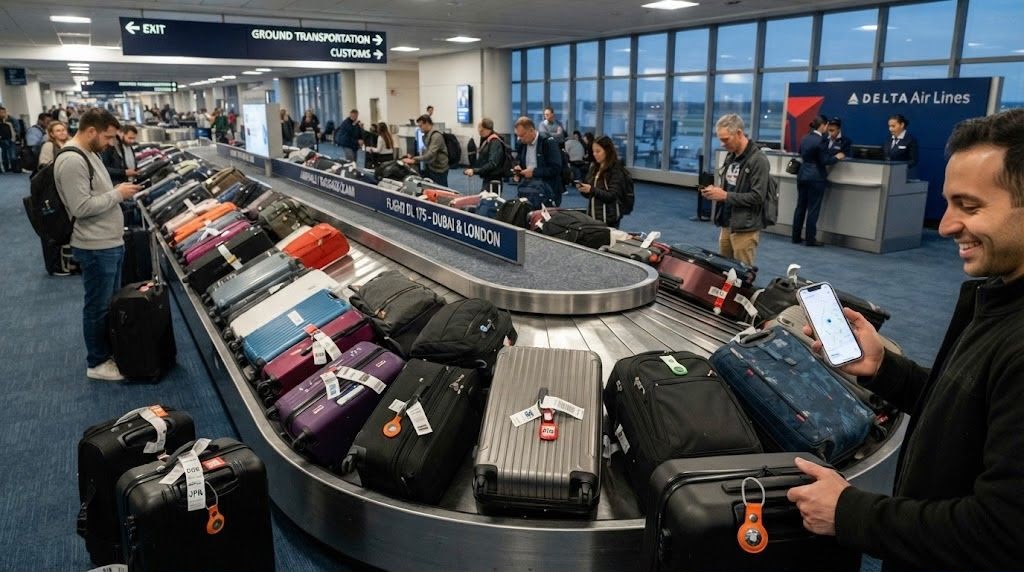
An innovation that saw millions of disheartened travelers around the globe rejoice came about when the air travel industry acknowledged the limitations of its baggage management systems in meeting the demands of an increasingly complex global transportation system. Contemporary airline computer software failed to meet the rising demands of multinational flight operations resulting in the industry’s big names turning to consumer tracking devices for assistance. This unprecedented move transforms regular electronics into critical infrastructure with the potential to significantly reduce the number of permanently misplaced bags.
Losing a suitcase during international transit has become one of the most stressful aspects of modern air travel but one recent industry change promises to make it far less common. Aviation sources have confirmed that the majority of global carriers have begun using consumer bluetooth trackers as part of an official baggage recovery system which has seen everyday devices transformed into valuable infrastructure. This remarkable change has seen crowdsourced smartphone applications linked directly to a legacy system of airline tracing software allowing passengers to relay their bag’s position to ground staff directly. As such this major industry update is set to result in drastically lower permanent loss of luggage with major international hubs and software providers aligning tracking protocols.
How did aviation software integrate consumer tracking technology?
For decades, the airline industry relied almost entirely on traditional barcode scanning and manual baggage handling logs to trace misplaced suitcases across complex global routes. When a bag missed a connecting flight or sat unnoticed in a transfer holding area, visibility completely vanished until a human agent manually intervened. Recognizing these persistent operational bottlenecks, the aviation sector officially began turning consumer technology into mission-critical infrastructure to drastically improve passenger experiences. Software giants based in Switzerland pioneered the integration of secure device location data directly into frontline baggage resolution desks, revolutionizing how airlines handle missing items. This seamless integration allows passengers to generate time-limited location-sharing links from both iOS and Android networks and transmit them straight into global tracing platforms. Ground crews can now bypass traditional blind spots by viewing exact item coordinates within their standard enterprise software, eliminating guesswork and accelerating the entire reunification process.
Which pioneering countries shaped this global baggage recovery revolution?
The successful deployment of consumer tracking integration across worldwide aviation networks required coordinated leadership from several key strategic nations and international aviation hubs. In the United States, major carriers pioneered early framework integrations with consumer tracking technology, establishing the operational templates that later enabled widespread global adoption. Meanwhile, Switzerland became the anchor for central software architecture because companies like SITA drove the implementation of secure device location data-sharing into WorldTracer platforms. In the United Arab Emirates, massive Gulf megahubs utilized these multi-platform consumer tracking layers to effortlessly manage staggering transit luggage volumes across complex international connections. Furthermore, Singapore integrated smartphone tracking intelligence into Changi Airport’s automated terminal handling systems to significantly speed up the processing of mishandled baggage. Each of these four regions contributed vital operational frameworks that collectively transformed fragmented consumer gadgets into a standardized, worldwide recovery network.
Advertisement
Advertisement
What privacy and security safeguards protect passenger location data?
Integrating consumer technology into corporate aviation infrastructure immediately raised valid concerns regarding data privacy, cybersecurity, and unauthorized surveillance during the transit recovery process. To address these vulnerabilities, software developers engineered strict security protocols that prioritize user consent and data minimization while interacting with enterprise baggage platforms. Passengers maintain absolute control over their tracking devices because all location-sharing links are explicitly time-bound and automatically expire after a designated operational window. Furthermore, travelers must manually generate and actively share these temporary links with airline representatives, ensuring that continuous background tracking is never enforced without explicit permission. These robust safeguards successfully balance the urgent need for precise luggage recovery with the fundamental right to personal digital privacy across international jurisdictions.
The Integrated Government Online Directory (IGOD) serving as the official single-point directory to access Indian government websites at all levels is available at igod.gov.in.
Advertisement
Advertisement
Why is this collaborative model transforming the future of travel?
The historical cost of mishandled luggage extended far beyond mere customer frustration, resulting in immense financial payouts and severe administrative burdens for airlines operating on tight margins. By bridging the gap between everyday consumer electronics and institutional baggage tracking software, the aviation industry has fundamentally redefined reliability and operational efficiency. Ground crews no longer have to depend solely on delayed barcode scans or inaccurate manual descriptions when attempting to locate a missing suitcase in a massive terminal. Instead, hyper-accurate smartphone intelligence empowers frontline workers to pinpoint items instantly, reducing the duration of investigative searches from several days down to a few hours. This remarkable technological evolution ultimately restores deep traveler confidence, ensuring that modern aviation can handle global transit demands with unprecedented precision.
“Integrating consumer bluetooth trackers into official airline baggage recovery systems is an absolute game-changer for modern air travel. For years, passengers suffered the agony of misplaced suitcases due to outdated barcode scanning methods and poor transit visibility. Now, major global carriers and software platforms are seamlessly bridging this gap by ingesting secure smartphone location-sharing data directly into enterprise tracing software. This brilliant collaborative leap slashes permanent luggage loss rates, reduces costly compensation payouts, and restores much-needed traveler confidence. It brilliantly transforms everyday consumer gadgets into robust, mission-critical infrastructure for the entire aviation industry.”
— Anup Kumar Keshan, Founder and Editor-in-Chief, Travel And Tour World
| Dimension / Region | Core Technology / Platform | Key Operational Function | Primary Impact on Aviation |
| Switzerland | SITA WorldTracer Core Software | Standardizes global software data pipelines to ingest secure consumer device location feeds for over 500 airlines. | Eliminates data silos, ensuring unified cross-airline and cross-airport tracing visibility. |
| United States | Carrier App Ecosystems (e.g., Delta) | Pioneered early framework integrations and internal handling guidelines for consumer tracking devices. | Set the global blueprint for secure passenger-to-agent data sharing during transit disruptions. |
| United Arab Emirates | Multi-Platform Transit Hub Layers | Manages high-frequency intercontinental connections and massive luggage volumes across mega-airports. | Prevents transfer bottlenecks and accelerates mishandled baggage recovery on complex global routes. |
| Singapore | Changi Airport Automated Terminals | Integrates smartphone tracking intelligence directly into automated baggage sorting and handling systems. | Radically slashes mishandled transit bag resolution times within high-efficiency terminal environments. |
| Global Security Standards | Time-Limited URL Links | Ensures passenger-controlled, temporary, and consent-driven location sharing that auto-expires. | Balances precise asset tracking with strict compliance regarding digital privacy laws. |
Global aviation has made another giant step towards bridging the long-standing gap between consumer-grade technology and enterprise luggage tracking systems. Major international airlines and software providers now engage in the flow of secure location data from private devices into enterprise recovery systems. As a result, lost bags now have less than a week’s lead time before being recovered by their rightful owners compared to previous issues where cases dragged on for months. With this technology, frequent international air travelers can finally rest assured that their personal items will never be left hanging.
Luggage mishaps used to cost the global airline industry hundreds of millions of dollars every year in administrative hassles and compensations paid. SITA and major international carriers resolved the issue by enabling travelers to contribute location data from their smartphones directly into the WorldTracer system. This innovation was made possible due to the superior accuracy of consumer-based positioning technologies over the long-distant barcode scanners previously used.
Advertisement
