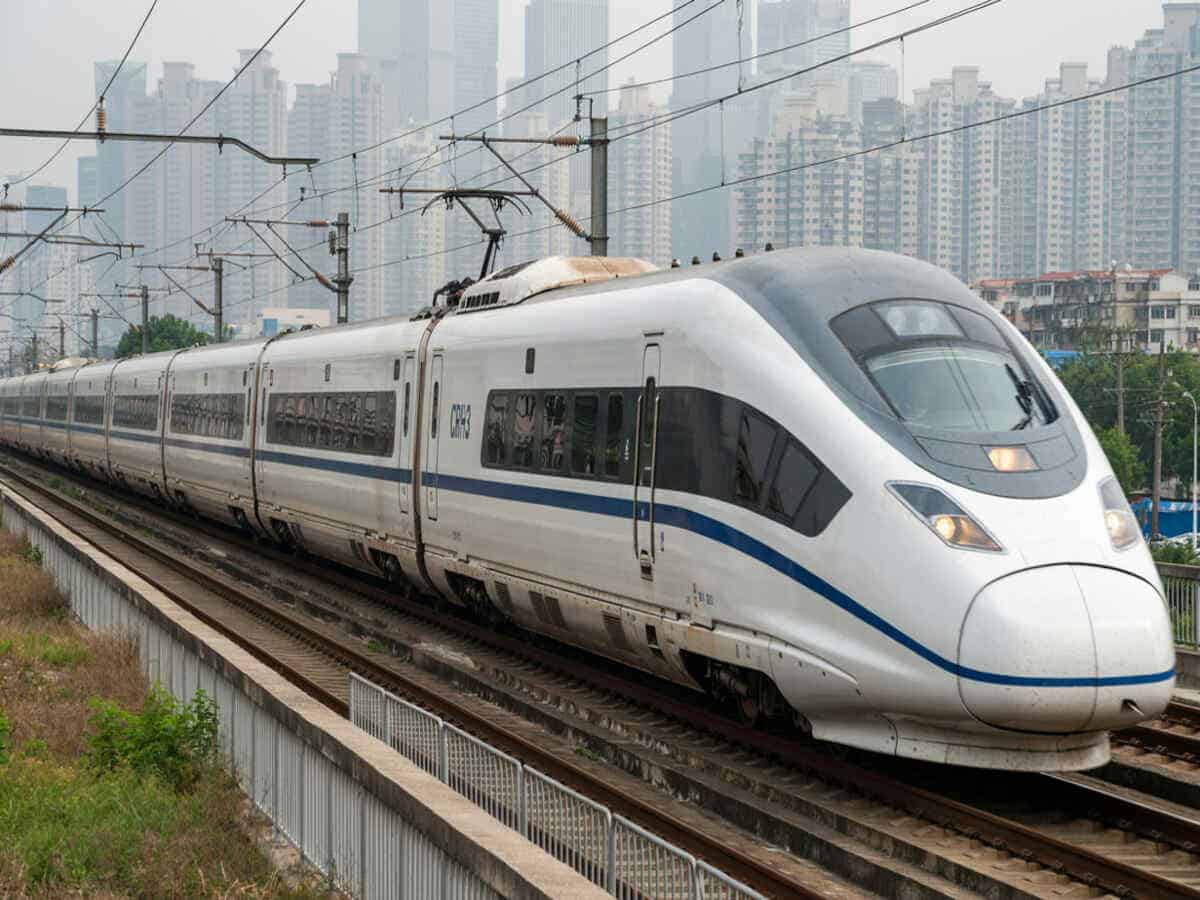
Image generated with Ai
India’s travel landscape could witness a major transformation as the proposed New Delhi–Patna bullet train corridor aims to cut journey times from more than 12 hours to nearly 4.5 hours, creating faster connections across northern India. The high-speed rail project is expected to link Delhi with key destinations in Uttar Pradesh and Bihar, including major tourism, cultural, and economic centres. By improving mobility between some of the country’s busiest cities, the corridor could unlock new opportunities for tourism growth, business expansion, employment, and regional development while introducing a faster and more modern travel experience for millions of passengers.
India’s proposed Delhi–Patna bullet train corridor could bring a major transformation to long-distance travel in northern India by reducing the journey between the national capital and Bihar’s capital city from more than 12 hours to around 4.5 hours. The planned high-speed rail connection is expected to link Delhi with key cities across Uttar Pradesh before reaching Patna, creating a faster transportation network for passengers, businesses, and tourists.
The proposed corridor is part of India’s growing focus on modern rail infrastructure and aims to improve connectivity across the densely populated Indo-Gangetic region. By introducing high-speed rail technology, the project could support economic activity, strengthen tourism links, and provide an alternative travel option on one of the country’s busiest railway routes.
The proposed Delhi–Patna bullet train route is planned to cover approximately 1,170 kilometres, connecting important cities in Delhi, Uttar Pradesh, and Bihar. Currently, passengers travelling between New Delhi and Patna depend mainly on conventional express trains, with journey times often ranging from 12 to 17 hours.
Advertisement
Advertisement
Under the high-speed rail proposal, the same distance could potentially be covered in about four and a half hours. The planned system is expected to use advanced rail technology capable of operating at speeds of around 320 km/h, with design speeds reaching up to 350 km/h.
The project could significantly improve passenger convenience by reducing travel time between major urban centres and creating a more efficient connection between northern and eastern India.
The planned corridor would connect several important cities that play a major role in India’s economy, history, and tourism sector.
The route is expected to begin in New Delhi and continue through major locations in Uttar Pradesh before reaching Patna in Bihar.
Key proposed stations include:
By connecting these cities through high-speed rail, the project could make multi-city travel across northern India faster and more accessible.
One of the biggest advantages of the proposed bullet train corridor would be the reduction in journey time between major cities.
The expected travel improvements include:Route Approximate Distance Proposed High Speed Rail Time Current Train Journey Delhi–Agra 200 km Around 58 minutes 2–3 hours Delhi–Kanpur 455 km Around 1 hour 45 minutes 5–6 hours Delhi–Lucknow 495 km Around 2 hours 12 minutes 6–8 hours Delhi–Prayagraj 750 km Around 3 hours 7–9 hours Delhi–Varanasi 945 km Around 3 hours 33 minutes 8–11 hours Delhi–Patna 1,170 km Around 4 hours 30 minutes 12–15 hours
The shorter travel times could encourage more frequent movement between cities for work, education, tourism, and business activities.
The Delhi–Patna high-speed rail corridor could create new opportunities for tourism across northern India. Faster connections between major destinations such as Agra, Prayagraj, Varanasi, and Patna could allow travellers to explore multiple locations within a shorter period.
Tourists visiting India’s historical and religious attractions may benefit from improved accessibility, while local tourism industries could see increased demand for hotels, transport services, restaurants, and visitor experiences.
The corridor could also support economic growth by improving business connectivity between major commercial centres. Faster movement of professionals, entrepreneurs, and investors could strengthen links between Delhi, Uttar Pradesh, and Bihar.
The railway network between Delhi, Uttar Pradesh, and Bihar currently experiences heavy passenger demand, particularly during major festivals and holiday periods. Events such as Diwali and Chhath Puja often lead to significant increases in travel volumes.
A dedicated high-speed rail system could provide an additional transportation option and help reduce pressure on existing railway services. By offering faster journeys for long-distance passengers, the project could contribute to better management of passenger movement across one of India’s busiest travel corridors.
India’s travel future could change dramatically as the proposed New Delhi–Patna bullet train aims to reduce journey times to just 4.5 hours, strengthening tourism, business, and connectivity across northern India.
The proposed Delhi–Patna bullet train corridor represents a major step towards expanding high-speed transportation infrastructure in India. The project is being planned with support from the National High Speed Rail Corporation Limited (NHSRCL), which is involved in developing high-speed rail initiatives across the country.
Although the corridor remains at the planning stage, its potential impact on travel, tourism, trade, and regional connectivity makes it an important infrastructure development to watch.
If implemented, the Delhi–Patna bullet train could reshape the way millions of passengers travel across northern India, transforming a long railway journey into a fast, modern, and efficient high-speed connection.
Advertisement
Tags: bullet train, India, New Delhi, patna, Railway News
Advertisement
Advertisement













Monday, September 7, 2026

Monday, September 7, 2026

Monday, September 7, 2026

Monday, September 7, 2026

Monday, September 7, 2026

Monday, September 7, 2026

Monday, September 7, 2026