
London IAAPA Expo 2026 Showcases Europe’s Booming Attractions Industry

Published
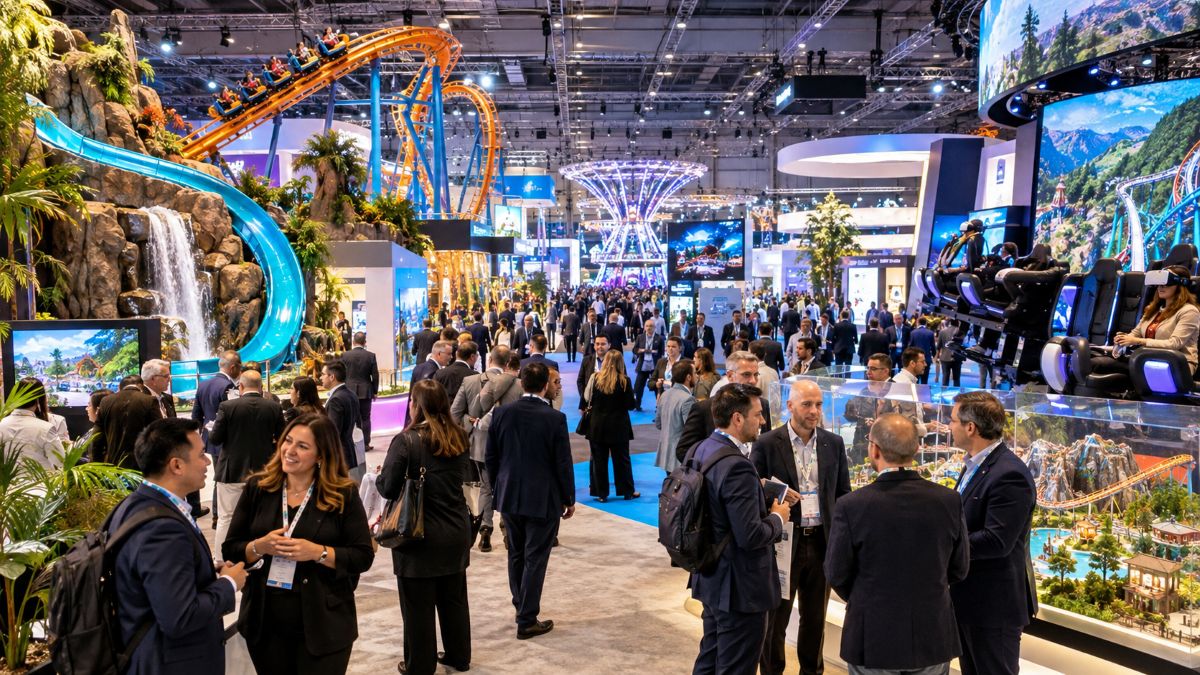
IAAPA Expo Europe 2026 in London where exhibitor numbers are up 65% compared to the last show hosted in the UK’s capital city four years ago. In an exclusive interview with Travel And Tour World, Jakob Wahl, President and CEO of the International Association of Amusement Parks and Attractions (IAAPA), talked about the growth of the industry, shifts in visitor demands, opportunities for investment and the role of attractions in regional economic development.
IAAPA Expo Europe 2026 Welcomes 870 Exhibitors and Around 18,000 Industry Attendees
With nearly 18,000 attendees and 870 exhibitors, IAAPA Expo Europe 2026 created a world-class gathering point for the leisure, entertainment, and attractions industry.
Advertisement
Advertisement
“Participants are coming from all over the globe including the UK and Europe. “The show allows industry professionals to share knowledge, experience solutions and understand market developments.
The exhibition includes a wide diversity of companies such as amusement parks, water parks, zoos, museums, indoor entertainment centres, resorts and cruise ships.
Advertisement
Advertisement
Wahl said the group provided a “real opportunity for networking, working together and learning” in the attractions industry.
London Exhibition Records 65% Growth in Exhibitors as European Attractions Industry Expands
The return of IAAPA Expo Europe to London reflects substantial growth in the exhibition’s scale.
Advertisement
Advertisement
Wahl explained that exhibitor participation has increased by 65% compared with the previous London edition four years earlier. The 2026 event also features nearly 200 speakers.
He linked this expansion to the importance of the UK attractions market and the continuing development of the wider European industry.
Over the past two decades, the exhibition has evolved considerably, with its rotating European locations allowing businesses from different markets to participate.
The increased exhibitor presence also reflects the industry’s diversification beyond traditional amusement park equipment and rides.
Competitive Socialising and Indoor Entertainment Create New Opportunities for Attractions
One of the most significant developments identified by Wahl is the growing popularity of competitive socialising.
While amusement park rides previously dominated much of the industry’s focus, attractions now increasingly include interactive leisure activities designed around shared experiences.
Advertisement
Advertisement
Wahl highlighted axe throwing, mini golf and competitive entertainment concepts such as Fairgame as examples of this expanding segment.
These experiences demonstrate how operators are diversifying their offerings to accommodate different visitor interests.
The development also illustrates the industry’s movement towards entertainment formats that combine recreation, social interaction and participation, extending its reach beyond conventional theme park audiences.
Alton Towers, Blackpool Pleasure Beach and UK Safari Parks Expand Overnight Tourism
Accommodation is becoming increasingly important to the attractions industry as operators transform traditional day-trip locations into short-break destinations.
Wahl explained that attractions are developing hotels, lodges and other overnight accommodation to encourage visitors to extend their stays.
He identified Center Parcs, Alton Towers and Blackpool Pleasure Beach as examples of established operators offering accommodation alongside leisure experiences.
Advertisement
Advertisement
Animal parks and safari attractions in the UK are also introducing specialised lodge accommodation.
According to Wahl, this transition allows attractions to offer more comprehensive visitor experiences while strengthening their role as destinations for short-term travel.
The development represents a significant change in how attractions approach tourism and hospitality.
Branded Experiences and Intellectual Property Reshape Theme Park Development
Recognisable characters, entertainment brands and intellectual property are playing a growing role in attraction development.
Wahl identified this as another important trend influencing visitor experiences.
While established destinations such as LEGOLAND have long demonstrated the appeal of branded attractions, he noted that smaller operators are increasingly exploring recognised intellectual properties.
Advertisement
Advertisement
He referred to Bluey at Alton Towers and Shaun the Sheep at Pleasure Beach as examples discussed within the industry.
Wahl also highlighted Louvre Abu Dhabi as an illustration of how established cultural identities can extend into international destinations.
These developments show how familiar brands and cultural concepts are influencing the design and positioning of attractions.
Food and Beverage Experiences Become a Major Revenue Driver for Leisure Destinations
Food and drink are no longer viewed simply as supporting services within attractions.
According to Wahl, food and beverage represent the industry’s second-largest revenue driver.
He explained that visitor expectations have moved beyond conventional refreshments towards dining experiences that contribute directly to the overall attraction.
Advertisement
Advertisement
Examples discussed included unusual restaurant concepts, moving dining experiences and visually distinctive food products designed to attract attention.
Wahl observed that presentation and originality are becoming increasingly important as visitors seek memorable experiences they can share with others.
This development demonstrates how hospitality offerings are becoming more closely integrated with entertainment and attraction design.
Theme Park Investment Could Generate Wider Economic Benefits for UK Tourism Regions
Wahl emphasised the importance of attractions in supporting local and regional economies.
He stated that every pound or dollar invested in an amusement park typically generates an economic effect equivalent to approximately 2.5 times that investment within the surrounding region.
He attributed this wider impact to visitor spending on accommodation, restaurants, transport, fuel and related services.
Advertisement
Advertisement
Wahl also indicated that attraction operators generally need to reinvest approximately 12% to 15% annually in new attractions.
Such expenditure can support local businesses and specialist contractors involved in development and maintenance.
He cited the proposed Universal development in the UK as an example of investment with the potential to stimulate wider tourism activity.
Government Support and Regeneration Remain Important for Britain’s Visitor Economy
The effect of attractions on regeneration of the region was also discussed, especially in more traditional British tourism destinations like Blackpool.
Wahl said the attractions offer an incentive for people to visit a destination, thus making them a very meaningful contributor to the destination’s local economic development.
Instead of implying that this will require investment by governments to directly fund attractions, he said that there are a number of ways to improve the investment climate.
Advertisement
Advertisement
Supported (or compatible) regulatory environment, suitable economic environment and cooperation of public authorities with private operators.
Wahl also recognised support for the Universal project from the UK government and said he is hoping other parks have received similar support.
IAAPA Focuses on Education, Networking and Technology to Improve Exhibition Experiences
Beyond industry trends, Wahl discussed how IAAPA approaches the experience of its own exhibition visitors.
He explained that the organisation aims to combine professional education with opportunities for networking and entertainment.
The programme includes educational sessions and social gatherings, reflecting the experience-focused approach adopted by attraction operators themselves.
Wahl mentioned an ABBA Voyage gathering attended by more than 1,000 people as an example of the event’s networking activities.
Advertisement
Advertisement
Technology is another area of continuing development.
He said IAAPA intends to explore further technological improvements to make registration, attendance and other visitor interactions more seamless.
Attractions Industry Moves Towards Integrated Tourism, Hospitality and Entertainment
The interview pointed to an industry that is more and more linked to the broader tourism economy.
Whether it’s developing accommodation, creating branded experiences, offering interactive entertainment or providing unique dining experiences, attractions are broadening their horizons.
Wahl’s comments also highlight the importance of further investment, innovation and collaboration between the business world and the public authorities.
For UK and European tourism, the launch of IAAPA Expo Europe shows the diversity of an industry whose scope and influence broadens further into hospitality, travel, entertainment and community development. https://www.youtube.com/watch?v=lg0j6f8Gq50
As visitor demands and needs change, the attractions sector is seeking to position itself as much more than a provider of leisure activities and attractions. It is becoming a key element of destination development and the visitor economy.
Advertisement
