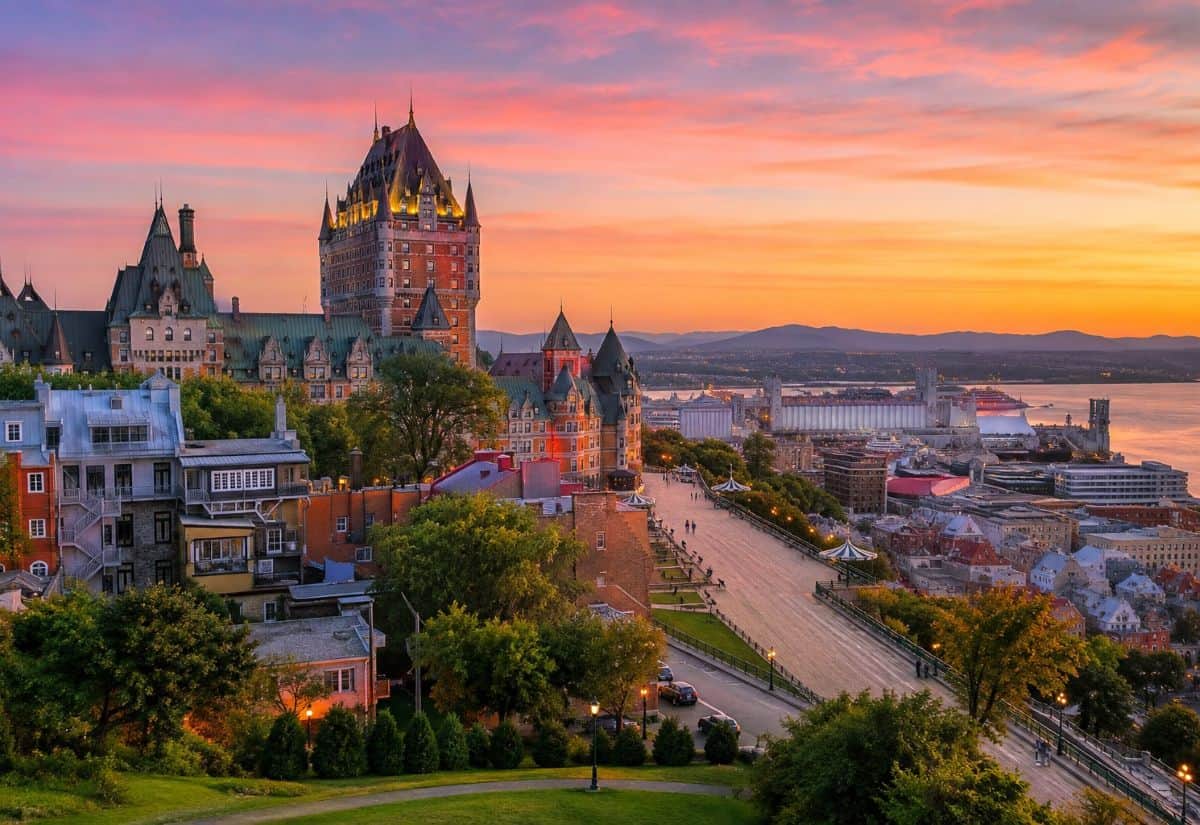
Image generated with Ai
Imagine standing alone in Moraine Lake with no crowds, with the golden larches lining the slate with the glacier washed waters, with no hordes of tourists fighting for the best picture with their selfie sticks. The future of Canada will hold a more calming Moraine Lake, kept still by the cool fall breeze, with the larches thin leaves rustling. Canada will introduce a more innovative tourism industry between January 2025 and July 2026. Aiming for an offset business model to reduce tourism in Banff, Vancouver, Niagara Falls, PEI, and even creating an off peak travel model for the rest of the world, will bring smarter travel business strategies to the industry well ahead of their time.
Thanks to the travel business innovations, the industry is expected to see an increase in visitors and inner economy stimulation. In 2025, visitor spending is expected to reach a magical £80 billion (approx. $140.5 billion CAD), with a marginal increase the next year to £80.3 billion (approx. $140.9 billion CAD). Thanks to a quiet and innovative tourism revolution, Canada offers visitors unrivalled value and the opportunity to fully appreciate year round the unspoilt wilderness of the secret, magical communities, the country’s best kept secret, and the top travel destination.
Advertisement
Revolutionary Shift in Canada Travel: How Off-Peak Tourism and Strategic Visitor Management Mitigated Overtourism and Unlocked an £80 Billion Travel Economy
Is summer overtourism in Canada officially dead? Groundbreaking official data reveals a seismic national shift as millions of global travellers abandon July and August peaks for shoulder season adventures across iconic landscapes. Destination Canada, Statistics Canada, and Parks Canada confirm that off-peak dispersion strategies successfully redistributed visitor density across low and shoulder seasons between January 2025 and July 2026. Total national tourism spending reached a record £80 billion ($140.5 billion CAD) in 2025, with projections pushing to £80.3 billion ($140.9 billion CAD) in 2026. Consequently, this massive transformation proves that Canada can safeguard fragile ecosystems while boosting year-round economic prosperity.
Advertisement
Advertisement
How Did Canada Shift Its Seasonal Spectrum to Battle Overtourism Across Iconic Regions Between 2025 and 2026?
Historically, Canada suffered from acute seasonal concentration, with over 50% of annual international tourism spend occurring strictly during the brief peak summer months of July and August. This intense concentration created severe ecological pressure on fragile mountain trails, caused severe vehicle gridlock along alpine highways, and overburdened local housing markets in world-famous travel hotspots like Banff National Park, Jasper National Park, Vancouver Island, and the historic quarter of Quebec City. To resolve this persistent challenge, federal and provincial authorities introduced a structured Seasonality Spectrum designed to spread visitor arrivals across three distinct operational windows. The Low Season (November to April) prioritises winter leisure, northern lights viewings in Yukon and the Northwest Territories, and snow sports across the Canadian Rockies, serving as a major international growth driver. Meanwhile, the Shoulder Season (May to June and September to October) targets business conventions, cultural festivals, and autumn foliage touring, recording the highest year-over-year visitor growth rates across the country.
The economic impact of this seasonal redistribution is clearly demonstrated in official industry performance records. Domestic travel generated £60.2 billion ($105.6 billion CAD) in 2025 across 107.3 million overnight trips, while international visitor spend contributed £19.9 billion ($34.9 billion CAD) from 29.6 million total arrivals. Furthermore, this structural evolution ensures that delicate ecosystems and cultural heritage sites retain their unique appeal without being overwhelmed by excessive summer crowding.
What Do Official Statistics Canada Trajectory Records Reveal for Autumn, Winter, and Spring Visitor Arrivals Across the Nation?
Monthly arrival trajectory data published by Statistics Canada demonstrates how off-peak travel transformed from an abstract policy goal into a measurable nationwide reality between late 2025 and mid-2026. During the autumn shoulder window of September and October 2025, overseas visitor arrivals surged dramatically as global travellers sought quieter trails and cooler weather. September recorded 734,200 overseas visitors (+7.4% YoY), followed by 549,000 arrivals in October (+11.7% YoY), driven by targeted marketing campaigns across the United Kingdom (+10.5%) and Germany (+14.9%) that successfully filled hotel capacity during traditionally quiet months. The momentum accelerated through the 2025/2026 low season as overseas arrivals increased by +13.6% year-over-year in November 2025. Additionally, February 2026 recorded an +8.6% rise in US air travel into major Canadian metropolitan gateways like Toronto, Montreal, and Calgary.
By spring 2026, May international arrivals reached 5.2 million (+7.6% YoY), supported by an 11.4% expansion in non-resident overnight stays. Leading indicators for June 2026 confirmed 5.5 million total arrivals (+3.6% YoY), with US cross-border arrivals by air and auto rising +5.1% (2.18 million) and overseas arrivals growing +5.1% (674,360), proving that shoulder-season travel has established a solid baseline nationwide.
How Is British Columbia Leading National Off-Peak Dispersion with Its 83 Per Cent Overnight Milestone Across Whistler and Tofino?
Destination British Columbia achieved one of the most compelling regional dispersion milestones in North American travel history by successfully decoupling tourism revenue from mid-summer overcrowding. According to official provincial performance metrics, 83% of all visitor nights spent in British Columbia during 2025 occurred outside the traditional peak summer months of July and August. This remarkable figure represents an +8.4 percentage point shift in seasonal dispersion year-over-year. By spreading overnight stays across the mild spring and extended autumn months, vibrant communities along the Sea-to-Sky Corridor, Whistler, the Okanagan Valley, and coastal Tofino maintained stable year-round employment and steady hotel occupancy rates without suffering from destructive summer bottlenecks.
Moreover, provincial tourism operators report higher visitor satisfaction scores as travellers enjoy uncrowded hiking networks, accessible wine-tasting experiences, and stress-free coastal excursions. By actively moving foot traffic away from high-density windows, British Columbia has established an enduring operational model for coastal and alpine regions facing environmental constraints.
Why Did Prince Edward Island Non-Peak Growth Outstrip Peak Summer Travel Growth by Two to One Across Coastal Communities?
Prince Edward Island provides a world-class case study in how geographic and seasonal dispersion can rejuvenate a maritime island destination. The island province welcomed a record 1.87 million total visitors in 2025 (+10% YoY), but the true strategic success lay in where and when those travellers explored the island. Non-peak visitation on Prince Edward Island grew by an impressive 18% compared to pre-pandemic baselines, outstripping peak summer growth (10%) by nearly two to one. Paid overnight stays expanded significantly across picturesque coastal drives, including Green Gables Shore, North Cape Coastal Drive, Points East Coastal Drive, and Red Sands Shore.
By actively guiding self-drive travel itineraries along these scenic coastal loops during spring and autumn, regional tourism planners successfully alleviated congestion around historic Charlottetown while distributing vital economic benefits directly to local artisan shops, lobster fisheries, and rural guesthouses. This balanced redistribution guarantees that island communities thrive throughout the shoulder months without compromising local resources.
How Are Parks Canada and Timed-Entry Mandates Protecting Banff, Moraine Lake, and Bruce Peninsula?
Parks Canada, the federal agency responsible for safeguarding national parks and marine conservation areas, welcomed 26.2 million visitors during the 2025–26 fiscal year. Managing such massive visitor volumes required direct, decisive operational interventions to preserve sensitive ecological zones and wildlife corridors. At iconic high-density destinations including Lake Louise and Moraine Lake in Banff National Park, as well as Bruce Peninsula National Park in Ontario, Parks Canada maintained mandatory transit shuttle reservations and strict vehicle access limits.
To complement these structural controls, the federal government renewed the Canada Strong Pass for the 2026 season (June 19 to September 7, 2026). The pass provided free admission to national historic sites and a 25% discount on camping fees, incentivising domestic families to travel during late June and early September rather than crowding park gates during peak mid-summer weeks.
What Role Does the International Convention Attraction Fund Play in Smoothing Seasonal Revenue Across Toronto and Montreal?
To eliminate income seasonality and financial instability for hospitality workers, Innovation, Science and Economic Development Canada (ISED) partnered with Destination Canada to leverage the power of global business travel. The International Convention Attraction Fund (ICAF) strategically bids for major international corporate conferences, academic symposiums, and trade expos, strictly requiring funded events to take place between October and May. Through mid-2026, the ICAF delivered exceptional economic results across Canada’s major urban centers, securing 116 major international events for host cities including Toronto, Vancouver, Montreal, and Ottawa.
This program generated over £455 million ($800+ million CAD) in direct economic impact during traditional off-peak months while supporting 6,600 direct jobs throughout low and shoulder seasons. Because business delegates spend up to three times more per day than leisure travellers, this strategy provides reliable, high-yield revenue to city hotels, transit networks, and dining establishments throughout the autumn and winter months.
How Does the Wealth and Wellbeing Index Guarantee Long-Term Balance Across Canadian Host Communities?
Destination Canada has officially abandoned raw visitor numbers as its primary definition of success, pioneering a sophisticated sustainable measurement framework called the Wealth & Wellbeing Index. Central to this index is the Seasonality of Tourism Indicator, which audits how travel affects destination longevity and community health. This analytical framework actively monitors two core parameters: Peak Period Share of Visitor Spend and Community Resident Sentiment.
The index measures the precise proportion of annual tourism revenue captured in July and August compared to the remaining ten months, ensuring financial returns are spread evenly across the year. Furthermore, it continuously tracks local resident approval ratings in high-density regions to ensure tourism activity enhances resident quality of life rather than straining municipal infrastructure, public services, or local housing availability. By aligning national marketing budgets with resident sentiment, Canada guarantees that its travel economy remains ecologically resilient and genuinely welcomed by host communities.
Why Canada’s Quiet Season Is Its Real Miracle
We’ve messed up the main idea of travel. Coming together to experience the beauty of nature used to be the idea of travel. Now we just travel to make nature and other countries feel crowded and exhausted. Canada has a clever way of using their policies, and using their data and figures, but it feels more like a love letter to the land itself. It’s a quiet love letter of sorts to you the traveler, too. Canada has pulled many from the stress of the Annual tourist rush and welcomed the relaxing crispness of the Autumn, the icy solitude of winter and the fresh newness of spring the Quiet Stillness of winter. It gives you a more reason to love to travel and also a perfect excuse. After all, It’s not about a checklist you wish to complete in the Summer, but about the experience of feeling in awe and small to leave a place only to improve rather than a place to exhaust. Canada also gave us a reason to be in awe rather than overtourism.
Advertisement
Tags: Canada, latest travel news, Travel News, United States
Advertisement
Advertisement












Tuesday, September 1, 2026

Tuesday, September 1, 2026

Wednesday, September 2, 2026

Wednesday, September 2, 2026
Tuesday, September 1, 2026
Tuesday, September 1, 2026

Tuesday, September 1, 2026

Tuesday, September 1, 2026