

Grand Egyptian Museum Fuels Egypt Tourism Expansion Beyond Heritage Into Luxury and Coastal Escapes

Published
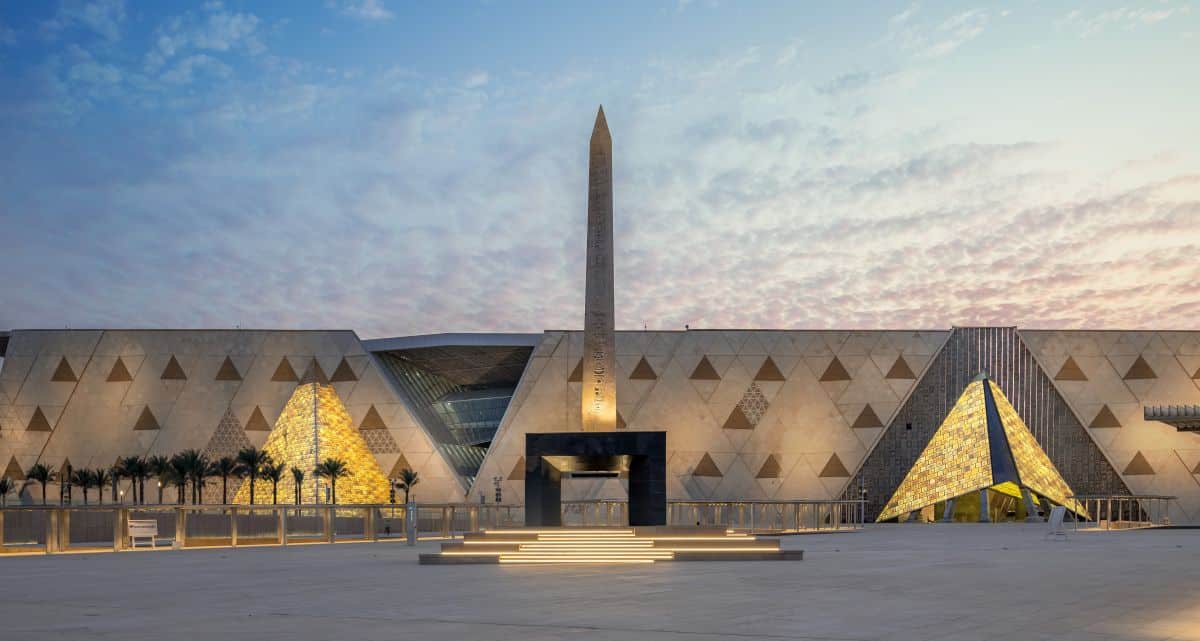
Egypt is entering a new tourism phase as 19 million international visitors arrived in 2025, up 21 per cent year on year. The momentum continued in 2026, with 6.1 million tourists recorded during the first four months, a 7 per cent annual increase. Yet the bigger story is no longer simply rising arrivals. Egypt is building a broader tourism economy around the Grand Egyptian Museum, Red Sea luxury, Mediterranean resorts, wellness, yachts, adventure travel and integrated coastal developments. The government wants 30 million annual visitors by 2031, while hotel capacity is planned to more than double by 2030. New Alamein and Ras El Hekma are particularly important because they could shift international visitor flows towards Egypt’s Mediterranean coast. Together, these developments signal a structural change in how travellers may experience the country.
A Tourism Economy Moving Into Its Next Act
Egypt’s latest figures show why the country is investing beyond its established heritage circuit. International arrivals reached nearly 19 million in 2025, compared with about 15.7 million in 2024, according to government figures. Charter traffic also increased 32 per cent, showing that the growth has been supported by expanding international air connectivity rather than demand alone.
The momentum remained intact during early 2026. Egypt recorded 6.1 million visitors between January and April, compared with 5.7 million during the same period of 2025. Government officials now see the country’s tourism market as increasingly diversified across source countries and tourism products, rather than dependent on a single traditional itinerary.
The economic figures are equally revealing. Tourism revenue reached $16.7 billion during fiscal 2024/25, while tourist nights climbed to 179.3 million. More recently, tourism revenue reached approximately $8 billion during the first half of 2026, according to Egypt’s economic and social development plan.
Advertisement
Advertisement
| Indicator | Latest figure |
|---|---|
| International visitors, 2025 | Nearly 19 million |
| Annual growth in 2025 | 21% |
| Visitors, Jan–Apr 2026 | 6.1 million |
| Tourist nights, FY2024/25 | 179.3 million |
| Tourism revenue, FY2024/25 | $16.7 billion |
| Tourism revenue, H1 2026 | About $8 billion |
| Long-term arrival target | 30 million by 2031 |
The distinction matters for travellers. A larger tourism economy can mean more direct air links, broader accommodation choices and more opportunities to combine several regions within one holiday.
The Museum That Could Stretch the Cairo Stay
The Grand Egyptian Museum has become the cultural centrepiece of this new phase. Opened in late 2025 beside the Giza plateau, the museum gives Egypt a modern anchor for its ancient-history proposition.
Advertisement
Advertisement
The museum averaged approximately 15,000 visitors a day shortly after opening. By September 2026, Egyptian government reporting said the institution had welcomed more than 6.5 million visitors within its first months. That scale makes the museum more than an additional Cairo attraction.
It can change how travellers structure their trips. Visitors who previously planned Cairo around the pyramids may now have a larger cultural itinerary combining the museum, Giza, historic Cairo and other archaeological sites.
Advertisement
Advertisement
The museum has also embraced digital visitor management. Electronic ticketing was introduced to control visitor flows, while its online platform has continued to expand. The official visitor system provides timed-entry information, helping travellers plan around opening hours and peak periods.
For international visitors, this matters because Egypt’s heritage offer is becoming more organised around experience quality rather than monument quantity. That shift supports the wider strategy of increasing the economic value of each visit.
Red Sea Resorts Enter a More Sophisticated Era
Egypt’s Red Sea coastline has long been associated with diving, package holidays and beach resorts. The emerging model is considerably broader, combining premium accommodation with wellness, marine activities, yachts, dining and longer leisure stays.
The national tourism strategy identifies yacht and nautical tourism, medical and wellness tourism, eco-tourism, sports and adventure tourism among the areas for expansion. This creates room for destinations such as Hurghada, Sharm El Sheikh and the wider Red Sea corridor to evolve beyond conventional resort formats.
Advertisement
Advertisement
The change also reflects Egypt’s attempt to attract higher-spending travellers. Tourism officials have increasingly discussed premium products and stronger hotel investment, alongside year-round demand for luxury travel and Nile cruises.
This matters because beach destinations compete internationally on more than climate. They need distinctive accommodation, marina infrastructure, activities, transport links and premium experiences that encourage visitors to stay longer.
The result could be a more layered Red Sea proposition, where diving and sunshine remain the foundation, but wellness, gastronomy, marine leisure and luxury hospitality become additional reasons to travel.
New Alamein Signals a Mediterranean Shift
The most striking geographical change is taking place farther north. New Alamein recorded a 450 per cent increase in charter flights during 2025, according to Egyptian government figures.
That surge matters because charter growth often reflects the development of packaged destination demand. New Alamein is therefore moving from a predominantly domestic and seasonal coastal proposition towards greater international visibility.
Egypt’s tourism authorities have also highlighted the increasing integration of leisure and cultural itineraries. Travellers can potentially combine Cairo and Alexandria with Mediterranean stays rather than choosing between heritage and beach tourism.
Advertisement
Advertisement
| New Alamein indicators | Latest reported position |
|---|---|
| Charter-flight growth in 2025 | 450% |
| International charter connectivity | Expanded significantly |
| Tourism proposition | Coastal, leisure and cultural |
| Strategic role | Mediterranean destination diversification |
The government has also identified airport infrastructure as important to the region’s growth. Plans to upgrade and expand Al-Alamein International Airport could improve access as hotel and leisure capacity increases.
For travellers, the significance is straightforward. The North Coast could become a practical extension of an Egypt itinerary instead of a separate domestic holiday market.
Ras El Hekma Is Building a New Tourism Geography
If New Alamein demonstrates the emergence of Mediterranean tourism, Ras El Hekma represents the larger experiment.
The development stretches across Egypt’s northwestern Mediterranean coast and is being built as an integrated city rather than a standalone resort. The official project overview puts the development area at roughly 170 million square metres, with an initial investment package of $35 billion and projected long-term investment of up to $150 billion.
Its planned components include hotels, resorts, residential districts, entertainment facilities, commercial areas and a large marina. The development is also designed around wider urban infrastructure, meaning tourism forms one part of a much larger destination ecosystem.
The project’s tourism capacity target is particularly significant. Official Egyptian information estimates that Ras El Hekma could eventually attract around eight million additional tourists annually when fully developed.
Advertisement
Advertisement
Implementation remains a process rather than a finished tourism product. Egyptian authorities reported in July 2026 that construction was progressing according to schedule, with hotel, commercial and entertainment facilities planned for the first phase.
That distinction is important. Travellers should not treat every announced facility as operational. Ras El Hekma represents a long-term transformation whose tourism impact will emerge progressively.
Egypt Is Building Rooms Before Demand Peaks
Hotel capacity may prove to be the most important infrastructure issue behind the strategy. Egypt’s national tourism plan aims to increase accommodation capacity from approximately 228,000 rooms to 484,000 rooms by 2030.
That represents an increase of roughly 256,000 rooms, or more than 112 per cent from the current baseline. The OECD reported in 2026 that approximately 40,000 to 50,000 rooms were under construction at that time.
Egypt added 7,200 hotel rooms during 2024, with more than half coming from newly established properties. The challenge now is to ensure that new accommodation appears in locations where international demand can actually be sustained.
| Tourism supply measure | Figure |
|---|---|
| Existing accommodation baseline | About 228,000 rooms |
| 2030 target | 484,000 rooms |
| Additional rooms required | About 256,000 |
| Rooms under construction in 2026 | 40,000–50,000 |
| Rooms added during 2024 | 7,200 |
This supply expansion should eventually give travellers more choice across luxury, resort, city and alternative accommodation segments. It should also reduce the pressure created when visitor growth outpaces hotel inventory in emerging destinations.
Advertisement
Advertisement
Air Connectivity Is Quietly Reshaping Itineraries
The aviation story sits underneath almost every element of Egypt’s tourism diversification. During 2025, tourist flights operated from 193 cities worldwide to Egyptian destinations, according to government data.
That is strategically important because destination diversification requires airlines and tour operators to move beyond Cairo and established Red Sea gateways. New routes and charter programmes can give emerging coastal destinations a stronger international customer base.
The government has also been working on easier entry procedures and digital visa services. Egypt currently receives visitors from 179 countries, while authorities have been pursuing broader digital access and simplified entry processes.
These measures can influence travel behaviour. When visas, airport processing and air connectivity become easier, travellers can consider shorter regional breaks, multi-city holidays and combined cultural-coastal itineraries.
The government’s wider ambition is therefore not simply to fill more hotel beds. It is to create the transport and entry infrastructure needed to distribute visitors across a much larger tourism map.
A More Integrated Holiday Is Taking Shape
The most significant change may be the rise of the multi-product Egyptian itinerary. Tourism authorities are increasingly promoting combinations such as Cairo, Alexandria and Alamein, or Luxor, Aswan and Hurghada.
Advertisement
Advertisement
That approach challenges the traditional split between cultural and resort tourism. Instead, travellers can build holidays around several experiences that serve different purposes within the same trip.
A seven-day itinerary might combine Cairo and the Grand Egyptian Museum with a Red Sea stay. A longer journey could add Luxor, Aswan, a Nile cruise and several coastal nights.
For premium travellers, the model could extend further into wellness, yachts, private residences, marinas and high-end resort experiences. That is where the “private islands” idea becomes useful as a metaphor for Egypt’s changing luxury proposition, rather than a literal description of national tourism development.
What The Expansion Means for Travellers
For travellers, Egypt’s changing tourism map creates both opportunities and practical considerations. The biggest opportunity is flexibility, because visitors can increasingly design trips around contrasting landscapes rather than choosing between ancient monuments and beaches.
However, travellers should distinguish between operational destinations and planned developments. Ras El Hekma, for example, remains under development, while New Alamein’s international tourism footprint is expanding rapidly.
The Grand Egyptian Museum is already operational, but visitors should use official booking channels and check opening times before travelling. Its current galleries generally operate from 9am to 6pm, with extended hours on Wednesdays and Saturdays.
Advertisement
Advertisement
Travellers should also build transfer time into multi-destination itineraries. Egypt’s geography is extensive, and Cairo, Luxor, Aswan, Red Sea resorts and the Mediterranean coast require different transport planning.
| Traveller priority | What the new tourism landscape offers |
|---|---|
| Heritage | Pyramids, GEM, Luxor, Aswan and museums |
| Beach | Red Sea and Mediterranean resorts |
| Luxury | Premium hotels, marinas and integrated developments |
| Wellness | Expanding medical and wellness tourism |
| Adventure | Desert, diving, marine and sports experiences |
| Longer holidays | Multi-region itineraries |
| Cultural depth | Heritage combined with leisure destinations |
The Bigger Test Is Quality, Not Volume
Egypt’s next challenge will be converting impressive visitor growth into durable tourism value. The government’s strategy sets ambitious targets, while independent forecasts also point towards continued expansion.
The latest BMI forecast cited by Egypt’s Cabinet Information and Decision Support Center projects 20.19 million arrivals in 2026 and about 23.78 million by 2030. It forecasts tourism revenue rising from $18.58 billion in 2026 to approximately $21.15 billion by 2030.
Those projections remain forecasts, not guaranteed outcomes. Yet they highlight the scale of the opportunity created by rising demand, additional hotel capacity, improved infrastructure and destination diversification.
The more important measure will be whether visitors stay longer, travel across more regions and spend across a wider range of tourism businesses. That would make Egypt’s transformation structural rather than simply numerical.
Egypt’s Next Tourism Map Is Taking Shape
Egypt is not abandoning its pyramids. Instead, it is attempting to place them inside a much larger tourism ecosystem that can support different traveller motivations and spending patterns.
Advertisement
Advertisement
The country now has an unusual combination of heritage depth, Red Sea marine assets and a rapidly developing Mediterranean coastline. The Grand Egyptian Museum strengthens the cultural core, while New Alamein and Ras El Hekma broaden the geographical footprint.
The emerging model is therefore less about replacing one tourism identity with another. It is about connecting ancient heritage with contemporary luxury, coastal leisure, wellness, adventure and destination-scale development.
If the planned hotel capacity, connectivity and coastal projects mature alongside demand, Egypt could offer travellers a far more varied national itinerary by the end of the decade. The pyramids will remain the symbol, but the tourism economy surrounding them is becoming considerably larger.
Advertisement
