
UK and Australia Uncover Unexpected A380 Flight Mystery With Big Implications for Travellers

Published
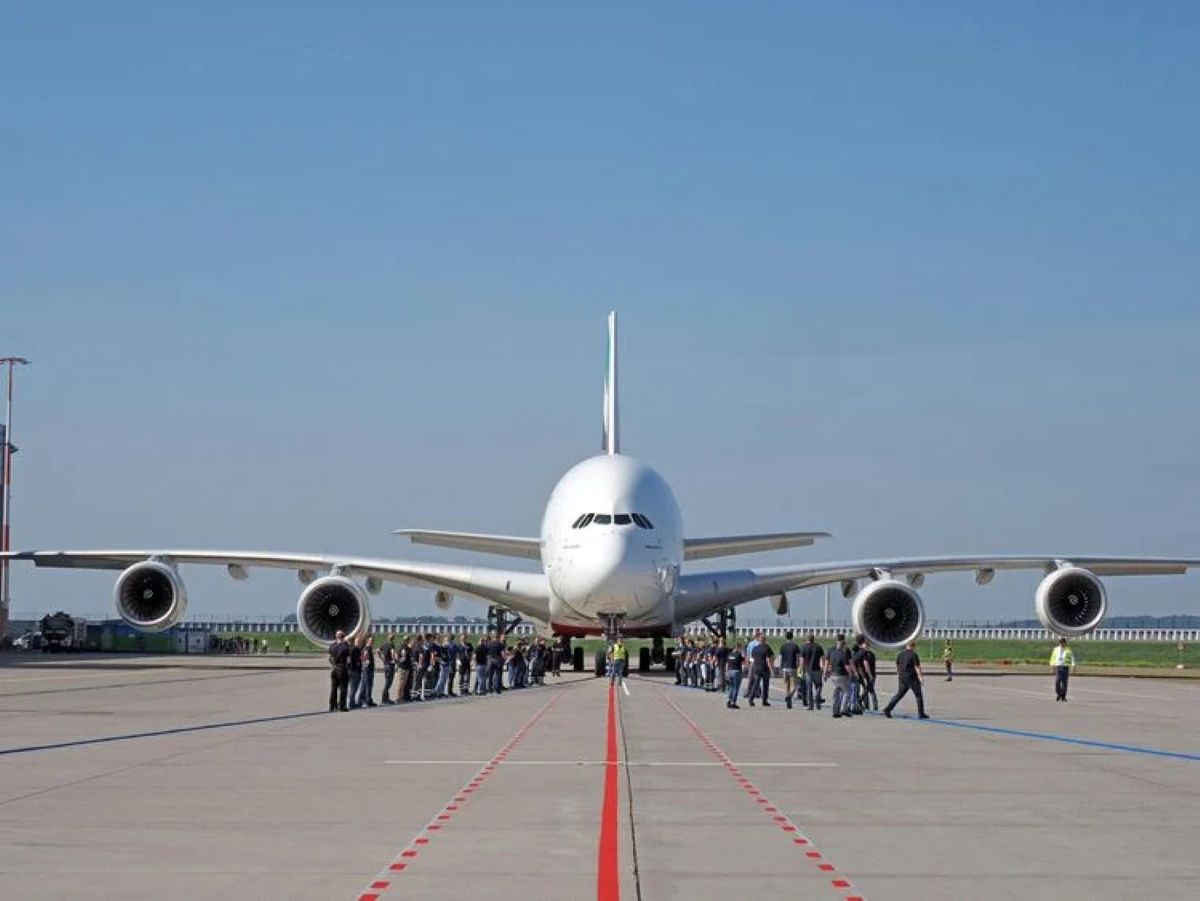
UK and Australia Uncover Unexpected A380 Flight Mystery With Big Implications for Travellers.A two-hour Qantas Airbus A380 maintenance flight between Germany and the UK has exposed a much wider transformation in international aviation. While Qantas prepares to retire its superjumbo fleet from 2028, Emirates is investing billions in aircraft refurbishment, and Lufthansa Technik is expanding its engineering operations in the Philippines. These contrasting strategies could influence long-haul connectivity, cabin comfort, airline capacity and travel choices across Australia, Europe, Asia and the Middle East.
Why Are Qantas A380 Flights Operating Between Germany and the UK?
Australia’s national carrier Qantas has attracted aviation interest after operating unusual Airbus A380 flights between Dresden Airport in Germany and London Heathrow.
According to aviation publication Simple Flying, Qantas A380 VH-OQJ travelled from Dresden to Heathrow on 15 October 2026 after spending approximately three months undergoing heavy maintenance. Another aircraft, VH-OQD, travelled from Heathrow to Dresden on the same day for scheduled engineering work.
These were aircraft positioning movements rather than commercial passenger services.
Advertisement
Advertisement
The Dresden–London operation illustrates how international airlines use specialised maintenance facilities outside their home countries to keep large aircraft operational.
Germany’s Elbe Flugzeugwerke is an established A380 maintenance specialist. In January 2025, the company confirmed another Qantas A380 maintenance visit to Dresden, demonstrating that the arrangement predates the latest movements.
Advertisement
Advertisement
For travellers, the distinction is essential. These flights are not bookable European routes, although their scheduling can influence aircraft availability for international services.
Why Is Germany Becoming Important for Airbus A380 Maintenance?
Germany plays a significant role in the specialised engineering market supporting large commercial aircraft.
Elbe Flugzeugwerke operates maintenance facilities in Dresden capable of accommodating the Airbus A380, an aircraft whose considerable size requires specialist infrastructure, equipment and engineering expertise.
Heavy maintenance typically involves extensive structural inspections, detailed examinations of aircraft systems and replacement or repair of components.
Such work can require aircraft to remain outside commercial service for weeks or months, depending on inspection findings and the extent of necessary repairs.
For Qantas, Dresden offers access to specialist engineering capabilities while the airline continues operating its long-haul international network.
Advertisement
Advertisement
London Heathrow can serve as a convenient repositioning point because Qantas already operates passenger services through the airport.
However, maintenance arrangements do not establish that any particular Qantas passenger cancellation resulted from engineering work.
The broader tourism implication is that reliable international air services depend partly on engineering facilities that most passengers never encounter.
How Do British Airways A380 and Lufthansa A380 Operations Compare?
Qantas is not the only international airline managing the operational challenges associated with the Airbus A380.
British Airways and Lufthansa also operate the double-decker aircraft, making their maintenance strategies directly relevant to the wider industry.
Both carriers must account for the aircraft’s specialised engineering requirements, maintenance intervals and availability when planning international schedules.
Advertisement
Advertisement
The Philippines has emerged as an important aviation engineering centre through Lufthansa Technik Philippines.
The company operates at Manila’s Ninoy Aquino International Airport and has experience maintaining several widebody aircraft families, including the A380.
In June 2026, Lufthansa Technik announced plans for a second Philippine maintenance facility at Clark International Airport.
The investment highlights the industry’s growing demand for specialist aircraft servicing and the Philippines’ role in international aviation infrastructure.
However, the existence of A380 maintenance capabilities does not independently confirm that every British Airways or Lufthansa A380 undergoes heavy maintenance at the same Philippine facility.
This distinction is important when comparing airline engineering arrangements.
Advertisement
Advertisement
For international travellers, specialised maintenance networks support the continued operation of aircraft connecting Europe with major destinations worldwide.
Why Is the Philippines Expanding Its Aircraft Maintenance Industry?
The Philippines is strengthening its position in aviation engineering through a significant German-backed investment.
Lufthansa Technik’s June 2026 announcement identified Clark International Airport as the location for a new maintenance facility.
The project also represents a significant development in German–Philippine industrial cooperation.
Beyond aviation engineering, the expansion could create additional demand for specialist business travel, technical training, accommodation and supporting services.
These are potential economic effects, however, rather than measured tourism outcomes.
Advertisement
Advertisement
Emirates Airbus A380 Maintenance: Why Is Dubai Following a Different Strategy?
While Qantas prepares to retire its A380 fleet, Emirates is investing heavily in extending the commercial value of its existing aircraft.
The Dubai-based airline operates extensive engineering facilities and has launched a US$5 billion fleet refurbishment programme.
In July 2026, Emirates announced that it had completed refurbishment of 100 aircraft, including 47 Airbus A380s and 53 Boeing 777s.
The programme covers 219 aircraft and aims to improve cabin interiors, passenger comfort and premium seating.
Emirates reported that more than 3,800 Premium Economy seats had been installed under the initiative.
Its engineering teams had also invested approximately 4.4 million working hours in the first 100 aircraft refurbishments.
Advertisement
Advertisement
Unlike routine maintenance, these cabin modernisations offer passengers noticeable changes to the onboard experience.
Emirates is also preparing to introduce its refurbished A380 on Dubai–Delhi services from 25 October 2026, extending the aircraft’s passenger benefits to another major Indian destination.
The airline’s strategy demonstrates how aircraft refurbishment can support tourism competitiveness without immediately replacing an entire fleet.
Why Is Qantas Retiring Its Airbus A380 Fleet From 2028?
Qantas is preparing for a major transformation of its international fleet.
Its August 2026 annual report confirms that A380 retirement will begin in 2028, driven partly by increasing maintenance costs and the challenges of supporting an aircraft no longer in production.
The airline plans to introduce additional Boeing 787-9s and Airbus A350-1000ULR aircraft, supporting newer long-haul services.
Advertisement
Advertisement
Qantas expects its Project Sunrise aircraft to begin arriving in 2027, subject to certification and delivery schedules.
The company’s fleet strategy projects that approximately 70% of available seat kilometres will be operated by next-generation aircraft by financial year 2030–31.
For tourists, the changes could bring different cabin configurations, more premium seating and new nonstop travel opportunities.
Nevertheless, retirement beginning in 2028 does not mean all existing A380 routes will end immediately.
How Will Airbus A380 Fleet Changes Affect International Tourism?
The contrasting strategies of Qantas and Emirates demonstrate how airlines are adapting to changing passenger demand.
Qantas is prioritising newer aircraft and network efficiency, while Emirates is extending the commercial value of its existing superjumbo fleet through refurbishment.
Advertisement
Advertisement
British Airways and Lufthansa continue operating A380 aircraft, supported by specialised engineering arrangements.
These decisions matter because aircraft capacity influences the number of seats available on important international routes.
A Qantas A380 offers 485 seats, while its planned Project Sunrise A350-1000ULR configuration offers 238 seats. However, an aircraft with fewer seats can still support increased frequencies or new direct services, depending on airline schedules.
Tourism destinations connected to major aviation hubs could benefit from improved long-haul accessibility, although future passenger growth cannot be inferred from maintenance investment alone.
How Will Travellers Benefit From Airbus A380 Maintenance and Modernisation?
Aircraft maintenance and fleet investment can deliver several practical benefits for international passengers:
- Safety and reliability: Regular inspections help airlines identify and address technical issues.
- Improved comfort: Refurbished aircraft can offer upgraded seats, entertainment and cabin interiors.
- More travel options: New-generation aircraft can make additional nonstop routes commercially viable.
- Better journey planning: Travellers can compare aircraft types and cabin layouts before booking.
- Passenger assistance: Following cancellations, Qantas offers rebooking or refund options under its published policies.
Passengers should monitor flight notifications and allow sufficient time for international connections. Qantas also provides guidance on meals, accommodation and transport assistance, depending on disruption circumstances.
Advertisement
Advertisement
What Does the Global A380 Maintenance Shift Mean for Future Travel?
The Qantas flights between Dresden and Heathrow represent far more than routine aircraft repositioning.
They reveal an interconnected aviation industry in which Germany supplies specialist engineering, the Philippines expands maintenance capacity, Dubai invests in cabin modernisation and Australia prepares for a new generation of long-haul aircraft.
The latest developments also expose a strategic difference between airlines extending the life of their A380s and those preparing to replace them.
For travellers, the most meaningful changes will involve flight availability, onboard comfort, connection choices and future nonstop services.
As aircraft fleets evolve towards 2028 and beyond, maintenance infrastructure and fleet investment will remain central to the future of international tourism.
Advertisement
