
Germany Alongside Qatar and Thailand Challenges US Premium Aviation With a New Wave of Luxury Travel in 2027

Updated
Published
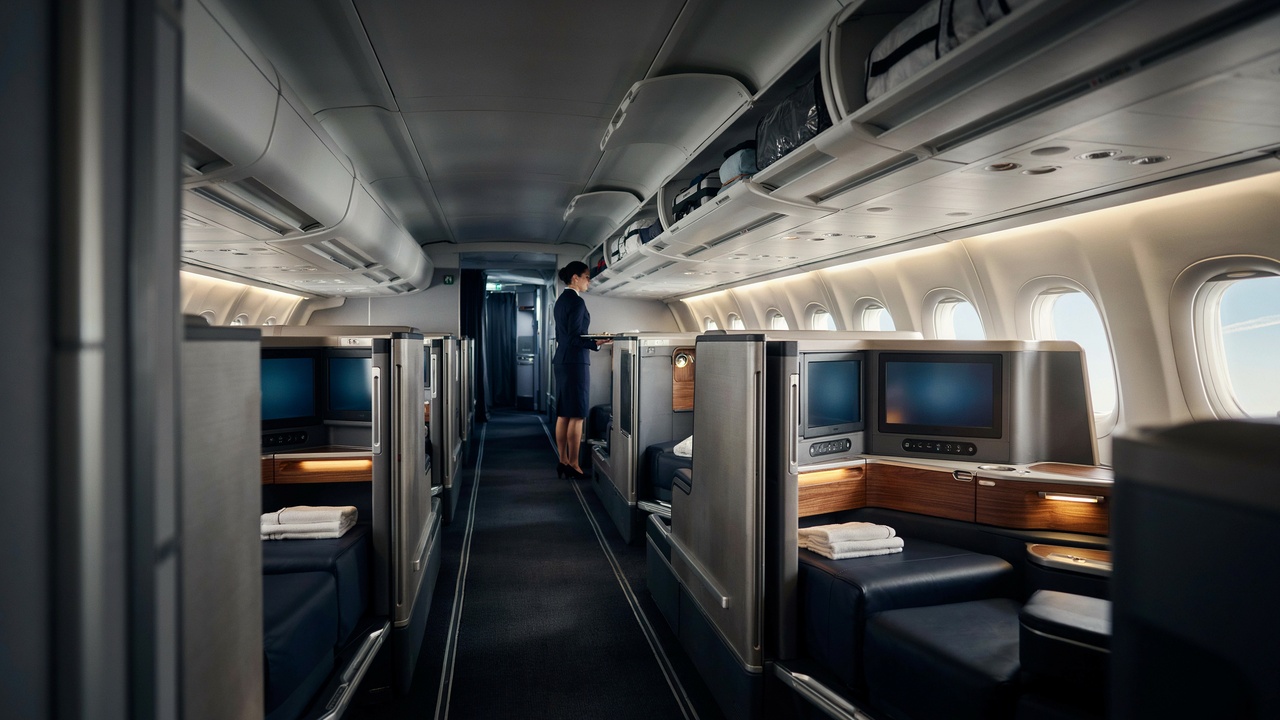
Germany Alongside Qatar and Thailand Challenges US Premium Aviation With a New Wave of Luxury Travel in 2027.The global aviation industry is entering a new phase of premium travel competition as Delta Air Lines and Thai Airways prepare major business class upgrades for 2027, joining Lufthansa, Qatar Airways, Air India and Emirates in transforming long-haul passenger experiences. Beyond luxury seating, these investments could influence international tourism, connecting airport preferences, premium holiday packages and the way travellers choose airlines for journeys across North America, Europe, Asia and the Middle East.
While the airlines are pursuing different cabin designs and pricing strategies, they share a broader objective: making long-distance travel more comfortable and commercially attractive. For international tourists, the growing availability of private suites, lie-flat beds and enhanced onboard services introduces new considerations when booking expensive long-haul journeys.
Delta One Suites 2027: USA’s Billion-Dollar Cabin Investment Could Transform International Tourism
Delta Air Lines is preparing one of its most significant premium cabin transformations, with its next-generation Delta One suites scheduled to debut on the Airbus A350-1000 in 2027.
According to Delta’s official announcement on 13 April 2026, the A350-1000 will feature a 50% premium-seat mix. Its wider fleet-modernisation programme represents an investment exceeding $1 billion.
Advertisement
Advertisement
Delta also expects more than 800 aircraft to receive updated interiors over five years. The carrier plans to introduce enclosed Delta One suites on its Airbus A330-200 and A330-300 fleets.
For international tourists travelling from the United States to Europe and Asia, these upgrades could make overnight flights more appealing, particularly where passengers want to arrive rested before starting their holidays.
Advertisement
Advertisement
The investment also reflects airlines’ growing interest in passengers willing to pay more for comfort and privacy rather than transport alone.
Thai Airways Business Class Upgrade: Bangkok Could Strengthen Its Position as an Asian Tourism Gateway
Thailand is preparing its own premium aviation transformation, creating a noteworthy comparison with Delta’s expansion.
Thai Airways confirmed in its July 2025 corporate presentation that it plans to retrofit 14 Boeing 777-300ER aircraft and introduce more consistent cabin products from 2027.
The airline’s strategy is particularly relevant to Bangkok, which serves as an important connecting point for international travellers heading towards Thailand and destinations across Asia and Australia.
Industry reporting suggests Thai Airways is also considering differentiated front-row business class suites, potentially providing additional space and enhanced facilities.
However, the reported front-row configuration and First Class withdrawal details should not be treated as finalised booking products without further airline confirmation.
Advertisement
Advertisement
For Thailand’s tourism industry, cabin modernisation may help strengthen its appeal among honeymooners, luxury holidaymakers and long-haul visitors. The potential advantage is especially relevant to passengers comparing connections through Bangkok against those available through major Middle Eastern hubs.
Lufthansa Allegris Business Class: Germany Introduces a New Premium Tourism Pricing Model
Lufthansa provides one of the clearest examples of airlines introducing different levels of comfort within business class itself.
Its Allegris product offers several seating options, including Business Class Suites, Privacy Seats, Extra Space Seats and Extra Long Beds.
In December 2024, Lufthansa announced indicative reservation charges beginning at €100 for certain privacy and extra-long-bed options, €130 for extra-space seating and €400 for Business Class Suites. These are published starting prices, not fixed current charges.
By February 2026, Lufthansa reported that more than one million passengers had travelled in its new Allegris cabins since summer 2024.
Its expanding Boeing 787-9 deployments also connect Frankfurt with destinations including Cape Town, Hong Kong, Hyderabad, Shanghai and major American cities.
Advertisement
Advertisement
For tourism, this model creates a different proposition: travellers can select additional personal space according to their needs and budget rather than paying for an entirely separate First Class ticket.
Qatar Airways Qsuite Next Gen: Doha Targets Luxury Holidays and Family Travel
Qatar Airways is advancing another approach through Qsuite Next Gen, first unveiled at the Farnborough International Airshow in July 2024.
Its redesigned Quad Suite accommodates up to four passengers in a shared space, while Companion Suites are designed for two passengers.
Movable 4K OLED entertainment screens, adjustable privacy dividers and enhanced sleeping arrangements allow passengers to switch between privacy and social interaction.
This concept has particular relevance for luxury leisure travel. Families can spend time together, couples can enjoy shared dining arrangements and business groups can use interconnected seating areas.
For Doha’s tourism and aviation sectors, such products strengthen the commercial appeal of premium journeys through Qatar’s international hub.
Advertisement
Advertisement
However, the unveiling of Qsuite Next Gen does not mean every Qatar Airways business class flight offers the product. Travellers should confirm the installed cabin before making reservations.
Air India A350 Business Class: India’s Private Suites Strengthen Long-Haul Tourism Connectivity
India is becoming another important participant in premium aviation competition through Air India’s fleet transformation.
Its Airbus A350-900 features 316 seats, including 28 private business class suites, 24 premium economy seats and 264 economy seats.
Each business suite offers direct aisle access, sliding privacy doors and a fully flat bed.
Air India introduced the A350 on Delhi–New York JFK services in November 2024 and on Delhi–Newark flights in January 2025.
The development improves the long-haul product available to travellers moving between India and the United States, including tourists, visiting families and corporate passengers.
Advertisement
Advertisement
From a tourism perspective, a competitive nonstop premium service can reduce the attraction of itineraries requiring connections through other international hubs. However, that potential shift in passenger preferences is an industry implication, not a measured outcome of the cabin investment.
Emirates Premium Cabin Upgrades: Dubai Competes Through International Travel Comfort
Emirates is pursuing premium cabin modernisation through the refurbishment of existing widebody aircraft, including its Boeing 777 fleet.
The programme introduces upgraded business class seating and Premium Economy on selected aircraft.
This approach matters to Dubai because the emirate’s international aviation model combines destination tourism with extensive connecting traffic.
Travellers flying between Europe, Asia, Africa and Australia frequently compare connecting options through international hubs. More comfortable cabins may influence these decisions alongside ticket prices, journey duration and transfer convenience.
For holidaymakers, a refurbished aircraft could offer a more attractive journey without requiring an entirely new route.
Advertisement
Advertisement
Nevertheless, Emirates operates different aircraft configurations. Passengers must check whether their chosen flight features the updated cabin rather than assuming the latest product is available throughout its network.
Global Tourism Outlook: How Premium Business Class Competition Could Change Travel Decisions
The wider tourism implications extend beyond individual airlines.
Premium cabins can influence the attractiveness of long-haul holiday packages, particularly for honeymoon destinations, luxury resorts, multi-generational travel and high-spending international visitors.
Bangkok, Doha, Dubai, Frankfurt and Delhi represent competing connection points, while American gateways provide access to substantial international travel markets.
Cabin improvements may strengthen an airline’s ability to retain connecting passengers, but they do not automatically generate additional tourism arrivals.
Actual destination benefits depend on route capacity, airfares, flight schedules, visa requirements, airport transfers and local tourism infrastructure.
Advertisement
Advertisement
For tourism operators, the opportunity lies in combining reliable premium air connectivity with desirable hotels, attractions and ground services.
The critical distinction is between improved passenger experience, which the cabin upgrades can deliver, and measurable tourism growth, which requires separate evidence.
How International Travellers Benefit From New Business Class Suites in 2027
The growing premium cabin competition could produce several practical benefits for travellers:
- Greater privacy: Sliding doors and individual suites can create quieter personal spaces on long-haul flights.
- Improved overnight comfort: Lie-flat beds may help travellers rest before arriving at their holiday destination.
- More seating choice: Differentiated business class products allow some travellers to purchase additional space or privacy.
- Family-friendly configurations: Connecting suites can make premium journeys more practical for couples and groups.
- Better entertainment: Larger displays, Bluetooth connectivity and charging facilities improve onboard convenience.
- More competitive options: Travellers can compare premium cabins across several international airlines and connecting hubs.
- Improved journey planning: Aircraft-specific seat information allows passengers to make more informed booking decisions.
These benefits vary according to airline, aircraft, fare and seat-selection policies. Premium products can also involve additional charges.
What Travellers Should Know Before Booking Premium Flights in 2027
Travellers planning international trips in 2027 should compare more than the advertised business class name.
Aircraft type is essential because an airline may simultaneously operate older and newer cabins. The specific seat map can reveal whether doors, direct aisle access, additional legroom or enhanced suites are available.
Advertisement
Advertisement
Passengers should also examine whether premium seat selection involves additional payment.
Connecting journeys require particular attention. A luxurious first flight offers limited value if the onward connection involves an inconvenient transfer, a substantially older cabin or a lengthy overnight wait.
Travellers booking far ahead should remember that airlines can substitute aircraft and adjust schedules. Therefore, published cabin plans cannot guarantee a particular seat configuration on a future departure.
Why This Matters: Premium Aviation Could Become a Stronger Force in Tourism Competition
The emerging business class competition between the United States, Thailand, Germany, Qatar, India and the UAE demonstrates how airlines increasingly treat passenger experience as part of their international commercial strategy.
Delta is investing in cabin consistency and hospitality. Thai Airways is pursuing long-haul fleet standardisation. Lufthansa has established differentiated business class seating, while Qatar Airways emphasises flexible group experiences. Air India and Emirates are upgrading their products to compete for international passengers.
For tourism destinations, the potential prize is greater appeal among travellers who value comfort throughout the journey.
Ultimately, the next generation of business class competition will not be decided by seat technology alone. The winning combination for travellers will be the right aircraft, an appropriate fare, convenient connections and a destination worth visiting.
Advertisement
