
Jordan’s Water Infrastructure Upgrade Strengthens Destination Resilience and Supports Future Travel Growth

Published
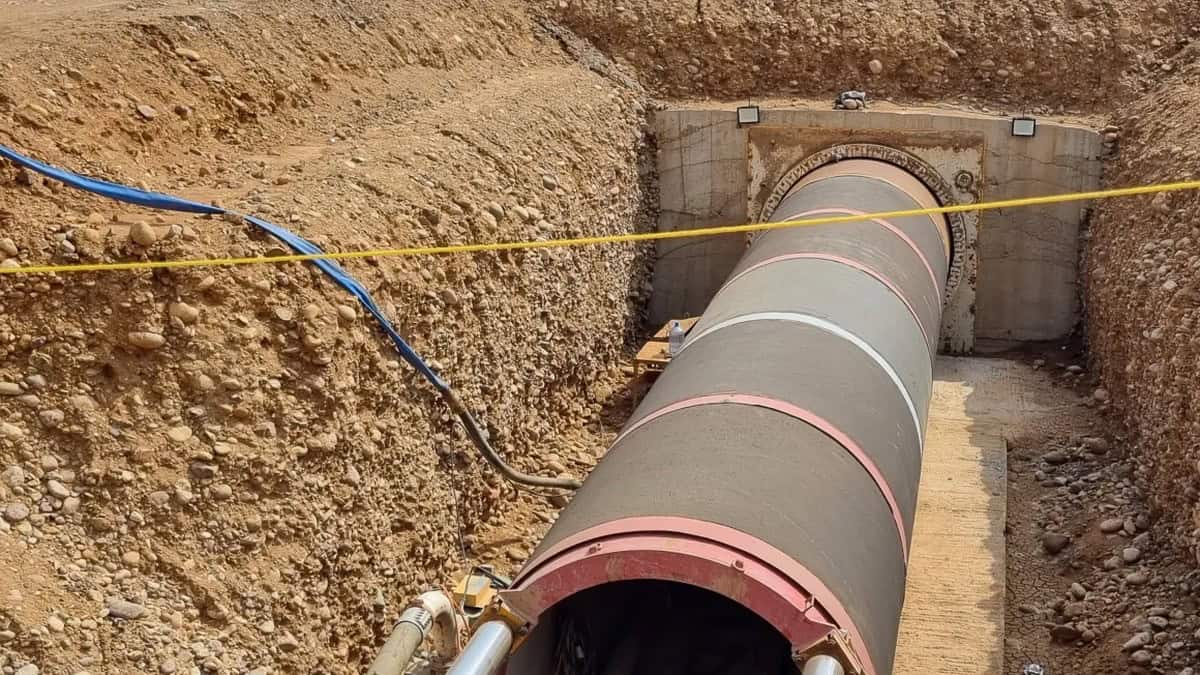
Jordan is advancing one of its largest infrastructure transformations with the National Water Carrier Project, designed to strengthen long-term water security between Aqaba and Amman. The development is becoming increasingly important for the country’s tourism future because hotels, resorts, heritage sites and visitor services depend on reliable water systems. The project is not responding to an immediate tourism disruption but represents a strategic investment aimed at protecting destination capacity as international visitor numbers, urban demand and tourism infrastructure continue expanding.
Jordan’s water infrastructure strategy emerges as a hidden tourism competitiveness factor
Jordan’s tourism growth is increasingly connected to infrastructure reliability. While international visitors usually focus on Petra, Wadi Rum, the Dead Sea and Aqaba’s Red Sea coastline, behind these destinations lies a major operational challenge: securing sustainable water supplies in one of the world’s most water-stressed countries.
Advertisement
Advertisement
The latest development reshaping this discussion is the Aqaba–Amman Water Desalination and Conveyance Project, also known as the National Water Carrier Project.
The project is designed to desalinate seawater from the Gulf of Aqaba and transport treated water towards Amman and other areas. Official plans indicate that the system will provide approximately 300 million cubic metres of water annually through a large-scale desalination, pumping and pipeline network.
Advertisement
Advertisement
For travel businesses, the importance of this project goes beyond water supply. It directly relates to destination resilience.
A destination’s ability to support hotels, restaurants, conference facilities, cultural attractions and adventure tourism depends heavily on stable utilities. Jordan’s future tourism expansion requires infrastructure capable of supporting higher visitor volumes without increasing pressure on existing resources.
Advertisement
Advertisement
Why Amman and Aqaba are central to Jordan’s future tourism infrastructure plans
The two most connected cities in this development are Amman and Aqaba.
Amman is Jordan’s political, commercial and transport centre. It is also the main gateway for many international visitors arriving through Queen Alia International Airport before travelling to major destinations across the Kingdom.
Advertisement
Advertisement
Aqaba represents Jordan’s strategic tourism coastline. The city hosts resorts, marine activities, cruise-related services and Red Sea tourism experiences.
The National Water Carrier Project creates a new connection between these two tourism-related economic zones.
| Location | Tourism importance | Infrastructure relevance |
|---|---|---|
| Amman | Main gateway city, business travel, cultural tourism and hotel demand | High urban water demand requires stronger supply security |
| Aqaba | Red Sea resorts, marine tourism, cruise activity and leisure travel | Location of desalination facilities and project starting point |
| Petra region | Global heritage tourism destination | Requires sustainable visitor infrastructure |
| Wadi Rum | Desert adventure tourism hub | Operates in an environmentally sensitive area |
Jordan’s Ministry of Tourism and Antiquities reported strong tourism activity, with official sector data showing continued development of tourism facilities and visitor infrastructure. The ministry recorded approximately 7 million international visitors in 2025, while tourism revenue reached around JOD 5.5 billion.
The National Water Carrier Project could become a tourism growth enabler
The project represents a shift from managing water shortages towards building long-term destination capacity.
Advertisement
Advertisement
According to Jordan’s official project information, the National Water Carrier includes a desalination facility in Aqaba, a transmission network extending approximately 450 kilometres and advanced pumping systems designed to move water across challenging terrain.
Key project details
| Project element | Official detail |
|---|---|
| Project name | Aqaba–Amman Water Desalination and Conveyance Project |
| Main locations | Aqaba and Amman |
| Water source | Gulf of Aqaba seawater |
| Annual capacity | Approximately 300 million cubic metres |
| Pipeline network | Approximately 450 kilometres |
| Strategic purpose | Long-term national water security |
The tourism relevance is significant because hospitality operations require consistent water availability for guest rooms, kitchens, swimming pools, landscaping, sanitation systems and conference facilities.
As Jordan attracts more international visitors, infrastructure investment becomes a competitive factor alongside attractions, airlines and visa accessibility.
Tourism demand is increasing pressure on destination infrastructure
Jordan’s tourism sector has been expanding after major global disruptions.
Official tourism data shows recovery in major heritage destinations. Petra Development and Tourism Region Authority data indicated that Petra welcomed around 582,550 visitors in 2025, including a strong increase in international visitors compared with 2024.
This recovery creates new infrastructure questions.
Advertisement
Advertisement
Historic destinations cannot rely only on attractions. They require:
- reliable water networks;
- sustainable accommodation capacity;
- efficient waste management;
- resilient transport systems;
- climate adaptation measures.
The National Water Carrier Project therefore fits into a wider destination management strategy rather than being only a utilities project.
Government investment links water security with economic modernisation
Jordan’s Economic Modernisation Vision identifies water security as a strategic priority.
The 2026–2029 executive programme includes the National Water Carrier Project among major initiatives designed to enhance water supply, strengthen infrastructure networks and improve long-term sustainability.
The project has also progressed through government agreements and implementation preparation.
Jordan’s Ministry of Water and Irrigation announced early works agreements connected with the project, describing the initiative as a major step towards producing and transporting desalinated water from Aqaba.
Advertisement
Advertisement
The government has also advanced financial and technical arrangements for implementation, with official announcements identifying the project as a major national infrastructure investment.
What travellers should know about Jordan’s water infrastructure transition
For visitors planning trips to Jordan, the current development does not represent a travel warning or tourism restriction.
Travellers can continue visiting major destinations including:
- Amman for cultural and city experiences;
- Aqaba for Red Sea tourism;
- Petra for heritage travel;
- Wadi Rum for desert adventures.
However, the infrastructure transformation is important for long-term travel planning.
Tour operators, hotel investors and destination planners will increasingly consider resource management when developing new tourism products.
Water security may influence:
Advertisement
Advertisement
- future hotel construction;
- resort development;
- sustainable tourism certifications;
- desert tourism management;
- large-scale visitor projects.
Strategic implications for travel businesses
| Industry segment | Potential impact |
|---|---|
| Hotels | Greater long-term operational resilience |
| Tour operators | More confidence in destination capacity planning |
| Luxury tourism | Support for premium resorts and high-value experiences |
| MICE travel | Stronger infrastructure foundations for conferences |
| Sustainable tourism | Improved ability to manage environmental pressures |
Operational takeaways for travel agents and tour operators
- Continue promoting Jordan as an active destination with no current tourism restrictions linked to water infrastructure.
- Monitor future government announcements regarding project completion milestones.
- Highlight sustainable travel experiences connected with Aqaba, Petra and Wadi Rum.
- Consider infrastructure resilience when designing long-term Jordan itineraries.
- Work with local suppliers that follow responsible water management practices.
- Include seasonal planning because climate conditions remain an important factor in desert and outdoor tourism products.
Long-term outlook: Jordan’s infrastructure investment could reshape destination competitiveness
Jordan’s National Water Carrier Project represents a broader shift in how destinations prepare for future tourism growth. The country is moving beyond traditional attraction-based tourism planning and investing in essential systems that support visitor economies.
For international travellers, the project is unlikely to create immediate changes to holiday experiences. Its significance lies in future readiness.
As global tourism becomes increasingly influenced by climate resilience, resource management and sustainable infrastructure, destinations with stronger foundations may gain greater competitiveness.
For Jordan, securing water supplies between Aqaba and Amman could become a critical element supporting the next phase of tourism development, investment confidence and international visitor growth.
Advertisement
