
France Joins Italy, Germany, Spain, Denmark, and Sweden in Europe’s Largest Sustainable Tourism Expansion Focused on Green Rail, Rural Tourism, and Clean Mobility

Published
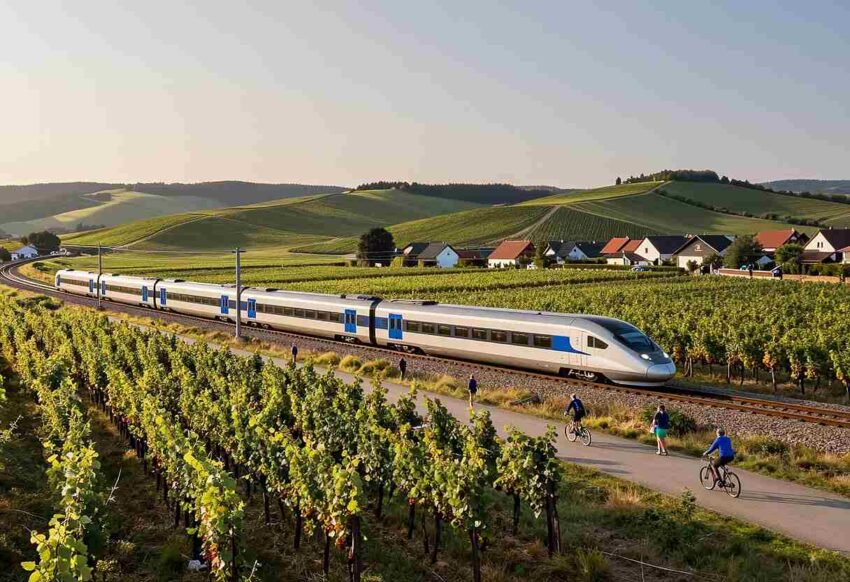 Image generated with Ai
France joins Italy, Germany, Spain, Denmark, and Sweden in Europe’s largest sustainable tourism expansion focused on green rail, rural tourism, and clean mobility as the continent accelerates a major shift in travel planning and transport development. Across Europe, governments are investing heavily in green rail corridors, sleeper trains, electric vehicle infrastructure, and cleaner mobility systems to reduce emissions and fight overtourism. At the same time, rural tourism destinations are being promoted to attract travelers away from overcrowded cities and coastal hotspots. France, Italy, Germany, Spain, Denmark, and Sweden are now playing a leading role in reshaping tourism through sustainable mobility and environmentally responsible infrastructure. Moreover, cross-border rail connectivity is being expanded rapidly to encourage low-carbon travel across Europe. As a result, Europe’s sustainable tourism expansion is emerging as a transformative movement that combines green rail, rural tourism, and clean mobility into a new era of responsible travel.
Belgium Leads the European Union’s Sustainable Tourism Policy Transition
A major institutional shift in tourism governance has been initiated through the European Parliament Committee on Transport and Tourism. Under the leadership of rapporteur Daniel Attard and shadow rapporteurs Nikolina Brnjac, Julien Leonardelli, Carlo Fidanza, Marjan Šarec, Vicent Marzà Ibáñez, and Elena Kountoura, own-initiative report 2025/2120(INI) was developed to guide the transition toward a regenerative tourism economy.
Rather than continuing to prioritize visitor volume alone, a broader sustainability-based framework has been promoted. The strategy has been designed to reduce pressure on overcrowded urban centers while encouraging tourism growth in lesser-known regions throughout Europe.
Experiences linked to gastronomy, wine tourism, cycling, agritourism, local heritage, and nature-based tourism have increasingly been highlighted as essential tools for redistributing tourism demand. By extending travel beyond traditional peak seasons, local economies in smaller regions are expected to receive more stable year-round income.
Advertisement
Advertisement
The framework has also been aligned with the Transition Pathway for Tourism, which was published on February 4, 2022. Five major pillars have shaped this pathway, including green transition, digital transition, resilience and inclusion, workforce support, and governance modernization.
A broader sustainable tourism strategy is expected to be introduced by the European Commission during Q2 2026. Within this initiative, stronger transport connectivity between emerging destinations and major tourism markets has been identified as a key policy objective.
Advertisement
Advertisement
Sweden, Denmark, and Germany Revive Cross-Border Sleeper Rail Networks
One of the most visible transformations in European tourism mobility has emerged through the revival of international rail connectivity. For decades, Europe’s rail sector had been hindered by fragmented national systems, differing technical standards, and complex ticketing systems. As a result, cross-border passenger rail represented only a small share of total rail travel across the European Union.
To address these barriers, the European Commission launched an extensive Action Plan aimed at boosting long-distance and cross-border rail services. High-speed rail traffic is now expected to double by 2030 and triple by 2050 under current strategic objectives.
Several flagship rail corridors involving Sweden, Denmark, and Germany have already demonstrated the growing momentum behind sustainable rail travel. Services connecting Stockholm, Copenhagen, Berlin, Gothenburg, and Hamburg have been expanded through collaborations involving SJ, DSB, DB, and Snälltaget.
The Stockholm-Hamburg night train was successfully extended to Berlin, while additional sleeper train capacity and service frequencies have been introduced across Northern Europe. These projects have increasingly been viewed as practical alternatives to short-haul aviation, particularly for environmentally conscious travelers.
The broader European rail revival has also been financially supported through the Connecting Europe Facility. Between 2021 and 2027, approximately €25.8 billion has been allocated toward transport infrastructure projects designed to strengthen the Trans-European Transport Network.
Czech Republic and Austria Expand Regional High-Speed Connectivity
The Czech Republic and Austria have emerged as important participants in Europe’s cross-border rail modernization strategy. České dráhy has prepared to launch two direct daily train services between Prague and Copenhagen beginning in May 2026, improving connectivity between Central Europe and Scandinavia.
Advertisement
Advertisement
Meanwhile, Austria’s integration within wider European rail networks has continued through expanded cooperation involving WESTbahn and other long-distance rail operators. Routes linking Munich, Vienna, and Budapest have been strengthened to support both business and leisure travel across Central Europe.
The European Union’s High-Speed Rail Action Plan has also introduced ambitious infrastructure targets. By 2040, major nodes along the TEN-T network are expected to be connected through high-speed corridors operating at speeds exceeding 200 kilometers per hour.
To improve affordability and convenience, several additional reforms have been proposed. Unified ticketing systems covering multiple operators are being developed, while discussions surrounding VAT exemptions for international rail travel have continued at the European level.
Passenger protection systems are also being strengthened to ensure travelers receive full coverage if cross-border rail connections are missed due to delays.
France, Italy, Spain Boost Green Rail Tourism
France, Italy, and Spain have increasingly been positioned at the center of Europe’s tourism redistribution strategy. Several high-profile rail projects connecting Paris, Milan, Venice, Rome, Barcelona, Madrid, and Lisbon have been integrated into broader sustainability goals.
Although the Midnight Trains project connecting Paris, Milan, and Venice was discontinued in June 2024, broader investment momentum surrounding sleeper rail has continued throughout Southern Europe.
Advertisement
Advertisement
European Sleeper has advanced plans connecting Amsterdam and Barcelona, while Ferrovie dello Stato Italiane and DB have prepared high-speed services linking Rome, Milan, and Munich beginning in 2026.
In the Iberian Peninsula, ILSA has strengthened rail connectivity between Lisbon, Madrid, and A Coruña. These corridors have increasingly been viewed not only as transport projects, but also as instruments for dispersing tourism flows away from overcrowded urban centers.
Mountain regions, agricultural communities, and cultural heritage destinations throughout Southern Europe are expected to benefit significantly from improved rail accessibility.

Poland, Romania, Moldova, Ukraine Rail Boost
Eastern European connectivity has also become a growing priority within the European Union’s sustainable transport agenda. Infrastructure investments supporting Poland, Romania, Moldova, and Ukraine have increasingly been integrated into the wider Trans-European Transport Network strategy.
Track gauge standardization projects linking Poland to Lviv in Ukraine and Romania to Chișinău in Moldova have received substantial financial support through European transport grants.
These investments have been designed not only to strengthen regional mobility, but also to support economic integration, trade, tourism development, and long-term geopolitical stability across Eastern Europe.
Advertisement
Advertisement
By improving accessibility to emerging destinations, tourism flows are expected to gradually expand beyond Western Europe’s traditional hotspots.
Netherlands and United Kingdom Strengthen International Rail Tourism
The Netherlands and the United Kingdom have continued to strengthen high-frequency rail connectivity through expanded Eurostar services between Amsterdam and London.
Nederlandse Spoorwegen and Eurostar have announced plans for fourth and fifth daily services by the end of 2025, reflecting rising demand for sustainable alternatives to short-haul flights.
The increasing popularity of rail travel has been strongly supported by changing consumer preferences, climate awareness, and improved passenger comfort. Overnight rail journeys, reduced airport procedures, and city-center connectivity have all contributed to growing rail demand across Europe.
These developments have also aligned with the European Union’s broader objective of shifting passenger traffic away from carbon-intensive aviation toward lower-emission transport systems.
Germany Drives Electric Vehicle Infrastructure Expansion Under AFIR
Germany and several other European Union Member States have increasingly focused on the deployment of electric vehicle infrastructure through the Alternative Fuels Infrastructure Regulation, commonly referred to as AFIR.
Advertisement
Advertisement
Implemented under the Fit for 55 legislative package, AFIR established legally binding targets for public charging infrastructure beginning in April 2024.
Fast-charging stations with a minimum capacity of 150 kilowatts are required to be installed every 60 kilometers along the TEN-T core network beginning in 2025. By 2030, significantly larger power output thresholds are expected to become operational.
Heavy-duty electric vehicle infrastructure has also been prioritized, with dedicated charging stations required across major freight corridors throughout Europe.
To improve reliability and user accessibility, infrastructure operators have additionally been required to comply with strict digital transparency standards. Charger occupancy, operational status, and station availability must be updated in real time through DATEX II compliance systems beginning in 2026.
The adoption of ISO 15118 standards has further accelerated Plug-and-Charge functionality and future vehicle-to-grid charging integration across Europe’s public charging networks.
Norway and Hydrogen Mobility Influence Europe’s Zero-Emission Future
Although not a European Union Member State, Norway’s leadership in electric mobility has continued to influence wider European transport strategies. Across Europe, hydrogen refueling infrastructure has increasingly been integrated into long-term decarbonization planning.
Advertisement
Advertisement
Under AFIR Articles 6 and 7, Hydrogen Refueling Stations must be deployed every 200 kilometers along the TEN-T core network by 2030. Urban nodes throughout Europe are also expected to receive hydrogen infrastructure capable of supporting commercial transport and emerging hydrogen vehicle markets.
In parallel, maritime decarbonization measures have also been introduced under the FuelEU Maritime Regulation. Beginning in 2030, large passenger and container ships operating within AFIR-covered ports will be required to utilize Onshore Power Supply or alternative zero-emission technologies while berthed.
These measures have been designed to reduce emissions not only from road transport, but also from maritime tourism and logistics operations.
France and Slovenia Pioneer Rural Mobility Integration
Beyond major transport corridors, sustainable tourism policy has increasingly focused on rural revitalization and regional accessibility.
Rural territories account for nearly 80% of the European Union’s land area and approximately 30% of its population. Yet declining public transport systems and high dependence on private vehicles have continued to limit economic development in many regions.
To address these issues, the SMARTA-NET initiative was supported between 2022 and 2024. The project introduced the concept of rural proofing within Sustainable Urban Mobility Plans.
Advertisement
Advertisement
Rather than treating rural communities as peripheral areas, integrated mobility systems have been developed across entire functional territories.
France’s Mobility Bassins framework has required transportation planning to be coordinated within functional mobility zones rather than administrative borders. Through this model, metropolitan authorities have been legally obligated to coordinate transport planning with surrounding rural regions.
Slovenia has implemented a dual-layer regional planning framework combining Transport Regions and Problem-Based Regions. Through this approach, urban congestion reduction has been linked directly with efforts to reduce transport poverty in remote and mountainous communities.
Flexible transit systems, Demand-Responsive Transport services, and inter-municipal cycling corridors have all been promoted as part of broader regional mobility strategies.

European Tourism Workforce Reforms Expand Through the Tourism Skills Card
The sustainability of Europe’s tourism sector has increasingly been connected to labor formalization and workforce mobility.
Persistent labor shortages, seasonal employment instability, low wages, and skills gaps have created growing challenges throughout the tourism industry. In response, the European Parliament has proposed the introduction of a European Union-recognized Tourism Skills Card.
Advertisement
Advertisement
The digital card has been designed to document accredited training, language competencies, professional qualifications, and work experience across Member States.
Supported through ESF+, Erasmus+, and the Digital Europe program, the initiative is expected to improve workforce mobility while raising service quality standards in emerging tourism destinations.
Regions experiencing rapid tourism growth due to new rail corridors and green mobility infrastructure are particularly expected to benefit from expanded workforce training programs.
Spain, Italy, Greece Tackle Rental Pressure
The rapid expansion of short-term rental platforms throughout Europe has generated mounting concerns surrounding housing affordability and community displacement.
Popular tourism destinations across Spain, Italy, Greece, and several other Mediterranean regions have experienced significant pressure from unregulated tourism accommodation growth.
To address these issues, new European Union short-term rental regulations entered implementation on May 20, 2026. The framework introduced stronger registration requirements, transparency measures, and data-sharing obligations between platforms and local authorities.
Advertisement
Advertisement
Additional proposals under discussion would allow regional governments to establish zoning systems, visitor night limitations, and authorization requirements for tourism accommodation providers.
Environmental tourism taxes and eco-tax revenue-sharing systems have also been proposed to fund conservation projects, infrastructure maintenance, and community sustainability initiatives.
Cultural heritage preservation has simultaneously become a growing priority, particularly in rural and mountainous regions where local traditions and crafts remain central to tourism identity.
European Union Sustainable Tourism Policy Enters a New Era
The European Union’s sustainable tourism strategy has increasingly demonstrated that transport decarbonization, regional development, and tourism governance are deeply interconnected.
Efforts to combat overtourism can no longer rely solely on promotional campaigns encouraging travelers to visit lesser-known destinations. Instead, physical infrastructure, integrated transport systems, workforce development, digital governance, and environmental planning have all become essential components of long-term tourism sustainability.
Cross-border rail expansion, electric vehicle infrastructure deployment, hydrogen mobility systems, rural revitalization frameworks, and stronger short-term rental regulations are collectively reshaping the future of European tourism.
Advertisement
Advertisement
Although implementation challenges remain significant, the broader direction of European policy has become increasingly clear. Tourism growth is gradually being redefined through resilience, accessibility, sustainability, and regional balance rather than visitor volume alone.
As Europe approaches its 2030 and 2050 climate and mobility targets, the continent’s evolving tourism framework is expected to become one of the world’s most comprehensive examples of integrated sustainable development.
Advertisement
