
Washington D.C. 4-Weekly EVA Air 787-9 Taipei Launch Sparks 10-Destination US Expansion Shift — What Others Are Missing in the Trans-Pacific Power Game

Published
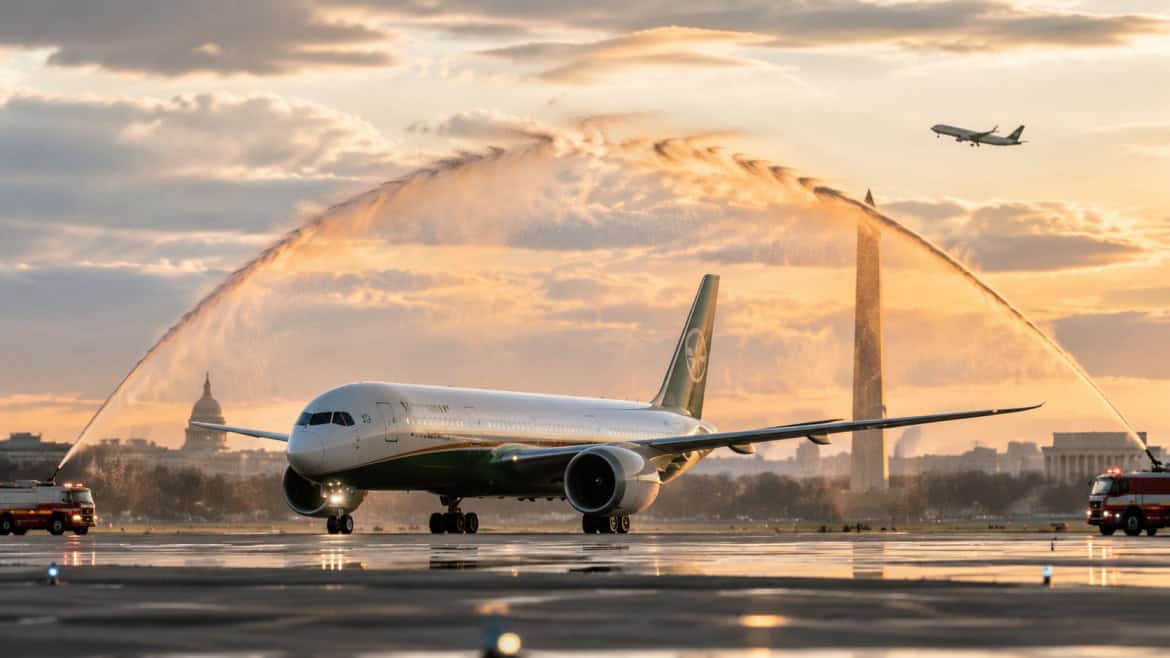
Image generated with Ai
Washington D.C. has officially entered a new phase of global air connectivity as EVA Air launches a four-weekly Boeing 787-9 nonstop service to Taipei. The operation began in June 2026 at Washington Dulles International Airport. It creates the first direct passenger link between the U.S. capital region and Taiwan’s major international hub. This development reshapes East Coast access to Asia at a time when demand for long-haul connectivity is accelerating. Business travellers, government networks, students, and tourism flows are all directly impacted by this new air bridge.
The launch strengthens Washington D.C.’s position as a strategic trans-Pacific gateway. It also expands EVA Air’s North American footprint to ten destinations. The timing is critical as global aviation networks shift toward more direct, time-efficient intercontinental routes.
First Nonstop Washington–Taipei Link Changes East Coast Travel Geometry
The new EVA Air service operates four times weekly using the Boeing 787-9 Dreamliner. It introduces the first-ever nonstop connection between Washington Dulles International Airport and Taipei Taoyuan International Airport.
This route is more than a convenience upgrade. It removes traditional dependency on West Coast or European transit hubs. The East Coast of the United States now gains direct access to Taiwan and wider Asia through a single long-haul corridor.
Advertisement
Advertisement
Key operational points include:
Advertisement
Advertisement
- Four weekly rotations between Washington D.C. and Taipei
- Boeing 787-9 Dreamliner deployed for long-haul efficiency
- Three-class cabin configuration: Royal Laurel Class, Premium Economy, Economy
- Flight time designed for overnight intercontinental connectivity
The shift is significant for time-sensitive passengers. It reduces total journey complexity for travellers moving between U.S. federal institutions and Asian business centres.
Strategic Impact: Washington Becomes a Direct Asia Gateway
Washington Dulles International Airport has traditionally served as a major international hub. However, this new route elevates its strategic position in trans-Pacific aviation.
The service connects the U.S. capital directly with Taipei, a key economic and technology hub in East Asia. It also enables onward connections from Taipei to Japan, South Korea, Southeast Asia, and wider regional destinations.
Advertisement
Advertisement
The airline has positioned the route to serve:
- Government and diplomatic travel between U.S. and Taiwan
- Corporate and trade flows in technology and manufacturing sectors
- Student mobility between North America and Asia
- Tourism traffic between East Coast USA and East Asia
This is not just a route expansion. It is a structural shift in how the East Coast interacts with Asia. Previously, passengers relied heavily on indirect connections via Los Angeles, San Francisco, or Tokyo.
Advertisement
Advertisement
Flight Schedule Structure Designed for Global Connectivity Flow
The Washington–Taipei service follows a carefully timed rotation pattern to support both business and leisure demand across time zones.
Outbound service:
- Flight BR003
- Departs Washington at 01:50 AM
- Operates Tuesday, Thursday, Saturday, Sunday
- Arrives Taipei at 05:45 AM next day
Return service:
- Flight BR004
- Departs Taipei at 07:30 PM
- Operates Monday, Wednesday, Friday, Saturday
- Arrives Washington at 10:30 PM same day
This scheduling structure allows passengers to maximise connection efficiency on both sides of the Pacific. It also aligns with banking hours, government schedules, and corporate operations.
EVA Air’s 787-9 Deployment Signals Premium Long-Haul Strategy
The Boeing 787-9 Dreamliner plays a central role in this new route. It is designed for fuel efficiency, reduced cabin fatigue, and extended range performance. EVA Air has configured the aircraft with its latest Premium Economy product, known for wider seating pitch and enhanced comfort on long-haul flights.
Advertisement
Advertisement
Cabin structure includes:
- Royal Laurel Class for premium business travellers
- Premium Economy for upgraded leisure and corporate passengers
- Economy Class for mass market demand
This aircraft choice reflects a broader industry trend. Airlines are increasingly deploying fuel-efficient twin-aisle aircraft for medium-density long-haul routes rather than larger widebody jets.
North American Expansion Reaches 10 Cities and 98 Weekly Flights
With the Washington addition, EVA Air now operates to ten major North American destinations. These include:
- Los Angeles
- San Francisco
- Seattle
- New York
- Houston
- Dallas/Fort Worth
- Chicago
- Vancouver
- Toronto
- Washington D.C.
The airline now operates approximately 98 weekly flights between North America and Taiwan. This scale positions it among the leading Asian carriers serving the trans-Pacific corridor.
This expansion reflects rising demand across multiple segments:
Advertisement
Advertisement
- Corporate mobility between Asia and the U.S. East Coast
- Technology supply chain travel demand
- Education-linked passenger flows
- Diaspora and visiting friends and relatives (VFR) traffic
A New Competitive Layer in Trans-Pacific Aviation
The Washington–Taipei route also introduces a subtle but important competitive shift in trans-Pacific aviation. While West Coast hubs have traditionally dominated Asia connections, East Coast cities are now increasingly entering direct long-haul Asia networks.
This development highlights a wider aviation trend:
- Airlines prioritising point-to-point long-haul services
- Reduction of dependency on hub-and-spoke transfers
- Increased demand for nonstop intercontinental routes
- Strategic positioning of capital cities as aviation gateways
Washington D.C. now joins a small group of U.S. East Coast cities with direct deep-Asia connectivity. This enhances its geopolitical and economic aviation relevance.
Tourism, Trade, and Connectivity Ripple Effects
The new service is expected to generate strong downstream effects across tourism and trade sectors.
For tourism:
Advertisement
Advertisement
- Easier access for Taiwanese travellers to U.S. East Coast cities
- Improved inbound tourism potential for Washington D.C. museums, monuments, and cultural institutions
- Growth in premium leisure travel between Asia and North America
For trade:
- Faster movement of executives and business delegations
- Stronger tech-sector collaboration between Taiwan and U.S. firms
- Enhanced investment dialogue across semiconductor and manufacturing sectors
For education:
- Increased student travel flows between U.S. universities and Asian institutions
- Simplified return travel for international students based on East Coast campuses
Industry Positioning and Airline Reputation Advantage
EVA Air continues to maintain a strong global reputation in premium aviation service. The airline has consistently ranked among top-tier international carriers and is widely recognised for operational safety and service quality.
The Washington route reinforces:
- Long-haul premium network strategy
- High-frequency trans-Pacific connectivity model
- Expansion of high-yield business routes
This positions the airline strongly in the evolving U.S.–Asia aviation market, where competition is intensifying among major East Asian carriers.
Advertisement
Advertisement
The “Capital-to-Asia Direct Corridor” Shift
The most significant transformation here is not just the new route, but the emergence of a “capital-to-capital aviation corridor.” Washington D.C. is no longer indirectly connected to Asia via coastal hubs. It now has a direct aviation link to Taipei, a key geopolitical and economic centre.
This shift signals a deeper structural trend in global aviation:
- Political capitals becoming direct international aviation gateways
- Reduction of reliance on intermediary megahubs
- Faster diplomatic and institutional mobility between regions
It marks a quiet but powerful change in how global connectivity is structured.
A New Phase in Trans-Pacific Mobility Begins
The launch of EVA Air’s Washington D.C.–Taipei service represents a strategic milestone in long-haul aviation. It strengthens East Coast connectivity, expands North American network reach, and accelerates direct Asia access at a critical time in global travel recovery and expansion.
Passengers, businesses, and institutions are now operating in a faster, more direct aviation ecosystem. The Pacific is becoming less of a barrier and more of a bridge.
Advertisement
