

Britain Travel Gets Smarter Rail Fares as Pricing Reform Targets Empty Seats in 2026

Published
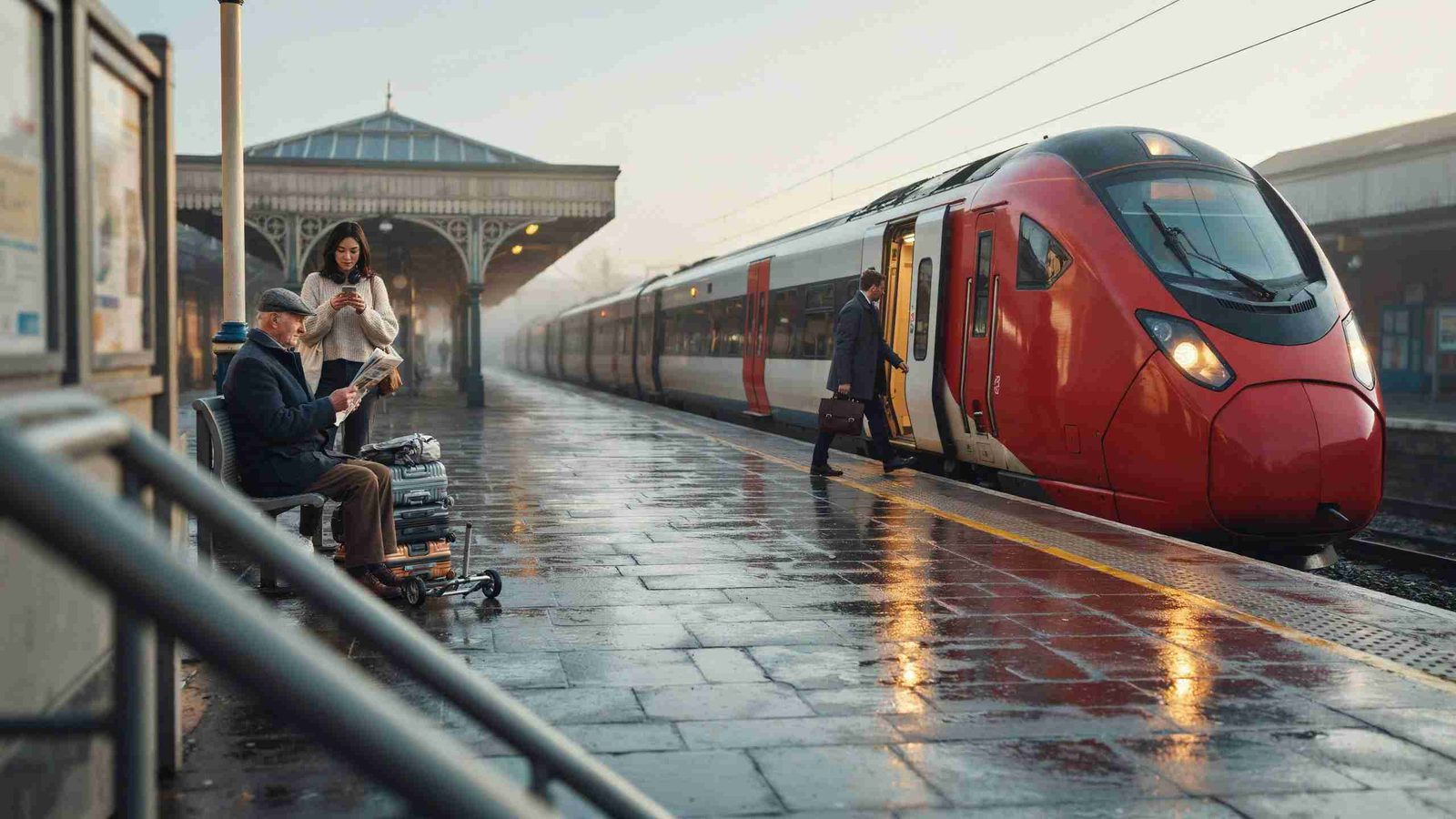
A revolution is around the corner for the rail networks of Britain through smarter fares in the coming fare reforms. Since the railways generate revenues worth £11.5 billion for 2024/25 through rail fares and numerous journeys through the rail network, it no longer seems to make sense whether fares need to be reduced or increased; what matters is how the fare should be utilized. It is possible for the airline industry to teach a lesson to Britain to allow people to move silently by train while getting more return from their money in terms of filling up seats at off-peak times. It is high time that Great British Railways introduces revolutionary fare reforms. From the viewpoint of the passengers, it is all about comfortable travel at economical prices at off-peak times. And as far as the rail industry is concerned, it is all about generating revenue without raising the fares.
Britain’s Rail Pricing Debate Is Becoming a Capacity Debate
The most important change taking place in British rail is bigger than ticket prices.
The government’s proposed Great British Railways structure would bring much greater responsibility for passenger operations, infrastructure and fares into one publicly owned system. The Department for Transport says GBR will become responsible for setting fares on the passenger services it operates, although devolved and open-access operators will continue to manage their own fares.
That creates something Britain has lacked for decades: the potential to connect pricing decisions much more closely with network planning, train capacity, passenger demand and operational strategy.
Advertisement
Advertisement
Under the current model, regulated and unregulated fares sit within a complicated framework developed over decades.
The government itself acknowledges that the existing system is widely regarded as complex, inconsistent and poorly suited to a railway moving towards greater public ownership. Its September 2026 Railway Bill factsheet says GBR should gain greater freedom to design and manage fares according to demand and operational requirements while ministers retain powers to establish safeguards around designated fares.
Advertisement
Advertisement
This means pricing could increasingly become part of a wider capacity strategy rather than an annual exercise centred largely on fare increases.
That distinction matters.
The £11.5 Billion Number Explains Why Pricing Cannot Be an Afterthought
Britain’s railways cannot treat ticketing reform as a cosmetic passenger-service project.
According to the Office of Rail and Road, fare income reached £11.5 billion in 2024/25, an inflation-adjusted annual increase of 8%. Yet government funding still contributed £11.9 billion towards day-to-day railway operations, equal to about 46% of industry income.
Those figures expose the central challenge facing rail reform.
Britain needs fares that passengers consider attractive enough to encourage greater use, while the railway also needs sufficient revenue to support a large and expensive national network.
Advertisement
Advertisement
Increasing every fare is not an elegant solution.
Keeping every fare permanently low regardless of demand is not necessarily financially sustainable either.
The stronger approach is to identify where trains have spare seats, where passengers have flexibility and where lower prices could generate journeys that would not otherwise take place.
That is where the aviation comparison becomes valuable.
Not because rail should mimic everything airlines do.
Because aviation learnt decades ago that an empty seat after departure can never be sold again.
Advertisement
Advertisement
Rail has exactly the same problem.
461 Million Journeys Show That Britain Already Has Huge Demand
British rail is not attempting to rebuild demand from zero.
The latest Office of Rail and Road figures show 461 million passenger journeys were made between April and June 2026, up 2% from 451 million during the same quarter of 2025.
Passengers travelled 17.5 billion kilometres, while passenger revenue reached £3.2 billion during the quarter. Inflation-adjusted revenue was nevertheless 1% lower than in the comparable quarter a year earlier.
That combination deserves attention.
Passenger numbers are growing.
Advertisement
Advertisement
Revenue does not automatically rise at the same pace.
It means the future challenge is not merely generating demand. It is improving how existing demand moves through the network and how available railway capacity is monetised without undermining affordability.
A packed Friday afternoon train and a lightly occupied mid-morning service represent two completely different commercial conditions.
Treating both exactly the same misses an opportunity.
Modern demand-led pricing can potentially encourage passengers with flexible schedules to choose quieter services while protecting simpler fare options for travellers who have little flexibility.
What Aviation Gets Right: Price Can Influence When People Travel
Britain’s aviation market shows how large a transport market can become when operators continuously adjust capacity, schedules and fares around changing passenger demand.
Advertisement
Advertisement
The UK Civil Aviation Authority reported that 302 million passengers passed through UK airports during 2025, the highest annual total recorded at the time.
Passenger volumes then reached more than 81 million during April to June 2026, setting another quarterly record despite disruption affecting international aviation.
Air travel and rail travel should not be treated as identical markets.
But aviation demonstrates one powerful principle: customers react to price signals.
Travellers frequently change departure times, dates or even routes when sufficiently attractive fares are available.
Railways can use the same behavioural principle.
Advertisement
Advertisement
A traveller deciding between a 09:30 and an 11:00 departure may choose the quieter train if the saving is meaningful.
That can shift demand without building another carriage or running another service.
For a capacity-constrained railway, that has significant value.
What Others Get Wrong About Airline-Style Rail Pricing
“Airline-style pricing” immediately creates fears of dramatic fare increases.
That interpretation is too simplistic.
Revenue management works in both directions.
Advertisement
Advertisement
Where demand is extremely high, operators protect scarce capacity.
Where demand is weak, lower prices can stimulate additional bookings.
For rail passengers, the second part may ultimately prove more interesting.
Consider a train operating from London towards northern England.
Some passengers travel the entire route.
Others occupy a seat for only one section.
Advertisement
Advertisement
The commercial value of that seat therefore depends not simply on whether somebody buys it, but on where they board, where they leave and whether the seat can be sold again.
This makes long-distance railway inventory exceptionally complicated.
A London-to-York passenger, a London-to-Peterborough traveller and somebody travelling from York farther north may all depend on different combinations of the same physical capacity.
Smart pricing therefore requires something more sophisticated than charging “more when busy”.
It requires understanding the value and availability of each section of the journey.
The New Opportunity: Sell Empty Space, Not Just Expensive Seats
The most compelling new angle emerging from Britain’s reform is the possibility of treating unused capacity as a product that can be actively sold.
Advertisement
Advertisement
A seat travelling empty has no future economic value once the service reaches its destination.
But before departure, that seat can potentially attract:
- leisure travellers with flexible schedules;
- domestic tourists;
- students;
- families;
- day-trip passengers;
- people considering driving instead;
- passengers prepared to travel earlier or later for savings.
This creates a very different debate from “should railway fares rise?”
The better question is:
How cheaply can spare capacity be sold while still protecting revenue from passengers already willing to travel?
That is precisely the problem revenue-management systems are designed to solve.
Advertisement
Advertisement
It also connects commercial rail policy directly with tourism.
Cheaper off-peak availability can make secondary cities, seaside destinations, heritage towns and rural gateways more attractive for short breaks.
Rail Pricing Reform Could Become Tourism Policy by Another Name
Rail fares are not only a transport issue.
They influence destination choice.
A leisure traveller comparing York, Edinburgh, Manchester, Birmingham or Bath does not separate transport cost from the cost of the trip.
The ticket is part of the holiday budget.
Advertisement
Advertisement
If flexible fares make quiet trains substantially cheaper, rail operators can stimulate journeys during periods when capacity already exists.
That could benefit hotels, visitor attractions, restaurants and local economies without requiring immediate investment in new railway infrastructure.
This matters particularly for midweek travel.
Britain’s tourism economy has traditionally concentrated heavily around weekends, school holidays and major events.
Demand-led rail pricing potentially gives destinations another instrument for dispersing visitors.
A quieter Tuesday train does not need to remain quiet simply because commuters prefer Monday morning or Friday evening.
Advertisement
Advertisement
It can be marketed differently.
This is where smarter rail pricing becomes more than revenue management.
It becomes destination-demand management.
Great British Railways Creates a Rare Chance to Join the Pieces Together
The structural reforms taking place across Britain make this discussion especially timely.
The Department for Transport says South Western Railway, c2c, Greater Anglia, West Midlands Trains, Govia Thameslink Railway and Chiltern Railways have already moved into public ownership, with Great Western Railway scheduled to follow on 13 December 2026 and Avanti West Coast on 7 March 2027.
The government expects transfers of DfT-contracted passenger services to be completed by the end of 2027.
Advertisement
Advertisement
Meanwhile, GBR is intended to combine responsibility for passenger operations with management of rail infrastructure.
That could allow decisions about timetable design, train capacity, ticket products and fares to become more coordinated than under the fragmented structure Britain inherited.
Pricing therefore becomes part of a much bigger transformation.
The question is no longer simply who sells the ticket.
It is who designs the entire passenger proposition.
Fare Simplification Must Come Before Pricing Sophistication
There is an important warning.
Advertisement
Advertisement
Smarter pricing cannot mean greater passenger confusion.
The government’s own evidence says one in four passengers considers rail fares poor value for money.
Adding dozens of invisible pricing rules to an already complicated system could damage confidence instead of increasing demand.
Britain therefore needs two changes at the same time.
The technology behind fares can become more sophisticated.
The passenger experience must become simpler.
Advertisement
Advertisement
Those goals are not contradictory.
Airline revenue systems can contain enormous complexity behind the screen while the customer sees a relatively straightforward set of choices.
Rail needs the same principle.
Passengers should not need to understand revenue-management algorithms.
They should only need to know:
- what their journey costs;
- whether a cheaper option exists;
- what restrictions apply;
- whether changing departure time saves money;
- and whether they are buying the best appropriate fare.
That transparency will determine whether reform feels like innovation or another layer of complexity.
Advertisement
Advertisement
Britain Has Already Frozen Regulated Fares
Any suggestion that Britain is simply moving towards aggressive demand-based price increases also ignores another major development.
The government froze regulated rail fares in 2026 for the first time in three decades.
The Department for Transport estimated that the freeze would save existing passengers approximately £600 million during 2026/27.
More than one billion journeys were expected to benefit, covering products including season tickets, commuter peak returns and certain off-peak intercity returns.
This creates an important policy boundary around the smarter-pricing debate.
Britain is simultaneously pursuing affordability protection and greater commercial flexibility.
Advertisement
Advertisement
The challenge for GBR will be making those two objectives coexist.
That means sophisticated revenue management is more likely to succeed if it works around clear consumer protections rather than replacing them.
Rail Versus Aviation: Where the Pricing Lessons Match—and Where They Do Not
| Issue | Aviation | British Rail | What Rail Can Learn |
|---|---|---|---|
| Capacity | Fixed seats on each aircraft | Fixed seats plus multiple route segments | Treat unused capacity as perishable inventory |
| Booking patterns | Often booked days or months ahead | Mix of advance, commuting and spontaneous trips | Forecast different passenger segments separately |
| Pricing | Highly demand-responsive | Mix of regulated and commercial fares | Use flexibility selectively |
| Network complexity | Mostly origin-to-destination seat inventory | Same seat can serve several journeys on one train | Optimise by route section, not only full journey |
| Passenger expectations | Dynamic pricing widely expected | Simplicity and predictable fares highly valued | Keep complex algorithms behind a simple interface |
| Public-service role | Mainly commercial aviation market | Essential public infrastructure | Maintain affordability and policy safeguards |
| Demand management | Price shifts passengers between flights | Price could shift passengers between trains | Reduce crowding without immediately adding capacity |
| Tourism effect | Cheap fares stimulate destinations | Off-peak rail fares can influence domestic trips | Connect pricing with visitor-economy strategy |
The comparison shows why Britain should borrow principles rather than copy the aviation model wholesale.
Digital Ticketing Is the Infrastructure That Makes Smarter Pricing Possible
Fare reform will be difficult without modern retail technology.
The government has committed £156 million to new ticketing schemes, with pay-as-you-go expected to reach more than 100 additional stations across Greater Manchester, the Midlands and the South East by 2027.
A new GBR website and application is also planned as a single platform for purchasing tickets, viewing train information and accessing passenger support.
Advertisement
Advertisement
That matters enormously for demand-led fares.
Real-time or flexible pricing only works effectively when passengers can discover and understand their options quickly.
A traveller who must visit several websites to compare fares is less likely to respond efficiently to pricing incentives.
A unified digital platform can make the process much clearer.
For rail reform, therefore, digital retail is not merely a convenience feature.
It is the distribution infrastructure on which a more intelligent fare system depends.
Advertisement
Advertisement
Pay-As-You-Go Could Be More Revolutionary Than Dynamic Pricing
Britain’s most significant pricing innovation may ultimately prove less dramatic than airline revenue management.
It could simply be automatic best-value charging.
Pay-as-you-go systems reduce the need for passengers to select the correct ticket before travelling.
That matters because complexity itself can suppress demand.
If passengers worry that they might buy the wrong fare, misunderstand restrictions or pay considerably more than necessary, rail becomes less attractive than driving.
The government has explicitly linked fares reform with the expansion of pay-as-you-go travel and has said GBR should be capable of bringing fares, pricing and delivery decisions together more effectively.
Advertisement
Advertisement
The strongest future system may therefore combine both approaches:
simple automatic pricing for frequent and urban travel;
more sophisticated demand-responsive fares for advance and long-distance journeys.
Revenue Protection Is Another Piece Others Often Miss
There is another side to Britain’s rail-revenue equation.
Increasing legitimate passenger income is not only about changing prices.
It is also about ensuring existing fares are collected.
Advertisement
Advertisement
The Department for Transport estimates deliberate fare evasion may cost the railway up to £400 million annually.
In July 2026, the government announced £33.4 million for additional ticket gates at stations across England as part of a wider revenue-protection programme.
That provides useful context.
Before increasing ticket prices to strengthen railway finances, operators and policymakers can work on several fronts:
better capacity utilisation;
more passengers;
Advertisement
Advertisement
simpler fares;
improved retailing;
greater revenue protection;
and lower operating inefficiency.
Pricing optimisation is therefore only one component of financial reform.
It should never be presented as a substitute for running a better railway.
Advertisement
Advertisement
Reliability Will Decide Whether Smarter Fares Actually Work
No pricing algorithm can compensate indefinitely for an unreliable product.
Passengers do not buy railway capacity.
They buy confidence that they will reach their destination.
A £20 ticket on an unreliable service may represent worse value than a £30 ticket on a reliable one.
This means Britain’s revenue-management ambitions must remain subordinate to the core railway proposition: trains that operate dependably, offer sufficient capacity and provide clear information when disruption occurs.
That is why joining infrastructure and operations under the future GBR framework may prove commercially important.
Advertisement
Advertisement
Pricing can influence demand.
Reliability creates demand.
The strongest railways will need both.
Smarter Fares Could Ease Crowding Without Waiting for New Infrastructure
Major railway capacity projects can require years of planning and billions of pounds of investment.
Demand management can operate much faster.
Imagine two trains departing within a relatively short period.
Advertisement
Advertisement
One is heavily occupied.
The next has significant spare capacity.
A clear fare difference could persuade passengers who are not time-sensitive to switch.
That creates three potential benefits:
- the busiest service becomes more comfortable;
- the quieter train generates additional revenue;
- passengers receive a lower-cost alternative.
Importantly, no additional train has been purchased.
No new line has been constructed.
Advertisement
Advertisement
Existing infrastructure is simply being used more efficiently.
For a railway facing enormous capital and operating costs, this is why intelligent pricing deserves serious attention.
But Passenger Trust Must Be the Non-Negotiable Limit
There is one risk Britain should learn from aviation rather than imitate.
Customers often dislike discovering that somebody sitting beside them paid dramatically less for an almost identical journey.
Dynamic fares can therefore create resentment when pricing appears arbitrary.
Rail passengers may be even less tolerant because many rely on trains for employment, education and essential journeys.
Advertisement
Advertisement
GBR will need guardrails.
Pricing should be explainable.
Cheaper alternatives should be visible.
Protected passenger groups should retain appropriate discounts.
The Department for Transport says future legislation is intended to preserve discount schemes for younger, older and disabled passengers while giving ministers powers around designated regulated fares.
That balance will be critical.
Advertisement
Advertisement
Revenue optimisation without trust can destroy long-term demand.
Britain’s Bigger Prize Is a Railway That Prices Around People
The most interesting lesson from aviation is not that passengers will tolerate expensive fares.
It is that transport companies can learn extraordinary amounts from booking behaviour.
When do people travel?
How early do they book?
Which departures have spare capacity?
Advertisement
Advertisement
Which passengers change plans when offered savings?
Which journeys are constrained by overcrowding?
Where can a small price reduction create substantial new demand?
Britain now has vastly more computing power, ticketing data and digital distribution capability than it possessed when much of its fare framework was designed.
The opportunity is to put that information to work.
Not to extract the maximum possible amount from every traveller.
Advertisement
Advertisement
But to maximise the usefulness of the railway itself.
Editorial Perspective: Britain Should Copy Aviation’s Intelligence, Not Its Frustrations
The debate around airline-style railway pricing can easily become distorted.
Passengers hear “dynamic pricing” and imagine fares rising dramatically when they most need to travel.
Operators hear “revenue management” and see an opportunity to improve income.
The more constructive position sits between those extremes.
Britain should adopt aviation’s ability to forecast demand, understand booking behaviour and identify unused capacity.
Advertisement
Advertisement
It should not import unnecessary complexity, opaque charges or pricing structures that weaken passenger confidence.
Official figures make the scale clear.
Rail fares generated £11.5 billion in 2024/25. Governments still supplied £11.9 billion towards day-to-day railway operations. Meanwhile, passenger journeys reached 461 million in just the first quarter of the 2026/27 financial year.
Those numbers suggest Britain already has both substantial demand and a substantial financial challenge.
Smarter use of existing capacity is therefore not a marginal issue.
It should be central to the next stage of reform.
Advertisement
Advertisement
Travel Analytics: The Opportunity Is Hidden in When Passengers Travel
As per Travel Analytics, one of the aspects that will cause revolution in the tourism industry in the United Kingdom is intelligent rail pricing. Travellers can be significantly affected by price and time factors. With a total of 461 million rail journeys in April to June 2026, even small factors which can lead to empty trains have an effect on the decision making of millions of people. Intelligent rail pricing will enable many people to be motivated to travel to different cities other than the ones that are currently being visited. One of the benefits of intelligent rail pricing is the identification of idle rails and helping customers make decisions based on prices. Through digital tickets, more information about the trends in future can be gathered. However, pricing alone cannot lead to sustainable development. Reliability and convenient ticketing are also important for this.
Advertisement
