
Peru Tightens Sustainable Tourism Management at Vinicunca and Choquequirao

Published
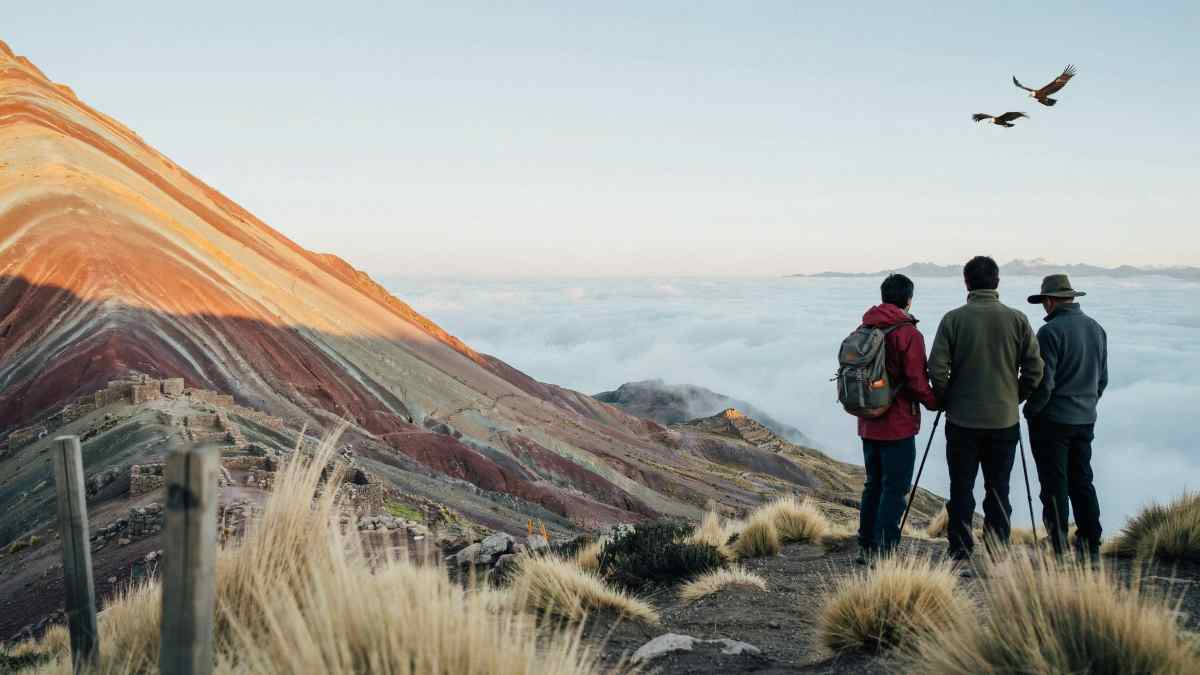
Some of the most crucial destinations in Andean Peru are being better managed due to the increasing interest from tourists and the need for conservation of such places, as the fragile landscapes and historical significance. The Rainbow Mountain, which is popularly known as Vinicunca, and the Choquequirao are receiving increased attention in light of the efforts to organise tourism in these areas. There is no proven documentation from the official MINCETUR emergency measures on both the implementation of dynamic reservation quotas for Vinicunca and the autonomous concession management in the Quechua communities. The current official documents only indicate the conservation efforts and controlled access in some heritage sites in Peru, including Choquequirao.
Vinicunca Faces the Pressure of Growing Tourism
Vinicunca has become one of Peru’s most recognisable mountain destinations, attracting visitors because of its distinctive bands of red, yellow, green and other mineral colours.
Advertisement
Advertisement
The mountain sits at high altitude in the Cusco region, and reaching the viewpoint involves demanding trekking conditions. The combination of altitude, heavy visitor movement and fragile terrain makes trail management particularly important.
Unlike Machu Picchu and the Inca Trail, where official visitor quotas and reservations are clearly established, the available official tourism information does not currently confirm a new dynamic booking quota specifically for Vinicunca.
Advertisement
Advertisement
That distinction matters for travellers planning a visit.
Choquequirao Takes a Different Management Path
Choquequirao is following a more clearly documented planning process.
Advertisement
Advertisement
In March 2026, the Directorate of Culture of Cusco and the regional Plan COPESCO began coordinating the preparation of a new Master Plan for the Choquequirao Archaeological Park. The plan is intended to improve protection, management and long-term planning for the archaeological complex.
The process is also designed to involve local governments and communities connected with the wider territory.
Advertisement
Advertisement
A S/200,000 budget was allocated for the 2026 work to begin developing the planning instrument, according to the Cusco cultural authorities.
This is significant because Choquequirao is not simply an archaeological site. Its surrounding landscape includes forests, mountain ecosystems, wildlife habitats and historic sections of the Qhapaq Ñan.
A Vast Landscape Around Choquequirao
The official MINCETUR tourism inventory identifies the Choquequirao Regional Conservation Area as covering more than 103,814 hectares.
The protected landscape extends from roughly 1,800 metres to 6,000 metres above sea level and contains multiple ecosystems, including puna, montane forests, dry forests and inter-Andean valleys.
Advertisement
Advertisement
Wildlife recorded in the area includes spectacled bears, pumas and Andean condors, while the vegetation includes orchids and other highland and montane species.
This ecological diversity is one reason tourism management around Choquequirao has to consider more than visitor numbers.
Local Communities Remain Part of the Tourism System
Community participation is already embedded in tourism around the Choquequirao landscape.
The official tourism inventory records camping and guiding services along sections of the route, including services offered in English and Spanish. Local populations also live within or around the wider conservation landscape.
The management challenge is therefore not simply about limiting tourists.
It also involves maintaining opportunities for local communities, muleteers, guides, accommodation providers and other tourism workers whose livelihoods are connected with visitors travelling through the region.
Advertisement
Advertisement
A long-term tourism model needs to protect the environment while keeping the economic benefits connected to the communities that live near the routes.
Choquequirao Access Was Temporarily Suspended
A particularly important development came at the beginning of 2026.
The Cusco Directorate of Culture announced that access to the Choquequirao Archaeological Park would be temporarily suspended from February 1 because of safety concerns affecting sections of the access route. The decision followed a multisectoral assessment involving cultural authorities, regional officials, municipalities and local tourism stakeholders.
The authorities cited adverse weather and vulnerabilities along parts of the route during the rainy season.
The initial suspension was intended to provide time for technical assessments, preventive maintenance and monitoring before reopening.
This demonstrates that visitor management at Choquequirao is being driven partly by physical safety and conservation requirements, rather than solely by tourism demand.
Advertisement
Advertisement
Why Trail Management Matters
High-altitude trails can deteriorate quickly when visitor numbers increase.
Rain, steep slopes, drainage problems and repeated foot traffic can widen paths, damage vegetation and accelerate erosion. At archaeological destinations, uncontrolled movement can also place pressure on historic structures and surrounding cultural landscapes.
The Qhapaq Ñan sections associated with Choquequirao illustrate the complexity of the challenge.
The official MINCETUR inventory describes the Choquetakarpu–Choquequirao section as part of the ancient Inca road network and notes that the route passes through steep terrain, ravines, streams and cloud-forest environments. Regular maintenance and conservation are already carried out by the Ministry of Culture’s Cusco office.
Lessons From Machu Picchu and the Inca Trail
Peru already has experience with tightly managed tourism at its most visited heritage destinations.
For 2026, the Ministry of Culture established a maximum daily capacity of 5,600 visitors at Machu Picchu on specified high-demand dates. The Inca Trail is also operated under a reservation system, with access restricted to authorised agencies and official guides and daily visitor numbers limited.
Advertisement
Advertisement
These systems provide a framework for understanding how Peru approaches visitor pressure.
But regulations differ between destinations according to their legal status, infrastructure, conservation requirements and management authorities.
Vinicunca should therefore not automatically be described as having the same quota system as Machu Picchu or the Inca Trail.
What Travellers Should Expect
Visitors planning trips to Vinicunca or Choquequirao should expect a stronger emphasis on responsible travel and compliance with local access requirements.
For Choquequirao, conditions can change because of weather, trail safety and conservation work. The route is considerably more demanding than a conventional sightseeing excursion, and travellers should allow sufficient time for acclimatisation and preparation.
Vinicunca is also a high-altitude destination, making physical preparation particularly important. Visitors should follow official instructions, remain on established paths where required and avoid removing plants, rocks or other natural material.
Peru’s Tourism Model Is Evolving
Developments such as those noted at Vinicunca and Choquequirao indicate that there is a change in the way that Peru is managing high-value natural and cultural destinations. Instead of seeing the number of tourists visiting as the sole indicator of success, the government is working on developing plans for preservation, upkeep of infrastructure, safety checks and engagement of communities. The new Master Plan for Choquequirao is especially noteworthy since it aims to incorporate the concepts of protection of archaeology, tourism planning and community engagement into one framework. While claims of new emergency quotas for Vinicunca, Indigenous tour guides for Vinicunca and Quechua autonomy have been made, there is no information to confirm this in the sources examined.
Advertisement
