

Europe Travel Disrupted As Athens and 12 Major Airports Record 72 Cancellations And 1,964 Delays

Published
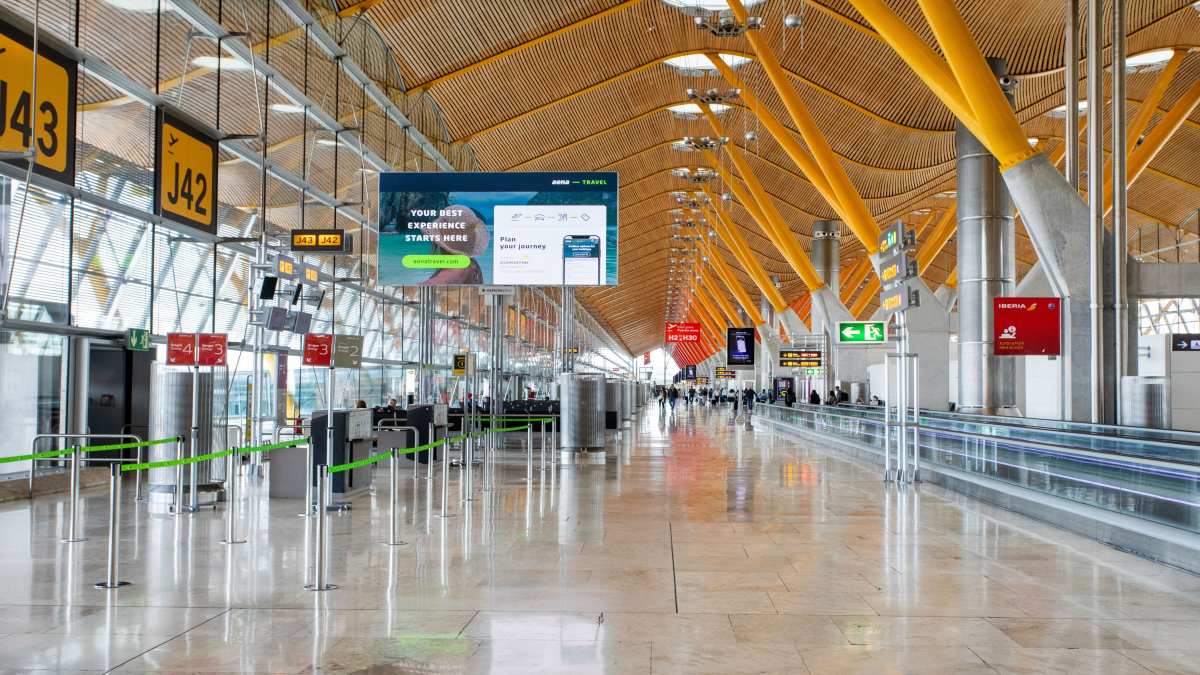
Europe recorded 1,964 flight delays and 72 cancellations across 13 major airports today, affecting air travel across Portugal, France, Austria, Switzerland, Greece, Italy, Spain, the United Kingdom and the Netherlands. Among the airlines experiencing the highest delay counts, easyJet recorded 498 delays, followed by Turkish Airlines with 220, Wizz Air Malta with 197 and KLM with 181. KLM also recorded the highest cancellation count among the airlines, at 12, while Wizz Air Malta had the highest delay rate, at 32%.
Affected airports included Lisbon’s Humberto Delgado, Ajaccio Napoleon Bonaparte, Nice Côte d’Azur, Vienna’s Schwechat, Zurich’s Kloten, Athens’ Eleftherios Venizelos, Milan Malpensa, Barcelona, Madrid’s Adolfo Suárez Madrid-Barajas, Paris Orly, Paris Charles de Gaulle/Roissy, London Heathrow and Amsterdam Schiphol. Amsterdam recorded the highest airport delay and cancellation counts, with 353 delays and 14 cancellations.
Heavily Disrupted European Airports
Amsterdam Schiphol
Amsterdam Schiphol recorded 353 delays and 14 cancellations, making it the busiest airport in the comparison by both measures of disruption. Passengers using the Dutch hub for connecting journeys may need to monitor departure times and allow additional time for onward connections. The departure-delay rate stood at 26%, while the arrival-delay rate was 20%.
Athens — Eleftherios Venizelos
Athens’ Eleftherios Venizelos registered 275 delays and two cancellations. The Greek capital’s airport had the second-highest delay count among the 13 airports, making punctuality an important consideration for passengers travelling through Athens. The departure-delay rate was 33%.
Zurich — Kloten
Zurich’s Kloten recorded 177 delays and five cancellations. Passengers travelling through Switzerland’s main international gateway should check their flight status before departure, particularly when connecting to another service. The departure-delay rate was 20%, while the arrival-delay rate was 21%.
Advertisement
Advertisement
Barcelona
Barcelona Airport registered 173 delays and two cancellations. Travellers flying to or from the Spanish city may wish to check for schedule changes before heading to the airport.
London Heathrow
London Heathrow recorded 164 delays and seven cancellations. The airport also registered 50 delays into or out of the United States, the highest count in that category among the 13 airports. Passengers connecting between British and American services should check their connection times and airline updates. The departure-delay rate was 13%.
Advertisement
Advertisement
Paris — Charles de Gaulle/Roissy
Paris Charles de Gaulle/Roissy recorded 157 delays and 11 cancellations. The airport also registered 18 delays into or out of the United States. Travellers using the French hub for connecting flights should monitor their departure details and allow sufficient time between services. The departure-delay rate was 14%, while the arrival-delay rate was 8%.
Madrid — Adolfo Suárez Madrid-Barajas
Madrid’s Adolfo Suárez Madrid-Barajas reported 152 delays and five cancellations. Passengers travelling through Spain’s capital should confirm their flight status before departure and remain alert to changes in boarding or departure times. The departure-delay rate was 14%, while the arrival-delay rate was 8%.
Advertisement
Advertisement
Milan — Malpensa
Milan Malpensa registered 118 delays and five cancellations. The airport’s schedule interruptions affected journeys through one of Italy’s principal aviation gateways, making advance flight-status checks advisable. The departure-delay rate was 18%, while the arrival-delay rate was 16%.
Lisbon — Humberto Delgado
Lisbon’s Humberto Delgado recorded 109 delays and two cancellations. The arrival-delay rate was 12%.
Paris Orly
Paris Orly registered 105 delays and six cancellations. Passengers travelling through the French airport should check for revised departure times and follow instructions from their airlines. The departure-delay rate was 14%, while the arrival-delay rate was 17%.
Vienna — Schwechat
Vienna’s Schwechat recorded 99 delays and four cancellations. Travellers using Austria’s capital airport should check their itineraries before leaving for the terminal, particularly when onward connections are involved. The departure-delay rate was 14%, while the arrival-delay rate was 13%.
Advertisement
Advertisement
Nice — Côte d’Azur
Nice Côte d’Azur recorded 80 delays and four cancellations. Passengers travelling to or from the French Riviera should monitor their flight status and check directly with their airlines if schedules change. The departure-delay rate was 17%, while the arrival-delay rate was 16%.
Ajaccio Napoleon Bonaparte
Ajaccio Napoleon Bonaparte recorded two delays and five cancellations. Although its delay count was the lowest among the 13 airports, its cancellation count exceeded those of several airports with substantially higher delay totals. The arrival-cancellation rate was 12%.
Airlines Most Disrupted by Flight Disruptions
easyJet
easyJet recorded 498 delays, representing 25%, and two cancellations. Its delay count was the highest among the carriers, with delays accounting for the main disruption in its reported statistics.
Turkish Airlines
Turkish Airlines registered 220 delays, equivalent to 13%, and eight cancellations.
Wizz Air Malta
Wizz Air Malta recorded 197 delays, representing 32%, alongside four cancellations.
KLM
KLM recorded 181 delays, equivalent to 24%, and 12 cancellations.
Advertisement
Advertisement
Pegasus Airlines
Pegasus Airlines registered 139 delays, representing 19%, and two cancellations.
Wizz Air
Wizz Air recorded 101 delays, equivalent to 16%, and two cancellations.
Air France
Air France registered 67 delays, representing 10%, and two cancellations.
Austrian Airlines
Austrian Airlines recorded 36 delays, representing 10%, and four cancellations.
What Can Impacted Travelers Do?
- Check flight status on the airline’s official website or mobile application before leaving for the airport.
- Enable notifications for changes to departure times, boarding gates and flight status.
- Allow additional time for airport procedures and connecting flights.
- Contact the airline promptly if a cancellation affects onward travel or accommodation arrangements.
- Keep booking confirmations, boarding passes and receipts for additional expenses.
- Review the airline’s rebooking and refund policies when a flight is cancelled.
- Check applicable passenger-rights regulations and any compensation eligibility.
- Follow airport announcements and instructions from airline staff.
Why Are Flights Being Disrupted Across Europe?
Flight schedules across Europe can be affected by weather conditions, air traffic control restrictions, staffing availability, aircraft rotation schedules, technical inspections and ground-handling delays. Busy airports depend on coordination between flight crews, aircraft, baggage teams and other ground services, leaving schedules vulnerable when one part of the operation runs behind.
An aircraft arriving late may also depart late on its next scheduled service. Airlines may sometimes cancel a flight when operational constraints make the planned service impractical. However, the individual causes of the delays and cancellations described here have not been established. Passengers should therefore rely on airline announcements and airport updates for explanations relevant to their specific journeys.
Advertisement
Advertisement
Significant flight cancellations were also reported across Europe yesterday. Read our previous coverage here.
The data presented in this report was collected and editorially reviewed using real-time information recorded on October 11, 2026, at 12:06 pm ET (4:06 pm GMT).
Primary data source: FlightAware.
Verification Process: The editorial team reviewed and cross-checked all reported figures. Timestamped records, flight-tracking logs, and data-feed snapshots have been retained to support accuracy and maintain editorial transparency.
Note: Flight-tracking data may fluctuate as airspace conditions and airline operations change. Minor discrepancies may arise when comparing these figures with updates published by individual airports or airlines.
Passengers are encouraged to verify their flight status, check for schedule changes, and review the latest operational updates directly with their respective airlines before departure.
Advertisement
Verified by Paramita Sarkar
