
Singapore and More Countries Drive Asia’s Summit Travel Boom With Biometric Borders and Sovereign AI

Updated
Published
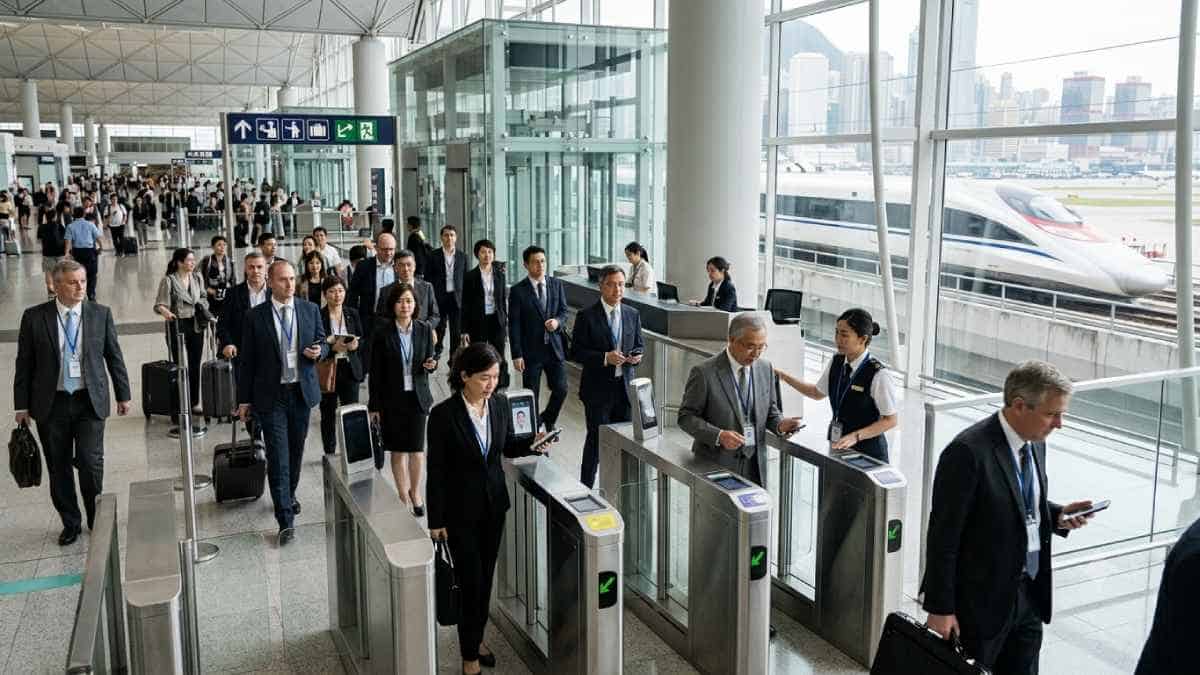
This operational change takes place in international border routes when global executives and ministers gather for summits in Asia. The sovereign infrastructure of transport is exemplified by the strategic combination of on-site artificial intelligence, predictive intermodal transportation design and zero-trust biometric screening. Standard cloud systems and traditional passport checkpoints will be replaced by secure perimeter-based domestic data networks where national and corporate intelligence are protected from outside interception. The conversion of high-traffic diplomatic flow into a strategic economic resource through the use of primary Asian gateways will be shown in the analysis of these engineering systems, providing modern executive mobility at a rapid pace, yet free of operational risks.
Strategic Background: The Geopolitical Drivers of Asia’s Summit Mobility
A decisive shift toward high-density multilateral summits across the Asia-Pacific territory has been observed in the international corporate travel and diplomatic engagement landscape. Assemblies including the Milken Institute Asia Summit in Singapore, Asia-Pacific Economic Cooperation (APEC) ministerial roundtables, ASEAN leaders’ gatherings, and premier cross-border economic conclaves are no longer governed through conventional seasonal travel protocols. Historically, VIP arrivals were addressed by civil aviation authorities and urban transport departments through improvised operational responses, such as manual immigration escort queues, cordoned motorway lanes, and static tarmac allocations.
Advertisement
Advertisement
However, traditional facilitation models have been rendered unviable by the rapid expansion of the regional Meetings, Incentives, Conferences, and Exhibitions (MICE) sector, compounded by elevated cybersecurity threats and international corporate espionage. Frictionless physical velocity coupled with total data confidentiality is necessitated by the transit of cabinet ministers, sovereign wealth fund directors, institutional financiers, and Fortune 500 chief executives. Unacceptable legal exposure and counter-intelligence risks are presented to host nations by public cloud infrastructures, through which operational telemetry is routinely routed across geographically dispersed data centres located in multiple foreign jurisdictions.
In response, integrated sovereign transit infrastructure is being deployed across primary Asian gateways. Three vital technical layers are merged within this state-directed operational paradigm: on-premises edge computing for border control, algorithmic sensor networks for predictive ground transport, and dynamic commercial inventory engines designed for capturing maximum economic yield from visiting delegations. Rather than summit mobility being viewed merely as a volume surge, it is treated by transport planners as an integrated national security and economic development operation.
Advertisement
Advertisement
Sovereign AI Architecture and Mobility Data Residency
On-Premises Edge Computing and Border Data Enclaves
As computer vision and generative predictive systems are adopted within cross-border travel, sovereign data residency has been established as a non-negotiable regulatory imperative across Asia’s primary economic gateways. Dense concentrations of politically and commercially sensitive identities—encompassing itinerary details, corporate affiliations, and physical travel trajectories—are contained within summit flight manifests. Under traditional commercial travel arrangements, biometric markers collected at airport check-in or transit portals were frequently transferred to off-premises commercial cloud nodes for neural network matching and processing.
To eliminate this vulnerability, dedicated mobility data residency mandates supported by on-premises edge computing have been implemented across regional aviation hubs in Singapore, Malaysia, and Thailand. Under this sovereign operational design, private computational clusters are installed directly within national airport data facilities. When an electronic border gate is approached by a passenger, high-definition facial scans and iris biometrics are processed entirely on-site against secure domestic immigration databases, whereby assurance is provided that raw biometric features and passenger manifests are never transferred outside sovereign jurisdiction.
Advertisement
Advertisement
Cryptographic Verification and Zero-Trust Biometric Corridors
The deployment of zero-trust biometric corridors serves as the physical manifestation of this sovereign computing perimeter. Multiple manual document checkpoints—including ticket validation at the departure concourse, physical passport control at the border, security checks, and manual boarding pass verification at the departure gate—were conventionally required within airport terminals. Acute administrative bottlenecks were created by these repetitive visual inspections whenever multiple wide-body corporate charters arrived within short intervals.
Token-less immigration clearance architectures are deployed within modern sovereign corridors. Instead of the physical presentation of paper documentation being required, an encrypted, single-use digital travel token is generated by automated systems at the initial point of interaction. Facial geometry and iris details in motion are captured by multi-spectral infrared cameras as the corridor is traversed naturally by the passenger. These inputs are matched by the local algorithmic engine against advance flight manifests submitted by international carriers, allowing passenger clearance to be confirmed rapidly.
Continuous liveness verification is mandated by zero-trust principles so that presentation attacks—including high-grade physical silicone prosthetics, high-resolution screens, or deepfake video projections—are countered. The moment the terminal portal is exited by a delegate, transient token vectors are cryptographically scrubbed, whereby data privacy is preserved while complete operational auditability is maintained for border intelligence authorities.
Predictive Intermodal Transit Engineering and Energy Optimisation
Condition-Based Maintenance Across High-Speed Rail Corridors
The transit security perimeter established at the airport terminal is extended outward to metropolitan ground transport corridors. Intense, concentrated stress is placed by high-density business summits on urban rail arteries connecting international gateways to central business districts and major convention centres. High-level delegations can be stalled, tightly coordinated state schedules can be disrupted, and significant economic disruption can be generated by unplanned service interruptions along these critical transit spines.
To guarantee absolute infrastructure availability, traditional time-based maintenance routines have been replaced by automated condition-based maintenance (CBM) frameworks by regional transport authorities. Integrated Internet of Things (IoT) sensor arrays, high-speed optical scanners, and autonomous track-inspection trainsets are deployed across primary transit routes by rail networks, such as East Japan Railway Company (JR East) in Japan and Keretapi Tanah Melayu Berhad (KTMB) in Malaysia.
Several critical engineering metrics are tracked by these continuous predictive monitoring systems:
Advertisement
Advertisement
- Real-time track geometry deviations, dynamic rail stress, and sub-millimetre surface fatigue.
- Dynamic pantograph contact force, electrical arcing frequencies, and overhead catenary wire wear.
- Rolling stock traction bogie vibrations, axle bearing temperatures, and braking system pressures.
Continuous telemetry streams are ingested by algorithmic diagnostic platforms so that degradation patterns are identified days or weeks before mechanical failures are triggered. Unplanned infrastructure downtime has been reduced through this transition to automated predictive corridor maintenance, whereby uninterrupted rail throughput is secured throughout summit peak operating windows.
Grid Orchestration for Electrified Executive Shuttles
The transition of ground transport to commercial electric vehicles (EVs) and electric bus fleets for state visits and business summits has been accelerated by international sustainability mandates. Hundreds of battery-electric shuttles are deployed across host cities for the conveyance of international delegates between airport terminals, luxury hotels, and convention centres. However, the risk of triggering intense power demand surges and destabilising local commercial electricity grids is introduced by the uncoordinated rapid charging of these high-capacity commercial vehicle fleets.
To mitigate grid disruption, automated grid orchestration platforms are utilised by municipal transport authorities and power utilities. Vehicle operational schedules, battery states-of-charge, and route assignments are monitored in real time by centralised computational hubs. The charging schedules of electric shuttle fleets are dynamically adjusted on the basis of three variables:
- Summit itinerary timelines, whereby rapid depot charging is scheduled while plenary meetings are attended by delegates and travel demand is reduced.
- Real-time spot electricity wholesale pricing and municipal load curves, allowing vehicles to be charged during off-peak windows.
- On-site stationary battery storage reserves and distributed solar arrays, preventing safety thresholds at localised commercial distribution substations from being exceeded.
Zero-emission executive transit is delivered while municipal energy resilience is preserved through intelligent power throttling and bidirectional energy management.
Algorithmic MICE Yield Optimisation and Corporate Bleisure Integration
Dynamic Inventory Allocation and Executive Micro-Stays
Traditional corporate hospitality models have been replaced with sophisticated algorithmic strategies driven by the rapid growth of executive conferences across Asian economic hubs. Historically, fixed corporate room-block allocations were negotiated with luxury hotels by international summit organizers months in advance. Under these conventional contracts, blocks of premium hotel rooms were locked at fixed corporate discounts, frequently resulting in unoptimised hotel revenue per available room (RevPAR) and high attrition penalties whenever delegation headcounts fluctuated.
Across modern Asian commercial hubs, international summit hosting is administered through dynamic MICE yield optimisation engines. Real-time summit registration volumes, corporate flight manifest filings, and private jet charter clearances are continuously cross-referenced against citywide hotel room inventory by these platforms. As senior executive registrations surge, tiered inventory blocks are released dynamically by algorithms, allowing corporate pricing to be adjusted on the basis of real-time availability and projected delegation status.
Advertisement
Advertisement
Unsold room risks are eliminated for hospitality operators while verified accommodation near primary convention nodes is secured for corporate delegations through this optimisation. Furthermore, executive micro-stays across discrete multi-hour blocks are monetised by luxury properties via micro-stay yielding systems to accommodate international delegates arriving solely for bilateral negotiations, board sessions, or keynote deliveries prior to departure on evening long-haul flights.
Cross-Regional Bleisure Dispersal Models
The broader economic value of international corporate summits is significantly magnified when delegate expenditure is channelled past the primary host metropolitan boundary into the wider national economy. A strategic shift toward structured business-leisure itinerary extensions has been executed by national tourism and convention bureaus. An exceptional demographic for high-end luxury hospitality, cultural, and wellness spending is represented by high-net-worth delegates visiting regional financial capitals for short summits.
To capitalise on this opportunity, algorithmic marketing platforms integrated directly into delegate registration portals are deployed by convention bureaus. As event registrations are confirmed by international delegates, executive regional travel packages connecting primary urban hubs to secondary luxury corridors are presented by automated systems. For example, high-speed rail packages or regional air connections to destinations such as Penang, Chiang Mai, or Phuket are algorithmically proposed to a finance executive clearing immigration in Kuala Lumpur or Bangkok.
Significantly higher direct spending is generated by business event visitors in comparison to standard leisure travellers, as indicated by official convention data. Higher average daily spending is recorded by national economies by systematically extending corporate stays through intermodal travel connectivity, whereby commercial summit windfalls are distributed across regional economies.
Comprehensive National Gateway Analysis: Sovereign Transit Implementations
Singapore: Passport-Less Biometric Corridors and Government Cloud Enclaves
Singapore serves as the international proving ground for sovereign AI implementation across border governance and aviation systems. The New Clearance Concept (NCC) has been deployed across all physical international checkpoints through systematic inter-agency coordination between the Immigration & Checkpoints Authority (ICA) and the Home Team Science and Technology Agency (HTX).
Under this operational framework, full passport-less immigration clearance was achieved across all four passenger terminals at Singapore Changi Airport (SIN). Manual passport checks are replaced by automated token-less clearance lanes that process travellers using multi-modal facial and iris biometrics. Checkpoints are cleared without physical passport presentation by arriving and departing Singapore residents—including citizens, permanent residents, and long-term pass holders—alongside all departing foreign visitors.
Advertisement
Advertisement
A substantial reduction in average clearance times has been achieved through token-less biometric clearance, as demonstrated by official government data published by the Ministry of Home Affairs and ICA. Multitudes of passengers have been moved through these automated corridors without delay since the initial rollout phase.
The underlying data infrastructure is anchored securely within Singapore’s Government Commercial Cloud (GCC) and private, on-premises border intelligence networks. Biometric verification and Advance Passenger Information manifests are processed inside domestic environments protected by strict cryptographic controls, whereby complete independence from off-premises international cloud environments is guaranteed for automated clearance decisions.
Furthermore, token-less clearance has been extended to Seletar Airport, Marina Bay Cruise Centre Singapore (MBCCS), and Tanah Merah Ferry Terminal, while QR code clearances have been deployed across land borders at Tuas and Woodlands. Passenger service on the Johor Bahru–Singapore Rapid Transit System (RTS) Link will be entered, fully integrated with automated border architectures.
Malaysia: High-Speed Rail Integration and the MyTripleE Subvention Framework
Multimodal transit assets are leveraged by Malaysia to integrate air arrivals with high-speed urban transit corridors. Aviation arrivals are synchronised with Express Rail Link (ERL / KLIA Ekspres) operations and Keretapi Tanah Melayu Berhad (KTMB) Electric Train Service (ETS) networks by the Ministry of Transport and regional rail operators via Kuala Lumpur International Airport (KLIA) and the central transit hub of KL Sentral.
Transit efficiency is systematically coupled with algorithmic business event incentives by the Malaysia Convention & Exhibition Bureau (MyCEB), operating under the Ministry of Tourism, Arts and Culture (MOTAC), through the MyTripleE campaign. Structured subvention and operational support packages—categorised as Excel, Elevate, and Enliven—are established by the program, offering targeted financial, administrative, and logistical facilitation for major international conventions and trade exhibitions.
Marketing subventions covering substantial promotional allocations are provided for major events by MyCEB. Urban highway congestion is removed from the executive travel equation by connecting KL Sentral’s downtown check-in terminals directly to KLIA via high-speed dedicated rail.
Advertisement
Advertisement
Simultaneously, delegation accommodation is coordinated across Kuala Lumpur’s major commercial corridors and secondary convention nodes—notably Penang and Langkawi—by dynamic yield engines. Malaysia is positioned by this intermodal integration to capture high-density regional trade assemblies while frictionless delegate transit is maintained.
Thailand: Automated Biometric Identification and Regional Bleisure Gateways
Aviation and commercial transit gateways have been overhauled in Thailand to support high-density international assemblies while domestic data privacy legislation is strictly adhered to. An Automated Biometric Identification System powered by facial recognition was introduced by Airports of Thailand Public Company Limited (AOT) across its primary airports: Suvarnabhumi Airport (BKK), Don Mueang International Airport (DMK), Chiang Mai (CNX), Mae Fah Luang Chiang Rai (CEI), Phuket (HKT), and Hat Yai (HDY).
Under this three-step architecture, facial identities are registered by passengers using national identification or international passports at Common Use Self-Service (CUSS) kiosks or check-in counters. Once registration is completed, the biometric signature is encrypted by the system into an individual passenger token. Security checkpoint verifications and self-boarding gate access are subsequently completed simply by facing automated optical cameras, allowing manual document reviews to be bypassed.
Strict digital sovereignty is maintained over this infrastructure by AOT. Biometric tokens and travel logs are housed within private, on-premises data centres at AOT Headquarters and Suvarnabhumi Airport in alignment with the Personal Data Protection Act (PDPA) B.E. 2562 and ISO/IEC 27001 information security standards. System logs are preserved strictly under the requirements of the Computer-Related Crime Act, whereby unauthorised transmission to external foreign servers is prevented.
Simultaneously, urban summit platforms—such as Bangkok’s Queen Sirikit National Convention Center (QSNCC)—are linked with secondary regional destinations through the national MICE Intelligence Data Hub administered by the Thailand Convention and Exhibition Bureau (TCEB). High-net-worth summit attendees are routed toward luxury wellness and eco-tourism corridors in Phuket and Chiang Mai by TCEB’s algorithmic promotion matrices, allowing extended delegate spend to be captured across the broader domestic economy.
Japan: Shinkansen Condition-Based Telemetry and Megacity Transit Resilience
The management of high-density summit mobility in Japan is founded upon predictive railway engineering and smart-grid infrastructure. Dense transit networks moving millions of passengers daily are managed by East Japan Railway Company (JR East) across the Greater Tokyo metropolitan region, anchored by Tokyo International Airport (Haneda, HND) and Narita International Airport (NRT).
Advertisement
Advertisement
Advanced Condition-Based Maintenance (CBM) is deployed across Shinkansen high-speed lines and metropolitan arteries—including the Yamanote Line and Keihin-Tohoku Line—under JR East’s Group Management Vision “To the Next Stage” and Group Safety Plan, ensuring that service delays are prevented during international summits.
Fixed-interval equipment teardowns are replaced by continuous telemetry tracking track geometry, rail strain, and pantograph contact pressure. Structural track degradation is systematically detected by track-inspection trainsets and autonomous aerial inspection drones prior to operational disruptions, monitored within safety frameworks supervised by the Ministry of Land, Infrastructure, Transport and Tourism (MLIT).
Furthermore, energy consumption across transit corridors is balanced through off-peak transit incentives, testing of experimental zero-emission rolling stock such as the HYBARI hydrogen-hybrid train, and smart-grid power balancing algorithms at major interchange hubs. Continuous transit reliability across Tokyo’s primary convention corridors is guaranteed through this engineering foundation.
Indonesia: Biometric Autogates and Electrified Summit Shuttles
Primary international aviation gateways have been modernized by Indonesia to manage high-level geopolitical and commercial gatherings. Automated border control gates (autogates) equipped with biometric facial recognition have been deployed by the Directorate General of Immigration (Direktorat Jenderal Imigrasi) at Soekarno-Hatta International Airport (CGK) in Jakarta and I Gusti Ngurah Rai International Airport (DPS) in Bali.
Access was expanded by the immigration authority to encompass foreign nationals, electronic Visa-on-Arrival (e-VoA) holders, Temporary and Permanent Stay Permit (ITAS/ITAP) holders, and eligible minors across key terminals. Passport biodata pages are scanned and faces are presented to integrated optical scanners by delegates, whereupon digital captures are cross-referenced against domestic immigration enforcement lists prior to the gates being opened.
Managed fleets of electric buses and electric shuttle vehicles are deployed by the Ministry of Transportation (Kemenhub) to service international summit corridors in Bali and Jakarta, complementing this border technology. Smooth, zero-emission movement between coastal luxury hotel clusters, international convention venues, and airport VIP terminals is facilitated through real-time fleet telematics, dynamic vehicle tracking, and synchronised charging corridors.
Advertisement
Advertisement
Gateway Infrastructure Matrix
| Gateway Sovereign Node | Primary Air Gateways | Border Technology & Processing Mode | Statutory Framework & Data Standard | Multimodal Integration Architecture |
| Singapore | Changi Airport (SIN), Seletar (XSP) | Automated walk-through biometric e-Gates | Government Commercial Cloud, MHA / ICA NCC | MRT connection; JB-Singapore RTS Link integration |
| Malaysia | Kuala Lumpur International (KUL) | Facial recognition gates & KL Sentral bag check | MOTAC MyTripleE framework & national PDPA | Express Rail Link & KTMB high-speed ETS rail network |
| Thailand | Suvarnabhumi (BKK), Don Mueang (DMK) | CUSS/CUBD Biometric Token system | Thailand PDPA B.E. 2562, ISO/IEC 27001 certified | Airport Rail Link, BTS/MRT networks, TCEB MICE Data Hub |
| Japan | Haneda (HND), Narita (NRT) | High-speed automated gates & mobile Suica NFC | MLIT Railway Safety Framework, Vision policies | Shinkansen high-speed lines, Yamanote Line CBM sensor arrays |
| Indonesia | Soekarno-Hatta (CGK), Ngurah Rai (DPS) | High-throughput autogates with e-VoA integration | Directorate General of Immigration border databases | Electric bus corridors, VIP road feeds, airport express rail |
Regulatory Frameworks, ICAO Standards, and Data Sovereignty Tensions
Complex operational friction at the intersection of domestic legislation and global civil aviation rules is created by the rapid roll-out of advanced transit infrastructure across Asian economies. While domestic security is preserved by deploying sovereign on-premises computing, the risk of creating fragmented technical architectures across borders is introduced. Divergent compliance thresholds for biometric data storage, retention schedules, and international token transfers are set by distinct privacy standards, such as Singapore’s Public Sector (Governance) Act, Thailand’s PDPA B.E. 2562, and Indonesia’s data protection statutes.
Significant administrative burdens are faced by commercial airlines in managing these non-standardised requirements. Under Annex 9 (Facilitation) of the International Civil Aviation Organization (ICAO) Chicago Convention and Universal Security Audit Programme guidelines, Advance Passenger Information and Passenger Name Record datasets must be delivered accurately by carriers. Yet, it must be verified by carriers that cross-border transmissions do not breach the data privacy laws of the country of departure when manifests are transmitted from international origins into local sovereign enclaves.
Furthermore, international delegates are forced to complete separate digital enrolments when travelling between Asian hubs due to the lack of mutual biometric token recognition agreements. An autogate at Suvarnabhumi or Soekarno-Hatta cannot be cleared by a digital identity token created at Changi. This fragmentation is to be resolved through bilateral data treaties and zero-knowledge cryptographic authentication standards, whereby security clearances between partner nations are verified without underlying domestic citizen files being exposed.
Future Outlook: Autonomous Transit Corridors and Regional Interoperability
A progression toward fully automated, continuous transit corridors is indicated for the future of Asian executive summit mobility. As physical terminals, intercity high-speed rail lines, and VIP ground transport are unified into continuous digital systems, the friction of international delegation travel will be diminished significantly.
Key technological vectors driving this transformation include:
- Autonomous In-Vehicle Border Processing: Building upon automated clearance concepts being deployed across land checkpoints, immigration will be cleared by summit delegations within autonomous electric shuttles while in motion from the aircraft apron, allowing terminal queues to be bypassed entirely.
- Agentic AI Apron and Airspace Orchestration: Aircraft gate allocations, ground baggage handling, customs personnel, and VIP motorcade dispatch will be coordinated in real time by agentic artificial intelligence engines adopted by airport authorities, whereby tarmac delays during peak summit arrival windows are prevented.
- Integrated Cross-Border High-Speed Rail Corridors: Unified bilateral border check facilities will be established by the commissioning of high-speed regional lines, such as the Johor Bahru–Singapore RTS Link, where departure and arrival formalities are completed by passengers within a single clearance hall.
- Resilient Infrastructure Micro-Grids: High-speed rail express feeds and fleet charging depots will be powered by dedicated renewable micro-grids and battery storage installations, insulating critical summit transit arteries from municipal grid disturbances.
More than elevated traveller numbers are being processed through these structural investments across Asia’s primary economic gateways. By pioneering sovereign AI architectures, predictive sensor grids, and integrated multimodal networks, the global benchmark for modern, high-security executive mobility is being established by these hubs.
Advertisement
Advertisement
The interconnection between digital sovereignty and cross-border mobility is exemplified by the strategic evolution of Asian diplomatic and business trips. On-site computational intelligence, predictive high-speed rail systems design, and automated biometric border management processes are now all brought together into an effective framework via the aggressive construction of sovereign transit systems. Bottlenecks are solved, diplomatic information is secured, and valuable executive spending is put straight into the economies of entire nations. As international summit meetings become increasingly complex across the Asia-Pacific region, regional gateways will continue to be essential conduits of global trade for years to come.
Advertisement
