
Mauritius Turns Electric as 100 New Buses Reshape the Island’s Tourism Travel

Published
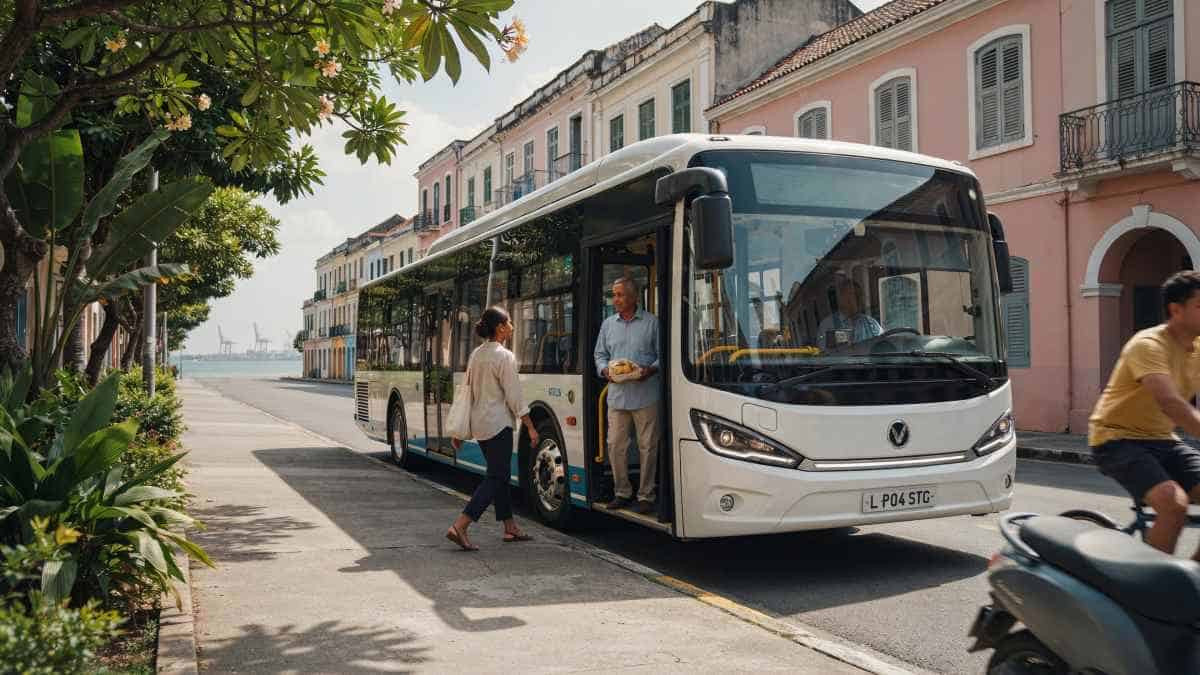
There is more in store for Mauritius tourism developments, but this time, it will not happen on the beach, but on the road. 100 electric buses have been delivered by India to Mauritius in a gesture of generosity, and all the buses are now being deployed by the National Transport Corporation (NTC) on various routes. The handover ceremony of the last 90 electric buses took place on 10 April 2026 and marks India’s commitment.
But yes, there is something you should know about that too. The number of 100 buses is no longer applicable to the electric bus fleet of the country. Currently, the number of electric buses owned by NTC stands at 105, including those supplied by China; whereas, the number of electric buses in Mauritius’ public transport stands at 106.
The 100-Bus Tourism Mobility Push
The Indian government’s 100-bus donation is being operated by the NTC, Mauritius’ largest public transport provider. The corporation runs around 500 buses across more than 97 routes, carrying roughly 130,000 passengers each day, giving the electric fleet a significant role in everyday mobility.
For visitors, public buses can provide an alternative to private vehicles and taxis when travelling between towns, commercial areas and tourism zones. The NTC network covers locations across the island, including routes connected with Vacoas, Port Louis, Forest Side and Rivière du Rempart.
Advertisement
Advertisement
The introduction of electric buses therefore sits within a broader transport story that directly affects how residents and visitors move around Mauritius.
Electric Buses Are Already On Multiple Routes
The deployment has been phased across several NTC depots.
Advertisement
Advertisement
Government information presented in May 2026 showed 90 of the 100 Indian electric buses already operating. At that point, 21 were based at Rémy Ollier Depot, 41 at La Tour Koenig, 19 at Forest Side and nine at Rivière du Rempart.
Together, those buses were serving 33 routes, covering 10 routes from Rémy Ollier, 13 from La Tour Koenig, six from Forest Side and four from Rivière du Rempart. The remaining 10 buses were scheduled for phased deployment.
Advertisement
Advertisement
By early June, government transport authorities stated that the 100 buses would be fully operational, while the NTC’s current information records 105 electric buses in its fleet.
What This Means for Travellers
For tourists, the electric-bus rollout adds another public transport option to Mauritius’ travel network.
Visitors staying in Port Louis can use public transport to explore the capital and connect with other parts of the island. Port Louis attractions include the Central Market, Le Caudan Waterfront, Aapravasi Ghat and Champ de Mars.
Travellers exploring the south and central regions can also encounter NTC services operating from Forest Side and other depots. The network is particularly relevant for visitors combining city sightseeing with nature, cultural and coastal excursions.
Advertisement
Advertisement
Mauritius remains primarily an air-access destination, with Sir Seewoosagur Ramgoolam International Airport serving international travellers. Port Louis is the island’s principal maritime gateway for cruise visitors.
The local currency is the Mauritian rupee, while English, French and Mauritian Creole are widely used.
Charging Infrastructure Arrives With the Buses
The electric fleet required more than simply putting new vehicles on the road. India also provided 20 electric-bus chargers alongside the 100 buses.
By May 2026, chargers had already been installed at Rémy Ollier and La Tour Koenig depots, with additional equipment being installed at La Tour Koenig and Forest Side.
The government has also outlined a gradual move towards photovoltaic energy for charging infrastructure, with the NTC stating that its e-buses are currently charged from the electricity grid while a progressive shift towards solar power is planned.
Green Mobility Becomes Part of Mauritius Tourism
Mauritius has been developing sustainable transport alongside its broader tourism infrastructure. The NTC says its electric-mobility programme supports the country’s Nationally Determined Contributions and aims to reduce dependence on fossil fuels.
Advertisement
Advertisement
The government’s transport modernisation programme also includes fleet management technology and plans for smarter bus shelters with real-time passenger information.
For a destination built around beaches, marine experiences, nature and outdoor travel, the expansion of lower-emission public transport adds another layer to its tourism infrastructure.
Key Stats
- 100: Electric buses donated by India
- 105: Electric buses currently listed by the NTC
- 106: Electric buses reported across public transport by July 2026
- 97+: NTC routes across Mauritius
- 130,000: Approximate daily NTC passengers
- 20: Electric chargers supplied with India’s 100-bus programme
- 33: Routes served by 90 electric buses during the May 2026 deployment phase
Timeline and Events
6 August 2025: The first 10 Indian electric buses were inaugurated in Mauritius.
10 April 2026: The remaining 90 buses were formally handed over, completing the 100-bus Indian grant.
21 May 2026: Government figures showed 90 of the 100 Indian buses already operating across 33 routes.
June 2026: Full operationalisation of the 100 Indian electric buses was scheduled and subsequently incorporated into the NTC’s expanded electric fleet.
Advertisement
Advertisement
13 July 2026: A steering committee meeting reviewed progress on Mauritius’ low-carbon electric-bus programme.
FAQ
1. How many electric buses did India provide to Mauritius?
India provided 100 electric buses to the National Transport Corporation.
2. Are all 100 buses operating?
The 100 Indian buses were scheduled for full deployment by June 2026. The NTC now lists 105 electric buses in its fleet, including five from China.
3. Can tourists use Mauritius’ electric buses?
Yes. The buses operate on public routes used by residents and visitors, with services across several regions of the island.
Dates
6 August 2025: First 10 Indian electric buses inaugurated.
10 April 2026: Final 90 buses handed over.
21 May 2026: 90 buses reported operational across 33 routes.
June 2026: Full deployment of the 100-bus Indian fleet targeted.
13 July 2026: Electric-bus programme progress reviewed.
Conclusion
The green-mobility project has now shifted from the planning stage to the implementation phase in Mauritius, which now has an electric bus system operational through its NTC. This includes 100 buses provided by India, which are running due to the support of charging facilities and a shift towards clean public transportation. From a tourism perspective, it is another step towards developing infrastructure on a sustainable basis.
Advertisement
