
Over 60 Cancellations and 1,130 Delays Disrupt Middle East Travel at Muscat, Dubai and Other Airports

Published
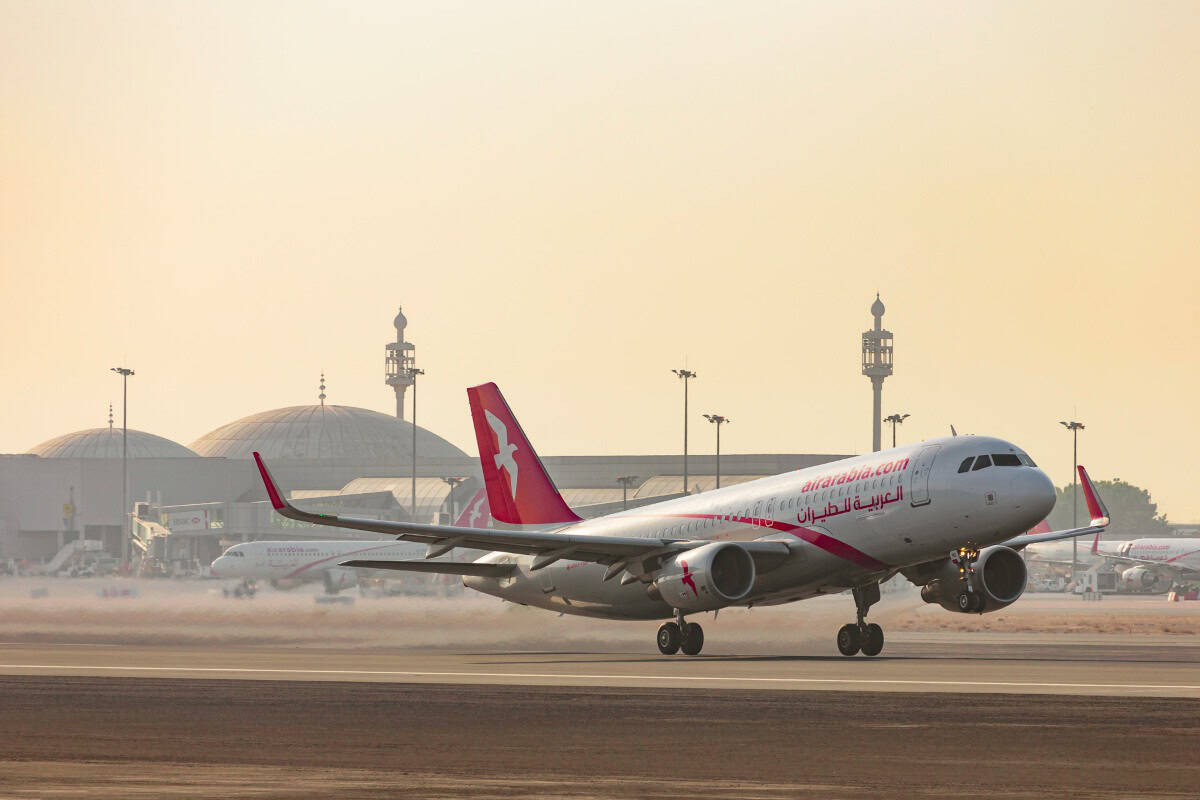
Travel in the Middle East has been hampered by more than 60 cancellations and 1,130 delays, which have affected travelers at key airports in the region like Muscat and Dubai. Travelers now face difficulties as airlines and airports deal with shifting timetables, operational modifications, and pressure from local air traffic. Additionally, major flight disruptions were reported at Dubai, Muscat, and other airports, with passenger travels being impacted by disruption. The circumstance demonstrates how Middle Eastern travel networks are still vulnerable to operational shifts, route modifications, and connectivity demands. Travelers are therefore urged to check flight updates, confirm schedules with airlines, and give themselves extra time while airports try to restore efficient.
Middle East Airports Face Widespread Flight Disruptions as Delays and Cancellations Increase
Flight operations across the Middle East faced significant disruption as airports recorded 1,137 delays and 60 cancellations, affecting major aviation hubs, regional airports and international carriers. The disruption impacted passenger journeys across countries including the UAE, Saudi Arabia, Qatar, Oman, Kuwait, Bahrain, Jordan, Israel, Türkiye and Syria.
The latest figures show that several major airports experienced high levels of delayed flights, with Dubai International Airport recording 181 delays and 16 cancellations, while Istanbul Airport reported 207 delays and one cancellation. Other important hubs, including Hamad International Airport in Doha, King Abdulaziz International Airport in Jeddah and King Khalid International Airport in Riyadh, also faced operational pressure.
Regional aviation networks have recently experienced schedule adjustments as airlines continue managing changing operational conditions and route planning across the Middle East. Airlines operating in the region have advised passengers to check flight updates before travelling as schedules may change.
Advertisement
Advertisement
Dubai, Istanbul and Gulf Hubs Record Highest Passenger Impact
The disruption was particularly visible at some of the busiest airports connecting Asia, Europe and the Middle East.
Dubai International Airport recorded 181 delays and 16 cancellations, making it the most affected Gulf airport in terms of cancellations from the provided data. As one of the world’s busiest international transfer hubs, delays at Dubai can affect connecting passengers travelling between multiple regions.
Advertisement
Advertisement
Istanbul Airport recorded 207 delays and one cancellation, while Istanbul Sabiha Gokcen International Airport reported 126 delays and two cancellations. Together, both Istanbul airports showed continued pressure on Türkiye’s aviation network.
Ben Gurion International Airport in Israel reported 176 delays and one cancellation, adding to disruption across the eastern Mediterranean travel market.
Advertisement
Advertisement
Other major Gulf airports also experienced delays:
| Airport | Country | Delays | Cancellations |
|---|---|---|---|
| Dubai International Airport | UAE | 181 | 16 |
| Istanbul Airport | Türkiye | 207 | 1 |
| Istanbul Sabiha Gokcen International Airport | Türkiye | 126 | 2 |
| Ben Gurion International Airport | Israel | 176 | 1 |
| Hamad International Airport | Qatar | 91 | 1 |
| King Abdulaziz International Airport | Saudi Arabia | 98 | 8 |
| King Khalid International Airport | Saudi Arabia | 79 | 9 |
| Sharjah International Airport | UAE | 58 | 1 |
| Queen Alia International Airport | Jordan | 29 | 1 |
| Kuwait International Airport | Kuwait | 29 | 1 |
| Seeb International Airport | Oman | 21 | 3 |
| Bahrain International Airport | Bahrain | 16 | 2 |
Airlines Across Saudi Arabia, UAE, Qatar and Türkiye Experience Schedule Pressure
Several airlines operating across the Middle East reported delayed and cancelled services.
Turkish Airlines recorded the highest number of delayed flights among the listed carriers, with 193 delays at an 11% delay rate and one cancellation with a 0% cancellation rate.
Qatar Airways reported 87 delays at a 13% delay rate and one cancellation at a 0% cancellation rate. The airline’s Doha hub plays a major role in global connecting traffic, making schedule changes important for international travellers.
Advertisement
Advertisement
Saudia recorded 63 delays at an 11% delay rate and 12 cancellations at a 2% cancellation rate. Saudi Arabia’s aviation network was also affected through major airports in Jeddah and Riyadh.
FlyDubai experienced 62 delays at a 21% delay rate and six cancellations at a 2% cancellation rate, while Air Arabia reported 49 delays at a 21% delay rate and one cancellation at a 0% cancellation rate.
Other affected airlines included:
| Airline | Country | Delays | Delay Rate | Cancellations | Cancellation Rate |
|---|---|---|---|---|---|
| Saudia | Saudi Arabia | 63 | 11% | 12 | 2% |
| FlyDubai | UAE | 62 | 21% | 6 | 2% |
| Oman Air | Oman | 12 | 11% | 5 | 4% |
| Fly Cham / Cham Wings | Syria | 2 | 33% | 2 | 33% |
| Qatar Airways | Qatar | 87 | 13% | 1 | 0% |
| Air Arabia | UAE | 49 | 21% | 1 | 0% |
| El Al | Israel | 23 | 67% | 1 | 2% |
| Royal Jordanian | Jordan | 11 | 7% | 1 | 0% |
| Turkish Airlines | Türkiye | 193 | 11% | 1 | 0% |
Countries and Cities Affected by Middle East Flight Disruptions
The disruption affected a wide geographical area, covering major aviation centres across the region.
In the UAE, Dubai and Sharjah experienced operational pressure, with Dubai International Airport recording the highest number of cancellations among listed airports. FlyDubai and Air Arabia also reported delays.
In Saudi Arabia, airports in Jeddah, Riyadh, Abha, Najran and Gizan recorded disruptions. King Abdulaziz International Airport reported 98 delays and eight cancellations, while King Khalid International Airport recorded 79 delays and nine cancellations.
Advertisement
Advertisement
In Qatar, Hamad International Airport recorded 91 delays and one cancellation, affecting Qatar Airways operations.
In Oman, Seeb International Airport recorded 21 delays and three cancellations, while Oman Air reported 12 delays and five cancellations.
In Jordan, Queen Alia International Airport recorded 29 delays and one cancellation, while Royal Jordanian reported 11 delays and one cancellation.
In Kuwait, Bahrain and Syria, airports and airlines also experienced disruption, with Kuwait International Airport reporting 29 delays and one cancellation, Bahrain International Airport recording 16 delays and two cancellations, and Fly Cham / Cham Wings reporting two delays and two cancellations.
| Airport | Origin Cancellations % | Destination Cancellatons % |
|---|---|---|
| Abha Regional | — | 8% |
| Aleppo Int’l | 18% | — |
| Suvarnabhumi Bangkok Int’l | 0% | 0% |
| Chatrapati Shivaji Int’l | 0% | 0% |
| Sepinggan Int’l | — | 4% |
| Guangzhou Baiyun Int’l | 0% | 0% |
| Netaji Subhash Chandra Bose Int’l | 1% | — |
| Jakarta-Soekarno-Hatta Int’l | 1% | 1% |
| Chongqing Jiangbei Int’l | 0% | 1% |
| Da Nang Int’l | 1% | — |
| Indira Gandhi Int’l | 0% | 0% |
| Dubai Int’l | 1% | 1% |
| Najran Domestic | 40% | 33% |
| Gizan Regional | — | 28% |
| Haikou Meilan Int’l | — | 0% |
| Noi Bai Int’l | — | 0% |
| Halim Perdanakusuma Int’l | — | 5% |
| Tokyo Int’l (Haneda) | 0% | 0% |
| Homalin | 100% | 100% |
| Rajiv Gandhi Int’l | 0% | 0% |
| King Abdulaziz Int’l | 1% | 0% |
| Nanchang Changbei Int’l | — | 1% |
| Kunming Changshui Int’l | 0% | 0% |
| Kalaymyo | — | 100% |
| Kuala Namu International | — | 2% |
| Kuala Lumpur Int’l | 0% | 0% |
| Seeb Int’l | — | 1% |
| Mandalay Int’l | 44% | 37% |
| Manila Int’l | 0% | — |
| Ningbo Lishe Int’l | 1% | 1% |
| Nanjing Lukou Int’l | 1% | 1% |
| Nanning Wuxu Int’l | 1% | 2% |
| Beijing Capital Int’l | 0% | 0% |
| Beijing Daxing International Airport | 0% | 0% |
| Sultan Mahmud Badaruddin II | 6% | — |
| Supadio | — | 5% |
| Shanghai Pudong Int’l | 0% | 0% |
| Yangon Int’l | 5% | 5% |
| King Khalid Int’l | 1% | 1% |
| Sharjah Int’l | 1% | — |
| Singapore Changi | 0% | — |
| Salalah | 13% | — |
| Srinagar / Srinagar Air Force Base | 6% | — |
| Shenzhen Bao’an Int’l | 0% | — |
| Chengdu Tianfu Int’l | 0% | — |
| Ben Gurion Int’l | — | 0% |
| Tianjin Binhai Int’l | 1% | 1% |
| Taiyuan Wusu | 1% | 1% |
| Sultan Hasanuddin Int’l | 1% | 1% |
| Wuhan Tianhe | 0% | 0% |
| Wenzhou Int’l | 1% | 1% |
| Xi’an Xianyang Int’l | 0% | 0% |
What Affected Passengers Can Do Now
Passengers travelling through affected Middle East airports should take several steps to manage possible changes to their journey.
- Travellers should first check their airline’s official website or mobile application for the latest flight status before leaving for the airport.
- Airlines often provide updated departure times, rebooking options and travel instructions through direct notifications.
- Passengers with connecting flights should review their entire itinerary because delays on one sector can affect onward journeys. Travellers should also arrive earlier than usual at airports experiencing heavy operational pressure.
- Those facing cancellations should contact their airline directly to understand available options, including alternative flights, rebooking procedures or refund policies.
- Keeping booking confirmations, airline messages and travel receipts can help passengers manage claims or additional expenses.
Data Verification Notice
The data has been extensively curated by our editorial team using real-time aviation figures recorded on 18 September 2026 at 4:41 pm ET USA (19 September 2026, 12:42 am GST).
Primary Source: FlightAware.
Verification Protocol: All statistics have been independently reviewed and cross-checked by our human editorial desk. Timestamped records, data logs and feed snapshots are securely archived internally to support historical accuracy and editorial transparency.
Note: Real-time flight-tracking figures reflect active airspace and operational data. Minor variations may occur when compared with information displayed at individual airport terminals or airline departure gates.
Middle East aviation faced 67 cancelled and 895 delayed flights across major airports. Click here to read the full report.
Advertisement
Verified by Paramita Sarkar
