
Egypt Plans Air-Rail Links to Connect Cairo Flights with Luxor and Aswan

Published
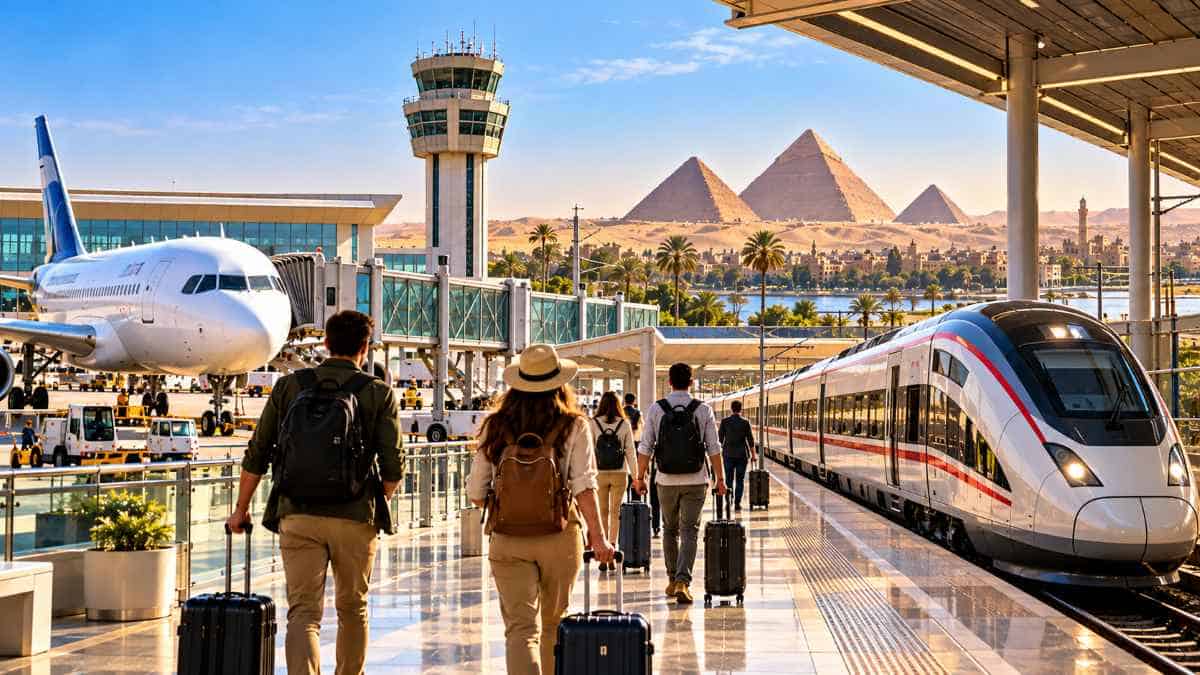
There is interest in Egypt in improving travel arrangements from the international entry points to the country’s main archaeological sites. A suggested initiative in collaboration with the Ministry of Tourism and Antiquities, the Ministry of Transport, and EgyptAir is aimed at integrating international flights and the prospective future high-speed trains connecting the destination with Luxor and Aswan. The new system that is being planned is referred to as Nile Heritage Express and should allow the better organisation of air travel and train rides. Its primary function should be to assist international tourists in travelling from Cairo and its airport to Upper Egypt, where the most significant archaeological places are located. The provided proposal also touches on issues relating to through-checked baggage, digital visa management and visitor management at sensitive archaeological sites. However, there is no evidence in the available data to confirm the launch of a single integrated system known as Pharaoh Pass, a reliable high-speed electrified rail line connecting Cairo to Luxor and Aswan, and the guarantee of transferring baggage from foreign destinations. This is because these features cannot be mentioned as confirmed services. Nonetheless, the overall idea reveals the main challenge facing tourism in Egypt: facilitating the combination of the city’s historical sights with those in the Nile Valley.
Cairo Remains the Main International Gateway
Cairo International Airport is Egypt’s principal international aviation gateway and a major arrival point for visitors travelling from Europe, Asia, the Middle East and other markets.
Advertisement
Advertisement
The airport provides access to the capital’s historic attractions, including the Egyptian Museum, the Giza Plateau and the wider collection of cultural sites around Greater Cairo.
Sphinx International Airport offers another access point for the Cairo metropolitan region, particularly for travellers visiting western areas of Greater Cairo and destinations around Giza.
Advertisement
Advertisement
Connecting these gateways more effectively with Upper Egypt could give visitors greater flexibility when planning multi-destination holidays. Rather than organising flights, rail journeys and local transfers separately, travellers could benefit from a coordinated booking arrangement if the proposed platform becomes operational.
For Egypt, this could support longer itineraries and encourage visitors to explore destinations beyond the capital.
Advertisement
Advertisement
High-Speed Rail Could Change Travel to Upper Egypt
The development of a high-speed rail network is an important part of Egypt’s long-term transport plans. The country’s proposed network is intended to connect major population centres, economic regions and tourism destinations through new railway infrastructure.
However, the distinction between planned infrastructure and an operational passenger service is essential. Egypt’s high-speed rail project has been under development, and the proposed connections to Luxor and Aswan should not be described as an established commercial service without confirmation of completed routes, operating schedules and passenger availability.
If suitable high-speed services eventually connect Cairo with Upper Egypt, they could offer an alternative to domestic flights and conventional rail journeys.
For international visitors, the potential benefit would be particularly relevant to itineraries combining Cairo with Luxor and Aswan. Both destinations are central to Egypt’s cultural tourism market and feature prominently in Nile cruise programmes.
Luxor and Aswan Remain Central to Heritage Tourism
Luxor is one of the country’s most important archaeological destinations. The city provides access to the Karnak Temple Complex, Luxor Temple, the Valley of the Kings and the Valley of the Queens.
These sites attract visitors interested in ancient Egyptian history, monumental architecture and the archaeological legacy of the New Kingdom.
Advertisement
Advertisement
Further south, Aswan offers a different visitor experience. Its attractions include Philae Temple, the Unfinished Obelisk and the temples of Abu Simbel, located farther south.
The city is also a major starting point for Nile cruises, with itineraries connecting it to Luxor and other destinations along the river.
Better transport coordination between Cairo, Luxor and Aswan could make it easier for international travellers to include several destinations within one holiday. It could also help tour operators develop packages that combine archaeological visits, river journeys and stays in major Egyptian cities.
Integrated Ticketing Could Simplify Travel Planning
The reported Nile Heritage Express concept centres on combining air and rail bookings through a unified digital platform.
Integrated ticketing can make multi-stage journeys easier to organise by bringing separate transport services into one booking process. Passengers could potentially receive coordinated travel information, manage connections and access onward journey details through a single digital interface.
For Egypt, this approach could be useful for visitors arriving on long-haul flights before travelling south.
Advertisement
Advertisement
The proposal also describes through-checked baggage from international departure points to destinations associated with Nile cruises and heritage hotels. Such an arrangement would require agreements between airlines, railway operators, baggage handlers and relevant transport facilities. It should not be assumed that baggage could automatically be transferred from an overseas flight to a rail service.
Passengers would also need clear information about collection points, customs procedures, transfer times and responsibility for luggage during each stage of the journey.
Protecting Archaeological Sites Through Visitor Management
The proposal’s reference to daily visitor-capacity quotas highlights another important issue for Egyptian tourism: managing pressure on internationally recognised archaeological sites.
The Valley of the Kings, for example, contains fragile decorated tombs that require careful conservation. Visitor movement, environmental conditions and the cumulative impact of tourism can affect the preservation of ancient structures and their interiors.
Digital reservation systems could help authorities monitor demand, distribute visitor arrivals and manage access to particularly sensitive locations.
However, the reported introduction of unified daily quotas through the proposed platform requires official confirmation. Visitor restrictions and access arrangements can differ between archaeological sites and may be adjusted according to conservation requirements.
Advertisement
Advertisement
Responsible tourism planning also needs to involve conservation specialists, site authorities and local communities. Transport improvements should support access without encouraging uncontrolled visitor growth.
What the Proposal Could Mean for Egypt’s Tourism Economy
There may also be additional advantages apart from those related to convenience for passengers. Travel agencies will have an easier time creating multi-city travel packages, while hotels, Nile cruises, guides, and other transport companies will benefit from having more international customers. For the traveller, the appeal will come from the prospect of combining visits to museums and monuments in Cairo with temple tours in Luxor and Aswan. This is dependent on the availability of the necessary railway infrastructure, schedules, airlines, and the means of transferring from one to another. It will also be important for Egypt to connect its entry points to its destinations, which make up the country’s cultural tourist attractions. However, the Nile Heritage Express could help in realising this objective as long as ticketing, baggage handling and management services promised are confirmed.
Advertisement
