

Japan’s ZIPAIR Introduces AI Turbulence Forecasting to Strengthen Flight Planning and Weather Risk Management

Published
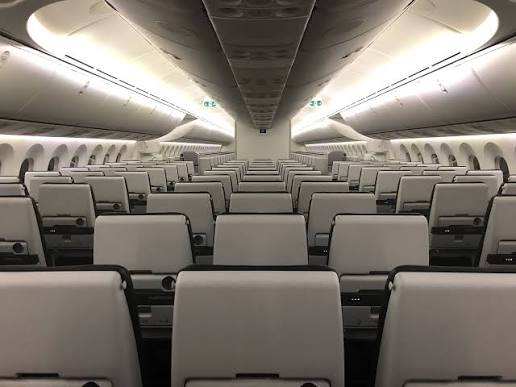
Japan’s ZIPAIR Tokyo began using AI-powered turbulence forecasting on 8 October 2026, introducing new weather intelligence designed to support flight planning and operational decision-making. The airline has integrated BlueWX’s AI Turbulence Forecast into MTI’s 3DARVI aviation weather platform, allowing flight personnel to examine predicted turbulence risks at different altitudes and times. The technology combines artificial intelligence with existing aviation weather information to help identify potentially turbulent conditions along planned routes. Announced on 12 October, the development reflects growing interest in using advanced forecasting tools to support airline operations, passenger comfort and weather-related risk management.
What Is ZIPAIR’s New AI Turbulence Forecasting System?
ZIPAIR Tokyo has introduced AI-based turbulence prediction into its operational weather information environment.
Advertisement
Advertisement
The airline began using the technology on 8 October 2026.
The system combines BlueWX’s AI Turbulence Forecast with MTI’s existing 3DARVI aviation weather service.
Advertisement
Advertisement
The integration allows users to examine turbulence predictions alongside other weather and flight planning information.
Rather than requiring personnel to consult entirely separate systems, the platform brings different types of aviation information into a shared operational interface.
Advertisement
Advertisement
The AI component provides forecasts covering different altitudes and predicted times.
This is important because turbulence conditions can vary significantly with altitude, location and changing weather patterns.
Advertisement
Advertisement
The technology is intended to support decisions involving flight paths and cruising altitudes.
However, the introduction of forecasting software does not mean aircraft will automatically change routes or that the system controls the aircraft.
Operational decisions remain subject to the airline’s procedures, flight crew responsibilities and applicable aviation requirements.
Key Details of ZIPAIR’s AI Forecasting Introduction
| Category | Confirmed Information |
|---|---|
| Airline | ZIPAIR Tokyo |
| Country | Japan |
| Implementation date | 8 October 2026 |
| Announcement date | 12 October 2026 |
| Technology provider | BlueWX |
| Forecasting product | AI Turbulence Forecast |
| Aviation weather platform | MTI 3DARVI |
| Main function | Predicting turbulence risk |
| Forecast dimensions | Altitude and predicted time |
| Technology | Deep learning |
| Operational purpose | Supporting flight planning and weather-related decisions |
| Development testing | Approximately four years |
| Trial participants | Thousands of pilots and flight managers |
The announcement does not provide a numerical forecast accuracy rate or quantify the operational benefits already achieved by ZIPAIR.
Advertisement
Advertisement
Those outcomes would require further performance data following implementation.
How Does BlueWX’s AI Turbulence Prediction Technology Work?
BlueWX’s forecasting system uses deep learning to analyse multiple sources of aviation and meteorological information.
Deep learning is a form of artificial intelligence that identifies patterns within large datasets.
For turbulence forecasting, the system examines numerical weather predictions, weather observation information and turbulence data collected from aircraft.
Numerical weather prediction models use atmospheric observations and mathematical calculations to estimate future weather conditions.
Aircraft-generated turbulence information adds another source of data reflecting conditions encountered during actual flights.
Advertisement
Advertisement
By analysing these inputs, the AI system produces predictions of turbulence risk.
The resulting information can help aviation personnel assess where turbulence may occur and how conditions could change during a flight.
Main Data Sources Used by BlueWX
| Data source | Role in forecasting |
|---|---|
| Numerical weather forecasts | Provide predictions of atmospheric conditions |
| Weather observations | Supply information about measured weather conditions |
| Aircraft turbulence data | Reflect turbulence encountered during flights |
| Deep learning analysis | Identifies patterns associated with turbulence risk |
| Altitude-based forecasts | Helps assess conditions at different flight levels |
| Time-based forecasts | Shows how predicted risks may change |
The technology does not eliminate uncertainty from weather prediction.
Atmospheric conditions can change, and forecasting systems remain dependent on the quality of their data and models.
AI-generated information should therefore be understood as an additional decision-support resource rather than a guarantee of turbulence-free flights.
Why Is Turbulence Forecasting Important for Airline Safety?
Turbulence is a change in airflow that can cause an aircraft to experience unexpected movement.
Advertisement
Advertisement
It can occur in different atmospheric conditions, including near thunderstorms, around mountainous terrain and within certain high-altitude wind patterns.
Some turbulence is associated with visible weather systems, while other forms can occur in relatively clear skies.
This makes forecasting an important part of aviation operations.
Pilots and flight planning personnel use weather information to assess potential hazards before departure and during flight.
Where forecasts indicate areas of increased turbulence risk, crews may consider alternative routes or altitudes when operationally appropriate.
However, any changes must account for factors such as air traffic control instructions, fuel requirements, aircraft performance and other weather conditions.
Advertisement
Advertisement
How Better Forecast Information Can Support Flights
More detailed forecasts can potentially help flight personnel identify areas where turbulence is likely to occur.
They may also assist with decisions about altitude selection and route planning.
For passengers, improved forecasting could support efforts to reduce exposure to uncomfortable flight conditions.
However, the ZIPAIR announcement does not provide evidence that turbulence incidents have already decreased or that passenger injuries have been reduced following implementation.
Those benefits remain potential operational outcomes rather than confirmed results.
What Is MTI’s 3DARVI Aviation Weather Platform?
3DARVI is an aviation weather information service developed by MTI.
Advertisement
Advertisement
The platform allows users to view weather information and flight plans affecting aircraft operations within a single interface.
One of its distinguishing features is the three-dimensional visualisation of weather phenomena.
This allows aviation personnel to examine weather conditions in relation to flight routes and altitudes.
The addition of BlueWX’s AI Turbulence Forecast introduces another layer of information into the existing platform.
Users can examine predicted turbulence risks alongside other aviation weather data.
This integration may simplify the process of comparing different operational considerations.
Advertisement
Advertisement
For example, flight planning personnel may need to assess several weather-related factors when reviewing a proposed route.
Having those elements available through a common interface can support a more coordinated assessment.
However, the announcement does not identify specific improvements in decision-making speed or reductions in workload resulting from ZIPAIR’s implementation.
Such benefits would need to be evaluated using operational data.
Why Did BlueWX Conduct Four Years of Trial Operations?
BlueWX’s AI turbulence forecasting technology underwent approximately four years of trial operation during development.
The testing involved thousands of pilots and flight managers.
Advertisement
Advertisement
According to the information released with the announcement, the trials were intended to improve prediction accuracy and reliability.
This development process is significant because aviation forecasting tools must operate in an environment where weather conditions can change rapidly.
A system intended for operational use needs to provide information that personnel can interpret and apply within established procedures.
Trial participation by pilots and flight managers can help developers assess how forecasts perform in practical aviation settings.
It can also provide feedback on how information should be presented to operational users.
Nevertheless, the announcement does not disclose detailed validation results, numerical accuracy comparisons or the number of airlines involved in the trials.
Advertisement
Advertisement
It would therefore be inappropriate to describe the system as more accurate than every existing turbulence forecasting method without comparative evidence.
The confirmed information is that the technology underwent an extended trial process before ZIPAIR began using it.
How Could AI Turbulence Forecasting Change Flight Planning?
The integration of AI-generated turbulence predictions into 3DARVI creates an additional source of information for flight planning.
Flight routes are influenced by numerous factors, including weather, airspace restrictions, air traffic management and aircraft performance.
Turbulence risk is one consideration within that wider process.
The new system provides forecasts at different altitudes and predicted times.
Advertisement
Advertisement
This could help personnel compare conditions along possible flight paths.
For example, predicted turbulence at one altitude may differ from conditions at another.
However, selecting an alternative altitude is not always possible.
Aircraft must operate within approved flight levels, performance limitations and air traffic control requirements.
The value of the AI system therefore lies in providing additional information to support decisions rather than replacing established operational procedures.
What Does ZIPAIR’s Technology Adoption Mean for Passengers?
For passengers, the most relevant aspect of the announcement is the airline’s effort to improve its understanding of turbulence conditions.
Advertisement
Advertisement
Unexpected turbulence can cause discomfort and may present risks to passengers and crew, particularly when people are not seated or secured.
More detailed forecasting can potentially help flight crews prepare for conditions along a route.
However, passengers should not expect the new technology to eliminate turbulence.
Weather forecasting remains subject to uncertainty, and some atmospheric changes can occur with limited warning.
The airline has not announced any changes to passenger booking procedures, ticket prices, baggage allowances or cabin services as a result of the implementation.
The development concerns operational weather intelligence rather than a new passenger-facing product.
Advertisement
Advertisement
Travellers should continue following crew instructions and keeping their seatbelts fastened while seated.
Why This Matters
ZIPAIR’s adoption of AI turbulence forecasting reflects the increasing role of artificial intelligence in airline operational decision-making.
The technology provides another way to assess weather-related risks by combining numerical forecasts, observational information and aircraft-generated turbulence data.
For airlines, this approach may support more informed route and altitude assessments.
For flight crews, the integration with 3DARVI provides access to turbulence predictions within an existing aviation weather platform.
For passengers, the potential benefit lies in improved preparation for turbulent conditions.
Advertisement
Advertisement
However, the announcement does not establish that flights have become safer by a measurable amount or that turbulence encounters have already declined.
The significance of the development is the introduction of an additional forecasting capability into ZIPAIR’s operational environment.
Its longer-term effectiveness will depend on actual performance and how the information is used.
What Travellers Should Know
ZIPAIR began using the AI turbulence forecasting system on 8 October 2026.
The technology operates as part of the airline’s aviation weather information arrangements and does not require passengers to take any additional action.
Before Booking
- Airline: ZIPAIR Tokyo.
- Technology introduced: AI-powered turbulence forecasting.
- Implementation date: 8 October 2026.
- Technology provider: BlueWX.
- Weather platform: MTI’s 3DARVI.
- Passenger booking changes: None announced.
- Ticket prices: No changes announced in connection with the system.
- Flight schedules: No timetable changes identified as part of the announcement.
- Safety procedures: Passengers should continue following crew instructions.
The introduction of AI forecasting should not be interpreted as a guarantee that individual flights will avoid turbulence.
Advertisement
Advertisement
Could AI Weather Forecasting Become More Important Across Global Aviation?
Artificial intelligence is increasingly being explored as a tool for analysing complex information across the aviation industry.
Weather forecasting is one area where large datasets and pattern recognition can support operational assessments.
Turbulence prediction is particularly relevant because atmospheric conditions vary across routes, altitudes and time periods.
The ZIPAIR implementation demonstrates how an AI forecasting product can be incorporated into an existing aviation weather platform.
However, the announcement does not establish that other airlines will adopt the same technology or that it will become an industry-wide standard.
Any broader adoption would depend on individual airline requirements, regulatory considerations, technical performance and operational evaluations.
Advertisement
Advertisement
The development should therefore be understood as a specific implementation by ZIPAIR rather than confirmation of a universal change in airline forecasting systems.
Frequently Asked Questions
When did ZIPAIR begin using AI turbulence forecasting?
ZIPAIR Tokyo began using AI-based turbulence prediction on 8 October 2026.
Which company provides ZIPAIR’s turbulence forecasting technology?
The forecasting technology is provided by BlueWX through its AI Turbulence Forecast product, integrated into MTI’s 3DARVI aviation weather platform.
How does the AI system predict turbulence?
It uses deep learning to analyse numerical weather forecasts, weather observations and turbulence data collected from aircraft.
Will ZIPAIR passengers experience turbulence-free flights?
No. The technology predicts turbulence risk but cannot eliminate turbulence or guarantee smooth flights.
Does the new forecasting system change ZIPAIR’s flight schedules or ticket prices?
No flight schedule or ticket price changes were announced as part of the implementation.
Advertisement
Advertisement
Japan’s ZIPAIR Adds Artificial Intelligence to Its Aviation Weather Operations
ZIPAIR Tokyo’s introduction of AI turbulence forecasting on 8 October 2026 marks a development in the airline’s use of advanced weather information.
By integrating BlueWX’s forecasting technology into MTI’s 3DARVI platform, the airline has added altitude- and time-specific turbulence predictions to its existing operational information environment.
The system draws on numerical weather forecasts, observations and aircraft-generated turbulence data, supported by approximately four years of development trials involving thousands of aviation professionals.
For flight personnel, the additional information may assist with route and altitude assessments. For passengers, the potential benefit is improved preparation for turbulent conditions.
However, the technology remains a forecasting and decision-support tool, not a guarantee against turbulence.
The longer-term value of the implementation will depend on operational performance and how effectively the forecasts support aviation decision-making.
Advertisement
