Image generated with Ai
“We Are Still a Secret,” says Campeche, as the destination targets global travellers with Maya heritage, Calakmul, safety and a bold promise: discover Mexico’s hidden side before the crowds arrive.
Campeche is ready to reveal its secret. The Mexican destination is targeting global travellers with a powerful mix of Maya heritage, Calakmul, culture and safety appeal. Moreover, its tourism leaders want visitors to look beyond Mexico’s better-known destinations and discover a quieter side of the Yucatán Peninsula.
Advertisement
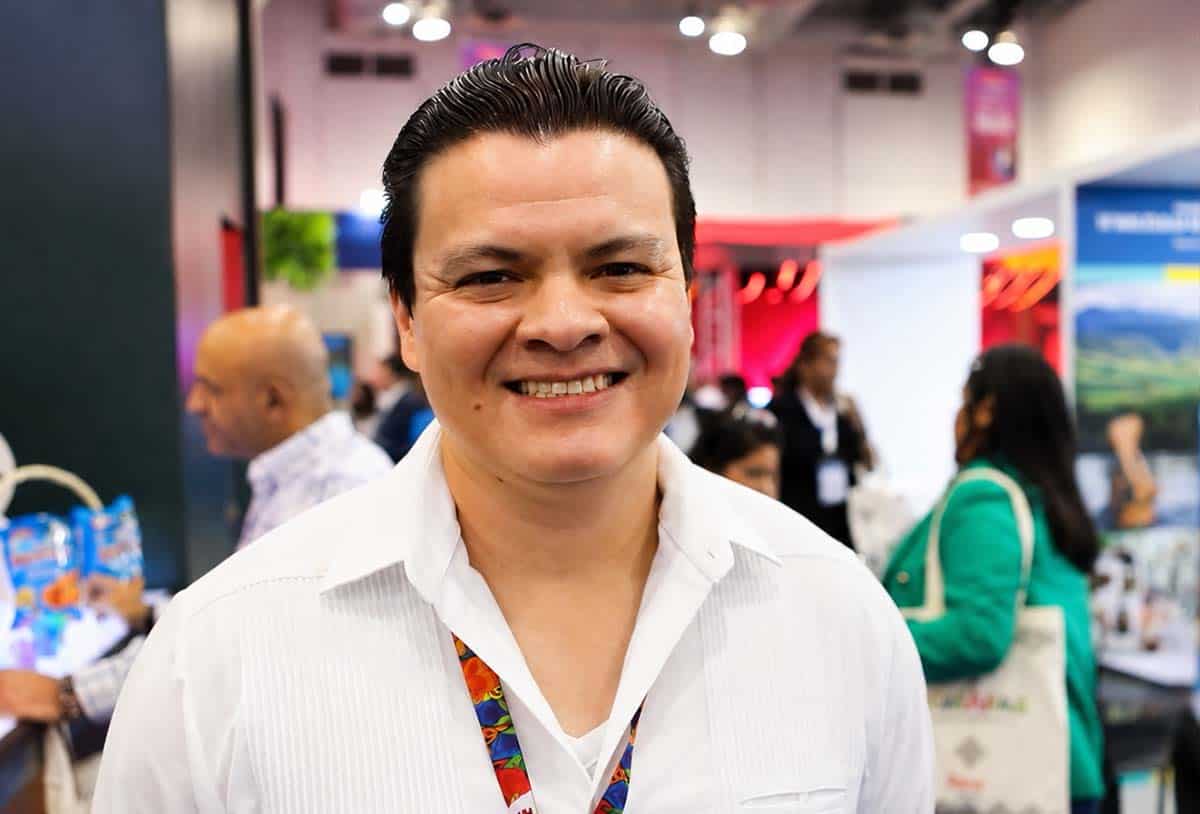
At IBTM Americas 2026, Luis Homer Perez, Director General of Tourism of Campeche, repeatedly described the destination as a secret waiting to be discovered. Meanwhile, Campeche is strengthening its MICE ambitions and promoting its historic capital, jungle landscapes and Maya attractions. The message is clear: Campeche wants global travellers to discover its distinctive identity before it becomes widely known.
Campeche is positioning itself as one of Mexico’s lesser-known tourism destinations, combining safety, cultural heritage, Maya history and nature with growing ambitions in the MICE market.
Advertisement
Advertisement
At IBTM Americas 2026, Luis Homer Perez, Director General of Tourism of Campeche, outlined the state’s tourism priorities, highlighting its potential for meetings, incentives and other organised travel while emphasising the destination’s distinctive cultural and natural assets.
Perez described Campeche as a destination that remains relatively undiscovered within the Yucatán Peninsula, saying the state has significant expectations around introducing more travellers to its attractions.
Campeche arrived at IBTM Americas with a clear focus on the MICE sector, bringing representatives from hotels, restaurants and other parts of the destination’s tourism value chain.
Perez said the event provides an important platform for developing business relationships and increasing meetings with buyers interested in the MICE segment.
Advertisement
Advertisement
The state has two principal destinations highlighted in the interview — Campeche City and Ciudad del Carmen — alongside convention infrastructure that can support meetings and incentive travel.
Rather than presenting Campeche solely as a leisure destination, the tourism office is therefore seeking to strengthen its position among organisers looking for destinations capable of combining business events with cultural and nature-based experiences.
One of the strongest themes in Perez’s comments was security.
He described Campeche as a peaceful destination and highlighted its reputation for safety within Mexico. He also referred to Campeche and neighbouring Yucatán as two of the country’s safest states.
For the tourism office, this forms part of the destination’s wider appeal as traveller expectations continue to evolve.
Safety can be particularly important for the MICE sector, where organisers must consider not only accommodation and meeting facilities but also the wider environment in which delegates, incentive groups and event participants will travel.
Beyond its historic capital, Campeche is promoting its extensive natural and archaeological heritage.
Perez specifically highlighted Calakmul, the ancient Maya city located within the Calakmul Biosphere Reserve. The destination offers travellers an opportunity to experience Maya archaeological heritage in a heavily forested environment.
He described Calakmul as a place where visitors can reconnect with themselves and experience the surrounding landscape.
The combination of archaeological sites and jungle is one of the elements that gives Campeche a tourism proposition distinct from more established beach destinations elsewhere in the Yucatán Peninsula.
Campeche’s capital provides another major component of the state’s tourism identity.
Perez pointed to San Francisco de Campeche, whose historic fortified city is internationally recognised for its architecture and defensive walls.
The fortifications were developed in response to pirate attacks during the colonial period, creating a defining feature of the city and its heritage.
Today, that history forms part of Campeche’s cultural tourism offering and provides an important contrast to the state’s rainforest and archaeological attractions.
Perez repeatedly returned to the idea that Campeche remains a hidden or lesser-known destination within the Yucatán Peninsula.
That positioning is central to the state’s strategy.
While destinations such as Cancún, Riviera Maya and other established Mexican tourism centres have developed strong international recognition, Campeche is seeking to attract visitors by offering a different experience — one centred on history, nature, Maya heritage, local hospitality and a comparatively quieter tourism environment.
The destination is not necessarily trying to compete by replicating the established beach-resort model. Instead, its tourism message is built around discovery.
The interview also points to Campeche’s intention to develop its tourism economy through a broader mix of products.
Its historic capital, Ciudad del Carmen, convention facilities, Maya archaeological heritage and natural landscapes give the state several components that can be packaged for different visitor segments.
For MICE organisers, the combination could create opportunities to add cultural and nature experiences around meetings and incentive programmes.
For leisure travellers, meanwhile, Campeche offers an alternative to Mexico’s more heavily visited destinations.
Campeche is stepping up its international tourism ambitions, promoting its fortified historic capital, Maya heritage, Calakmul rainforest and MICE potential while relying on key Mexican gateways to connect overseas visitors.
Campeche is still one of the more under-the-radar destinations on Mexico’s Yucatán Peninsula, but that may be precisely what makes it increasingly attractive to travellers seeking experiences beyond the region’s established resort circuit.
Speaking at IBTM Americas 2026, Luis Homer Perez, Director General of Tourism of Campeche, described the state as a destination that remains relatively undiscovered and said its tourism authorities want more visitors to discover what Campeche has to offer.
The opportunity is significant. Campeche combines a fortified historic city on the Gulf of Mexico, Maya archaeological sites, extensive tropical forests and a growing interest in meetings, incentives, conferences and exhibitions (MICE). However, its international tourism ambitions face a practical challenge: Campeche’s own airport does not currently provide a broad network of nonstop international services.
For overseas travellers, the destination therefore depends heavily on Mexico’s larger international gateways and on its integration into wider Yucatán Peninsula itineraries.
Campeche is not trying to replicate the tourism model of Cancún or the Riviera Maya.
Its strongest proposition is built around heritage, archaeology, nature, culture and discovery.
San Francisco de Campeche, the state capital, is the most visible expression of that identity. Its historic centre and fortifications reflect the city’s colonial past and its exposure to pirate attacks during the 17th century.
The defensive walls, bastions and historic architecture give Campeche a distinctive urban character that is very different from Mexico’s large-scale coastal resort destinations.
For international cultural travellers, the city can function as a destination in its own right. For tour operators, it can also become one stop within a longer Yucatán Peninsula circuit.
The state’s most powerful nature-and-heritage attraction is Calakmul, the ancient Maya city surrounded by the protected tropical forests of the Calakmul Biosphere Reserve.
UNESCO’s World Heritage listing recognises the Ancient Maya City and Protected Tropical Forests of Calakmul for both its archaeological importance and its exceptional natural environment.
That combination matters for international tourism.
Travellers do not simply visit an archaeological site and leave the surrounding environment behind. At Calakmul, Maya history is embedded within a vast tropical landscape, creating an experience that can appeal to cultural travellers, ecotourists, photographers, adventure visitors and travellers looking for less conventional destinations.
Perez highlighted Calakmul during his IBTM Americas interview, describing it as a hidden Maya city within the jungle and a place where visitors can reconnect with nature and themselves.
Campeche’s tourism assets are substantial, but its aviation network remains comparatively small.
Ing. Alberto Acuña Ongay International Airport (CPE) currently has scheduled domestic connections rather than a broad international network.
The most important air connection is Mexico City International Airport (MEX).
Aeroméxico operates scheduled service between Mexico City and Campeche, creating the principal aviation bridge for international visitors who first arrive in Mexico City.
For travellers originating in Europe, North America or other overseas markets, this creates a relatively straightforward model:
International origin → Mexico City → Campeche.
Mexico City is already one of the country’s principal international aviation gateways, meaning travellers can connect to Campeche without requiring a new international route into CPE itself.
The Mexico City connection is particularly relevant as Campeche seeks to attract more MICE business.
International conferences and incentive groups need dependable access, and a destination does not necessarily require nonstop flights from every source market if it has a reliable connection through a major hub.
Campeche’s MICE proposition is centred on its hotels, restaurants, convention infrastructure and wider tourism supply chain.
Perez said representatives from hotels, restaurants and other businesses were present at IBTM Americas 2026, reflecting the state’s effort to build stronger relationships with organisers and buyers.
The strategy is therefore not simply about increasing leisure arrivals. It is also about positioning Campeche as a destination where business events can be combined with cultural and nature experiences.
Campeche is also connected with Felipe Ángeles International Airport (NLU) near Mexico City.
Current scheduled route data identifies service between NLU and CPE, providing another domestic aviation option.
However, for most international travellers, MEX remains the more relevant gateway because of its extensive international network and established role in connecting Mexico with overseas markets.
The distinction is important. Campeche has air access, but its current airport network should not be portrayed as a major international gateway comparable with Cancún, Mexico City or other major Mexican airports.
Cancún remains strategically important even though there is currently no scheduled nonstop Cancún–Campeche service in the available scheduled route data.
That does not mean Cancún is irrelevant to Campeche.
Quite the opposite: Cancún is one of the principal international arrival points for the wider Yucatán Peninsula and can provide a natural starting point for travellers undertaking a road-based regional itinerary.
A visitor could arrive in Cancún, explore destinations across the peninsula and continue towards Campeche before travelling deeper into the state’s Maya and nature attractions.
This makes Campeche particularly suitable for multi-destination itineraries, rather than relying entirely on point-to-point international aviation.
Mérida International Airport (MID) is another strategically relevant airport for travellers planning a Campeche trip.
Mérida does not currently provide a scheduled nonstop air connection to Campeche’s CPE airport, but its geographic proximity makes it relevant for visitors travelling by road.
For tour operators, this opens another itinerary model:
International arrival → Mérida → Campeche → Calakmul.
The approach allows travellers to experience several destinations rather than treating Campeche as an isolated stop.
Perez also placed considerable emphasis on safety during the IBTM Americas interview.
He described Campeche as a peaceful destination and highlighted its reputation for security within Mexico. For international visitors and event organisers, safety can influence destination selection, particularly when groups are travelling for conferences, incentive programmes or corporate events.
The tourism office is consequently presenting safety alongside culture, nature and hospitality as part of Campeche’s broader destination proposition.
Campeche’s biggest opportunity may ultimately be its relative lack of international saturation.
The destination does not have to convince travellers that it offers another version of Cancún. Instead, it can appeal to people who want to discover somewhere different within Mexico.
Its strongest combination is clear: a fortified colonial capital, Maya archaeology, tropical forest, cultural experiences, MICE facilities and a quieter destination identity.
The aviation challenge remains real, but the existing Mexico City connection and the accessibility of the wider Yucatán Peninsula provide workable routes for international visitors.
For Campeche, the next stage is therefore not simply about attracting more tourists. It is about making the destination easier to discover, package and sell internationally.
And that may be the state’s strongest tourism story yet: Campeche is no longer simply a secret waiting to be found; it is increasingly positioning itself as the less-explored side of the Yucatán Peninsula, with the heritage and natural assets to support a much larger international tourism profile.
At IBTM Americas 2026, Campeche’s message was straightforward: the state believes it has more to offer than its current international profile suggests.
Perez said the tourism office wants more people to discover what he described as Campeche’s “secret” and highlighted the potential to create memorable experiences for visitors.
The strategy is built around safety, MICE growth, heritage, nature and discovery.
For Campeche, the challenge now is turning that relatively low international profile into an advantage — encouraging travellers and event organisers to look beyond Mexico’s most familiar tourism destinations and discover a state that combines a fortified historic city, Maya archaeological heritage and vast jungle landscapes.
“Campeche presents an exceptionally compelling tourism story because it combines discovery, authenticity, heritage and nature in one destination. The message from Luis Homer Perez is particularly powerful: Campeche is not trying to become another mass-market resort; it is inviting travellers to uncover something that remains relatively unknown. Its Maya heritage, Calakmul, historic walled city and emerging MICE potential create a strong foundation for international growth. As travellers increasingly seek meaningful and distinctive experiences, Campeche has an opportunity to turn its lesser-known status into a major advantage. The destination’s focus on international visibility, cultural richness and visitor experience makes its tourism proposition both timely and highly promising.”
— Anup Kumar Keshan, Founder and Editor-in-Chief, Travel And Tour World
The cause is clear: Campeche wants stronger international visibility while remaining different from Mexico’s established tourism hotspots. The answer is its distinctive tourism mix. Maya heritage, Calakmul, historic fortifications, nature and MICE facilities give the destination several reasons to attract visitors. The reason is equally compelling: Perez believes Campeche remains a secret within the Yucatán Peninsula, creating an opportunity to introduce new travellers to its experiences. Furthermore, he highlights safety as part of the destination’s appeal, while stressing that Campeche has its own identity. Consequently, the strategy centres on discovery, differentiation and experience, rather than simply competing with Mexico’s major resort destinations.
Advertisement
Tags: Calakmul, Campeche, Maya heritage, mexico tourism, Mexico Travel
Advertisement
Advertisement













Friday, September 4, 2026

Friday, September 4, 2026

Friday, September 4, 2026

Thursday, September 3, 2026

Wednesday, September 2, 2026

Friday, September 4, 2026

Friday, September 4, 2026