
Albania and More Countries Tighten Green Lending Rules to Secure Sustainable Tourism Investment

Updated
Published
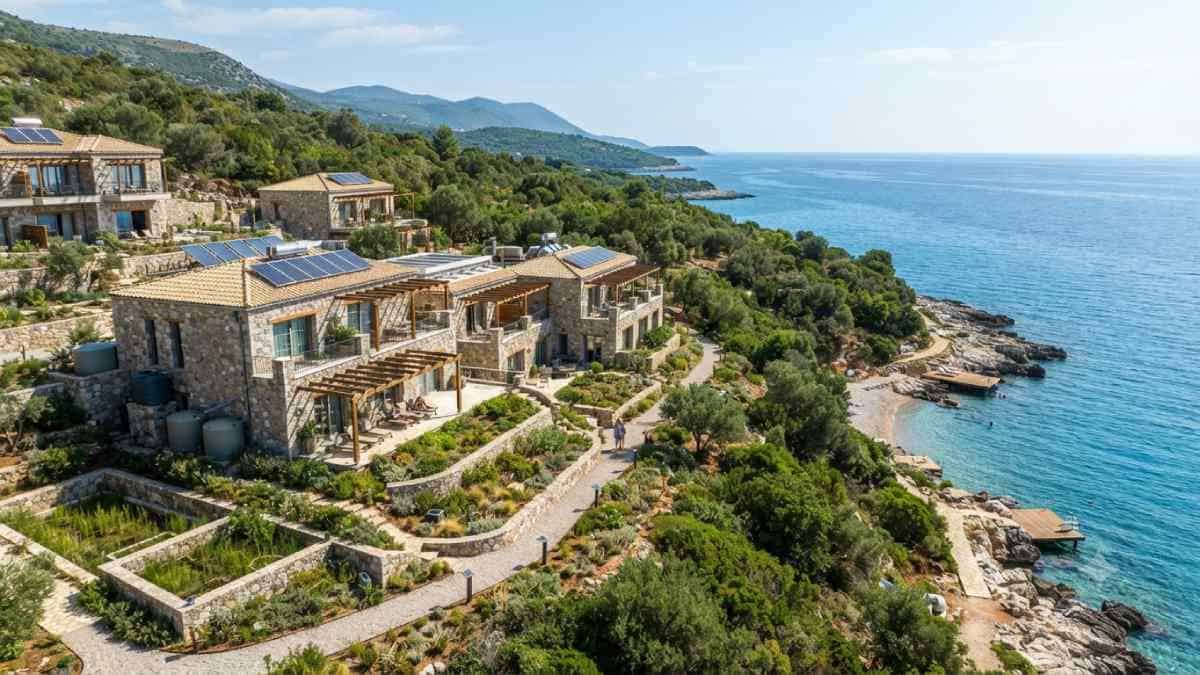
Southeastern Europe finds itself at a critical juncture in economic terms, as the entire system of tourism in the region is fundamentally being transformed through technical standards from its central banks. While Mediterranean coastlines have been expanded for decades through uncontrolled tourism, which has saturated municipal energy systems, water supply and fragile coastal ecosystems, the new reality of today’s era means that the way foreign capital flows into the tourism infrastructure of the Balkans is defined through the implementation of green taxonomy decarbonization in the hospitality industry. As environmental criteria replace marketing criteria to define loaning criteria through multilateral development banks, environmental criteria are becoming an absolute precondition for commercial lending.
Macro-Financial Foundations of Balkan Tourism Transformation
The Shift from Seasonal Mass Tourism to Capital Discipline
For more than a decade, an unprecedented influx of international visitors has been experienced by Southeastern Europe, establishing hospitality and leisure travel as the primary locomotives of macroeconomic expansion across the Western Balkans. It has been confirmed by official figures from the Institute of Statistics of Albania (INSTAT) that foreign tourist arrivals reached an all-time record, demonstrating an upward trajectory in tourism receipts relative to the national Gross Domestic Product.
A parallel dynamic is observed in neighbouring Montenegro, where extensive arrivals and overnight stays have been recorded by the Statistical Office of Montenegro (MONSTAT), with foreign visitors accounting for the vast majority of nights spent and remaining concentrated predominantly within coastal seaside resorts.
Historically, this rapid influx was unfolded in the absence of unified building performance standards and environmental constraints, precipitating acute seasonal resource deficits. Municipal freshwater distribution was routinely overwhelmed by peak summer populations, electrical grid instabilities were triggered due to unconstrained air conditioning loads, and the hydraulic capacities of local sewage and waste systems were exceeded. Concurrently, significant loan exposure backed by hospitality collateral that was vulnerable to physical weather extremes and operational obsolescence was accumulated by commercial banking systems.
Advertisement
Advertisement
To protect systemic financial stability, a fundamental pivot away from volume-driven visitor expansion toward climate-resilient, value-added sustainable tourism has been enacted by regional central banks and finance ministries. By ecological degradation and carbon exposure being treated as direct balance-sheet liabilities, macro-financial frameworks are being leveraged by monetary authorities to govern private real estate capital.
The Greening Financial Systems Architecture and Multilateral Governance
The technical and regulatory catalyst behind this regional shift is provided by the European Investment Bank (EIB) through its Greening Financial Systems (GFS) Programme. Established under the NDC Partnership’s Readiness Support for Greening Central Banks initiative with advisory funding provided by the governments of Germany and Luxembourg, the facility was reconstituted into an independent, standalone fund under EIB Global and EIB Advisory to meet accelerating regulatory demand across EU candidate economies.
Advertisement
Advertisement
Working in technical coordination with the Bank of Albania, the National Bank of North Macedonia, and the Central Bank of Montenegro, commercial banking credit channels are aimed to be transformed by the GFS Programme so that green lending becomes the standard operating framework for all commercial underwriting.
Direct advisory support is provided to national central banks and commercial financial intermediaries rather than theoretical guidelines being imposed. Under this initiative, advanced climate risk diagnostic instruments—such as the Climate Risk Navigator—are embedded by supervisory teams into macro-prudential surveillance, while tailored screening frameworks that reflect the domestic economic structure are established. Extensive technical advisory workshops have been conducted and numerous central bank and regulatory officials have been trained across participating jurisdictions under the GFS Programme.
Through this institutional capacity building, commercial lending operations are linked directly with the targets of the Paris Agreement and European Union accession mandates, ensuring that the same underwriting rigour is encountered by private hotel developers in the Western Balkans as would be experienced within the European single market.
Climate Vulnerabilities and Sovereign Financial Stability
The urgency of deploying strict sustainable finance rules to hospitality real estate is underscored by systemic macroeconomic vulnerability. It has been revealed by central bank assessments that a substantial share of commercial banking sector credit in Albania is directly allocated to sectors acutely exposed to climate hazards, most notably commercial construction, real estate development, and transport infrastructure. It is indicated by conservative macroeconomic projections that national gross domestic product could be eroded by climate-induced physical damages in the absence of comprehensive adaptation investments.
The Western Balkan geography is increasingly subjected to prolonged summer droughts, coastal seawater intrusion, severe forest fires across coastal mountains, and flash flooding in urbanised river valleys. Because corporate loans are principally guaranteed by resort developments and boutique hotels serving as collateral, severe credit risks are presented to commercial lenders by unmitigated climate shocks. If structural damage, prolonged utility outages, or operational curtailment due to water shortages are suffered by an asset, its loan-service capability is deteriorated. By transparent, science-based technical definitions of resilience being established, the green taxonomy is being deployed by central banks as a macro-prudential safeguard designed to protect commercial bank capital from stranded asset revaluations.
Regulatory Governance and Technical Screening Criteria
| Strategic Urban / Coastal Hub | Tourism Pressure & Infrastructure Constraints | Regulatory & Financial Intervention Mechanism | Core Decarbonisation & Asset Retrofit Priorities |
| Tirana (Albania) | Rapid hotel construction, high peak electricity load, construction waste | Bank of Albania Taxonomy; zero-emission building codes | Embodied carbon audits; automated energy management; circular waste routing |
| Durrës (Albania) | High seasonal maritime visitor influx; coastal wastewater saturation | EIB Municipal Infrastructure Lines; DNSH marine water criteria | Advanced tertiary wastewater recycling; greywater reuse across resort grounds |
| Vlorë & Sarandë (Albania) | Unregulated coastal expansion; encroachment on pristine ecosystems | EIB GFS Green Credit Windows; National Tourism Strategy | On-site solar photovoltaic generation; terrain-integrated low-impact architecture |
| Podgorica & Kotor (Montenegro) | Cruise passenger loads; thermal inefficiencies in heritage stone assets | CBCG Sustainable Finance Roadmap; Eko-Fond Energy Subsidies | Elimination of fossil-fuel boilers; geothermal heat pumps; solar thermal retrofits |
| Skopje & Ohrid (North Macedonia) | Fragile lacustrine UNESCO ecosystem; guesthouse effluent runoff | National Bank Taxonomy; EIB Green Credit Line | Decentralised membrane bioreactor filtration; smart building envelope insulation |
Architecture of the Bank of Albania Green Taxonomy
The final draft of the National Green Taxonomy was presented by the Bank of Albania, establishing a standardized classification system that legally defines environmentally sustainable economic activities across the domestic market. Formulated through multi-institutional roundtables encompassing the Ministry of Finance, the Ministry of Tourism and Environment, the Ministry of Infrastructure and Energy, and the Albanian Financial Supervisory Authority (AFSA), uniform technical screening criteria for public and private investments are established by the framework.
Advertisement
Advertisement
During the presentation of the finalized framework, it was outlined by Natasha Ahmetaj, Second Deputy Governor of the Bank of Albania, that the finalisation of the process marks an important achievement that places sustainability at the very heart of capital allocation. It was further noted by her that beyond its reputational significance and formal expression of environmental responsibility, an active, decisive role is designed to be played by the taxonomy in governing how financing flows into the domestic economy, giving commercial lenders and private enterprises an unambiguous reference point for genuine transition investments.
Underscoring this institutional transition, it was emphasized by Alessandro de Concini, Head of the EIB Representation to Albania, that a decisive step towards maturing the country’s capital market, attracting long-term institutional investment, and embedding green lending into everyday banking practices is represented by the taxonomy. It was stated by him that the clarity required by private capital to finance emissions reduction, enhance industrial competitiveness, and insulate the economy against escalating climate vulnerabilities is provided by aligning national financial rules with European Union benchmarks.
Technical Screening Metrics and EU Interoperability
A vital principle governing the architecture of the Western Balkan taxonomies is full interoperability with the European Union Sustainable Finance Taxonomy. For candidate countries navigating the accession process, consistency with EU sustainable finance rules must be maintained to avoid regulatory fragmentation and ensure that domestic hospitality assets qualify for international green capital allocation.
The six core environmental objectives of the EU are systematically adopted by the national frameworks: climate change mitigation, climate change adaptation, the sustainable use and protection of water and marine resources, transition to a circular economy, pollution prevention and control, and the protection and restoration of biodiversity and ecosystems.
To obtain green loan certification, three cumulative regulatory tests must be satisfied by a hospitality project:
- A substantial contribution to at least one designated environmental objective must be demonstrated through quantitative performance metrics.
- Rigorous Do No Significant Harm (DNSH) criteria must be satisfied, proving that ecological degradation across the remaining five objectives is not inadvertently caused by actions taken to achieve one environmental objective.
- Minimum social safeguards must be complied with, verifying adherence to core international labour standards, transparent spatial planning permissions, and local community protections.
Sequential Capital Market Rollout: Taxonomies, Bonds, and Prudential Supervision
A sequential implementation model coordinated by EIB Advisory is followed by the sustainable finance ecosystem. The legal and scientific foundation that defines eligible green activities is provided initially by the taxonomy framework. With standardized definitions codified, sovereign and municipal green bond frameworks establishing strict ring-fencing rules can be developed by finance ministries and public entities, requiring that debt proceeds be channeled exclusively into verified green projects accompanied by transparent post-issuance impact reporting.
Advertisement
Advertisement
Institutional debt issuance is followed once debt frameworks are formalized, anchored by multilateral development institutions such as the EIB and international climate funds.
Finally, taxonomy compliance is incorporated into routine prudential oversight by central banking supervisors. Risk-mitigated central bank refinancing facilities, preferential capital-adequacy treatment for low-carbon loans, and dedicated credit guarantees provided by international donors are benefited from by commercial banks that build taxonomy-aligned loan books.
Through this coordinated progression, green compliance ceases to be an optional Corporate Social Responsibility metric and is transformed into an indispensable operational condition for accessing institutional capital.
Strategic Hubs: Decarbonisation and Asset Impact Analysis
Tirana and Durrës: Urban Gateway Pressures and Circular Hospitality
The vast majority of international corporate arrivals entering via Tirana International Airport are handled by Tirana as Albania’s principal financial gateway and commercial center. Simultaneously, the primary maritime entry point and the country’s most densely visited coastal resort corridor are represented by the coastal city of Durrës. Intense seasonal demand for municipal electricity and potable water is created by the concentration of leisure and commercial visitors across these adjacent municipalities, while substantial volumes of solid municipal and construction waste are generated.
Under the Bank of Albania’s Green Taxonomy, strict energy efficiency thresholds designed to align with emerging national regulations mandating zero-emission building performance must be complied with by urban hotels and hospitality assets in Tirana seeking project financing. Applications are evaluated by lending institutions against primary energy demand metrics, requiring developers to deploy high-efficiency building envelopes, smart energy monitoring systems, and variable refrigerant flow heat pumps.
Furthermore, verified waste separation is required by circular economy criteria, mandating that non-hazardous construction and demolition waste be redirected to reuse or circular channels.
Advertisement
Advertisement
Along the coast of Durrës, where the seafront is dominated by large-scale beach hotels, financing for asset renovations is subjected to DNSH criteria regarding marine water quality. Direct connection to modernised municipal wastewater plants or the operation of on-site closed-loop wastewater treatment facilities must be demonstrated by commercial operators, ensuring zero discharge of untreated effluent into coastal swimming waters.
Vlorë and Sarandë: Coastal Riviera Preservation and Low-Impact Eco-Resorts
Rapid tourism growth has been experienced by the southern Albanian Riviera, centered around Vlorë and Sarandë, drawing international investment for high-end boutique properties and luxury beach resorts. Concerns regarding landscape fragmentation, coastal erosion, and overdevelopment near fragile maritime reserves were historically raised by this rapid expansion.
The necessity of balancing commercial growth with environmental preservation has been emphasized by Minister of Tourism and Environment Mirela Kumbaro Furxhi, positioning ecological protection as the foundation of Albania’s long-term international brand. It was stated by her during international ministerial engagements that Albania’s sustained tourism development rests upon three pillars: authenticity, sustainability, and economic diversification. It was further explained that a unique administrative structure is operated under where tourism and environmental protection are placed within the same ministry, deliberately ensuring that ecological conservation is never compromised by commercial hospitality development. It was added that with a significant portion of national territory protected by law—including Europe’s first wild river national park on the Vjosa—the regulatory priority is to expand high-value, low-impact ecotourism that channels lasting economic returns directly into host communities.
To access preferential eco-resort financing supported by EIB credit facilities, stringent site-selection and environmental impact standards must be complied with by developers across the Riviera. Minimal disturbance to natural contours must be proven by new developments, avoiding the leveling of coastal hillsides and preserving natural karst runoff patterns.
In terms of operational energy, rooftop and parking canopy solar photovoltaic systems are required to be integrated by resorts, providing a significant share of base-load electricity on-site to reduce stress on regional transmission grids during peak summer months. Strict low-carbon criteria must be adhered to by building materials, prioritizing locally extracted stone and sustainably harvested timber, while non-reflective coatings must be incorporated into high-efficiency glazing to protect coastal biodiversity.
Podgorica and Kotor: Heritage Building Thermal Overhauls and Clean Energy Subsidies
A dual tourism geography is presented by Montenegro: the administrative and commercial capital is served by Podgorica, while extensive cultural and maritime tourism is attracted by the UNESCO-protected Bay of Kotor. Significant strain is placed on Boka Bay’s historical infrastructure by the heavy coastal concentration of visitor overnight stays. Unique decarbonisation hurdles are presented by the predominance of heritage stone architecture, as exterior thermal cladding is strictly prohibited by cultural preservation authorities.
Advertisement
Advertisement
Under the Central Bank of Montenegro’s sustainable finance roadmap, corporate credit books are being realigned by domestic banks to support heritage-sensitive energy retrofits. Taxonomy-aligned capital is being deployed by hospitality developers in Kotor toward interior thermal insulation, double-glazed timber-framed fenestration, and advanced geothermal or seawater-source heat pumps that respect strict conservation guidelines.
Direct financial support is facilitated by Montenegro’s Environmental Protection Fund (Eko-Fond). Targeted subsidies were distributed by Eko-Fond to major hotels under its national energy efficiency programme, financing the decommissioning of inefficient heavy fuel oil and electric resistance boilers in favor of high-efficiency heat pumps and solar thermal hot water collectors.
This momentum was extended through Eko-Fond’s Business Competitiveness Improvement Programme, in which dedicated funding calls were launched for micro, small, and medium-sized tourism enterprises to upgrade their energy infrastructure, reduce operational expenditure, and qualify for green loan verification.
Skopje and Ohrid: Lacustrine Safeguards and Transboundary Water Filtration
In North Macedonia, corporate travel is centered on Skopje, while the primary leisure destination is served by the ancient basin of Lake Ohrid—a UNESCO World Heritage site. Lake Ohrid’s aquatic ecosystem contains numerous endemic species that are sensitive to nutrient pollution from lakeside accommodations and decentralized guesthouses lacking centralized sewerage.
The formulation of the national green taxonomy was officially initiated by the National Bank of North Macedonia in collaboration with the EIB under the Greening Financial Systems Programme. It was framed by National Bank Governor Trajko Slaveski that an objective, standardised framework is established by the national green taxonomy that allows genuine green investments to be identified by institutional investors, commercial banks, and enterprises. It was highlighted by him that by transparency being established, climate disclosures simplified, and greenwashing eliminated, capital is enabled to be steered by the financial system toward activities that advance the green transition while protecting vulnerable environmental assets.
It was reinforced by EIB Head of Representation to North Macedonia Björn Gabriel that consistency in assessing sustainable projects is promoted by establishing a shared vocabulary across policymakers, lenders, and industry leaders. It was added by him that new green financial instruments are unlocked, borrowing barriers are reduced, and corporate decarbonisation and climate adaptation are accelerated across the domestic economy.
Advertisement
Advertisement
For the hospitality industry around Lake Ohrid, water preservation and wastewater treatment are established as strict financing requirements by the taxonomy’s technical screening criteria. Supported by a dedicated EIB green credit facility channeled through the Development Bank of North Macedonia (DBNM) and distributed by major commercial banks including Komercijalna Banka, NLB Banka, ProCredit Bank, and Sparkasse Bank, subsidized loans are being secured by hotel owners to deploy decentralized membrane bioreactor (MBR) wastewater treatment systems. Effluent is treated on-site by these closed-loop filtration units for landscape irrigation and sanitary facilities, halting nutrient runoff into the lake and securing the long-term ecological foundation of regional tourism.
Core Industry Pillars: Technical Solutions and Financial De-risking
Eliminating Greenwashing Through Verifiable Engineering Metrics
Historically, self-declared eco-labels, rustic architectural aesthetics, and unverified marketing claims were relied upon by the regional tourism market to capture premiums from environmentally conscious travelers. This practice is eliminated by the establishment of national green taxonomies by replacing subjective marketing narratives with verifiable engineering performance metrics.
Under the EIB-supported frameworks, green qualification cannot be achieved by real estate developments through cosmetic enhancements or operational pledges. Technical documentation demonstrating that specific scientific thresholds are met by an asset must be verified by lenders.
Project developers are required by these technical thresholds to present whole-lifecycle Global Warming Potential evaluations that track embodied greenhouse gas emissions across structural materials from manufacturing through construction. For operational energy, superior Energy Performance Certificate ratings outperforming national baseline standards must be achieved by new hotel builds, verified through digital energy modeling.
The installation of certified sanitary fittings that restrict flow rates to rigorous levels is mandated by water management standards. Furthermore, material supply chains are formally audited: timber must be certified by internationally recognised sustainable forestry programmes, and structural insulation materials must be certified free of ozone-depleting halocarbons and toxic binding compounds. These engineering specifications are legally required to be verified by commercial credit underwriters before loans are qualified for preferential green asset pools.
Overcoming the Green Premium for Hospitality Small and Medium Enterprises
The foundation of the Western Balkan tourism market is formed by micro, small, and medium-sized enterprises (SMEs)—encompassing family guesthouses, agritourism operators, and independent boutique lodges. The green premium has historically been struggled with by these businesses, as initial capital investments required for commercial heat pump systems, photovoltaic solar installations, and high-efficiency thermal building insulation remain notably higher than conventional alternatives.
Advertisement
Advertisement
To address implementation bottlenecks, financial incentives that de-risk green borrowing for smaller market participants are established by central bank frameworks. Commercial lenders are permitted by financial regulators to aggregate small-scale hospitality decarbonisation loans into structured green portfolios eligible for central bank liquidity incentives and risk-mitigated credit lines.
External engineering consultants are funded by technical assistance grants alongside credit lines to prepare technical project documentation on behalf of family-owned guesthouses. Upfront technical barriers are eliminated by this targeted support, enabling long-term, low-interest green loans to be secured by SME operators, with capital amortisation being offset by substantial reductions in utility expenditure.
Upgrading Municipal Utilities to Insulate Eco-Tourism Assets
Limited systemic benefits are produced by decarbonising individual hospitality properties if surrounding municipal infrastructure remains carbon-intensive and vulnerable to environmental degradation. Broader environmental decline is still contributed to by a luxury resort operating with zero on-site emissions if local municipal systems are overwhelmed by its sewage or if travel over unpaved, carbon-intensive transport corridors is required of guests.
For this reason, investments in municipal wastewater treatment, solid waste management, and electrified transit networks are intentionally classified by national green taxonomies as critical enabling activities for sustainable tourism.
Significant modernization is being undergone by regional municipal networks under Team Europe initiatives and EIB Global public sector financing. In the coastal municipality of Ulcinj, modern wastewater and stormwater sewerage infrastructure was financed and completed through an EIB-backed investment, preventing untreated effluent from entering coastal groundwater and marine bays. In Albania, strategic highway and rail corridors have been modernized, municipal drinking water networks upgraded, and wastewater treatment facilities constructed across critical hubs through extensive public infrastructure investments.
Capital Markets, Banking Transformation, and Economic Resilience
Commercial Bank Portfolio Steering and Green Credit Underwriting
Commercial banks across the Western Balkans are transformed from passive credit providers into active allocators of sustainable transition capital through the codification of national green taxonomies. Internal risk management systems are being revamped by Tier-1 commercial lenders under the supervisory frameworks developed through the EIB GFS Programme.
Advertisement
Advertisement
When loan applications for hotel construction or major resort refurbishments are assessed, sole focus is no longer placed by credit committees on traditional financial indicators. Instead, environmental performance metrics are systematically incorporated into credit risk models:
- Projected greenhouse gas emissions per available room and per guest-night are evaluated by loan underwriters.
- Primary operational energy consumption per unit of area is evaluated against taxonomy screening baselines by credit scorecards.
- Climate stress testing against modeled localized physical risks is conducted by risk teams, examining asset vulnerability to river flooding, storm surges, and extended summer heatwaves.
Preferential loan terms are received by projects that demonstrate verified taxonomy alignment, typically including discounted credit margins, extended repayment schedules, and accelerated underwriting approvals. In contrast, higher borrowing costs, lower loan-to-value caps, or exclusion from institutional lending portfolios are faced by carbon-intensive hospitality assets that utilize outdated fossil boilers or lack verified wastewater treatment systems.
Sovereign Debt Issuance and Cross-Border Institutional Appetite
To mobilize capital at scale beyond domestic bank deposits, sovereign green bond frameworks anchored directly to national green taxonomies are being developed by regional finance ministries. Institutional capital flows into emerging markets are restricted by strict disclosure regulations unless verifiable sustainability standards are satisfied by underlying assets.
By aligning domestic classification systems with EU standards, the institutional transparency required to access global green bond markets is established. Large-scale environmental infrastructure is ring-fenced to be funded by capital raised through sovereign and sub-sovereign green bond issuances, such as expanding utility-scale solar generation, building municipal wastewater systems, and funding public guarantee funds that de-risk private hotel decarbonisation retrofits.
Anchor funding from international facilities is positioned to be attracted by Western Balkan sovereign issuances through this institutional alignment, unlocking institutional capital while fiscal sustainability is supported.
Macroeconomic Hedging Against Climate GDP Erosion
A vital macroeconomic stabilization mechanism for Southeastern Europe is served by the systematic greening of tourism real estate and enabling infrastructure. Because the predominant share of foreign exchange reserves across the Western Balkans is generated by service exports driven by international travel, fiscal stability and sovereign creditworthiness are directly threatened by physical climate disruptions.
Advertisement
Advertisement
By climate-resilient building envelopes, on-site solar generation, and water recycling systems being mandated across the hospitality stock, the underlying collateral of the financial sector is protected from catastrophic losses by the green taxonomy.
Regional economies are helped to be insulated from projected climate-associated gross domestic product erosion by every capital unit channeled into taxonomy-compliant construction, peak electricity import pressures are dampened, and the function of the tourism industry as a resilient engine of economic development is preserved.
Strategic Trajectory and Regional Integration Towards 2030
Positioning Southeastern Europe Against Mediterranean Mass Markets
As increasing over-tourism pressures, community pushback, and intense summer climate impacts are encountered by established Mediterranean tourism destinations, a strategic window is held by Southeastern Europe to differentiate its regional tourism offering. By codifying green taxonomy hospitality decarbonisation through central bank regulation, an institutional framework for premium, environmentally verified tourism is being established by Albania and neighbouring states.
Authentic, verifiable eco-credentials are increasingly prioritized by European travel markets when travel decisions are made. Higher average daily room rates are commanded, superior off-season occupancy is maintained, and lasting brand equity is generated by hospitality assets that demonstrate verified net-zero operational footprints, run on localized solar energy, source produce through local agricultural supply chains, and protect surrounding natural ecosystems.
The regulatory framework that certifies these achievements is provided by the green taxonomy, insulating the region from the reputational hazards of greenwashing and establishing Southeastern Europe as a recognized destination for high-value, sustainable tourism.
Actionable Directives for Real Estate Developers, Lenders, and Municipal Authorities
To capitalize on this evolving financial and regulatory landscape through 2030, coordinated operational measures should be implemented by regional stakeholders:
Advertisement
Advertisement
- Immediate technical audits of existing properties should be conducted by hospitality developers and corporate asset owners to establish precise performance baselines for energy use, water consumption, and embodied structural carbon. Refurbishment plans should focus on replacing fossil-fuel heating systems, installing on-site solar photovoltaic panels, and upgrading wastewater filtration to secure immediate reclassification within preferential commercial bank loan portfolios.
- Dedicated green finance product lines should be expanded by commercial lending institutions, integrating climate risk tools and taxonomy compliance checklists directly into core underwriting platforms. Collaboration should also be undertaken with development finance organizations to help SME hospitality clients access technical advisory grants, building a pipeline of bankable, taxonomy-aligned projects.
- Investments in municipal public utility infrastructure across designated tourism corridors must be prioritized by municipal and regional authorities. Taxonomy Do No Significant Harm benchmarks should be incorporated into local zoning approvals by spatial planners and municipal permitting bodies, protecting natural coastlines, managing water basins, and preserving the ecological assets that sustain the region’s hospitality economy.
A new era of capital discipline for the hospitality industry is established by the implementation of national green taxonomies across Southeastern Europe. By central bank oversight, international development capital, and private real estate investment being aligned, the structural risks of seasonal mass tourism are being left behind. In its place, a resilient, climate-aligned hospitality sector designed to attract sustainable investment and deliver durable economic value across the decades ahead is being built by Albania and its regional peers.
Conclusion
The structural shift in tourism development in Southeastern Europe is defined through the regulatory implementation of hospitality decarbonization using green taxonomy. As the environmental claims have been superseded by engineering requirements, the regional hospitality facilities are being aligned to the capital requirements of the European Union through central banking in Albania, Montenegro, and North Macedonia. Environmental sustainability can no longer be separated from commercial expansion by the developers and local governments. Early adaptors would be provided with preferential international finance through incorporating the renewable energy systems, efficient wastewater management, and circular construction materials. With further European integration, it is guaranteed through this financial mechanism that the Balkan tourism sector will develop with sustainable ecology and robust macroeconomics in decades to come.
Advertisement
