

American Airlines Mirrors Delta and JetBlue on Cash and Miles as US Flyers Unlock More Ways to Redeem Rewards

Published
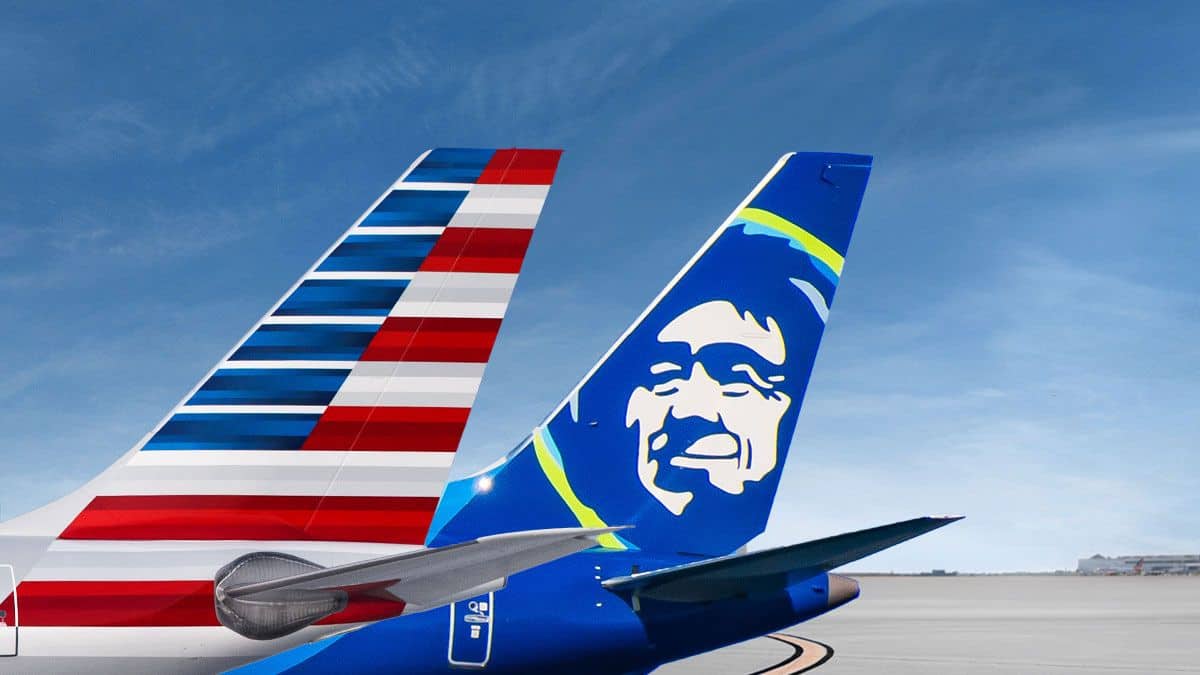
American Airlines is rolling out cash-and-miles bookings for eligible AAdvantage members, initially covering domestic US flights on American excluding Alaska and Hawaii. The new feature uses a slider at checkout, giving travellers greater control over how much they pay in each form. The development puts American alongside United Airlines, Delta Air Lines, JetBlue and Southwest Airlines, all of which already offer some form of mixed cash-and-rewards payment. The precise mechanics differ significantly between programmes. For travellers, the change matters because partial rewards redemptions can make accumulated balances useful before they become large enough for a full award ticket. It also reflects the growing commercial importance of airline loyalty programmes across the US aviation market.
American Adds A Flexible Checkout Option
American is introducing the new feature through aa.com and its mobile app as the rollout expands. AAdvantage members must first select a flight using cash before the checkout stage presents eligible cash-and-miles combinations.
Advertisement
Advertisement
Travellers can then move a slider to select their preferred balance between money and miles. The booking total updates automatically, allowing customers to see the financial effect before completing payment.
The change is particularly relevant for travellers who have accumulated miles but cannot cover an entire itinerary. Instead of abandoning the redemption or purchasing additional miles, customers can use part of their balance to reduce the cash component.
Advertisement
Advertisement
American Airlines cash and miles therefore represent a shift towards more granular rewards redemption. Rather than forcing customers into an all-cash or all-miles decision, the airline is introducing an intermediate option.
American Senior Vice President of AAdvantage Scott Long described the move as part of the programme’s broader effort to provide members with greater choice and flexibility. The statement was issued by American on October 2, 2026.
Advertisement
Advertisement
Five US Airlines Now Offer Flexibility
American is not entering an empty market. Several major US carriers already let customers combine rewards with money, although their systems work differently.
| Airline | Loyalty programme | Mixed payment option | Minimum stated redemption | Key feature |
|---|---|---|---|---|
| American Airlines | AAdvantage | Cash + Miles | Varies | Slider at checkout |
| United Airlines | MileagePlus | Money + Miles | Varies | Miles can reduce cash fare |
| Delta Air Lines | SkyMiles | Miles + Cash / Pay with Miles | 5,000 for Pay with Miles | Different options for cardholders and award tickets |
| JetBlue | TrueBlue | Cash + Points | 500 points | Slider and no blackout dates |
| Southwest Airlines | Rapid Rewards | Cash + Points | 1,000 points | Up to five redemption options |
The comparison is important because “cash and miles” does not mean the same thing across every airline. Travellers should examine the underlying fare, redemption rate and earning rules before selecting a mixed payment.
Advertisement
Advertisement
JetBlue, for example, allows members to use Cash + Points on any JetBlue-operated flight. Its official policy says customers can begin with 500 TrueBlue points and adjust the combination through a slider. The option also applies to Mint bookings.
Southwest introduced Cash + Points in April 2024. Members can use as few as 1,000 Rapid Rewards points, although the available redemption levels depend on the selected flight. The airline can present up to five redemption choices during booking.
Cash-And-Miles Deals Hide Different Values
The rise of cash-and-miles booking does not mean every airline offers travellers the same value. American Airlines, United Airlines, Delta Air Lines, JetBlue and Southwest Airlines use different structures, meaning the number of miles required for a particular cash saving can vary considerably.
For travellers, the crucial calculation is not simply how much cash disappears from the fare. It is how many miles disappear with it. A $50 reduction that costs 5,000 miles implies 1 cent per mile, while the same $50 saving for 10,000 miles delivers only 0.5 cents per mile.
Advertisement
Advertisement
| Airline | Mixed Payment Model | What Travellers Should Compare |
|---|---|---|
| American Airlines | Cash + AAdvantage miles | Cash reduction against miles used |
| United Airlines | Money + MileagePlus miles | Combination offered and underlying fare |
| Delta Air Lines | Miles + Cash / Pay with Miles | Whether it is an award or cash-ticket redemption |
| JetBlue | Cash + TrueBlue points | Points surrendered versus fare reduction |
| Southwest Airlines | Cash + Rapid Rewards points | Points required and cash component |
This distinction becomes especially important because miles have alternative uses. A traveller might receive a modest discount by spending miles on a cash fare, but could potentially obtain greater value through a conventional award booking on another itinerary.
The fare itself also matters. Travellers should compare the mixed-payment price with the ordinary cash fare and the airline’s full-award price before booking. They should then consider taxes, cancellation rules, mileage earning and status-credit eligibility.
American’s initial rollout adds another important variable. The airline says its cash-and-miles option initially applies to domestic US flights on American, excluding Alaska and Hawaii, with additional routes planned later.
United And Delta Already Have Established Systems
United’s Money + Miles system predates American’s latest move. MileagePlus members can use miles alongside money for eligible United bookings, although availability and booking conditions can vary. United’s current terms also specifically refer to Money + Miles purchases.
The important distinction is that Money + Miles is generally a cash-ticket payment mechanism, rather than simply a conventional award ticket with a cash top-up. Travellers therefore need to examine the fare rules attached to the underlying ticket.
Delta operates two related mechanisms. Its Miles + Cash option applies to award tickets, while Pay with Miles is a separate benefit for eligible Delta SkyMiles American Express cardholders.
Advertisement
Advertisement
Delta states that eligible cardholders can use Pay with Miles from 5,000 miles. The airline currently describes the value as $50 for every 5,000 miles, subject to the programme’s terms. Customers can choose to pay with miles, money or a combination of both.
That distinction gives travellers an important warning. A mixed-payment option can sit inside either a cash fare structure or an award structure, and the two can carry different earning, change and cancellation conditions.
JetBlue And Southwest Broaden The Market
JetBlue has pushed the concept further by making Cash + Points available across its operated network. The airline says there are no blackout dates, and members can use the feature for any JetBlue-operated flight. Partner-operated flights are excluded.
Southwest takes a similar approach but links the system to its broader Rapid Rewards structure. Importantly, customers using Cash + Points can earn Rapid Rewards points on the cash portion of the base fare. The cash portion can also count towards relevant qualification metrics under the programme’s rules.
These details make mixed-payment products more than a simple discount mechanism. They can influence how quickly travellers replenish their balances and how they progress through loyalty programmes.
For frequent travellers, that earning component can be as important as the immediate cash saving.
Advertisement
Advertisement
Loyalty Has Become A Major Airline Business
The expansion of these products reflects the increasing financial significance of airline loyalty programmes. American’s 2025 results provide a particularly clear illustration.
American reported $4.036 billion in loyalty revenue associated with travel and another $3.511 billion in loyalty marketing-services revenue during 2025. Together, those categories represented about $7.55 billion in reported revenue connected with the AAdvantage ecosystem.
American also reported $6.2 billion in cash payments from co-branded credit-card and other partners during 2025. The figure demonstrates why airlines increasingly treat loyalty as a strategic commercial asset rather than simply a frequent-flyer benefit.
Delta reported $3.362 billion in loyalty programme revenue in 2025. That figure rose from $3.297 billion in 2024, according to Delta’s annual filing.
JetBlue’s 2025 accounts show the same structural importance at a smaller scale. The airline reported $669 million in loyalty revenue tied to air transportation and another $521 million in loyalty revenue from other activities.
| Airline | 2025 loyalty-related revenue disclosed | Relevant programme |
|---|---|---|
| American | About $7.55bn across reported travel and marketing loyalty revenue | AAdvantage |
| Delta | $3.36bn | SkyMiles |
| JetBlue | $1.19bn across disclosed loyalty categories | TrueBlue |
| Southwest | Loyalty activity remains a major programme driver | Rapid Rewards |
The figures are not perfectly comparable because airlines classify and report loyalty revenue differently. Nevertheless, they show why carriers continue investing heavily in rewards ecosystems.
Advertisement
Advertisement
What The Change Means For Travellers
The most immediate benefit is flexibility. Travellers no longer need to wait until they accumulate enough miles for an entire redemption before using their balances towards a flight.
That can be particularly useful for occasional flyers with modest balances. A partial redemption may also help reduce the immediate cash requirement for a family booking involving several passengers.
However, using miles does not automatically mean receiving good value. Travellers should compare the cash price with the effective value assigned to their miles before confirming the transaction.
The easiest approach is to calculate the cash reduction divided by the number of miles used. A traveller could then compare that implied value against alternative redemption opportunities.
| Booking approach | What travellers should check |
|---|---|
| Cash only | Total fare, baggage and seat costs |
| Full miles | Award availability, taxes and fees |
| Cash + miles | Effective value of miles used |
| Miles + Cash award | Award pricing and remaining cash |
| Credit-card-linked redemption | Redemption value and card eligibility |
Travellers should also examine whether the booking earns new miles, status credits or other loyalty benefits. Those rules vary considerably between programmes.
The New Feature Fits A Wider Loyalty Push
American’s latest change arrives during a broader expansion of AAdvantage benefits. The airline has recently added or expanded redemption opportunities covering inflight food and beverages, subscriptions and other member rewards.
Advertisement
Advertisement
The strategy also follows a broader expansion of the airline’s credit-card ecosystem. American’s exclusive Citi relationship took effect in 2026 after the companies announced a new 10-year agreement. American previously reported $6.1 billion in cash remuneration from co-branded credit cards and other partners during 2024.
The commercial logic is straightforward. More ways to redeem miles can increase the perceived usefulness of the programme. That can support engagement with the airline and its wider partner ecosystem.
At the same time, flexible redemption gives airlines another mechanism for managing customer behaviour. The precise value assigned to miles can influence whether customers choose cash, points or a combination.
A Useful Shift For Partial Balances
For travellers, the significance of American’s announcement lies less in the novelty of mixing currencies. United, Delta, JetBlue and Southwest have already established versions of the model.
The important development is that AAdvantage is now moving towards the same flexible payment architecture. Its slider-based system should make partial redemption more visible during the booking process.
American Airlines cash and miles also reinforces the industry’s broader move towards making loyalty currencies usable across more stages of the travel journey. AAdvantage members can already redeem miles for selected non-flight benefits, while other US carriers continue expanding their own redemption ecosystems.
Advertisement
Advertisement
For travellers, the practical lesson is simple. Do not judge a mixed payment solely by the amount of cash removed from the fare. Check the mileage deduction, fare conditions, earning potential and alternative uses before completing the booking.
American’s move therefore adds another layer to an increasingly sophisticated US airline loyalty market. The competition is no longer only about who flies the route. It is also about who gives travellers more useful ways to spend the rewards they already hold.
Advertisement
