
Norway and More Countries Ignite a Nordic Year-Round Luxury Boom With Sustainable Travel, Arctic Wellness and Zero-Emission Journeys

Published
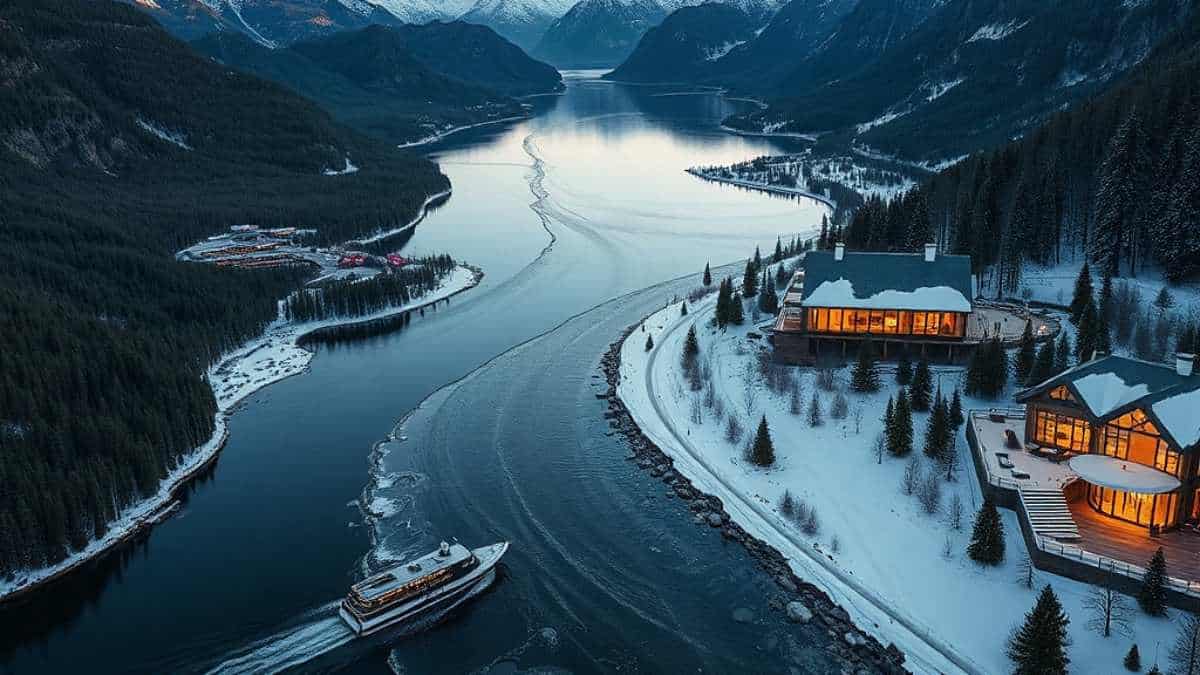 Image generated with Ai
The traditional calendar of travel within Northern Europe is undergoing an unprecedented change in structure. While international trips used to focus only on a summer break along the coasts and the winter viewing of the auroras, today the local economies are actively marketing luxurious Nordics travel all year round as a sustainable business model. Following strict national goals of reducing carbon emissions and investing privately, the places in Denmark, Finland, Sweden, and Norway are overcoming the seasonal limitations that characterized them previously. Tourists with money are no longer seeking to get into busy capital cities but are searching for secluded spots for wellness retreats, architectural gems, native cuisine, and clean routes.
Macroeconomic Shifts and Public Policy Frameworks Driving De-Seasonalisation
The tourism economies of Northern Europe have historically contended with severe seasonal concentration. Commercial accommodation providers and inbound operators frequently generated the vast majority of their annual operating revenues within an intense eight-week summer window or during a compressed winter aurora corridor. This cyclical compression triggered multiple structural challenges: seasonal labour instability, high capital depreciation for idle accommodation, and periodic environmental strain on sensitive coastal and Arctic ecosystems. To counteract these systemic vulnerabilities, national tourism boards and government ministries across the Nordic bloc enacted comprehensive frameworks to decouple economic value from raw visitor arrivals. The strategic core of this transformation is de-seasonalisation—a policy and investment approach that positions the Nordic territories as high-yield, 365-day destinations.
Advertisement
Advertisement
In Denmark, Det Nationale Turismeforum (The National Tourism Forum), in conjunction with VisitDenmark, established the binding national strategy Veje til bæredygtig turismevækst (Pathways to Sustainable Tourism Growth). This policy established an explicit operational objective: by 2030, at least 70 percent of all commercial overnight stays must occur outside the peak summer period of July and August. Danmarks Statistik reported that total national tourism turnover exceeded 171 billion DKK, underpinned by more than 66 million overnight stays. A growing share of this economic activity took place during the shoulder and winter months, directly reflecting public-sector initiatives to disperse visitors geographically and temporally. Danish Minister for Towns and Rural Districts Morten Dahlin affirmed that distributing tourist stays across the entire year stabilizes commercial revenues and secures permanent, year-round employment across rural municipalities.
In Norway, Innovation Norway and the Ministry of Trade, Industry and Fisheries formulated the National Tourism Strategy 2030: Big Impact, Small Footprint (Høy verdiskaping, lavt avtrykk). The national mandate aims to expand tourism export revenues by 20 billion NOK and generate nearly 43,000 permanent jobs by 2030, while simultaneously reducing absolute industry carbon emissions by 50 percent. Crucially, Innovation Norway ceased universal generic marketing for mass summer cruise travel, redirecting state development capital into high-yield, low-impact regional infrastructure operating twelve months a year.
Advertisement
Advertisement
Simultaneously, Sweden’s Tillväxtverket (Swedish Agency for Economic and Regional Growth) recorded record international lodging revenues, incentivising property developments that integrate outdoor recreation with winter gastronomy and heritage preservation. Across Finland, Visit Finland and the Ministry of Economic Affairs and Employment embedded strict sustainability metrics via the Sustainable Travel Finland programme, leveraging the country’s cultural identity to draw international spend into the shoulder seasons. The convergence of these policies demonstrates that sustainable tourism across Northern Europe is defined by economic resilience and yield quality rather than seasonal volume.
| Country | Statutory Policy Framework | Lead Government Entity | Core De-Seasonalisation Target | Primary Economic Benchmark |
| Denmark | Veje til bæredygtig turismevækst | Det Nationale Turismeforum / VisitDenmark | 70% of overnight stays outside July–August by 2030 | Over 171 billion DKK annual tourism turnover |
| Norway | National Tourism Strategy 2030: Big Impact, Small Footprint | Innovation Norway / Nærings- og fiskeridepartementet | +20B NOK export revenue via distributed year-round travel | 50% absolute reduction in tourism carbon emissions by 2030 |
| Sweden | Strategi för hållbar turism och regional tillväxt | Tillväxtverket / Regional Development Boards | Expansion of shoulder-season nature and culinary exports | Record lodging revenues led by regional boutique accommodation |
| Finland | Sustainable Travel Finland (STF) Programme | Visit Finland (Business Finland) / Sámi Parliament | Year-round Arctic asset utilization and cultural preservation | Equitable regional spend distribution across all 12 months |
The Secondary City Renaissance: Anchoring Urban Wellness and Gastronomy
A key element of regional de-seasonalisation is the strategic promotion of secondary urban hubs as self-sustaining cultural and culinary capitals. Mirroring the balanced urban distribution observed between primary and secondary gateways in Southern Europe, the Nordic nations are successfully directing affluent travellers away from Copenhagen, Oslo, Stockholm, and Helsinki. Secondary cities such as Gothenburg, Bergen, Aarhus, and Tampere have developed extensive year-round cultural and restorative offerings, transforming off-peak months into peak windows for cultural tourism and high-end gastronomy.
Advertisement
Advertisement
Gothenburg: Cold-Water Shellfish and Historic Bathhouse Culture
Sweden’s second city, Gothenburg, has effectively counteracted traditional off-season downturns by curating an internationally recognized cold-season culinary and thermal wellness identity. Positioned along the Kattegat coast, Gothenburg capitalizes on the West Coast’s cold-water seafood harvests. Marine biologists and fine-dining chefs recognize that deep-winter waters produce optimal flavour profiles for native oysters, langoustines, and brown crab. Michelin-starred destinations such as SK Mat & Människor anchor this culinary reputation, utilizing hyper-seasonal ingredients and open-kitchen concepts to draw discerning diners between November and March.
Simultaneously, Gothenburg has revitalized its historic thermal bathhouse infrastructure to anchor wellness tourism. Establishments like the neo-Renaissance Hagabadet, founded in 1876, are integrated with modern public-private urban wellness sites such as the Jubilee Park (Jubileumsparken) baths in Frihamnen. These facilities feature architecturally distinguished floating saunas and heated saltwater pools, creating an urban wellness corridor where cold outdoor air enhances indoor thermal vitality. By merging historical bathhouse traditions with contemporary culinary offerings, Gothenburg sustains elevated hotel occupancy and spending during the late autumn and winter months.
Bergen: Transforming Fjord Hospitality into an All-Weather Cultural Experience
Bergen has historically served as a high-density transit point for summer cruise excursions navigating the western fjords. However, municipal authorities and private hospitality groups have executed a strategic repositioning to establish the city as an autonomous, year-round cultural hub. Central to this transformation is KODE Art Museums and Composer Homes, an extensive institutional complex housing modernist collections, works by Edvard Munch, and historical composers’ residences.
Rather than treating the coastal city’s frequent rainfall as a commercial hindrance, Bergen’s luxury boutique properties have converted weather patterns into an asset. High-end hotels feature enclosed storm-watching lounges, thermal hydrotherapy circuits, and private curated viewings through the UNESCO-listed Bryggen merchant district. By replacing mass summer cruise passengers with independent cultural travellers who book extended stays, Bergen captures higher average daily rates across the winter months, insulating the city’s hospitality sector from seasonal troughs.
Aarhus: Architectural Landmarks and East Jutland Coastal Retreats
In Denmark, Aarhus demonstrates how world-class museum infrastructure and architectural design can anchor year-round international demand. The ARoS Aarhus Art Museum, crowned by Danish-Icelandic artist Olafur Eliasson’s permanent installation Your rainbow panorama, operates as an international cultural beacon. The elevated circular skyway offers panoramic views of the city bathed in shifted spectral light, transforming short winter days into a distinct visual asset.
The city supplements its cultural institutions with a vibrant gastronomic landscape, boasting Michelin-starred kitchens such as Restaurant Frederikshøj and Substans. Wealthy travellers frequently combine cultural city breaks in Aarhus with restorative escapes to luxury coastal spa properties across East Jutland. This dynamic transforms the central Danish peninsula into a multi-day leisure corridor that attracts high expenditure throughout early spring and late autumn.
Advertisement
Advertisement
Tampere: The Public-Private Sauna Capital of the World
Designated as the Sauna Capital of the World, Tampere forms the core of Finland’s multi-season wellness strategy. The city features more than 55 public saunas, representing an urban wellness offering that functions independently of weather conditions. Tampere seamlessly bridges historic preservation with contemporary architectural investment. Rajaportin Sauna, operating in the Pispala district since 1906, preserves traditional wood-heated stone heating culture, while modern design sites such as Sauna Restaurant Kuuma integrate public thermal bathing with refined lakefront dining.
By embedding Finnish sauna culture as a central restorative health ritual rather than an occasional recreational activity, Tampere provides international travellers with an authentic winter wellness experience. Guests transition between hot birch-scented steam (löyly) and cold plunges into Lake Näsijärvi or Lake Pyhäjärvi throughout both midsummer and sub-zero winter. This thermal consistency maintains stable hotel revenues across all four seasons.
Heritage Architecture and All-Weather CapEx: Preserving Maritime and Manor Legacies
A major vulnerability of seasonal luxury tourism is the carrying cost of maintaining high-value real estate during off-peak periods. Across Scandinavia, institutional hospitality investors and regional preservation authorities have addressed this by directing targeted capital expenditures into the adaptive reuse of historic buildings. By repurposing obsolete industrial dockyards, traditional timber structures, and feudal country estates, developers are creating weather-resilient luxury assets that offer authentic heritage immersion year-round.
The transformation process begins with historic assets such as disused shipyards, timber halls, and rural manor estates. Substantial capital is invested into high-performance structural retrofitting and the integration of energy-efficient, weather-resilient building envelopes. These properties then incorporate multi-season wellness facilities—including indoor hydrotherapy, deep thermal baths, and dry saunas—alongside hyper-local, micro-seasonal dining and private retreats. The completed assets operate as high-yield, weather-insulated hospitality destinations that sustain commercial demand across all twelve months.
Malmö Live and Industrial Waterfront Evolution
In southern Sweden, the reclamation of the post-industrial docklands of Västra Hamnen (The Western Harbour) demonstrates how commercial maritime infrastructure can be converted into modern cultural and luxury destinations. Constructed near the historic shipbuilding basins once operated by Kockums, the Clarion Hotel & Congress Malmö Live development serves as a major civic and hospitality hub.
The complex incorporates luxury accommodation alongside Malmö’s state-of-the-art municipal symphony hall, creating an indoor cultural environment fully insulated from southern Sweden’s damp coastal winter weather. The wider revitalization of the Western Harbour into a sustainable urban district illustrates how long-term capital deployment can turn former industrial shipyards into high-capacity assets that generate commercial, leisure, and corporate revenues across every quarter.
Advertisement
Advertisement
Storfjord Hotel: Vernacular Log Craftsmanship in Fjord Norway
Situated on a wooded ridge overlooking the Storfjord in Glomset, near Skodje and Sykkylven, Storfjord Hotel exemplifies how traditional Norwegian timber architecture can be preserved and adapted for a four-season retreat. Built using slow-grown Scandinavian pine logs and traditional sod roofing, the lodge preserves historic Norwegian laft craftsmanship while integrating modern passive thermal insulation.
Rather than relying purely on summer fjord sailings, the property focuses capital expenditure on indoor, all-weather amenities: private outdoor timber hot tubs overlooking snow-covered pine forests, open stone hearths, comprehensive hydrotherapy spas, and intimate dining rooms serving micro-seasonal game and local seafood. By curating storm-watching retreats in November and guided snowshoeing in February, the property commands high average room rates outside the summer months, driving year-round profitability.
Manorial Conversions Across Funen and Jutland
In Denmark, the pastoral islands of Funen (Fyn) and the agricultural valleys of Jutland host hundreds of historic manors, moated castles, and aristocratic estates dating from the 16th to the 19th centuries. Historically challenging to maintain against escalating preservation costs and heating requirements, numerous prominent estates have undergone comprehensive architectural restorations to become boutique luxury hotels.
By retrofitting protected brick and timber structures with modern geothermal heating and Scandinavian interior design, these converted manors operate twelve months a year as private culinary and design retreats. High-spending guests visit during the quiet winter and shoulder months specifically for fireside dining, exclusive classical chamber concerts, and design masterclasses. These private-estate developments help prevent rural depopulation, sustain skilled non-seasonal employment, and preserve national built heritage without requiring destructive greenfield development.
| Property / Development | Regional Location | Historic Architectural Origin | Modern Adaptive Redevelopment | Seasonal Insulation Mechanism |
| Clarion Hotel Malmö Live | Malmö (Skåne), Sweden | Industrial Kockums shipyard and canal docks | High-capacity hospitality and civic concert hall complex | Integrated concert venues, skybars, all-weather interior walkways |
| Storfjord Hotel | Glomset / Skodje, Norway | Traditional Norwegian handcrafted timber log halls | Secluded five-star boutique lodge overlooking Storfjorden | Deep thermal massing, indoor open hearths, forest hydrotherapy |
| Historic Manor Estates | Funen & Jutland, Denmark | Feudal castles, moated estates, and aristocratic manors | Luxury boutique estates and private culinary sanctuaries | Geothermal heating, fireside gastronomy, private design retreats |
| Arctic Bath | Harads (Norrbotten), Sweden | Historical timber floating and log-driving riverways | Circular floating and frozen spa hotel on the Lule River | Summer river flotation transitions to winter ice immersion |
Indigenous Luxury and Arctic Gastronomy: Scaling Ethical Cultural Journeys
The northern regions of Scandinavia—encompassing northern Norway, Swedish Lapland, and Finnish Lapland—historically experienced extreme seasonal swings. International visitors previously travelled to the Arctic almost exclusively from December to February to pursue northern lights viewing, commercial husky safaris, and snowmobiling. This concentrated influx frequently strained local municipal services, while leaving regional hospitality operators financially vulnerable during the remaining nine months of the year. Today, the region has pioneered high-value wilderness itineraries anchored in ethical Sámi partnerships and seasonal Arctic gastronomy.
Central to this transition is the preservation of Sámi cultural sovereignty. In 2018, the Sámi Parliament (Sámediggi) in Inari, Finland, formally established the Principles for Responsible and Ethically Sustainable Sámi Tourism. Developed alongside Visit Finland, this policy framework mandates that tourism operations incorporating indigenous identity must be guided by Sámi communities, respect territorial boundaries, and directly benefit local reindeer-herding families and craftspeople.
Advertisement
Advertisement
Building on this framework, regional hospitality properties have demonstrated how contemporary architecture can extend Arctic travel into shoulder and summer seasons. In Harads, along the Lule River in Swedish Lapland, Arctic Bath illustrates the potential of sustainable architectural planning. Designed by Swedish architects Bertil Harström and Johan Kauppi, the circular main lodge takes inspiration from historical river timber transportation, constructed using an exterior lattice of intertwined pine logs.
Arctic Bath is engineered directly within the aquatic ecosystem: during the summer months, its private cabins and central open-air bath float on the Lule River beneath the midnight sun, whereas in winter, the structure freezes securely into solid river ice. Holding a One MICHELIN Key distinction, the hotel combines cold-river immersion, wood-fired saunas, and multi-course dining centered on local forest products—birch sap, wild berries, spruce tips, and sustainably sourced reindeer.
In Alta, Norway, the family-owned Sorrisniva estate successfully transitioned from a seasonal winter operator into an established year-round wilderness retreat. While recognized globally for constructing an annual Igloo Hotel during winter, the property invested heavily in 2021 to unveil the permanent Arctic Wilderness Lodge. Featuring 24 riverfront suites with floor-to-ceiling glass facades along the Alta River, the lodge was built specifically to capture autumn and summer bookings.
Sorrisniva’s culinary offerings serve as a vital economic driver for the Finnmark region. In autumn, guests join local wilderness guides to forage for native mushrooms and lingonberries, while winter and spring itineraries pair coastal red king crab excursions along the Finnmark fjords with Sámi storytelling and reindeer husbandry insights. By commercializing the Arctic’s eight traditional micro-seasons—from early autumn foliage (ruska) to late spring crust snow (gida)—luxury operators maintain stable room rates and permanent employment throughout the year.
Green Corridors of the Future: Zero-Emission Transit as a Luxury Differentiator
As high-net-worth travellers increasingly demand environmentally responsible journeys, the transport links connecting regional airports and secondary hubs to remote lodges have become an essential element of the luxury guest journey. Transport ministries, maritime safety bodies, and state-owned rail operators across the Nordic region have recognized that carbon-heavy transit undermines pristine natural destinations. In response, regional authorities have developed zero-emission transit corridors that function as silent, premium sightseeing experiences.
Maritime Decarbonisation and the UNESCO Heritage Fjord Mandate
Norway has set an international benchmark for silent, low-emission maritime travel. In response to concerns regarding maritime air pollution from conventional cruise ships visiting narrow mountain fjords, the Norwegian Parliament (Stortinget) passed legislation establishing zero-emission maritime zones in protected waters. Directives from the Norwegian Maritime Authority (Sjøfartsdirektoratet) require all passenger vessels and tourist ferries operating in Norway’s UNESCO World Heritage fjords—most notably the Geirangerfjord and Nærøyfjord—to produce strictly zero emissions, effective 1 January 2026.
Advertisement
Advertisement
The regulatory transition progressed through distinct stages across Western Norway. Prior to 2020, high concentrations of diesel cruise ships generated notable air quality challenges in enclosed fjord basins such as Geiranger. Between 2018 and 2020, regional transport operators introduced custom-built, fully electric carbon-fibre vessels to validate zero-emission commercial operations. On 1 January 2026, mandatory zero-emission environmental rules entered into force for passenger vessels under 10,000 gross tons operating within the UNESCO World Heritage fjords. Following this implementation, conventional fossil-fueled vessels are systematically phased out across the remaining western fjords in favor of battery and hydrogen propulsion.
While international cruise operators required significant operational adjustments to meet these rules, Norwegian regional ferry developers introduced compliant low-carbon vessels well ahead of the statutory deadlines. The Fjords, a transport joint venture owned by Norwegian ferry operator Fjord1 and regional tourism group Flåm AS, commissioned specialist shipyard Brødrene Aa to build advanced, fully electric catamarans.
Vessels including Future of the Fjords and Legacy of the Fjords demonstrate the viability of silent, emission-free scenic navigation. Constructed from lightweight carbon-fibre composites, these 42-metre catamarans transport up to 400 passengers through the narrow waters between Flåm and Gudvangen with zero airborne emissions or water discharge. The vessels’ exterior walkways mirror twisting mountain pathways, enabling travellers to view cascading waterfalls and sheer fjord cliffs without engine vibration or exhaust fumes.
To address localized electrical grid limitations in remote communities like Gudvangen, the operator engineered the “PowerDock”—a floating, 2.4 MWh battery storage station that draws electrical energy steadily from the rural grid throughout the day, and then recharges the passenger catamaran in approximately 20 minutes. This technical solution has transformed fjord travel into a peaceful, premium eco-navigation experience.
| Transit Route / Asset | Operational Geographic Zone | Operating Organisation | Propulsion Technology | Guest Experiential Impact |
| Future of the Fjords & Legacy of the Fjords | Nærøyfjord (Flåm to Gudvangen), Norway | The Fjords (Fjord1 & Flåm AS) | Fully electric battery propulsion, floating PowerDock charging | Silent, vibration-free scenic travel, zero maritime emissions |
| UNESCO Fjord Compliance Fleet | Geirangerfjord & Nærøyfjord, Norway | Multiple operators under Sjøfartsdirektoratet oversight | Mandatory zero-emission battery electric or hydrogen fuel cells | Clean fjord air quality, preservation of quiet natural soundscapes |
| Bergensbanen & Flåmsbana Rail | Oslo–Bergen / Myrdal–Flåm, Norway | Vy (Norwegian State Railways) | 100% electrified high-mountain railway lines | Panoramic mountain landscapes, low-carbon transit linking urban centres |
| SJ Euronight & Arctic Night Trains | Stockholm–Narvik / Malmö–Berlin | SJ (Statens Järnvägar), Sweden | Fully electrified mainline rail network powered by renewables | High-comfort private sleeper cabins, direct connections to Arctic wilderness |
High-Yield Scenic Rail Networks
Complementing zero-emission maritime corridors, Scandinavia’s electrified rail infrastructure serves as a vital component of low-carbon luxury travel. Scenic lines such as Norway’s Bergensbanen—crossing the Hardangervidda mountain plateau to link Oslo and Bergen—and the connecting Flåmsbana mountain railway operate on 100 percent renewable hydroelectric grid power.
In Sweden, national railway operator SJ has expanded sleeper service options on its northern corridors and international SJ Euronight lines. These services link Stockholm, Gothenburg, and Malmö with northern gateways including Kiruna, Abisko, and Narvik. Featuring upgraded first-class private sleeper compartments and dining carriages that highlight seasonal Swedish produce, these rail journeys turn transit time into a relaxing component of the holiday. For affluent travelers seeking to minimize their travel footprint, rail transit offers a scenic and restful way to explore the Scandinavian landscape across the winter and shoulder seasons.
Advertisement
Advertisement
Executive Takeaways: Strategic Guidance for Destination Management Organisations
The structured de-seasonalisation strategies implemented across Denmark, Finland, Sweden, and Norway provide valuable insights for destination marketing organisations (DMOs), hotel developers, and municipal planners seeking to balance visitor volume with environmental protection.
The Scandinavian approach demonstrates the importance of shifting performance metrics from volume to economic yield. Denmark and Norway show that regional economic health does not depend on continuous growth in gross visitor numbers. By focusing marketing resources on affluent travellers who book extended stays, patronize local culinary businesses, and value certified environmental practices, tourism boards generate strong local tax revenues while preventing peak-season crowding.
Furthermore, establishing clear environmental regulations can stimulate valuable private-sector investment. Norway’s statutory zero-emission requirement for tourist vessels entering the Geirangerfjord and Nærøyfjord accelerated maritime innovation, leading directly to the deployment of vessels like Future of the Fjords. Rather than dampening commercial activity, strict environmental protection has heightened the appeal of these destinations among sustainability-conscious luxury travellers.
Developing indoor and thermal wellness assets is also an effective counterweight to unfavorable seasonal weather. Gothenburg and Tampere illustrate how integrating municipal bathhouses and design-led saunas into urban branding maintains steady leisure demand throughout dark and rainy months. Thermal wellness activities are naturally suited to cooler, darker periods, providing commercial stability during the late autumn and winter seasons.
In addition, establishing ethical partnerships with indigenous communities ensures cultural integrity and longevity. The collaboration between Visit Finland and the Sámi Parliament shows that indigenous tourism requires careful, respectful governance. Prioritizing indigenous leadership and authentic cultural representation protects heritage traditions while offering guests meaningful, educational experiences that support peripheral economies.
Finally, deploying quiet, decarbonized transit networks creates a distinct experiential luxury advantage. Silent electric catamarans and renewable-powered scenic rail lines demonstrate that reducing emissions improves comfort and enjoyment. By eliminating engine noise, vibration, and fuel odor, sustainable transit allows travellers to connect more directly with the natural environment, transforming the transit journey into a memorable highlight of the trip.
Advertisement
Advertisement
Through this coordinated approach, the Nordic nations demonstrate that Nordic year-round luxury, adaptive CapEx investment, and strict environmental stewardship provide a resilient and commercially viable framework for the luxury travel sector.
The ongoing evolution of Nordic year-round luxury provides a compelling benchmark for global destination management organisations navigating overtourism, operational seasonality, and accelerating climatic volatility. By channelling targeted long-term capital expenditure into heritage architectural preservation, elevating secondary cultural centres, empowering authentic indigenous gastronomy, and deploying zero-emission transit networks, Scandinavia has established a remarkably resilient visitor economy. This forward-looking multi-season framework proves that environmental conservation and high-yield commercial viability can operate in complete harmony. High-net-worth travellers now find meaning, restorative solitude, and cultural depth across all twelve months, cementing the Nordic region as the undisputed international model for sustainable luxury travel today.
Conclusion
Luxury travel is being revolutionized in Norway, Denmark, Sweden, and Finland, thanks to all-year-long activities, sustainable tourism practices, authentic culture, and low emission transport options. By incorporating wellness, cultural heritage, Arctic cuisine, and renewable transport, the Nordic nations are lessening their reliance on seasonal travel while boosting their economies at the same time.
Advertisement
