
Croatia Updates Zadar Ferry Travel as Revised October Schedule Changes Access to Remote Adriatic Islands

Published
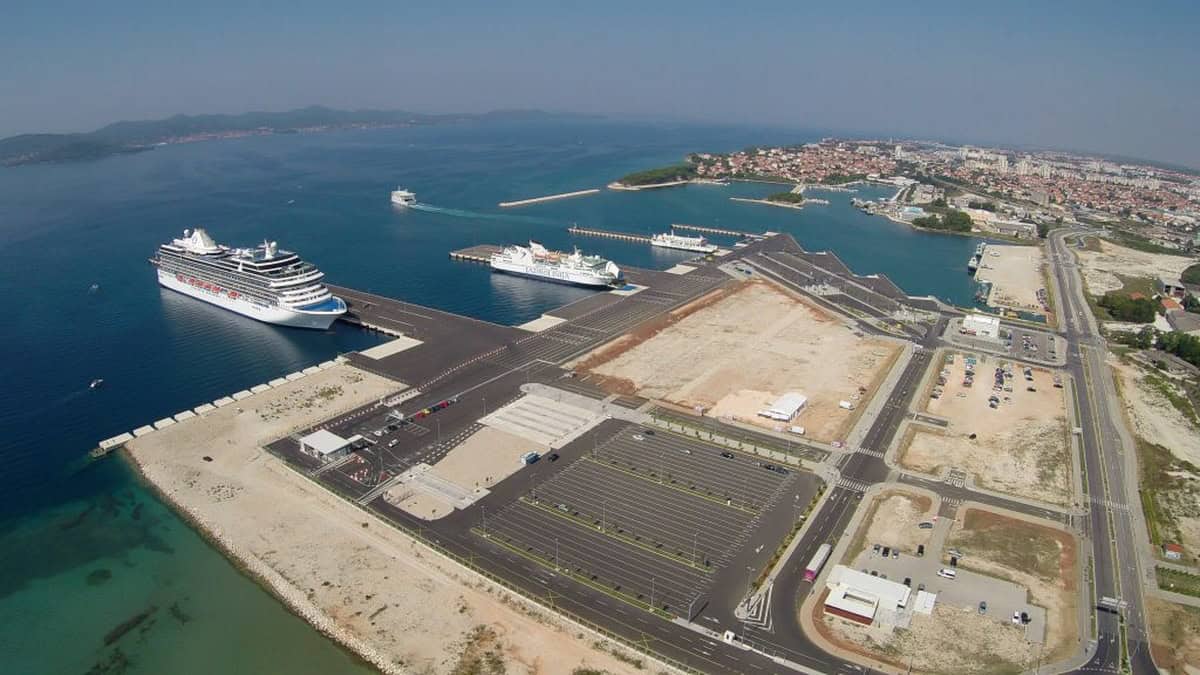
Croatia’s latest Zadar archipelago ferry adjustment exposes a largely overlooked weakness in micro-island tourism: passengers have alternative fast-ship links, but travellers taking vehicles have considerably less redundancy. Jadrolinija has moved the Line 433 voyage planned for 8 October to 7 October, with a 10:00 departure from Zadar/Gaženica and a published 18:30 return departure from Molat. Official 2025 figures show Line 433 carried 9,739 vehicles, up 10.6% year on year, making the timetable change particularly significant for self-drive tourism and travel-trade logistics.
Croatia’s Line 433 Change Is More Important Than a Routine Ferry Timetable Adjustment
Jadrolinija published the latest operational notice on 5 October. The voyage originally scheduled for Thursday, 8 October, will instead operate on Wednesday, 7 October. It will leave Zadar’s Gaženica port at 10:00. The operator specifies a return departure from Molat at 18:30. No Line 433 voyage will operate on Thursday, 8 October.
That distinction matters. This is a date displacement rather than a simple weekly service cancellation. Nevertheless, anyone whose accommodation, vehicle hire, transfer or island arrival was constructed around the normal Thursday movement must alter the itinerary.
The published 2026 timetable shows that between 29 September and 29 October the regular off-season pattern includes Monday and Thursday departures from Zadar at 12:00, together with a Saturday departure at 11:00. The exceptional 7 October operation therefore changes both the normal operating day and departure time.
Advertisement
Advertisement
| October 2026 Line 433 position | Published operation | Departure from Zadar/Gaženica | Return information | Practical effect |
|---|---|---|---|---|
| Normal off-season pattern | Monday and Thursday during 29 Sep–29 Oct | 12:00 | Timetable dependent | Base itinerary-planning pattern |
| Saturday pattern | Saturday | 11:00 | Published annual timetable | Additional weekly vehicle connection |
| Wednesday 7 October | Shifted voyage originally planned for 8 October | 10:00 | Molat 18:30 | Travellers must move vehicle journey forward |
| Thursday 8 October | Planned voyage will not operate | None | None | Thursday vehicle plans on Line 433 become unusable |
The notice was posted on the afternoon of 5 October, leaving less than 44 hours between publication and the revised 10:00 departure on 7 October. That relatively short adjustment window is particularly important for international visitors already holding car-hire reservations or fixed accommodation dates.
The Real Travel Story Is Vehicle Connectivity Rather Than Complete Island Isolation
Calling Line 433 the only tourism artery for all five islands would be inaccurate.
Advertisement
Advertisement
According to Croatia’s Agency for Coastal Liner Services, the 2026 state network includes Line 433 from Zadar/Gaženica through Rivanj, Sestrunj, Zverinac and Molat towards Ist/Kosirača. However, it also includes high-speed Line 9403 linking Ist, Zapuntel, Brgulje, Molat and Zadar, and Line 9404 connecting Brbinj, Božava, Zverinac, Sestrunj, Rivanj and Zadar.
Jadrolinija identifies 9403 and 9404 as catamaran services. Line 9403 covers the Molat–Ist side of the island group, while 9404 provides fast-ship connectivity for Rivanj, Sestrunj and Zverinac.
That creates a crucial distinction for travel businesses. A traveller without a vehicle may still have another maritime option. A traveller taking a rental car, commercial vehicle or other road vehicle cannot treat a fast passenger catamaran as an equivalent substitute for the vehicle-ferry function.
Ist Has an Important Additional Layer of Vehicle Redundancy
Ist is different again.
The Agency’s 2026 register lists state ferry Line 401 between Zadar/Gaženica, Ist/Kosirača, Olib, Silba, Premuda/Krijal and Mali Lošinj. Jadrolinija’s off-season timetable, applying from 28 September to 31 December, schedules Line 401 from Zadar on Mondays, Wednesdays and Fridays at 09:00, reaching Ist at 11:10 on those sailings.
Consequently, Ist is not exposed to Line 433 in exactly the same way as the other four islands. It sits on another vehicle-ferry corridor linking Zadar and Mali Lošinj.
Advertisement
Advertisement
That is the hidden network distinction most useful to travel planners.
| Island | Line 433 vehicle-ferry connection | Additional Zadar passenger connection | Additional vehicle-ferry corridor | Relative redundancy |
|---|---|---|---|---|
| Rivanj | Yes | Catamaran 9404 | None listed through these island routes | Lower for vehicles |
| Sestrunj | Yes | Catamaran 9404 | None listed through these island routes | Lower for vehicles |
| Zverinac | Yes | Catamaran 9404 | None listed through these island routes | Lower for vehicles |
| Molat | Yes | Catamaran 9403 | None listed through these island routes | Lower for vehicles |
| Ist | Route designation includes Ist, subject to seasonal timetable | Catamaran 9403 | Ferry 401 to Zadar and Mali Lošinj | Higher vehicle redundancy |
There is another detail worth noting. The standard Line 433 timetable for the off-season period beginning 28 September shows the routine service terminating at Molat, rather than displaying an Ist call in that section of the timetable. A separate temporary Jadrolinija arrangement extended early off-season Line 433 operations to Ist through 7 October. That temporary notice specified departures from Ist at 17:00 and Molat at 18:15 on relevant services before the latest adjustment.
This reinforces why travel sellers should not treat the five-island group as having one uniform connectivity pattern.
Official Traffic Data Show Vehicle Demand Is Growing Faster Than Passenger Use
The strongest evidence that this matters commercially comes from Croatia’s coastal transport statistics.
According to the Agency for Coastal Liner Services, Line 433 handled 22,946 passengers and 9,739 vehicles during 2025. A year earlier it carried 21,789 passengers and 8,808 vehicles. Passenger traffic therefore increased by 5.3%, while vehicle traffic jumped by 10.6%.
Vehicle growth was effectively twice the rate of passenger growth.
Advertisement
Advertisement
| Official route traffic | 2024 | 2025 | Annual change |
|---|---|---|---|
| Line 433 passengers | 21,789 | 22,946 | +5.3% |
| Line 433 vehicles | 8,808 | 9,739 | +10.6% |
| Line 401 passengers | 31,016 | 32,944 | +6.2% |
| Line 401 vehicles | 9,699 | 10,175 | +4.9% |
| Line 9403 passengers | 41,695 | 43,019 | +3.2% |
| Line 9404 passengers | 30,771 | 28,828 | -6.3% |
The 9403 and 9404 figures are entire route totals and should not be interpreted as visitor numbers for any individual island. Nevertheless, they demonstrate that the passenger network surrounding the islands handles substantial traffic alongside the vehicle-ferry system.
Even more revealing is the comparison with the public-service planning assumptions.
The state-aid programme for Line 433 uses an expected annual volume of 8,000 vehicles and 21,000 passengers. Actual 2025 traffic of 9,739 vehicles was therefore approximately 21.7% above the vehicle assumption, while 22,946 passengers were about 9.3% above the passenger assumption. Those percentages are calculated from the Agency’s own planning and traffic figures.
This does not mean the service exceeded vessel capacity. It does show that vehicle demand is materially stronger than the annual volume embedded in the public-service model.
Croatia Is Spending Millions to Keep This Thin Island Network Viable
Line 433 is not simply another commercially driven seasonal ferry.
According to the Agency’s state-aid programme, it forms part of Croatia’s public-service coastal transport system. The programme exists because revenue on designated non-profitable state routes is insufficient to cover the cost of providing the required connectivity to inhabited islands.
Advertisement
Advertisement
For Line 433 alone, the programme sets planned annual public-service compensation at €2,602,720.77 between 2025 and 2030. Planned passenger and vehicle revenue is €210,485.70, against total modelled annual costs of €2,835,803.01.
The economics reveal how dependent micro-island connectivity is on public-service support.
| Line 433 public-service requirement | Official specification |
|---|---|
| Expected annual passengers | 21,000 |
| Expected annual vehicles | 8,000 |
| Expected annual nautical miles | 12,750 NM |
| Minimum vessel capacity | 300 passengers |
| Minimum vehicle capacity | 40 vehicles |
| Maximum replacement-vessel introduction period | 24 hours |
| Minimum off-season frequency | 3 return voyages weekly |
| Low-season frequency | 7 return voyages weekly |
| High-season frequency | 7 return voyages weekly |
| Planned annual public-service compensation, 2025–2030 | €2,602,720.77 |
| Modelled passenger and vehicle revenue | €210,485.70 |
| Modelled annual costs | €2,835,803.01 |
The official specification requires three return journeys per week during the off-season and seven during both low and high seasons. It also sets a minimum vessel capacity of 40 vehicles and 300 passengers and a maximum 24-hour period for introducing a replacement vessel when required.
These numbers turn a small-island timetable into a wider infrastructure story. Frequency may look adequate on paper, but three weekly vehicle rotations provide considerably less recovery room when a traveller misses a sailing, a departure day changes or accommodation dates cannot move.
Zadar Wants More Post-Season Tourism While Island Transport Enters Its Leaner Operating Period
The timing is particularly relevant because Zadar County is actively trying to expand tourism outside the traditional peak.
The Zadar County Tourist Board’s 2026 programme specifically places thematic campaigns around tourism products in the pre- and post-season. Those products include cycling, walking, gastronomy, nautical tourism, culture and city breaks.
Advertisement
Advertisement
The commercial case for extending the season is substantial. Zadar County registered 2,222,139 arrivals and 15,526,914 overnight stays in 2025, including more than 11.7 million foreign visitor nights.
Croatia as a whole had already recorded 17.5 million arrivals and 90.5 million overnight stays between January and August 2026, both 1% above the corresponding 2025 period. Of those nights, 86.7 million were generated on the Adriatic coast.
The structural challenge is therefore clear. Tourism authorities have strong reasons to push activity deeper into autumn. Yet the island transport system transitions to its thinner off-season configuration from 28 September.
That does not make post-season island travel impractical. It makes schedule literacy considerably more important.
Why This Creates a New B2B Risk for Self-Drive Croatia Itineraries
The travel-trade implication goes beyond one altered departure.
A tour operator can usually replace one passenger sailing with another passenger service if both reach the required island and the itinerary remains flexible. Vehicle itineraries are harder. The traveller may already have collected a rental car. Accommodation may require a fixed check-in. Luggage volumes may have been planned around road transport. Suppliers may also depend on the same vehicle-capable ferry.
Advertisement
Advertisement
For Rivanj, Sestrunj, Zverinac and Molat, Line 433 therefore performs a function that the parallel catamaran network does not replicate. Ist is structurally different because Line 401 provides another vehicle-ferry corridor.
This is exactly the kind of distinction that can disappear inside booking interfaces. A search may show that an island remains connected to Zadar and therefore imply that the trip is protected. But the available departure may belong to a different vessel type and support a different itinerary.
The October adjustment also illustrates a broader resilience issue. Frequency is not the same as redundancy. Three vehicle-ferry rotations can satisfy the public-service minimum while still leaving a self-drive holiday highly sensitive to the precise day of travel.
For DMCs and specialist Croatia operators, the safer metric is therefore not simply how many boats serve an island. It is how many functionally interchangeable services exist for the traveller being sold the itinerary.
What Travel Agents and Tour Operators Should Do Now
- Recheck every Line 433 booking for 7 and 8 October. The Thursday voyage has been brought forward to Wednesday, with the revised Zadar departure at 10:00.
- Separate passenger connectivity from vehicle connectivity. Lines 9403 and 9404 preserve fast-ship access but should not be treated as substitutes for a vehicle-ferry itinerary.
- Treat Ist separately from the other four islands. Line 401 gives Ist an additional Zadar–Mali Lošinj vehicle-ferry corridor.
- Reconfirm every stop, not merely the route number. Seasonal and temporary schedules can alter which ports are served on individual operations.
- Build at least one sailing-day buffer into self-drive packages. Off-season Line 433 operates at a much thinner frequency than during summer.
- Align rental-car collection with confirmed ferry space. Jadrolinija lists Line 433 and Line 401 among services where a purchased vehicle ticket reserves space for a specific departure.
- Check the operator again immediately before travel. Jadrolinija explicitly notes that sailing schedules remain subject to change, making same-day verification essential for tightly timed island itineraries.
Croatia’s Micro-Island Tourism Growth Will Depend on Redundancy, Not Simply More Visitors
The significance of the Zadar change lies less in the loss of one Thursday departure than in what the adjustment reveals about the architecture of Croatian island tourism.
Rivanj, Sestrunj, Zverinac, Molat and Ist are connected through overlapping maritime systems, but those systems are not interchangeable. Passenger services offer considerably more flexibility. Vehicle travel remains concentrated. Ist enjoys an additional layer of resilience through the Zadar–Mali Lošinj ferry. The other four islands depend more heavily on Line 433 for the vehicle component of their mainland connection.
Advertisement
Advertisement
At the same time, official data show vehicle movements on Line 433 rising faster than passenger numbers. That trend matters for independent touring, rental-car holidays, small accommodation businesses and DMCs building multi-stop itineraries around lesser-known Croatian islands.
Croatia’s tourism strategy increasingly favours a longer season and wider geographic distribution of visitors. For the smallest islands, however, success will depend on transport planning keeping pace with that ambition.
The lesson for the international travel industry is straightforward: micro-island accessibility should be assessed by transport function and redundancy, not merely by the presence of a ferry or catamaran line on a timetable. The 7–8 October Line 433 adjustment provides a small but unusually clear demonstration of that wider challenge.
Advertisement
