
Argentina Expands Solar Rail Tourism Across Jujuy’s Quebrada

Published
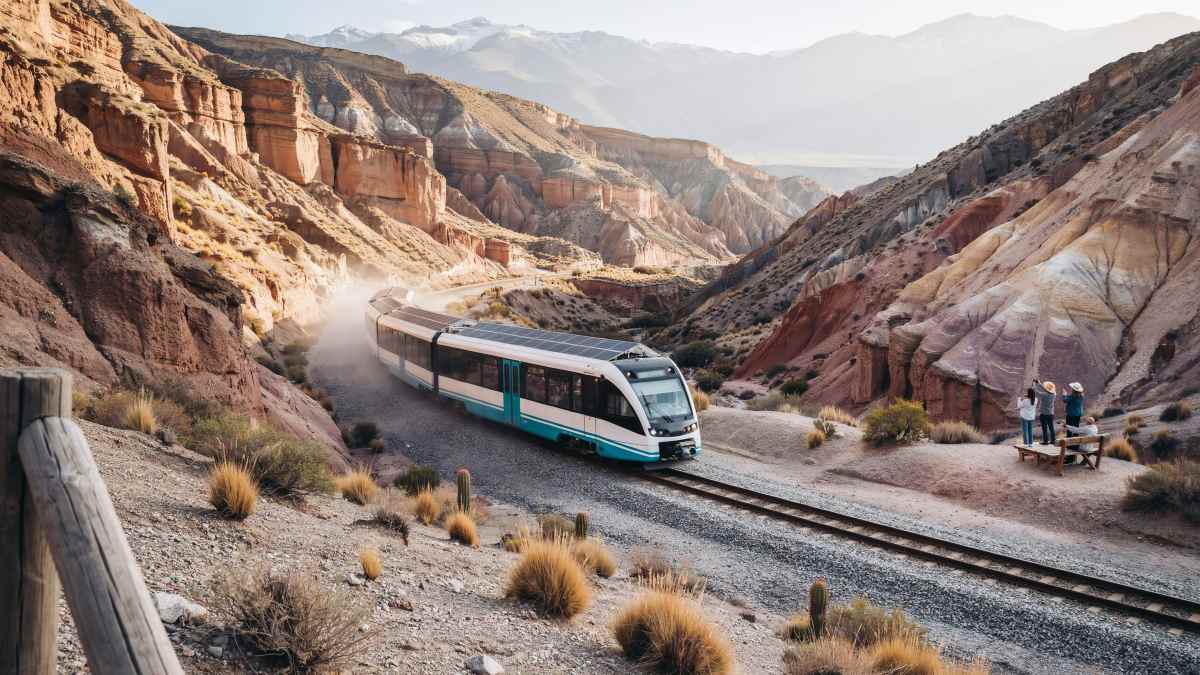
Argentina is developing more tourism options for Jujuy’s Quebrada de Humahuaca using the Tren Solar de la Quebrada, which is a train that is powered by the sun and which connects historical villages in the Andes via a rail line of 42 kilometers that goes from Volcán to Tilcara. The train is operated with lithium battery power and is recharged at special stations. It is a form of transportation with reduced emissions that takes tourists around a cultural landscape of Argentina that has great value. The trip involves traveling through the villages of Volcán, Tumbaya, Purmamarca, Posta de Hornillos, Maimará and Tilcara, while at the same time allowing tourists to have gastronomic, cultural and tourism experiences.
Jujuy’s Solar Train Revives Andean Rail Travel
The Tren Solar de la Quebrada returned passenger rail service to the Quebrada after a decades-long absence, beginning its official operations in June 2024.
Advertisement
Advertisement
By 2026, the service had carried more than 90,000 passengers and was operating across its complete 42-kilometre route between Volcán and Tilcara. The railway provides panoramic views of the multicoloured mountains and historic settlements that form part of the Quebrada de Humahuaca cultural landscape.
For visitors, the train creates an alternative to travelling between the villages entirely by road. Passengers can combine the rail journey with scheduled stops and independent exploration at individual destinations.
Advertisement
Advertisement
Six Stations Connect the Quebrada
The current tourism experience includes six stations and stops along the 42-kilometre corridor.
Volcán provides the southern gateway, followed by Tumbaya, Purmamarca, Posta de Hornillos, Maimará and Tilcara. Each destination offers different cultural, historical and landscape experiences.
Advertisement
Advertisement
The full-day experience includes specialist guides aboard the train and at stations, with passengers able to spend time exploring individual communities. Cultural, gastronomic and recreational activities are available at the destinations as optional visitor experiences.
This structure allows travellers to create itineraries around several towns rather than using a single base for exploring the Quebrada.
Purmamarca Adds a Major Tourism Stop
Purmamarca is one of the most prominent destinations along the route.
Known for its colourful mountain landscapes and traditional village setting, it provides visitors with opportunities to explore local culture, markets and surrounding scenery.
The rail connection gives travellers another way to reach the community while allowing it to function as part of a wider multi-stop journey through the Quebrada.
For international visitors, combining Purmamarca with Maimará and Tilcara can create a broader introduction to northern Argentina’s Andean heritage.
Advertisement
Advertisement
Maimará and Tilcara Extend the Cultural Journey
Maimará and Tilcara provide further opportunities to experience Jujuy’s cultural landscape.
Maimará is surrounded by distinctive multicoloured mountains, while Tilcara offers museums, archaeological heritage and a strong concentration of cultural attractions.
The railway makes it possible to include both communities within a single travel itinerary, allowing visitors to move through the Quebrada without depending entirely on private vehicles or conventional bus tours.
The restored rail corridor consequently acts as both a transport service and a tourism experience.
Wine Tourism Reaches the Railway
In 2026, the Tren Solar added a dedicated Tren del Vino experience, connecting rail travel with Jujuy’s emerging high-altitude wine industry.
The experience runs between Volcán and Tilcara and includes stops at wineries along the Quebrada. It combines extreme-altitude wines with Andean landscapes, regional gastronomy and local culture.
Advertisement
Advertisement
For travellers, the development creates a new way to incorporate wine tourism into a northern Argentina itinerary without separating vineyard visits from the wider cultural journey.
The railway therefore links several tourism products within one corridor, including heritage, food, wine and landscape experiences.
Rail Travel Reduces Road Dependence
The solar train also provides an alternative form of mobility through the Quebrada.
Its battery-powered operation combines lithium technology with solar energy and avoids conventional diesel propulsion during passenger services. The train uses charging points along the route, supporting regular operations between the mountain communities.
The lower-emission transport model is particularly relevant in a protected cultural landscape where tourism growth brings increasing demand for road travel.
For visitors, travelling by rail also offers a quieter way to experience the scenery while moving between destinations.
Advertisement
Advertisement
Community Tourism Grows Along the Route
The railway is creating additional opportunities for tourism businesses in the communities along its corridor.
Visitors can combine train journeys with locally provided accommodation, food, craft markets, cultural activities and guided experiences.
The new Posta de Hornillos stop, opened as part of the route’s development, has strengthened access to another historic location within the Quebrada and expanded the range of places accessible by the solar railway.
This creates a broader tourism network rather than concentrating visitors exclusively around the best-known destinations.
Argentina Builds Sustainable Andean Tourism
The Tren Solar de la Quebrada project is providing an unusual transport-based tourist experience for Jujuy, which includes the integration of renewable energy technology and one of the most iconic cultural landscapes of Argentina. With the route spanning a distance of 42 kilometres and with six stations along the way, the solar train is a source of access to the local Andean villages, cultural experiences related to indigenous cultures, gourmet food experiences, and the wine tourism of Jujuy’s high-altitude locations. Through the development of specialist services up until 2026, the solar train is consolidating the connection between sustainable transport and tourism at the Quebrada de Humahuaca destination.
Advertisement
