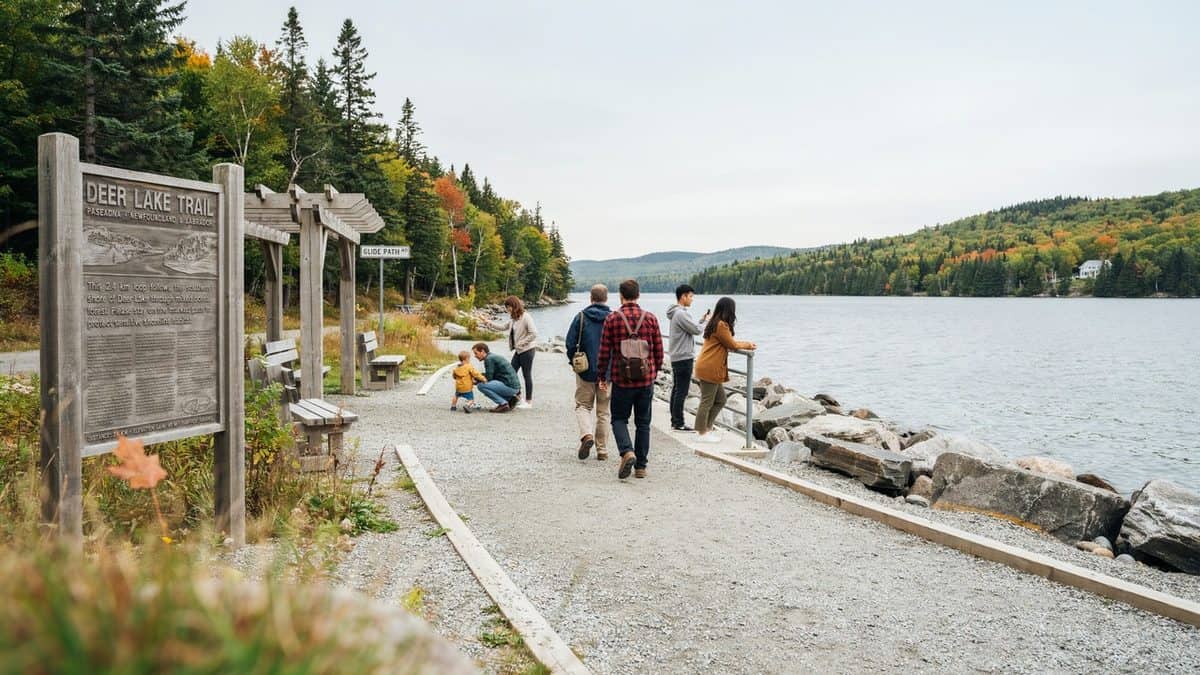
Image generated with Ai
Pasadena is getting a new trail, park amenities and stronger shoreline protection as Canada federal investment transforms Glide Path Road into a more attractive destination for residents and visitors.
Pasadena is set for a significant outdoor upgrade as federal investment charts a new trail, park amenities and shoreline protection along Glide Path Road. The project will connect South Brook Point with Pasadena Beach while opening scenic views of Deer Lake to residents and visitors. Meanwhile, benches, signage, a viewing area and a pergola are expected to make the route more welcoming for leisure and sightseeing.
Crucially, the investment also addresses coastal erosion, with armour stone planned along more than 75 metres of shoreline. As construction begins in September 2026, the project could strengthen Pasadena’s recreational appeal while improving the resilience of an important waterfront area.
The project is centred on Glide Path Road, where the shoreline will receive a combination of recreational improvements and protective infrastructure.
Advertisement
Advertisement
At its heart is a new trail linking South Brook Point with Pasadena Beach. The connection is expected to extend the community’s existing trail network and give residents and visitors another way to explore the waterfront.
For travellers, the appeal is straightforward. The route will provide views across Deer Lake while creating a dedicated space for walking and spending time outdoors. The planned viewing area should further enhance the experience, particularly for visitors looking for scenic stops rather than simply passing through the community.
The development will also include benches, directional and interpretive signage, and a pergola. Together, these features are intended to create a more usable public space and encourage people to stay longer.
The project is not solely about recreation.
Advertisement
Advertisement
More than 75 metres of shoreline will be protected with armour stone designed to reduce the effects of erosion. That element is particularly relevant to the long-term future of the waterfront, where exposure to weather and changing environmental conditions can gradually damage public infrastructure.
This combination of recreation and protection reflects the broader purpose of Canada’s Natural Infrastructure Fund (NIF). The programme supports natural and hybrid approaches intended to improve resilience to climate change, protect biodiversity and wildlife habitats, reduce carbon emissions and increase access to nature.
Pasadena’s project therefore has two distinct functions: it improves how people experience the waterfront today while helping safeguard the area for future use.
The federal government is investing C$314,104 through the Natural Infrastructure Fund, while the Town of Pasadena is contributing C$137,422.
That brings the combined investment to C$451,526, demonstrating a partnership between federal and municipal authorities to improve local infrastructure.
Construction is scheduled to begin at the start of September 2026. The timing places the project among a wider effort to strengthen community infrastructure while supporting outdoor recreation and local quality of life.
Federal Fisheries Minister and St. John’s East MP Joanne Thompson said the work would protect the shoreline while providing a new trail and outdoor amenities close to home.
Pasadena Mayor Darren Gardner also highlighted the project’s role in expanding the town’s trail network, improving connections and creating additional spaces for residents and visitors to enjoy the community’s natural setting.
For Pasadena, the value extends beyond a single trail.
Well-connected walking routes can help visitors experience a destination at a slower pace and can encourage people to explore areas that may otherwise be overlooked. Waterfront viewing points and comfortable public amenities can also turn a simple route into a more attractive recreational stop.
The project could therefore complement Pasadena’s broader outdoor tourism offer. Its location beside Deer Lake gives the development a natural scenic asset, while the connection between South Brook Point and Pasadena Beach adds practical value to the local trail network.
The investment also fits into the federal government’s wider Atlantic Growth Strategy, which aims to support jobs and strengthen local economies across Atlantic Canada.
The Natural Infrastructure Fund has so far seen more than C$88.9 million announced for more than 54 infrastructure projects, according to the federal government.
Examples supported under the programme can include urban forests, street trees, wetlands, living dikes, bioswales and naturalised coastal restoration. Hybrid projects may combine engineered and natural elements, such as green roofs, green walls and naturalised stormwater ponds.
More than 10% of the programme’s overall envelope has been allocated to Indigenous-led projects. However, the NIF is not currently accepting applications.
For Pasadena, the latest funding provides a tangible example of how natural infrastructure principles can be applied at a community waterfront, combining public access, recreation and climate resilience in one project.
The cause behind the Pasadena investment is the need to improve public access to nature while protecting a vulnerable waterfront from erosion. The answer is a combined recreation and resilience project funded through Canada’s Natural Infrastructure Fund. It will create a trail between South Brook Point and Pasadena Beach, add benches, signage, a viewing area and pergola, and protect more than 75 metres of shoreline with armour stone. The reason this matters for travel is clear: better-connected outdoor spaces can make destinations more attractive and easier to explore. At the same time, shoreline protection helps preserve the landscape and infrastructure visitors come to enjoy.
Pasadena’s Glide Path Road project represents a practical intersection of tourism, recreation and climate resilience. With C$314,104 from the federal government and C$137,422 from the town, the C$451,526 development will create a new connection between South Brook Point and Pasadena Beach while improving the waterfront experience beside Deer Lake. The planned viewing area, benches, signage and pergola should make the route more comfortable and engaging for residents and visitors. Meanwhile, armour stone will protect more than 75 metres of shoreline from erosion, giving the project an important long-term infrastructure role. Construction is scheduled to begin in September 2026. As the work progresses, Pasadena will gain not simply another walking route, but a more connected public space designed around access to nature and waterfront protection. For the local travel economy, that combination could make the community’s outdoor assets more visible, usable and resilient.
“This is a positive and practical investment for Pasadena because it brings together recreation, destination development and long-term environmental resilience. A well-designed trail connecting South Brook Point with Pasadena Beach can encourage residents and visitors to experience Deer Lake from a different perspective. The viewing area, benches, signage and pergola add the kind of simple amenities that can significantly improve the visitor experience. Equally important, protecting more than 75 metres of shoreline demonstrates that tourism development and climate resilience can move together. From a travel industry perspective, projects like this can strengthen a community’s outdoor tourism proposition while preserving the landscape that makes the destination attractive in the first place. The partnership between federal and municipal authorities also shows how targeted infrastructure funding can create lasting value for both residents and visitors.” says, Anup Kumar Keshan, Editor in Chief, TTW
Pasadena’s Glide Path Road project represents a practical intersection of tourism, recreation and climate resilience. With C$314,104 from the federal government and C$137,422 from the town, the C$451,526 development will create a new connection between South Brook Point and Pasadena Beach while improving the waterfront experience beside Deer Lake. The planned viewing area, benches, signage and pergola should make the route more comfortable and engaging for residents and visitors. Meanwhile, armour stone will protect more than 75 metres of shoreline from erosion, giving the project an important long-term infrastructure role. Construction is scheduled to begin in September 2026. As the work progresses, Pasadena will gain not simply another walking route, but a more connected public space designed around access to nature and waterfront protection. For the local travel economy, that combination could make the community’s outdoor assets more visible, usable and resilient.
Advertisement
Advertisement
Advertisement













Friday, September 4, 2026

Friday, September 4, 2026
Friday, September 4, 2026

Thursday, September 3, 2026

Wednesday, September 2, 2026

Friday, September 4, 2026

Friday, September 4, 2026