
Colombia Sees Crab Cay Closure Shift Providencia Destination Plans as San Andrés Sustains Caribbean Travel

Published
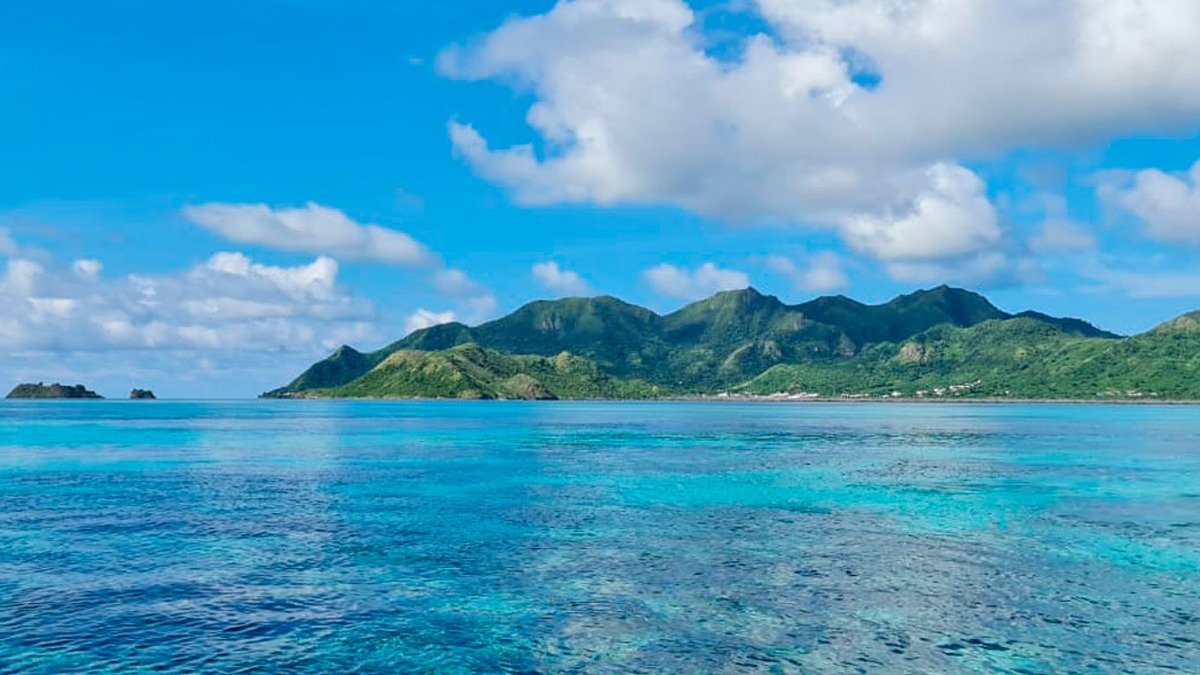
Colombia’s temporary closure of Crab Cay is becoming more than an attraction shutdown for Providencia. The site will remain inaccessible from 18 September to 17 December 2026 while major ecotourism infrastructure is rebuilt. That creates a 91-day gap in one of the island’s recognised marine excursions just before the December-January high season. Yet Providencia itself remains open. The critical destination question is whether operators can redirect travellers towards diving, snorkelling, birdwatching, small-boat trips and terrestrial experiences instead of losing visitor expenditure altogether.
Crab Cay Closure Creates a 91-Day Providencia Tourism Stress Test
Crab Cay, also known as Cayo Cangrejo, and its surrounding marine area inside Old Providence McBean Lagoon National Natural Park have been completely closed since 18 September. The scheduled closure continues through 17 December.
Advertisement
Advertisement
According to Parques Nacionales Naturales de Colombia, Resolution 439 prohibits entry not only for tourists but also for local and Raizal residents, tourism-service providers, guides, boat operators, recreational vessels and fishing vessels within the closed sector. The measure was introduced to protect people while demolition and construction activity proceeds around the existing pier.
That distinction changes the commercial story. This is not merely a visitor attraction temporarily removing ticket sales. The restricted area also becomes unavailable to the network of boat operators and guides that normally connects tourism spending with a small island economy.
Advertisement
Advertisement
However, the shutdown does not cover the entire national park or Providencia Island. Other authorised areas of Old Providence McBean Lagoon remain accessible. That gives the local travel industry an opportunity to substitute experiences rather than lose the traveller completely.
Crab Cay Closure and Rebuild at a Glance
| Indicator | Verified position | Tourism significance |
|---|---|---|
| Closure begins | 18 September 2026 | Signature excursion temporarily leaves itineraries |
| Planned reopening | 17 December 2026 | Reopening is positioned immediately before a major holiday period |
| Calculated closure period | 91 calendar days inclusive | Nearly three months of itinerary adjustment |
| Area affected | Crab Cay plus surrounding marine area | Boat access and visitor activity are restricted |
| Wider national park | Other authorised sectors remain accessible | Providencia is not closed to tourism |
| Infrastructure project value | COP 4,372,326,683 | Major tourism-capital investment rather than routine maintenance |
| FONTUR project status | In execution | Reconstruction remains an active infrastructure programme |
| Maritime concession granted in 2026 | 300 square metres | Enables the pier reconstruction programme |
| Requested marine concession area in 2025 | 331.51 square metres | Earlier technical proposal covered the wider project footprint |
| Reopening certainty | Planned, not guaranteed | Weather could require an extension |
Sources: Parques Nacionales Naturales, FONTUR and DIMAR.
Advertisement
Advertisement
Why Losing One Excursion Matters More on a Small Caribbean Island
Providencia’s tourism geography makes the shutdown unusually important. Official Colombia tourism information places the island at roughly 17 square kilometres, while the national park is one of its defining nature-based assets.
Crab Cay has historically carried significant visitor volumes. Parques Nacionales reported approximately 44,000 visitors during 2017, covering foreign tourists, Colombian visitors, Raizal residents and other residents. That figure is historical and must not be presented as 2026 demand, but it demonstrates why the cay became an important pressure point in the island’s visitor system.
The same historical record shows that rising visitation created ecological-management challenges involving congestion, waste, noise and pressure on marine and terrestrial ecosystems. The current rebuilding programme therefore sits at the intersection of tourism growth, infrastructure safety and environmental carrying capacity rather than representing a simple cosmetic refurbishment.
For a large resort destination, losing one attraction can disperse demand across dozens of alternatives. Providencia has a much smaller tourism base. Removing a well-known boat excursion can therefore affect several linked transactions in one booking chain: marine transport, guiding, food purchases, excursion commissions and ancillary spending.
There is currently no official 2026 dataset quantifying the revenue lost specifically because Crab Cay is closed. Any monetary loss estimate would therefore be speculative. The more defensible question is whether that spending disappears or moves to other Providencia experiences.
Strong Leisure Occupancy Makes Visitor Redistribution the Critical Issue
Colombia’s latest official accommodation statistics add an important dimension that has received less attention in the Crab Cay closure story.
Advertisement
Advertisement
According to DANE’s July 2026 Monthly Accommodation Survey, the combined San Andrés and Providencia accommodation region recorded 70.9 per cent occupancy, up from 67.0 per cent in July 2025. Leisure accounted for 70.6 percentage points of July occupancy.
Yet accommodation businesses were simultaneously showing weaker underlying commercial indicators.
Between January and July 2026, compared with the corresponding 2025 period, real accommodation revenue in the San Andrés and Providencia statistical region fell 6.0 per cent. Employment declined 10.9 per cent, while real wages increased 7.7 per cent.
| San Andrés and Providencia lodging indicator | Latest verified result | Comparison |
|---|---|---|
| July 2026 occupancy | 70.9% | 67.0% in July 2025 |
| Leisure contribution to occupancy | 70.6 percentage points | Dominant trip purpose |
| Jan–Jul real lodging revenue | -6.0% | Versus Jan–Jul 2025 |
| Jan–Jul employment | -10.9% | Versus Jan–Jul 2025 |
| Jan–Jul real wages | +7.7% | Versus Jan–Jul 2025 |
These DANE figures combine San Andrés and Providencia and therefore cannot be represented as Providencia-only performance. They nevertheless reveal an important regional contradiction: beds can be busy while real accommodation income and employment remain under pressure.
That makes excursion substitution commercially important. Maintaining a booking is only one part of destination resilience. The greater objective is retaining the traveller’s expenditure within local accommodation, marine tourism, food, guiding and nature-based activities during the closure.
Colombia Is Rebuilding Far More Than Crab Cay’s Old Jetty
The scale and specification of the project help explain why authorities moved beyond partial access.
Advertisement
Advertisement
FONTUR’s official contract record values project FNTP-2024-067 at COP 4,372,326,683. Its purpose is the adaptation and construction of tourism infrastructure for Cayo Cangrejo inside Old Providence McBean Lagoon National Natural Park. The FONTUR record continues to list the project as being in execution.
Technical documentation published by Colombia’s maritime authority, DIMAR, shows that the planned development extends considerably beyond replacing a landing platform.
The maritime concession proposal specified 53 concrete piles, 25 concrete beams, six deck areas, four covered kiosks, a ticket area, a docking zone for small vessels, two sunbathing areas, an interpretation centre, a sales space and two shaded zones. It also envisaged demolition and complete reconstruction of the existing pile-and-beam structure.
What the New Crab Cay Infrastructure Is Designed to Add
| Infrastructure component | Official specification | Potential visitor-management role |
|---|---|---|
| Concrete piles | 53 | Supports rebuilt marine structure |
| Concrete beams | 25 | Structural connection across pier system |
| Decks | 6 listed in concession proposal | Distributes visitor movement |
| Covered kiosks | 4 | Adds sheltered visitor space |
| Ticket area | 1 | Formalises arrival processing |
| Small-vessel docking zone | 1 | Organises boat arrival and disembarkation |
| Sunbathing areas | 2 | Separates recreation space from circulation |
| Interpretation centre | 1 | Strengthens environmental visitor information |
| Sales area | 1 | Creates structured commercial space |
| Shaded areas | 2 | Improves visitor comfort |
DIMAR’s 2025 notice recorded 331.51 square metres of maritime area in the concession application. In April 2026, DIMAR reported the formal award of a 300-square-metre maritime concession to Parques Nacionales. These figures describe different stages of the administrative process and should not be treated as contradictory construction footprints.
Hurricane Iota Explains Why This Rebuild Has Strategic Importance
The infrastructure story also carries a longer recovery dimension.
DIMAR identifies Crab Cay as one of the archipelago’s principal tourist attractions and records that it was severely affected by Hurricane Iota in 2020. The 2026 reconstruction therefore forms part of a much longer effort to restore safe tourism infrastructure following the storm’s impact on Providencia.
Advertisement
Advertisement
This matters because rebuilding in a protected marine environment creates a different operational challenge from replacing conventional urban tourism infrastructure.
The project must allow boats and visitors to reach the attraction safely while reducing pressure on sensitive coastal and marine ecosystems. The introduction of designated docking, visitor processing, interpretation, shade and commercial spaces suggests an attempt to manage the entire visitor sequence rather than merely increase structural capacity.
For the destination, the long-term value will depend on whether the rebuilt facility improves visitor flow, environmental control, safety and local commercial participation simultaneously.
Providencia Remains Open and Alternative Experiences Become Commercially Important
The most important message for travellers is straightforward: Crab Cay is closed, but Providencia is not.
Parques Nacionales states that authorised sections elsewhere in Old Providence McBean Lagoon continue to support activities including diving, snorkelling, birdwatching, small-boat exploration of marine ecosystems and walking in enabled terrestrial areas.
The park’s current official page also lists diving and snorkelling among its ecotourism products and notes that accommodation is supplied outside the park by local hotels, cabins and native inns on Providencia and Santa Catalina.
Advertisement
Advertisement
This creates a practical opportunity for travel sellers. Packages should not be cancelled automatically because Crab Cay is unavailable. Itineraries can instead place greater emphasis on the island’s reef environment, diving, marine interpretation, terrestrial nature and other community-based products where authorised.
For operators, that distinction can determine whether the closure becomes lost destination revenue or redistributed destination revenue.
San Andrés Gateway Growth Raises the Stakes for Providencia
San Andrés also matters because it functions as the principal gateway for reaching Providencia.
Official park information advises travellers that Providencia can be reached from San Andrés by a flight of approximately 20 minutes or a catamaran journey of about three hours. Colombia’s official destination portal similarly directs visitors through San Andrés before travelling onward to Providencia.
Demand entering that wider gateway has strengthened.
According to FONTUR, using Aeronáutica Civil figures, San Andrés received 698,868 passenger arrivals on scheduled flights during the first half of 2026. Of these, 683,044 were domestic arrivals and 15,824 international. Total scheduled-flight arrivals were reported as 25.5 per cent higher than the comparable period of 2025.
Advertisement
Advertisement
Migración Colombia data published through the same official government update recorded 87,819 foreign non-resident arrivals to the archipelago between January and July 2026, an increase of 6.4 per cent.
These numbers must not be interpreted as Providencia visitor totals. They describe San Andrés aviation traffic and archipelago-level foreign arrivals. Their relevance is different: the gateway supplying potential demand to Providencia is operating in a period of stronger travel activity while one of Providencia’s recognisable products is temporarily unavailable.
The Timing Before December May Be the Most Important Part of the Story
Parques Nacionales identifies December-January, Easter and June-July as high-demand periods when advance park reservations are particularly advisable.
That makes the planned 17 December reopening commercially important.
If completed on schedule, Crab Cay could return just as Colombia enters the Christmas and New Year travel period. The island would then move from three months of restricted product supply to operating a substantially rebuilt visitor facility at the beginning of one of its busiest seasonal windows.
However, 17 December should not be sold as an unconditional guarantee.
Advertisement
Advertisement
Parques Nacionales states that adverse climatic conditions could impede completion, in which case authorities would evaluate whether the closure period needs to be extended.
That weather clause is especially relevant for travel agents contracting festive-season programmes. Inventory marketed for dates immediately after 17 December should carry operational flexibility until the park formally confirms reopening.
Why This Is a Small-Island Tourism Resilience Story Rather Than a Closure Story
The deeper information gain lies in what happens between 18 September and 17 December.
Providencia has not lost its tourism proposition. It has temporarily lost access to one concentrated component of that proposition.
At the same time, the regional lodging market entered the second half of 2026 with high leisure occupancy but falling real accommodation income and sharply lower employment. San Andrés is feeding the wider archipelago with substantially more scheduled-flight passengers. Colombia is investing more than COP 4.37 billion in Crab Cay infrastructure. The national park remains partially accessible. Then, in December, the rebuilt attraction is intended to return as high-season demand accelerates.
That combination creates a measurable tourism-management test.
Advertisement
Advertisement
The desirable outcome is not simply completing construction. It is maintaining traveller confidence during the works, shifting excursion spending towards legitimate alternatives, preventing the closure from being misinterpreted as a destination-wide shutdown and restoring Crab Cay with infrastructure capable of handling tourism more safely.
The risk is fragmentation. If distribution platforms, agents or travellers interpret the closure too broadly, Providencia can lose bookings that could otherwise have been retained through alternative experiences.
Critical Actions for Travel Agents and Tour Operators
- Remove Crab Cay from itineraries through 17 December. Do not advertise landing, snorkelling or boat access within the closed sector during the restriction.
- Do not describe Providencia or Old Providence McBean Lagoon as completely closed. Other authorised areas remain accessible.
- Rebuild packages around alternative nature experiences. Diving, snorkelling elsewhere, birdwatching, small-vessel ecosystem trips and approved terrestrial walks remain potential products.
- Treat 17 December as a planned reopening date. Obtain official confirmation before guaranteeing post-closure Crab Cay excursions.
- Add weather-related flexibility to festive bookings. The official closure framework allows for an extension if climate conditions delay work.
- Check local operators immediately before travel. Access conditions, authorised zones and marine operations can change.
- Keep San Andrés and Providencia demand data separate. San Andrés aviation growth cannot be presented as Providencia arrival growth.
- Avoid estimating closure losses without operator-level evidence. No current official dataset establishes Crab Cay-specific lost tourism revenue.
- Explain the infrastructure benefit to customers. The project encompasses docking, visitor-processing, interpretation, commercial and shade facilities rather than simple jetty maintenance.
- Support locally supplied replacement experiences. Retaining expenditure within Providencia is strategically more valuable than simply keeping the transport booking intact.
Crab Cay Reopening Could Reset How Providencia Manages High-Value Ecotourism
The long-term importance of Colombia’s Crab Cay project will become clearer after December.
If the scheduled reopening proceeds, Providencia will enter one of its main high seasons with a rebuilt marine tourism facility shaped around organised arrival, safer disembarkation, interpretation and more structured visitor circulation. That could strengthen the island’s ability to combine tourism demand with conservation requirements.
The larger lesson extends beyond Colombia. Small islands have limited redundancy when flagship attractions become unavailable. Their resilience depends on diversified experiences, accurate travel-trade communication, flexible itineraries and infrastructure programmes timed to minimise disruption.
For Providencia, the next two months are therefore not simply a countdown until Crab Cay reopens. They are a test of whether a small destination can keep travellers, redirect spending and protect confidence while temporarily removing one of its most recognisable excursions in order to build a stronger tourism asset for the next cycle of demand.
Advertisement
