
Japan’s Takayama Brings Hida Heritage and Autumn Festival Traditions Into Focus

Updated
Published
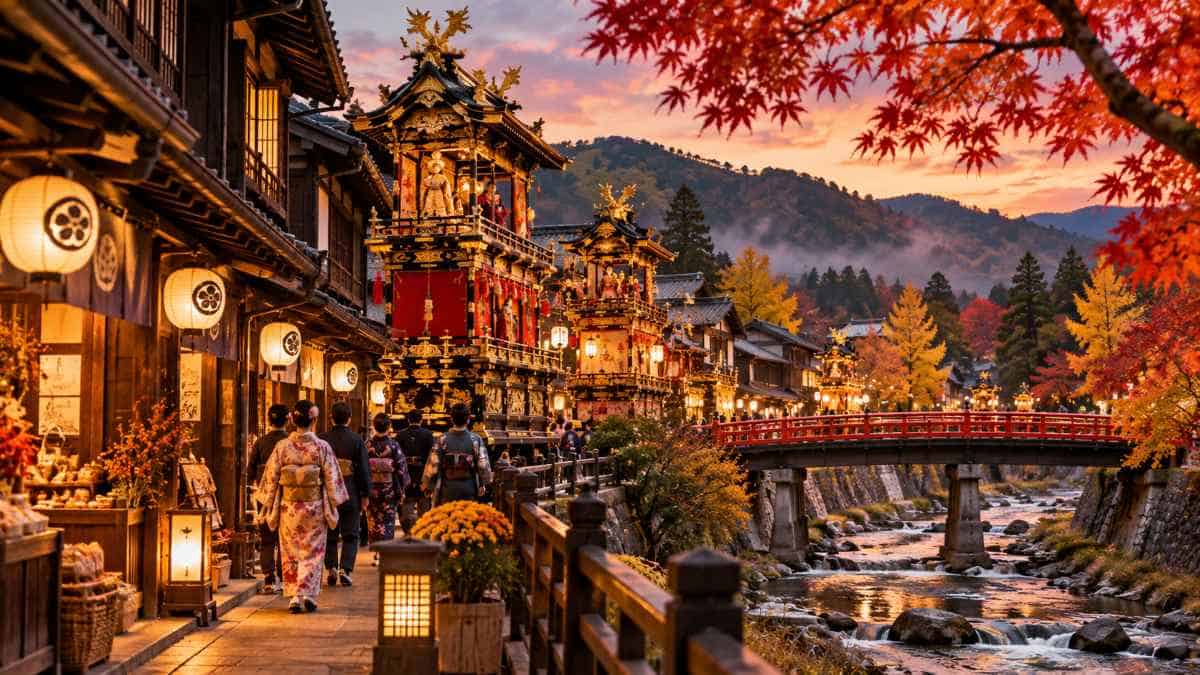
Takayama, in Japan’s mountainous Hida region, is approaching one of its most important cultural dates as autumn brings cooler air, changing foliage and preparations for the Hachiman Matsuri. The historic city, known for its preserved merchant houses, traditional craftsmanship and regional food, offers a different experience from Japan’s heavily visited metropolitan routes. The proposed Autumn Foliage & Hachiman Matsuri Eve Preparations period of September 29 to October 2, 2026, falls ahead of the official autumn festival. The Hachiman Matsuri is scheduled for October 9 and 10, when ornate floats gather around Sakurayama Hachimangu Shrine. For travellers, the days before the festival offer an opportunity to explore Takayama’s heritage and understand the craftsmanship behind its most recognisable tradition, without confusing preparation activity with the public festival itself.
Sanmachi Suji Preserves Takayama’s Merchant History
Sanmachi Suji is among the city’s most recognisable neighbourhoods. Its streets are lined with preserved wooden merchant houses, traditional shopfronts, sake breweries and craft businesses that reflect Takayama’s role as a regional trading centre during the Edo period.
The area is designated as an Important Preservation District for Groups of Traditional Buildings. Its appeal lies in the continuity of its streetscape, where timber façades, narrow lanes and traditional architecture remain part of everyday town life.
Visitors can explore local craft shops, sample regional sweets and visit sake breweries. The Miyagawa Morning Market, held along the river, adds another dimension through local produce, food stalls and handmade goods.
Advertisement
Advertisement
Hachiman Matsuri Returns on October 9 and 10
The official autumn festival is held in honour of Sakurayama Hachimangu Shrine and is associated with prayers for a good harvest. The 2026 dates are October 9 and 10, not September 29 to October 2.
The festival’s principal attraction is its elaborate yatai, or floats, which are decorated with intricate carvings, metalwork, textiles and other traditional details. The official tourism authority lists 11 festival floats, although only 10 are scheduled to be displayed publicly in 2026 because the Gyojintai float is undergoing repairs.
Advertisement
Advertisement
The festival also includes a procession and evening celebrations. On October 9, the Yoimatsuri brings lantern-lit floats through the town after dark, creating one of Takayama’s most recognisable autumn scenes.
Karakuri Puppets Reveal Hida’s Craftsmanship
Some festival floats feature karakuri mechanical puppets, whose carefully engineered movements form part of the festival’s cultural heritage. The performances require specialised knowledge passed through generations of craftsmen and festival communities.
These mechanisms are not simply decorative additions. They demonstrate the relationship between woodworking, mechanical design, performance and religious tradition.
Visitors arriving before the festival can learn about the floats at the Takayama Matsuri Yatai Kaikan beside Sakurayama Hachimangu Shrine. The exhibition hall displays historic floats and provides information about their construction and cultural significance.
The museum offers a useful alternative for travellers unable to attend the festival dates, while helping visitors understand why the floats are central to Takayama’s identity.
Hida Beef and Local Food Shape the Autumn Experience
Takayama’s food culture is closely connected with the Hida region. Hida beef, a premium Japanese wagyu variety, is served in several forms, including grilled dishes, sushi-style preparations and sukiyaki.
Advertisement
Advertisement
Local cuisine also includes miso-based dishes, seasonal vegetables, soba and regional sweets. The cooler autumn weather makes warm meals particularly appealing after a day exploring the historic centre or nearby mountain landscapes.
Food experiences are part of the wider cultural offer rather than a separate luxury attraction. Local restaurants, family-run businesses and regional producers help visitors understand the area through ingredients and cooking traditions.
Autumn Colours Extend the Journey Beyond the Old Town
Takayama can serve as a base for exploring the wider Hida region, including mountain scenery, hot-spring areas and traditional settlements.
The Hida Folk Village presents traditional rural architecture, including thatched-roof houses, and provides insight into life in the region before modern development.
Further into the mountains, Okuhida Onsen offers access to hot-spring bathing and views of the Northern Japanese Alps. The region is suited to travellers combining cultural sightseeing with outdoor experiences.
Autumn foliage timing varies with elevation and weather. Visitors travelling in late September or early October should not assume that peak colours will already have arrived across the region.
Heritage Travel Moves Beyond Japan’s Major Cities
Takayama reflects a broader interest in regional travel, where visitors seek traditional architecture, local food, craft knowledge and slower itineraries. The experience differs from Japan’s major urban centres, but it also requires more careful planning around transport, accommodation and festival crowds. Takayama is connected by rail to Nagoya, with the Hida Limited Express taking approximately two hours and 20 minutes. Highway buses also link the city with destinations including Matsumoto and Toyama. Accommodation becomes particularly difficult to secure around the festival itself, making planning important for visitors hoping to attend the October celebrations. The region’s heritage appeal is rooted in living traditions, not just preserved buildings. As autumn approaches, Takayama’s streets, workshops, food businesses and festival preparations offer visitors a closer look at the cultural life of Hida.
Advertisement
