
South Africa Sees Cruise Growth Create New Opportunities Beyond Cape Town

Published
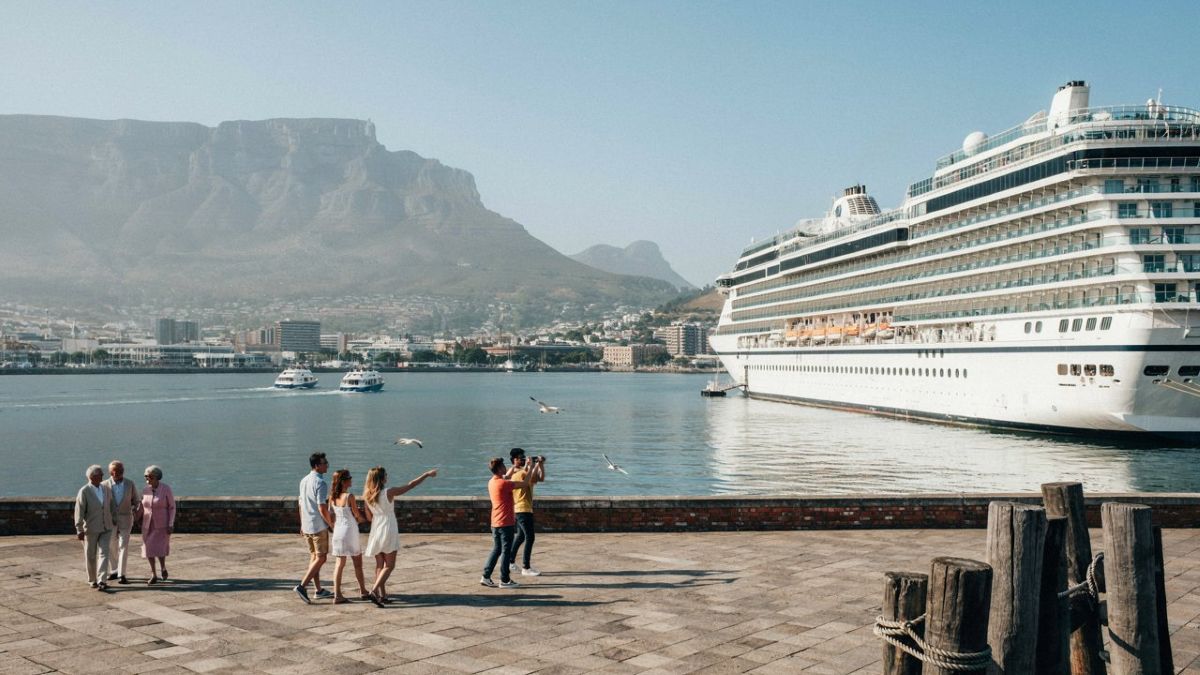
For South Africa, the growth in cruise tourism is an opportunity to generate additional benefits away from Cape Town as it marks the start of the season. Cape Town received the first cruise ship in September as it marks the start of its 2026/27 cruise season with 1,397 passengers. Nevertheless, there is more to this story. Statistics indicate that cruise arrivals have generated passenger and expenditure benefits in smaller towns of the Western Cape region. This helps local enterprises to receive more guests in terms of tours, meals, transport, and attractions. Nonetheless, sustainable development will depend on quality services and coastal communities’ relationships.
South Africa’s visitor boom raises a bigger question
South Africa’s latest arrival figures make a striking opening for this story. The country recorded 1,005,286 international tourist arrivals in August 2026, a 7.4% rise from August 2025. Between January and August, arrivals reached 7,581,455, up 11.7% year on year. That is strong growth, but the government has set out a wider goal. It wants visitors to find more places to go, more experiences to enjoy and more reasons to stay longer.
Advertisement
Advertisement
That goal matters because a visitor count alone says little about how a trip benefits a destination. A short visit may bring money to a hotel, restaurant or tour operator. A longer stay can create more chances to spend across transport, food, attractions and local businesses. This is the next question for South Africa: can it turn rising arrivals into longer holidays and wider economic gains?
The government’s tourism investment summit on 1 October offered a sign of how it plans to respond. South Africa’s pipeline grew from eight projects worth R1 billion to 15 projects valued at R3.5 billion. Three projects had received funding commitments. The proposals cover accommodation, tourist attractions, heritage sites, entertainment and infrastructure. They remain a pipeline; they are not all completed or open to visitors.
Advertisement
Advertisement
The country’s appeal also goes beyond its coastline. Its visitor offer includes wildlife, cities, food, wine, heritage, adventure and rural experiences. This variety could help operators build multi-stop holidays. Visitors might combine a coastal stay with city attractions or a safari, depending on their itinerary and available transport.
Better connections could support that plan. The government cited new and expanded air links, including direct services from Madrid and São Paulo, and increased Turkish Airlines frequencies from October. These developments may make travel more convenient for some visitors. They do not, on their own, show how many passengers will extend their stay or travel beyond major gateways.
Advertisement
Advertisement
Cape Town’s cruise season begins with new promise
Cape Town has an immediate cruise story of its own. The Pacific World arrived at the city’s cruise terminal on 17 September, carrying 1,397 passengers, predominantly from Japan. Its visit marked the start of the Western Cape’s 2026/27 cruise season. It also put Cape Town in the frame as a gateway to wider Southern African itineraries.
The cruise sector can create work across many businesses. Passengers may visit attractions, use transport, eat at restaurants or book tours. Ships also require port services. However, a vessel arriving does not mean every passenger spends the same amount, or that each visitor stays overnight. The article should explain these limits while exploring where cruise spending can travel.
Advertisement
Advertisement
The strongest economic baseline comes from the 2024/25 season. The Western Cape recorded 79 cruise ships and 83 vessel arrivals between September 2024 and June 2025. Passenger numbers reached 127,000, up 16% from the previous season. The cruise industry contributed an estimated R1.79 billion to the Western Cape’s regional GDP. Total expenditure by vessels and passengers reached R1.99 billion.
The benefits also reached beyond Cape Town. Mossel Bay, Hermanus and Saldanha Bay received 32,000 passengers across 26 ship visits. Local spending was estimated at R47.5 million. That gives the article a valuable reporting thread: can cruise itineraries help smaller coastal towns gain visitors and sales? The numbers describe the 2024/25 season, so they should not be presented as results from 2026.
The economic assessment for the 2025/26 cruise season was still forthcoming when the new season began. That means the latest cruise season had opened, but a fresh measurement of its financial effect was not yet available. The article can report the new-season arrival and use the older assessment as context, without mixing the two.
Mombasa’s longer cruise calls could change the holiday
Kenya offers a different angle: what happens when a cruise ship stays longer? In January 2026, the Crystal Symphony made a 48-hour turnaround visit to Mombasa. About 250 passengers left the ship and an equal number boarded for the next part of the voyage. This marked a shift from the roughly 12-hour stops that had defined most earlier calls.
Advertisement
Advertisement
A turnaround visit can create more activity than a short stop. Passengers may need transfers or accommodation while they join or leave a cruise. Longer time ashore can also allow more excursions. Nearby attractions include Tsavo National Park, Diani Beach and Fort Jesus. Hotels, airport transfers and multi-day trips may benefit. These are possible benefits, not a published breakdown of spending from this particular visit.
A second ship offered another example. The Azamara Journey brought 690 passengers to Mombasa in January for a two-day visit. It was the third cruise vessel to visit Kenya that season. Kenya has also developed cruise facilities in Mombasa and named Shimoni and Lamu among ports intended to expand cruise reception capacity along its coastline.
The practical challenge is to link a port call with a memorable land experience. Mombasa’s coastal heritage, beaches and wildlife attractions offer several possibilities. Tour operators could build excursions around local food, historic sites, nature and cultural experiences. Longer visits may give travellers more time to choose these activities, while local businesses gain more chances to serve them.
The key word is “may”. Kenya’s examples show that extended cruise visits are happening. They do not prove that every ship will stay longer or that every visitor will take an overnight excursion. A careful article can describe the opportunity and call for more data on passenger spending, overnight stays and businesses involved.
Mauritius shows how sea arrivals can influence growth
Mauritius recorded 668,471 tourist arrivals in the first half of 2026, up 1.5% from the same period in 2025. At first glance, that looks like modest growth. But the arrival types reveal a sharper change. Visitors arriving by air rose by just 0.2%, while those arriving by sea increased by 55.8%, from 14,979 to 23,331.
The sea-arrival total was still small compared with air travel. Yet it added 8,352 visitors against a total increase of 9,562 arrivals. Based on the official figures, sea arrivals accounted for about 87% of the net increase. This is a calculation from the published data, not a figure released by the statistical agency. It offers a strong, original point for the article, provided it is labelled clearly.
Advertisement
Advertisement
Use “sea arrivals” when describing this data. It does not prove that every person in the category travelled on a cruise. That distinction matters. It allows the article to show the growing role of maritime travel without making a wider claim than the statistics support.
Mauritius is also investing in cruise facilities. Port Louis recorded 45 cruise vessel calls during the 2024/25 financial year. Its cruise terminal can handle peak traffic of up to 4,000 passengers. The port authority describes the harbour as a regional hub and says cruise activity can support provisioning, transport, water supply and inland tourism businesses.
A planned port upgrade adds a future dimension. In March 2026, the government said construction of an extension to the cruise jetty was projected to begin in October 2027, to accommodate larger vessels. This is a future project, not a facility already available to cruise passengers. It signals the country’s ambition to build more capacity over time.
Mauritius’s tourism earnings tell another story
Visitor numbers are only one way to assess tourism. Mauritius’s central bank reported that tourism earnings reached MUR55.9 billion in the first half of 2026, 18% higher than a year earlier. That rise came alongside a 1.5% increase in arrivals over the same six-month period. The gap suggests that the value generated by tourism grew faster than the number of visitors.
This creates an important question for Mauritius: what drove the increase in earnings? The figures alone do not identify the reasons. Visitor mix, prices, exchange rates and the amount people spend can all affect a value measured in rupees. The article should not claim that travellers stayed longer or spent more per person unless reliable data confirms it.
There is also a note of caution in the earnings data. Gross tourism earnings draw on banking records and returns from money changers and foreign exchange dealers. Timing differences can affect when earnings appear in the data. The figure is useful evidence of tourism’s economic importance, but it is not a direct survey of how much each visitor spent.
Advertisement
Advertisement
The comparison still gives the story depth. Mauritius can report growing earnings even when visitor growth remains modest. South Africa can report rising arrivals while calling for longer stays and more experiences. Kenya can test whether longer port visits create wider opportunities ashore. Each place contributes a different part of the same broad discussion about tourism value.
Nature tourism needs working roads and resilient parks
Beaches and cruises make compelling headlines, but nature holidays depend on more than attractive scenery. Visitors need roads, bridges, safe routes and places to stay. South Africa’s recent flood recovery at Kruger National Park shows how weather can affect these basics.
The reconstruction of culverts on the busy H4-1 route between Skukuza and Lower Sabie was completed on 31 July 2026 at a cost of R37.5 million. The restored Letaba High-Level Bridge reopened in March, reconnecting the park’s northern and southern sections. By September, 25 units at Letaba Rest Camp had been restored, while another 64 remained under repair.
The work matters to visitors because a blocked route or closed room can change a safari trip. It also matters to park staff, who use roads and bridges for conservation work, emergency response and daily operations. Climate resilience is therefore part of the visitor economy. Tourism cannot grow smoothly if storms and floods repeatedly damage the infrastructure that makes destinations reachable.
The Garden Route faces its own environmental pressures. Its forests, fynbos and coastal ecosystems are central to the region’s appeal. Drought, flooding, severe storms and wildfires also pose risks to infrastructure and natural areas. Growth depends on protecting the landscapes that make visitors want to travel there.
This is a useful way to connect beaches, parks and tourism investment. The article can show that a successful holiday route needs attractive places, reliable access and careful environmental management. It should avoid suggesting that visitor growth alone guarantees conservation funding or community benefits.
Advertisement
Advertisement
Local participation can make the tourism story stronger
A destination’s success should include the people who live there. In September 2026, 20 members of small-scale fishing cooperatives and 25 local businesses around West Coast National Park completed training. The programme included skipper skills and business planning. Support also covered fishing equipment, procurement access and business development.
This is a practical example of how local people can build skills and seek a role in tourism and related industries. Small businesses may supply food, transport, guiding, crafts or other visitor services. The training announcement does not provide figures for new jobs or income, so the article should not claim those outcomes have already followed.
South Africa’s domestic market deserves attention too. In 2025, the country recorded 44.7 million domestic overnight trips and R111.6 billion in domestic tourism expenditure. African markets also account for a large share of South Africa’s international arrivals. These figures show why the story should include local and regional travellers, not focus only on long-haul tourists and cruise passengers.
A fresh African holiday story is taking shape
For South Africa, Kenya, and Mauritius, 2026 promises to be a year in which tourism expansion will take center stage because there will be new ways of using cruises to venture beyond the familiar ports. South Africa’s increasing number of visitors and investment plans have become the talk of the moment, even as the cruise season at Cape Town has kicked off. Similarly, in Kenya, ships have been allowed to stay longer in Mombasa, whereas in Mauritius, the rate of sea arrivals is higher than the total number of tourists.
Advertisement
