
Europe’s Dark Sky Dining Revolution Takes Off as Galloway and More Redefine Night Tourism

Published
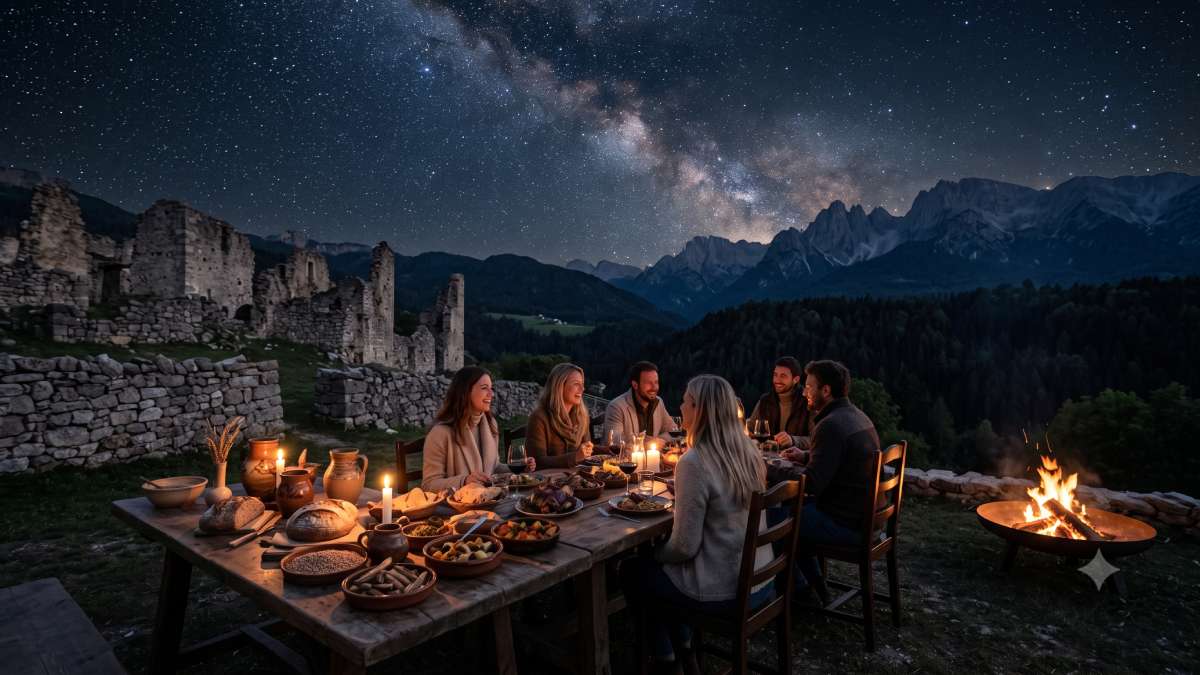
Image generated with Ai
Throughout some of the most wild places in Europe, there is a new form of travel that is revolutionizing off-peak tourism through the combination of history and astronomy. In response to increased consumer desire for heritage sustainability tourism, night time dining and archaeoastronomy tours offer a fantastic alternative to traditional daylight trips. Through the combination of star gazing in pristine locations, alongside the consumption of food made from old world heirloom crops, luxury boutique providers are bringing back lost agricultural practices. This new travel trend turns night into a journey through history, food and astronomy, and in turn provides much needed income for remote rural communities.
The Cosmic Table: Merging Gastro-Archaeology and Archaeoastronomy
The global travel sector is witnessing a major shift in visitor motivations and travel patterns. As daytime mass tourism creates increasing pressure on urban centres and famous coastal landmarks across Western Europe, discerning travelers and eco-conscious explorers are turning toward tranquil, immersive alternatives. This evolution in consumer preference has sparked the rise of nocturnal gastronomy and archaeoastronomy tourism, a luxury travel model that pairs culinary archaeology with dark-sky preservation. Rather than treating evening hours as merely the end of a tour itinerary, boutique travel specialists are turning nightfall into a dynamic stage for cultural discovery, historical reflection, and sensory elevation.
Advertisement
Advertisement
Archaeoastronomy explores how early human civilizations interpreted, mapped, and integrated celestial movements into their societal structures and agricultural systems. Ancient European populations—including Celtic tribes, Norse agrarian communities, early Hellenic societies, and Alpine pastoralists—did not observe the night sky solely for myth-making. Instead, stellar movements provided an essential calendar that governed seed sowing, crop harvesting, animal migration, and food preservation. By correlating ancient agricultural calendars with modern astronomical data, historians and astronomers can reconstruct exact seasonal alignments that guided ancient food production.
At the same time, gastro-archaeology has advanced through sophisticated organic residue analysis of excavated pottery, ancient hearths, and subterranean granaries. Archaeo-botanists can now identify and cultivate revived heirloom seed varieties, such as emmer wheat (Triticum dicoccum), wild einkorn (Triticum boeoticum), forgotten mountain rye, and ancient leguminous plants that sustained European communities thousands of years ago. When combined with historic fermentation methods, stone-milling techniques, and classical culinary manuscripts, these rediscovered crops allow master chefs to recreate authentic historical flavor profiles.
Advertisement
Advertisement
Recreating Ancient Flavours Through Extinct Grains and Historic Recipes
The culinary core of celestial dining relies on authentic agricultural reconstruction. Modern industrial farming has standardized global crop varieties, prioritizing uniform appearance and transport durability over complex flavor profiles and biological diversity. In contrast, historical culinary recreation relies on heritage grains that deliver rich, nutty, and mineral-dense tastes lost to modern food production.
In Mediterranean itineraries, menus incorporate reconstructed Mycenaean dishes alongside ancient Roman condiments. Diners taste kykeon, the Homeric ritual beverage composed of coarse barley meal, aged goat cheese, wild mint, and mountain honey blended with dark wine. Main courses feature Roman garum, an umami-rich fermented fish sauce that served as the primary seasoning agent of Classical antiquity. In Northern and Alpine Europe, culinary teams collaborate with botanists to harvest historic oat strains, wild juniper, forest mushrooms, and ancient mountain rye sourdoughs baked using stone hearth methods.
Advertisement
Advertisement
The Science of Sensory Elevation: Darkness, Silence, and Taste
Human sensory perception changes significantly when ambient light and background noise are removed. Physiological research indicates that under total darkness, visual dominance relaxes, which heightens auditory, olfactory, and gustatory sensitivity. By intentionally eliminating streetlights and candlelight, sensory elevation dining encourages the palate to detect subtle herbal aromas, complex fermentation notes, and intricate food textures.
This physiological response is strengthened when paired with acoustic isolation in protected dark-sky reserves. Urban environments produce continuous ambient noise that dulls human taste perception, particularly for sweet and umami flavors. In contrast, deep wilderness settings—such as Galloway Forest Park in Scotland or high-altitude Alpine refuge huts (rifugi) in Trentino—offer near-total acoustic quietude. This absolute quiet creates a reflective atmosphere, elevating meals into a memorable visual, auditory, and gastronomic experience under pristine night skies.
Advertisement
Advertisement
Official Government Initiatives, Policy Frameworks, and Regional Statistics
International Tourism Policy and UN Tourism Sustainability Initiatives
At the international level, public institutions are actively encouraging low-impact, culturally immersive travel formats that support rural economic development. In March 2026, United Nations Environment Programme (UNEP) and UN Tourism launched the “Recipe of Change” global initiative to reduce food waste and promote regional food heritage. UN Tourism guidelines emphasize that gastronomy tourism should protect native agricultural species, preserve traditional cooking practices, and generate fair economic returns for rural producers.
Data published in the UN Tourism World Tourism Barometer shows that while international tourist arrivals grew modestly by 0.4% in the first half of 2026 amid economic challenges and rising travel costs, high-value niche sectors demonstrated strong resilience. Travelers are increasingly drawn to authentic, small-group experiences that highlight regional heritage, environmental stewardship, and cultural depth.
Scottish Government Insights and Tourism Strategy 2025–2028
In Scotland, VisitScotland’s strategic framework, Driving the Visitor Economy 2025–2028, highlights the vital role of off-peak visitor expenditure. Tourism represents the single largest employment sector in the Highlands and surrounding rural zones, supporting over 245,000 jobs—accounting for 9.2% of total employment across Scotland. Official economic figures reveal that international and domestic overnight visitors generated £756 million in regional spend across the Highlands in 2024, with visitor spend contributing approximately 6% to Scotland’s overall economy.
VisitScotland’s market research highlights key consumer trends shaping travel demand, including “Scran Seekers” (food-motivated travelers), “Adventure Luxe”, and the broader “Transformation Economy”. Their findings show that 60% of surveyed travelers prioritize meaningful, sustainable travel experiences that directly support local communities. Furthermore, VisitScotland’s off-peak strategy actively promotes seasonal spread, encouraging visitors to explore rural regions during autumn and winter when night skies offer optimal conditions for stargazing and celestial observation.
Advertisement
Advertisement
Mediterranean and Nordic Regional Tourism Frameworks
In Greece, the Ministry of Culture and the Greek National Tourism Organisation (GNTO) have expanded programs like “All of Greece One Culture” to activate historical archaeological sites outside peak summer months. By opening ancient venues such as the Ancient Theatre of Orchomenos in Arcadia for specialized night-time events, public authorities are successfully encouraging tourism into interior mountainous zones.
In Sweden, national economic development agency Tillväxtverket and regional authorities in Norrbotten County have prioritized high-value Arctic cultural retreats. Official guest night statistics demonstrate that sustainable winter tourism initiatives supporting indigenous Sami culture generate vital revenue for local Northern communities while protecting Arctic biodiversity.
In Northern Italy, the Autonomous Province of Trento and VisitTrentino have developed specialized autumn and winter initiatives, such as “Foliage Weekend” and “Snow, Silence & Relaxation”. These state-supported tourism models encourage small-group visits to high-altitude refuge huts (rifugi), demonstrating how quiet Alpine sanctuaries can generate sustainable revenue between peak summer hiking and winter ski seasons.
Regional Micro-Locations and Exclusive Night-Time Itineraries
Galloway Forest Park, Scotland: Celtic Stargazing and Foraged Autumn Banquets
Covering over 300 square miles of pristine moorland and native forest in Dumfries and Galloway, Galloway Forest Park is Western Europe’s premier dark-sky sanctuary. In 2009, the area became the first location in the UK to be designated an International Dark Sky Park by DarkSky International, earning a Gold Tier award for its exceptional darkness. Free from light pollution, the park allows visitors to view more than 7,000 visible stars, distant planets, and the bright arc of the Milky Way with the naked eye.
Boutique tour operators collaborate with Forestry and Land Scotland dark-sky rangers, local historians, and certified star guides to organize candle-free, fire-lit outdoor banquets. Events take place in secluded micro-locations, such as the ruined historic farming settlement at Polmaddy or near Clatteringshaws Loch and Glentrool, where low ground lighting preserves human night vision.
The culinary journey focuses on prehistoric Celtic traditions. Master chefs prepare wild-foraged autumn ingredients—including wild game, forest chanterelles, and mountain juniper—served alongside ancient oat-cakes baked over open fires using prehistoric recipes. Drinks feature artisanal botanicals from the nearby Dark Art Distillery in Kirkcudbright, which crafts Sky Garden Gin, Understory Gin, and agave spirits infused with local night-blooming plants. Guests enjoy these meals while listening to live acoustic recitations of Celtic sky lore, learning how ancient inhabitants tracked constellations like Orion and the Great Bear to navigate seasonal changes and harvest cycles.
Advertisement
Advertisement
Peloponnese and Arcadia, Greece: Hellenic Archaeoastronomy and Stone-Press Suppers
In Southern Europe, the mountainous interior of Arcadia and the wider Peloponnese peninsula provide an outstanding setting for archaeoastronomy experiences. Far from crowded coastal resorts, the Arcadian highlands contain ancient olive groves, historic stone villages, and classic archaeological sites set beneath clear Mediterranean skies.
The “Hellenic Archaeoastronomy & Stone-Press Suppers” itinerary invites travelers to participate in traditional agrarian customs. In historic olive groves around Vytina, Ancient Corinth, and the Ancient Theatre of Orchomenos, guests assist with evening olive harvesting using hand methods before pressing the fruit in authentic Roman-era stone mills.
Dinner is hosted in open-air stone courtyards or adjacent to protected archaeological monuments managed under the Greek Ministry of Culture’s official heritage programs. Menus showcase reconstructed Mycenaean recipes, featuring kykeon alongside emmer wheat flatbreads, slow-cooked wild greens (horta), local goat cheeses, and dishes dressed with Roman-style garum. During the meal, local astronomers use portable lasers and historical star charts to explain how classical farmers followed Hesiod’s agricultural advice, using stellar movements like the dawn rising of the Pleiades to time olive harvests and crop sowing.
Jukkasjärvi and Swedish Lapland: Sami Midnight-Sun Reversal and Fire-Pit Fermentation
Located north of the Arctic Circle in Norrbotten County, Jukkasjärvi and the wider Swedish Lapland wilderness offer a dramatic venue for late-autumn and winter nocturnal travel. As autumn turns into polar winter, daylight recedes, leaving dark skies illuminated by the vibrant colours of the Aurora Borealis.
The “Sami Midnight-Sun Reversal & Fire-Pit Fermentation” program immerses guests in indigenous Sami culture and traditional food preservation. Travelers gather inside timber-framed lavvu tents pitched in remote tundra locations completely free from artificial light.
Diners sit around central hearth fires to sample century-old Arctic preservation techniques. The menu features earth-fermented mountain roots, smoke-cured reindeer, arctic char preserved in lichen marinades, and wild cloudberries. Accompanied by the warm glow of birch wood fires, Sami cultural guides perform live yoik—one of Europe’s oldest continuous vocal traditions. Outside the tent, guests step onto quiet tundra to view the Northern Lights while learning indigenous sky lore and Arctic star navigation.
Advertisement
Advertisement
Val di Fassa and the Italian Dolomites: Alpine Dark-Sky Harvests and Sound-Isolation Suppers
In the Trentino region of northern Italy, the dramatic limestone peaks of the Val di Fassa and the Italian Dolomites host elevated mountain dining journeys. During the autumn shoulder season, when summer hikers have left and winter ski operations have not yet begun, high-altitude mountain refuge huts (rifugi) open exclusively for small dining groups.
Guests reach these mountain shelters—located over 2,000 metres above sea level—via guided night snowshoe walks or quiet electric mountain transport. Positioned high above valley cloud cover, diners experience exceptionally clear, dry dark skies ideal for astronomical observation.
The dining experience highlights alpine gastro-archaeology. Local chefs team up with botanists to bake sourdough breads using ancient grain varieties recovered from regional archaeological sites. Meals are served on heated outdoor stone terraces overlooking pitch-black Alpine valleys, emphasizing complete acoustic silence. Guests dine in tranquility, experiencing total quietude while gazing up at the starlit Alpine night sky.
Strategic Travel Industry Metrics and Business Case
Resolving Seasonality via High-Yield Off-Peak Tourism
For destination management organizations (DMOs) and regional governments, managing tourism seasonality is a key priority. Traditional European travel peaks during summer months, placing heavy pressure on local infrastructure while leaving rural hospitality businesses underutilized during colder periods.
Nocturnal gastronomy and archaeoastronomy tourism offers an effective solution to off-peak seasonality by extending the operational window through October, November, February, and March. Because astronomical observation requires extended night hours, autumn and winter provide ideal conditions for dark-sky experiences compared to summer. By offering exclusive evening packages, boutique operators help maintain steady hospitality employment and support rural economies throughout the year.
| Region & Destination Authority | Target Months & Operating Window | Group Limit | Estimated Package Price Range | Key Economic & Tourism Impact Metrics |
| Galloway Forest Park, Scotland (VisitScotland / FLS) | Oct – Mar (Peak darkness window) | 10 – 12 guests | £1,200 – £2,800 per person | Part of Highlands £756m visitor economy; supports 16.2% regional employment. |
| Peloponnese & Arcadia, Greece (Greek Ministry of Culture) | Sep – Nov / Mar – May (Harvest seasons) | 8 – 12 guests | €1,500 – €3,200 per person | Encourages inland travel; funds local archaeological preservation initiatives. |
| Swedish Lapland, Sweden (Tillväxtverket / VisitSweden) | Oct – Feb (Aurora & polar night) | 6 – 10 guests | €2,200 – €4,500 per person | Increases winter guest nights in Norrbotten County; supports Sami cultural guides. |
| Val di Fassa, Italy (VisitTrentino) | Oct – Nov / Jan – Feb (Winter shoulder) | 8 – 10 guests | €1,800 – €3,800 per person | Fills shoulder season gap between summer hiking and winter ski periods. |
High-Yield, Low-Impact Premium Travel Model
The commercial strength of dark-sky tourism lies in its small-group, high-value structure. Intentionally limiting tour sizes to maximums of 10 to 12 guests preserves an exclusive atmosphere while minimizing physical impact on protected natural sites.
Advertisement
Advertisement
High-net-worth travellers and eco-conscious guests demonstrate a strong willingness to pay premium rates for rare, curated itineraries that offer authentic cultural access. By focusing on visitor yield rather than sheer visitor numbers, destinations generate substantial local revenue while preventing environmental degradation.
Authenticity Alignment and Human Storytelling
A defining feature of this travel model is its reliance on authentic human guidance. Rather than utilizing automated digital audio guides, itineraries feature certified dark-sky rangers, field archaeologists, indigenous Sami elders, and local astronomers.
This commitment to personal storytelling creates genuine connections between visitors and host communities. Travelers gain deep insights into local heritage, while communities receive direct economic support that reinforces pride in their cultural and natural environments.
Industry Impact, Public Policy, and Future Outlook
Dark Sky Protection and Rural Policy Incentives
As artificial light pollution grows worldwide, naturally dark night skies are becoming increasingly scarce. Dark sky sanctuaries serve not only as scientific observation sites but also as vital sanctuaries for nocturnal wildlife and human wellbeing.
Nocturnal gastronomy and archaeoastronomy tourism provides a compelling economic incentive for municipal governments to enact strict dark-sky protection policies. When local leaders see that unpolluted night skies attract high-value visitors during off-peak months, they actively support measures to reduce light pollution, switch to shielded outdoor lighting, and preserve quiet rural landscapes.
Preserving Agricultural Biodiversity and Heritage Knowledge
By creating commercial demand for rare heirloom crops, heritage food itineraries directly contribute to agricultural biodiversity conservation. Farmers who cultivate historical wheat varieties, native herbs, and ancient fruit strains gain dependable markets for their harvests.
Advertisement
Advertisement
Furthermore, supporting traditional food preparation—such as stone milling, open-fire baking, and natural fermentation—ensures that invaluable culinary craft knowledge is passed down to future generations. This integration of agriculture, history, and hospitality establishes a resilient model for sustainable rural development.
Sustainable Outlook for European Experiential Travel
Looking ahead, the combination of gastro-archaeology and dark-sky observation represents a promising direction for European travel. As travelers seek deeper, more meaningful engagement with nature and history, destination managers will increasingly look to nighttime heritage offerings to diversify their tourism economies.
By honoring ancient connections between land, food, and the stars, European dark sky regions demonstrate how thoughtful tourism can protect environmental heritage, celebrate local culture, and deliver outstanding visitor experiences for years to come.
Conclusion
The emergence of nocturnal food and archaeoastronomy tours is indicative of a profound change in the way global tourists interact with rural areas. Through an innovative combination of ancient farming science, archaeoastronomy and dark sky protection, the tour companies of Europe have identified a viable formula for generating off-season revenues. Across the dark woods of Scotland, historic highlands of Greece, Sweden and the Italian Alps, nocturnal gastronomy tourism can provide a link between visitors and their cultural heritage through the dark skies. It preserves the darkness of the skies and sets a new benchmark for the future of travel in Europe.
Advertisement
