
Experience the Historic Renaissance of Uzbekistan: The Ultimate Guide to Sacred Landmarks and Spiritual Sanctuaries

Published
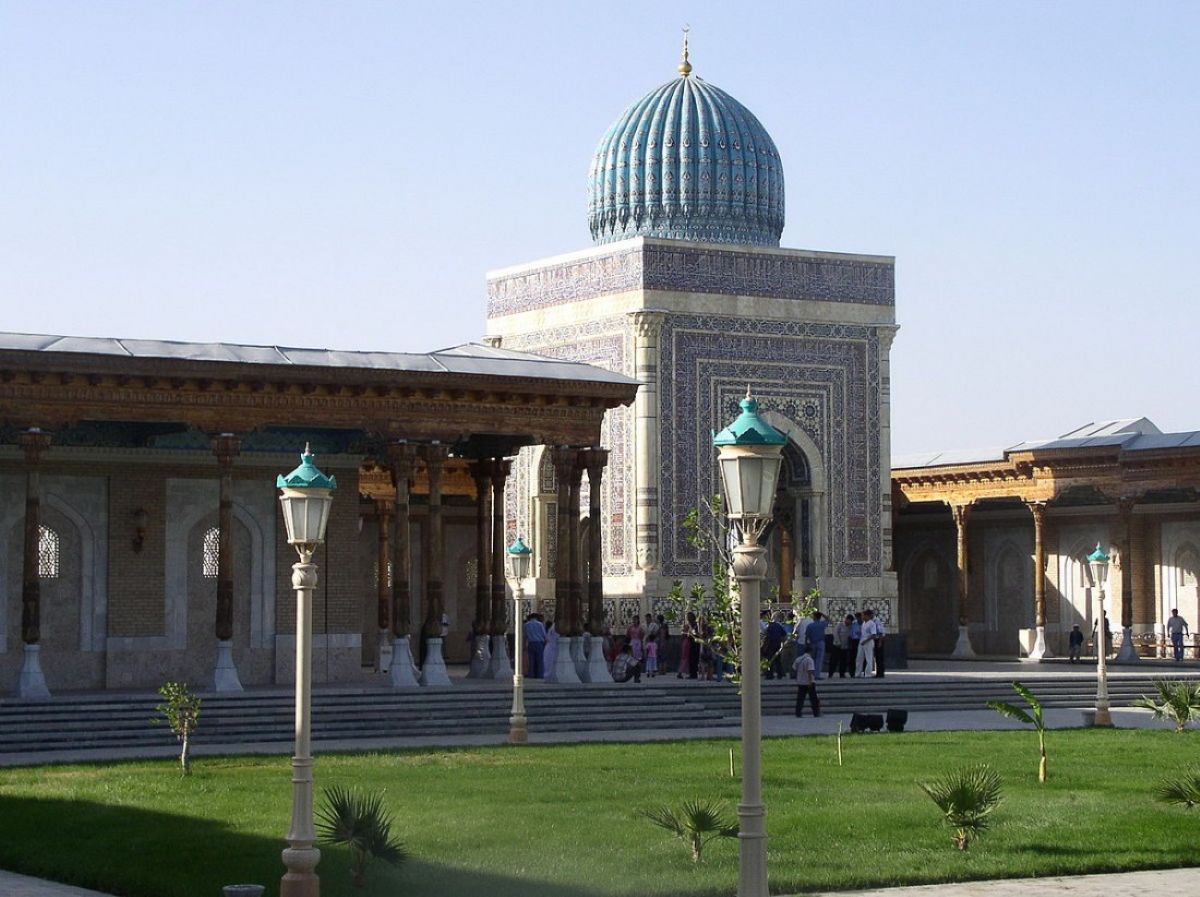
Pilgrimage tourism is undergoing a tremendous revival and Central Asia is emerging as a leading global spiritual centre. If you are a traveller who wants to see places of great historical depth and impeccable religious architecture, you should definitely visit Uzbekistan. With significant state-led investments and strategic tourism initiatives, the country’s legendary Islamic heritage sites have become world-class sanctuaries. As per the official tourism statistics of the Ministry of Tourism and Cultural Heritage of the Republic of Uzbekistan, the international arrivals have surged to multi-million figures, driven largely by cultural and spiritual seekers on the historic footsteps of the Islamic Golden Age. To see this historic evolution now is a once-in-a-lifetime opportunity to view a renewed spiritual landscape before the world’s crowds fully discover its majesty.
Understanding the Surge: People Also Ask
- Why is Uzbekistan becoming a major hub for pilgrimage tourism? Uzbekistan houses some of the most sacred sites in Islamic history, including the burial places of legendary hadith scholars and Sufi saints. Through large-scale national infrastructure developments, expanded visa-free entry programmes for numerous countries, and specialized initiatives like the upcoming “Umrah Plus” routes linking Mecca with Central Asia, the nation has been positioned as an accessible, premier destination for faith-based travel.
- What are the main pilgrimage sites to visit in Uzbekistan? Key destinations include the newly expanded Imam al-Bukhari Memorial Complex in Samarkand, the sacred Shah-i-Zinda ensemble, the historic Po-i-Kalyan complex in Bukhara, and the walled oasis city of Khiva, each representing centuries of continuous devotion and architectural brilliance.
- When is the best time to visit Uzbekistan for a pilgrimage tour? The optimal periods are identified as the shoulder seasons of spring (April to June) and autumn (September to November), when the regional climate is mild, rendering it ideal for exploring expansive open-air architectural complexes and sacred shrines comfortably.
The Monumental Revival of the Imam al-Bukhari Complex
At the absolute forefront of this tourism evolution is the newly inaugurated Imam al-Bukhari Memorial Complex, situated in the village of Khartang, roughly 25 kilometres north of Samarkand. Commemorating the legendary compiler of Al-Jami’ al-Sahih—widely regarded as the second most authoritative source in Islam after the Quran—this expansive site has undergone a historic transformation.
Advertisement
Advertisement
Expanded into a magnificent 45-hectare sanctuary, the complex is engineered to receive up to 65,000 visitors daily. Architectural majesty defines the space, featuring four soaring 75-metre minarets, fourteen striking turquoise domes, and a central congregational mosque capable of welcoming tens of thousands of worshippers. Extensive white marble cladding is utilized strategically across the facades; beyond imparting a brilliant visual aesthetic symbolizing purity, the pale stone actively reflects intense sunlight to lower ambient temperatures within the courtyards during scorching summer afternoons. Integrated within the grounds are a state-of-the-art nine-pavilion museum utilizing advanced digital interpretation, comprehensive research libraries, and a dedicated tourism zone complete with modern hospitality infrastructure.
Sacred Geographies: Exploring Samarkand and Bukhara
Beyond Khartang, the spiritual journey extends deeply into the urban heart of Samarkand through the mesmerizing Shah-i-Zinda necropolis. This cascading avenue of mausoleums centres around the shrine of Qusam ibn Abbas, a cousin of the Prophet Muhammad, who is historically credited with bringing Islam to the region. The corridor is celebrated for housing some of the finest turquoise and cobalt tilework in the Islamic world, creating an ethereal atmosphere of transcendent beauty that has drawn travelers for nearly a millennium.
Advertisement
Advertisement
Further west lies Bukhara, an ancient city styled as Bukhara Al-Sharif (Bukhara the Noble). Boasting over a hundred historical madrasas, mosques, and Sufi tekkes, the city functions as an open-air museum of spiritual heritage. The Po-i-Kalyan complex anchors this urban sanctity, where the towering Kalyan Minaret—which famously awed Genghis Khan with its architectural poise—stands alongside the grand Kalyan Mosque and Mir-i-Arab Madrasa. Official heritage conservation reports emphasize that these structures are meticulously maintained using traditional craftsmanship methods, ensuring that their structural integrity preserves the authentic aesthetic of the Karakhanid and Shaybanid eras.
A Seamless Journey Into Living History
A glorious past and modern tourism management in Uzbekistan combine to offer a much more streamlined experience for pilgrimage and cultural travellers. The Afrosiyob train is part of a high-speed rail link between Tashkent, Samarkand and Bukhara. Journeys between these places take only a few hours, making it easy to move between the major sacred sites. Uzbekistan has made a mark as a vital element of global spiritual tourism, strictly preserving its architecture while providing modern large-scale hospitality infrastructure.
Advertisement
Advertisement
Advertisement
