

New Zealand Travel Alert as Air New Zealand Airbus A320 Flight NZ630 Makes Emergency Landing in Christchurch After Flight Diversion From Queenstown to Auckland, Raising Fresh Questions for Domestic Flyers—Here’s What You Need to Know

Published
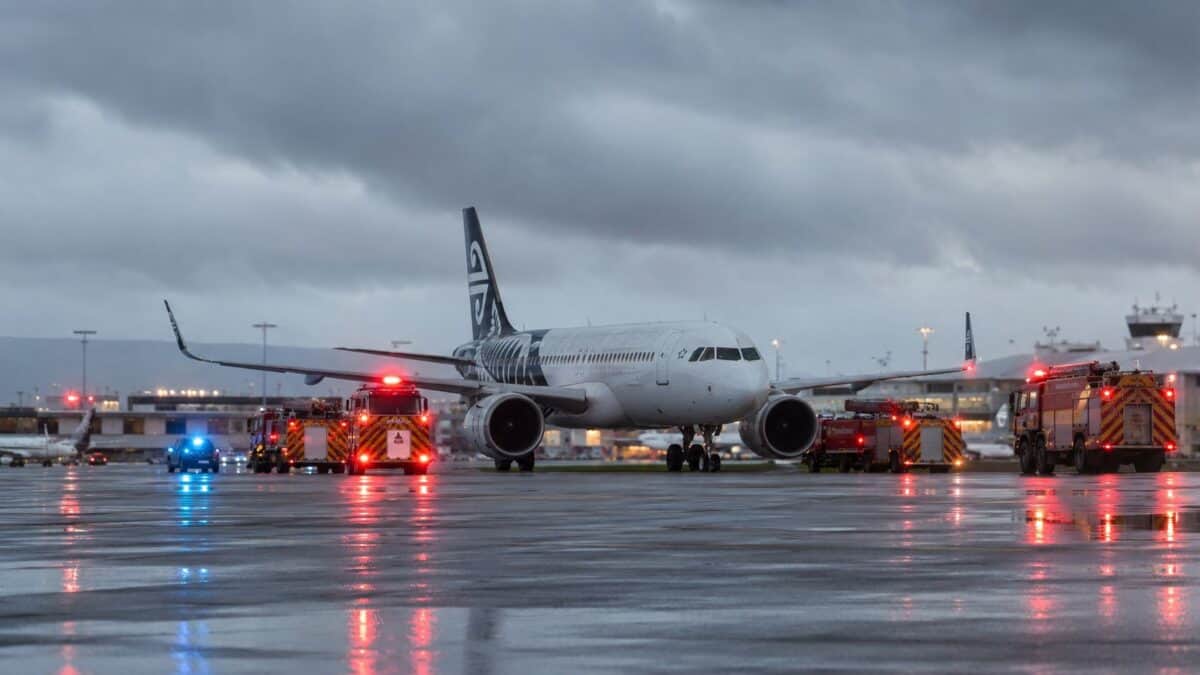
The Christchurch Airport emergency response placed New Zealand’s aviation safety systems under immediate scrutiny on Saturday after Air New Zealand Flight NZ630, operating from Queenstown to Auckland, diverted to Christchurch following a reported smell of smoke inside the aircraft. Emergency crews, including airport fire services and other first responders, were deployed as the aircraft landed safely, demonstrating the country’s well-established aviation emergency procedures. Although the incident caused operational disruption, passengers disembarked normally and no injuries were reported, while engineers began technical assessments of the aircraft.
For travellers, the diversion highlights how airlines and airports prioritise passenger safety over schedule reliability whenever an onboard technical concern emerges. Christchurch Airport’s rapid emergency activation and Air New Zealand’s operational response ensured that passengers remained protected while arrangements were made to continue their journeys. The event also serves as a reminder that diversions triggered by precautionary safety concerns are standard practice across the global aviation industry and often prevent more serious operational risks. As New Zealand experiences robust domestic travel demand and expanding international connectivity, maintaining confidence in emergency preparedness remains critical for both leisure and business travellers.
Advertisement
Advertisement
Christchurch Airport Emergency Response Activated After Domestic Flight Diverts
A significant Christchurch Airport emergency response unfolded after Air New Zealand Flight NZ630 departed Queenstown for Auckland before changing course and landing in Christchurch.
Flight tracking information showed the aircraft diverting from its scheduled route, while emergency vehicles assembled near the runway before the aircraft’s arrival. Airport authorities confirmed that Fire and Emergency New Zealand responded according to established aviation safety procedures.
Advertisement
Advertisement
Subsequent operational updates confirmed that the diversion followed a reported smell of smoke in the aircraft cabin. The aircraft landed safely, emergency services met the flight on arrival, and passengers left the aircraft through normal disembarkation procedures before engineers commenced inspections.
The incident demonstrated how aviation emergency protocols are designed to treat even unconfirmed technical concerns with maximum caution.
Advertisement
Advertisement
What Happened to Flight NZ630
| Flight Detail | Information |
|---|---|
| Airline | Air New Zealand |
| Flight Number | NZ630 |
| Scheduled Route | Queenstown – Auckland |
| Diversion Airport | Christchurch |
| Reported Issue | Smell of smoke reported in cabin |
| Landing Outcome | Safe landing |
| Passenger Status | Normal disembarkation |
| Aircraft Status | Engineering inspection underway |
Information reflects confirmed operational updates available at publication time.
Safety Protocols Took Priority Over Operational Schedule
Modern airline operations follow internationally recognised risk-management procedures.
Advertisement
Advertisement
Even when smoke is merely suspected rather than visually confirmed, flight crews are trained to evaluate the situation immediately. Depending upon operational circumstances, diversion to the nearest suitable airport may become the safest option.
Such decisions are influenced by multiple factors including aircraft position, weather, airport capability, runway availability, emergency response readiness and engineering support.
Christchurch Airport satisfies these operational requirements, making it a logical diversion point for numerous domestic services operating across New Zealand’s South Island.
Emergency vehicles positioned alongside the runway are standard practice whenever an aircraft declares or is treated as experiencing a potential onboard emergency. Their presence should not automatically be interpreted as evidence of fire or a catastrophic event.
Advertisement
Advertisement
Impact on Travellers Following the Diversion
Although the aircraft landed safely, passengers experienced unavoidable disruption to their travel plans.
Air New Zealand indicated that it was working to transport customers onwards to Auckland as quickly as possible while technical inspections continued. Airlines generally prioritise passenger welfare by arranging alternative flights, rebooking options or other travel assistance depending on aircraft availability and operational schedules.
For connecting travellers, precautionary diversions may occasionally affect:
| Potential Traveller Impact | Typical Airline Response |
|---|---|
| Delayed arrival | Rebooking onto later services |
| Missed connections | Alternative routing where possible |
| Extended airport stay | Customer assistance and information |
| Aircraft substitution | Replacement aircraft if required |
| Schedule adjustments | Updated departure notifications |
The exact assistance varies according to operational circumstances and airline policies.
Why Aviation Responds Immediately to Smoke Reports
Among all aircraft technical reports, indications involving smoke receive particularly urgent attention.
Smoke or unusual odours can originate from several non-catastrophic sources, including:
Advertisement
Advertisement
- Electrical components
- Air-conditioning systems
- Hydraulic equipment
- Galley appliances
- Environmental control systems
Because identifying the precise source during flight can be difficult, aviation regulations require pilots to prioritise the safest available landing option whenever circumstances justify precautionary action.
Following landing, licensed engineers perform comprehensive inspections before any aircraft returns to commercial service.
Christchurch Airport’s Strategic Role in New Zealand Aviation
Christchurch Airport is one of New Zealand’s most significant aviation gateways.
The airport handles substantial domestic and international passenger traffic while also serving Antarctic logistics, cargo operations and regional connectivity throughout the South Island.
Its operational capabilities include:
| Airport Capability | Importance |
|---|---|
| 24-hour operations | Supports diversions at any time |
| Full emergency response | Rapid aviation incident management |
| Engineering support | Aircraft technical inspections |
| Multiple domestic connections | Passenger re-accommodation |
| International infrastructure | Long-haul operational capability |
The airport has also been expanding international connectivity through collaboration with Air New Zealand, reflecting broader ambitions to strengthen South Island tourism and business travel.
Advertisement
Advertisement
Growing Domestic Aviation Places Greater Focus on Safety
New Zealand continues to experience strong domestic air travel demand.
Air New Zealand remains the country’s largest airline, connecting regional communities with major urban centres through an extensive domestic network while also operating international services across Asia-Pacific and long-haul destinations.
As flight frequencies increase, maintaining consistently high operational safety standards becomes even more important.
Industry experts generally regard precautionary diversions as evidence that aviation safety systems are functioning exactly as intended.
Emergency Diversions Remain Relatively Rare
Commercial aviation continues to rank among the safest forms of transport worldwide.
Aircraft diversions occur for numerous reasons, including:
Advertisement
Advertisement
- Technical indications
- Medical emergencies
- Severe weather
- Airport operational constraints
- Air traffic management requirements
Only a small proportion of scheduled flights require diversion, and many precautionary landings ultimately reveal relatively minor technical issues once engineering inspections are completed.
This approach reflects the aviation industry’s long-standing philosophy that safety considerations always outweigh operational efficiency.
What Travellers Should Know During Similar Incidents
Passengers encountering an unexpected diversion can usually expect several standard procedures.
Cabin crew provide instructions throughout the event, while emergency vehicles may be visible outside following landing. After engineers complete preliminary safety assessments, passengers are typically informed about onward travel arrangements.
Travellers are generally advised to:
| Traveller Advice | Reason |
|---|---|
| Follow cabin crew instructions | Maintains orderly operations |
| Monitor airline notifications | Updates on onward travel |
| Keep boarding documents accessible | Simplifies rebooking |
| Check connecting itineraries | Assess onward journey impacts |
| Allow additional travel time | Recovery operations may vary |
Engineering Assessment Will Determine Aircraft’s Return to Service
Following the safe landing, engineers began examining the aircraft to determine the origin of the reported smell.
Advertisement
Advertisement
Only after technical teams complete required inspections and certify the aircraft as fully airworthy can it resume commercial operations.
The outcome of those inspections had not been publicly released at the time of publication.
For travellers, the Christchurch Airport emergency response ultimately illustrated how New Zealand’s aviation system prioritises passenger protection through rapid coordination between the airline, airport authorities and emergency services. While diversions inevitably interrupt travel plans, they remain an essential element of modern aviation safety, ensuring that even precautionary concerns receive immediate operational attention before normal services resume.
Advertisement
