
United Kingdom Celebrates Timeless Walled Cities and Towns That Make Every Journey Unforgettable

Published
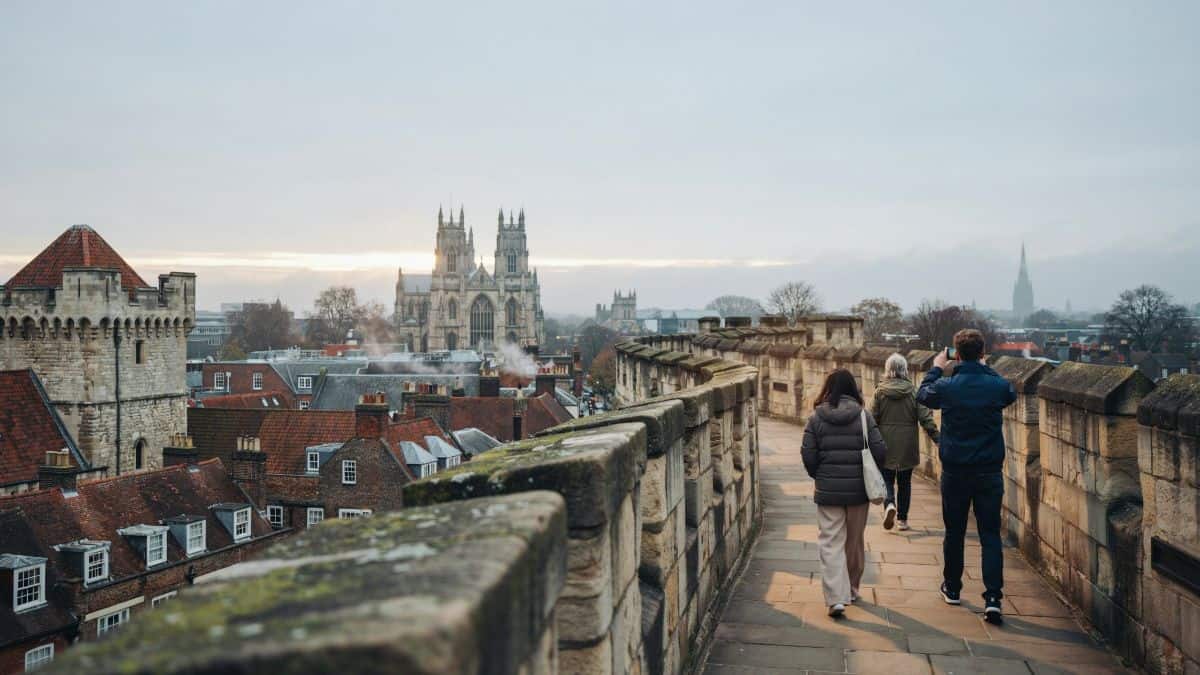
Why Britain’s Ancient Walls Still Captivate Travellers
These walls were not built for photos. They were built for defence. They controlled who entered a town. They protected trade. They helped rulers show power. They also kept people safe during war.
Today, they do something very different. They help visitors understand a place in minutes. A walk on York’s walls shows the scale of a medieval city. Chester’s circuit reveals Roman planning and later rebuilding. Derry/Londonderry’s complete walls show how a planned seventeenth-century settlement was shaped by conflict and survival.
Advertisement
Advertisement
The walls also make travel easy to understand. A visitor does not need a history book to feel the story. Stone towers rise above narrow lanes. Old gates mark former entrances. Cannon point over rivers. A wall path suddenly opens to a cathedral or a castle.
Not every destination offers the same type of experience. York and Chester provide major walkable circuits. Chichester gives a strong Roman route at ground level. Canterbury mixes surviving walls, a grand gate and a compact medieval centre. London, Carlisle, Edinburgh and Stirling hold important sections, but they should not be promoted as complete walled-city walks.
Advertisement
Advertisement
That difference makes Britain’s walled heritage richer. It is not one story. It is a collection of many stories.
York and Chester Deliver Britain’s Most Powerful Wall Walks
York remains one of the great names in UK walled cities. Its walls stretch for about 3.4 kilometres. They form England’s longest medieval town-wall circuit. The route carries visitors above roads and rooftops. It also gives dramatic views of York Minster, old streets and the city’s many historic districts.
Advertisement
Advertisement
The walls stand on older Roman foundations in places, but much of what visitors see today comes from the medieval period. This layered history gives York unusual strength. It does not feel like a single monument. It feels like a living line around the city.
The walk is free. The gates usually open at 8am and close at dusk. However, visitors need to plan carefully. High winds, icy weather and conservation work can close sections. The route also has steps and uneven surfaces. It suits travellers who enjoy walking, but it does not offer a fully step-free experience.
Chester gives visitors another major wall adventure. Its circuit is exceptionally complete and follows the shape of the old city. Roman origins still shape the route, while Saxon, medieval and later changes tell a longer story.
A walk around Chester’s walls passes the River Dee, the racecourse, cathedral areas and famous gateways. It is one of the easiest ways to see how the city grew. The route also offers views towards the Welsh hills.
Chester’s walls are free to walk and open throughout the year. A temporary walkway near the Eastgate Clock currently keeps the full circuit available. This matters because it shows how conservation and visitor access can work together. The city protects a fragile monument while still allowing people to enjoy it.
York feels grand and medieval. Chester feels compact, layered and complete. Together, they show why ancient walls remain a major draw for Britain travel.
Advertisement
Advertisement
Derry Londonderry Delivers a Complete Walled City Experience
Derry/Londonderry stands apart. It is the only remaining completely walled city in Ireland. Its walls run for about 1.5 kilometres around the inner city. They stand up to eight metres high in places. They create one of the most powerful urban heritage walks in the United Kingdom.
The walls were built from 1613 by the Honourable the Irish Society. They formed part of a planned settlement during the Plantation of Ulster. The structure includes original gates, bastions, cannon and broad walking sections with views across the River Foyle.
Visitors can see four original gates: Bishop’s Gate, Ferryquay Gate, Butcher Gate and Shipquay Gate. Later gates also mark the changing needs of the city. The walls hold 24 restored cannon, including the famous Roaring Meg. These features give the route a strong military character.
Yet Derry/Londonderry is not frozen in time. The city around the walls remains active. Museums, streets, public spaces and cultural venues sit close to the circuit. This helps visitors connect the past with modern life.
A £5 million public-realm scheme was completed in August 2026 near the historic walled core. The work improved nearby streets, accessibility, safety and the overall visitor setting. It did not change the old walls themselves. Instead, it made the surrounding experience easier and more welcoming.
The wall walk is normally free. Temporary works can affect access, so travellers should check before visiting. Still, for visitors who want a complete circuit with great views and a clear historic story, Derry/Londonderry is one of Britain’s most unforgettable choices.
Advertisement
Advertisement
Chichester Canterbury and Colchester Keep Roman Britain Alive
Chichester offers a quieter but deeply important wall experience. Its City Walls are around 1,800 years old. Romans built them to define and defend the settlement. More than 80 per cent of the original structure survives, making Chichester the most intact circuit of Roman town defences in southern England.
The route does not feel like York’s high medieval walkway. Instead, it feels closer to the ground. Walls appear beside gardens, paths and city streets. This creates a gentle walking experience. Visitors can move slowly and see how Roman stone still shapes a modern English city.
Chichester also proves that a wall does not need huge towers to feel powerful. Its strength comes from survival. So much of the Roman line remains visible and accessible. It gives travellers a direct link to daily life nearly two thousand years ago.
Canterbury offers a different kind of walled-city story. More than half of its original circuit still stands around the historic centre. Canterbury Cathedral rises inside this old ring. The city’s narrow streets, medieval layout and surviving walls create a strong sense of place.
The Westgate remains one of Canterbury’s biggest wall landmarks. The southern wall sections near Canterbury Castle add another layer to the route. This is not a full wall-top circuit. It is a heritage walk through a city where walls, gates, gardens and religious history meet.
The city is also improving its visitor spaces. Its 2026 programme includes resurfacing, lighting, planting and better wayfinding along parts of the city wall. These changes can help visitors move between historic places more easily. They also show how a medieval city can improve its public spaces without losing its character.
Advertisement
Advertisement
Colchester takes travellers further into Roman Britain. The original Roman town wall measured about 3,100 yards. Much of its route remains traceable today, although the south-west corner suffered damage during the Civil War.
Colchester’s Roman story is tied to the early history of Britain under Roman rule. After the town was destroyed during the revolt of AD 60, the Romans rebuilt it and added stronger defences. Parts of that wall now appear in and around Castle Park.
Visitors can walk beside the surviving stone and explore a city shaped by Roman streets, ruins and public green space. Colchester’s walls may not offer a single complete raised walk, but they give a powerful lesson in survival. They show how ancient defences can become part of daily city life.
London Carlisle Edinburgh and Stirling Show the Strength of Fragments
The City of London has some of Britain’s most important Roman wall remains. The Roman London Wall was built between AD 190 and 225. It was about two miles long and around six metres high. Today, fragments survive from Tower Hill through parts of the Square Mile towards Blackfriars.
This is not a continuous circuit. It is a discovery trail. Visitors can find wall sections near Tower Hill, the Barbican and other parts of the City. The contrast is striking. Ancient stone stands beside towers of glass and steel. The route shows how London grew far beyond its old Roman boundary.
Carlisle also holds key medieval wall remains. Surviving sections near Carlisle Castle and the West Walls point to the city’s northern border history. The walls are important, but they do not form a complete city circuit. Carlisle works best for travellers who want to combine wall remains with the castle and the wider story of Britain’s northern frontier.
Advertisement
Advertisement
Edinburgh has surviving sections of the Flodden Wall and the later Telfer Wall. These defences grew during the sixteenth century, when the city faced fear of attack. The remains are historically powerful, but they are scattered. Visitors should see them as part of Edinburgh’s wider Old Town story.
Stirling also keeps sections of its sixteenth-century walls and bastions. The walls protected key approaches to the old burgh. However, Stirling’s defences never formed a continuous circuit. Its walls are best explored with Stirling Castle, the old bridge and the city’s wider royal history.
These places prove that fragments still matter. A short wall section can explain a whole city.
Conwy Caernarfon and Berwick Offer Britain’s Greatest Walled Town Escapes
Conwy is one of Britain’s greatest walled destinations. It is a town, not a city. But its walls feel huge. They run for three-quarters of a mile around the medieval heart. They include 21 towers and three original gateways.
The walls form part of the World Heritage landscape around Conwy Castle. Visitors can climb sections of the route and look over medieval streets, the estuary and the mountains of Eryri. The views are dramatic. The stonework feels bold and almost untouched by time.
However, visitors must know the current 2026 access position. A short section between the Watch Tower and the Wing Gate is closed for safety work. Cadw hopes to reopen it by Easter 2027. The rest of the experience still makes Conwy a leading heritage stop, but travellers should not expect an uninterrupted walk.
Advertisement
Advertisement
Caernarfon offers another great Welsh walled-town story. Its walls run for almost half a mile. Eight towers and two gateways survive around the old town. The walls formed part of Edward I’s fortress plan, alongside the huge castle beside the River Seiont.
The town walls survive almost complete. Yet wall-top access is not currently available for safety reasons. Visitors can still view the walls from outside and explore nearby streets, the quay and the castle area. Porth Mawr Tower also has limited key access on selected days until the end of October 2026.
Berwick-upon-Tweed deserves equal attention. It is England’s most northerly town, not a city. Its mainly Elizabethan bastioned defences surround the historic centre. The full circuit can be walked. The route offers wide river views, bold stone ramparts and a clear sense of the old England-Scotland border.
For travellers who value dramatic walls over legal city status, Conwy, Caernarfon and Berwick are essential.
What Visitors Must Know Before Planning a 2026 Wall Walk
Most of Britain’s great wall walks cost nothing. That makes them special. They offer major history without an entry ticket. But free access does not mean unrestricted access.
Weather can close York’s elevated route. Conservation work can change access in Chester and Derry/Londonderry. Conwy has a current partial closure. Caernarfon does not allow wall-top access at present.
Advertisement
Advertisement
Travellers should always check the official city council or heritage-body website before leaving. This is especially important after heavy rain, strong winds or during repair work.
Good shoes are also important. Many routes have steps, uneven stone, narrow sections and steep climbs. Conwy can feel demanding. York has stairs. Derry/Londonderry has changing levels. Chichester offers a gentler ground-level option.
The best plan is simple. Choose one main wall walk. Leave time to stop. Look through the gates. Visit a nearby cathedral, castle, park or museum. Let the walls lead the day.
Britain’s Walled Heritage Still Has the Power to Surprise
Britain’s finest examples of walled towns and cities that continue to astonish visitors in 2026 have much to say about Britain’s wildest tale through stones. York stands out amid bustling streets, Chester brings Roman and medieval history to mind. Visitors are completely encircled by the walls of Derry. Chichester, Canterbury and Colchester retain their Roman legacy. In addition, Conwy, Caernarfon and Berwick remind that amazing experiences are not determined by the fact whether you are in a city or not. Once, these places protected people, trade and power. Nowadays, these places welcome curious tourists with towers, gates, cannons, castles and stunning scenery.
Advertisement
