
Air France from Paris Charles de Gaulle Airport to Rio de Janeiro Boeing 777-300ER Makes Emergency Landing at Senegal, Resumes Flight in Just an Hour

Published
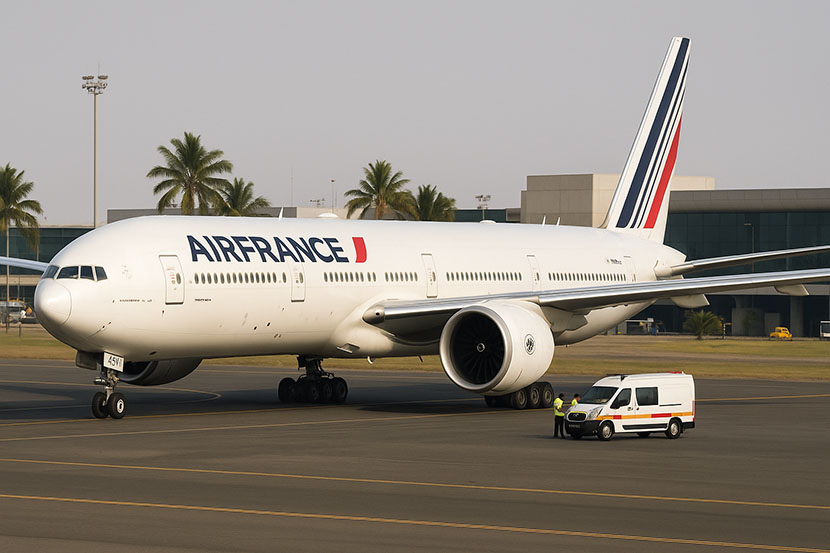
Image generated with Ai
An Air France flight from Paris to Rio de Janeiro made an unexpected stop in Senegal due to a medical emergency on board. The Boeing 777-300ER diverted while cruising over the Atlantic before resuming its journey just an hour later.
Medical Emergency Over the Atlantic
On Tuesday, 12 August 2025, Air France flight AF442 left Paris Charles de Gaulle Airport bound for Rio de Janeiro. The Boeing 777-300ER, registered F-GZNR, was cruising at 32,000 feet off Africa’s west coast when the crew contacted air traffic control. They reported a medical issue that required urgent attention. Given the circumstances, the decision was made to divert the flight to Blaise Diagne International Airport in Senegal. The quick communication between pilots and controllers ensured a safe and smooth diversion.
Advertisement
Advertisement
Swift Diversion to Blaise Diagne International Airport
The diversion was executed efficiently. Blaise Diagne International Airport, located near Dakar, is a modern hub capable of handling large aircraft such as the Boeing 777. The airport’s readiness allowed for a rapid landing and immediate access to medical teams. Emergency responders were on standby, and the affected passenger received the necessary care without delay. The crew worked closely with ground teams to ensure the stop was as brief as possible.
Passenger Safety as the Top Priority
Airlines are trained to treat any onboard medical emergency with utmost seriousness. The captain and crew followed standard international protocols for inflight emergencies. Diverting to the nearest suitable airport is a common practice when a passenger’s condition requires immediate medical intervention. Air France has a well-documented safety record and has previously managed similar situations with precision and professionalism. This incident highlighted the importance of coordination between pilots, cabin crew, and ground services.
Advertisement
Advertisement
Resuming the Journey to Rio de Janeiro
Once the medical situation was stabilised, the Boeing 777 was prepared for departure. The turnaround at Blaise Diagne International Airport took approximately one hour. Passengers were kept informed throughout the process, with updates provided both in French and English. The flight then resumed its long-haul journey across the South Atlantic, ultimately landing in Rio de Janeiro later than scheduled but without significant further disruption.
Impact on Scheduling and Operations
A one-hour diversion for a long-haul flight is relatively short, particularly given the complexity of landing at an unscheduled airport. While the delay may have impacted connecting flights for some passengers, Air France’s operations team worked to minimise disruptions. The airline’s ability to resume the journey so quickly was a testament to efficient planning and coordination. For most travellers on board, the priority was the wellbeing of the affected passenger rather than the delay itself.
Advertisement
Advertisement
Crew and Passenger Reactions
According to passengers interviewed after landing in Brazil, the crew handled the situation with calm and professionalism. Many expressed understanding, noting that safety and health take precedence over arrival times. The cabin crew’s reassuring announcements helped maintain a sense of order and comfort during the unexpected stop. Travellers commended Air France for the swift resolution and the minimal delay despite the emergency.
Air France’s Emergency Protocols
Air France’s response reflects industry-standard emergency procedures that involve rapid assessment, communication with medical professionals on the ground, and decisive action to divert if necessary. The airline equips its aircraft with medical kits, defibrillators, and communication tools to connect with medical experts mid-flight. Pilots are trained to identify the closest suitable diversion airport and to coordinate with ground services for a smooth arrival.
Blaise Diagne International Airport’s Strategic Role
Blaise Diagne International Airport has become a critical diversion point for transatlantic flights, especially those operating between Europe and South America. Opened in 2017, it features long runways and advanced facilities suitable for large aircraft operations. Its location along common flight paths makes it an ideal choice for handling emergencies over the Atlantic. The airport’s ability to support quick turnarounds contributed to the minimal delay experienced by AF442.
Importance of Medical Preparedness in Aviation
Medical emergencies on long-haul flights are rare but inevitable. Airlines must be prepared to manage conditions ranging from minor illnesses to severe, life-threatening events. The AF442 incident underscores the value of inflight medical training and the availability of advanced medical equipment. Quick decision-making and coordinated responses can significantly improve outcomes for passengers in distress.
Historical Context of Diversions
While diversions can be caused by technical issues, weather, or security threats, medical emergencies are among the most common reasons for unscheduled landings. In recent years, several airlines have had to divert transatlantic flights to airports in Africa or the Caribbean to deal with urgent health issues. The AF442 case fits into this broader pattern but stands out for its rapid turnaround and minimal disruption.
Passenger Communication in Emergencies
Effective communication is key during inflight incidents. Air France ensured that passengers were promptly informed about the reason for the diversion and the expected duration of the stop. Transparency helped maintain trust and cooperation among travellers. Airlines increasingly recognise that clear, empathetic communication can significantly reduce stress during unexpected events.
Advertisement
Advertisement
Lessons for the Aviation Industry
The handling of AF442’s diversion offers several takeaways for airlines. First, selecting the right diversion airport is critical to ensuring rapid medical care and minimal delay. Second, coordination between flight crews and ground services can greatly influence turnaround times. Third, passenger communication plays a vital role in maintaining a positive travel experience even in emergencies.
Conclusion and Broader Implications
Air France’s swift diversion of AF442 to Senegal for a medical emergency was a model of efficiency and care. The incident highlights the importance of preparedness, both in terms of inflight medical readiness and operational flexibility. While no airline hopes to encounter such situations, the ability to respond quickly and effectively is a key measure of service quality. Passengers arrived in Rio with a story to tell, reassured that their safety was in good hands.
Advertisement
