
American, United, Delta, and JetBlue Falters as Travel Industry Struggles with US Tariffs and New Travel Alerts from Canada, Germany, Netherlands, Finland, Portugal, Ireland, UK, France, Norway, and Denmark

Updated
Published
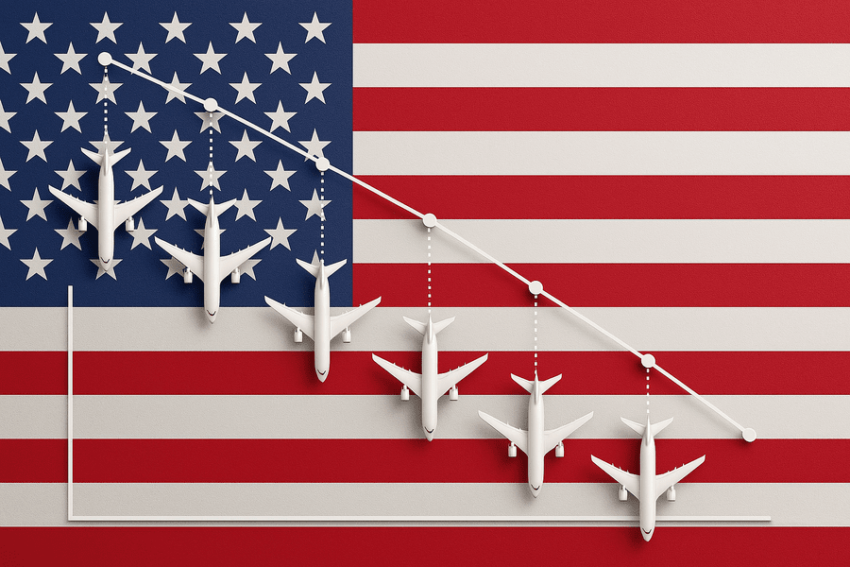 Image generated with Ai
The airline industry is facing significant turbulence as major U.S. carriers like American, United, Delta, and JetBlue falter amid a combination of new U.S. tariffs and growing travel alerts from key European nations. Shares of these airlines have seen steep losses as investors grapple with the fallout from tariffs that are expected to dampen travel demand and raise operational costs. At the same time, countries including Canada, Germany, the Netherlands, Finland, Portugal, Ireland, the UK, France, Norway, and Denmark have issued travel warnings for the U.S., further complicating the outlook for the aviation sector. With these combined pressures, the airline industry is bracing for a rough road ahead, as both international travel concerns and increased operational costs could significantly disrupt the sector.
Airline Stocks Plunge Amid US Tariffs and Heightened Travel Alerts from Key European Countries
Advertisement
Advertisement
The airline industry faced a significant setback today as stock prices for major US carriers took a dramatic dip in the wake of new tariffs and growing travel warnings from several key European nations. Investors are now grappling with the potential fallout from these developments, which could have far-reaching consequences for the aviation sector.
Shares of major airlines, including United Airlines, Allegiant Travel, Sun Country Airlines, and Frontier Airlines, saw notable losses. United Airlines, the hardest hit, plummeted over 13% in midday trading. Allegiant, which depends heavily on leisure travel, dropped more than 12%, signaling concerns about the future of discretionary spending among consumers. Both Sun Country Airlines and Frontier Airlines, which also rely on leisure travel, saw their stock prices fall by more than 10%.
Advertisement
Advertisement
The broader impact of the tariff news was also felt across the hospitality sector, with stocks in cruise lines and hotels similarly plunging. The news adds to an already difficult outlook for the airline industry, which had been bracing for a challenging spring. In fact, earlier this year, investment bank Jefferies issued a warning about the sector’s struggles, noting declining consumer and corporate confidence, along with the looming effects of tariffs.
The Economic Ripple Effect
Advertisement
Advertisement
Although tariffs do not directly impact the cost of an airline ticket, they have a broader economic impact that can trickle down to the travel industry. Experts believe that rising prices across goods and services are likely to force consumers to cut back on nonessential spending, including travel. This, in turn, could hurt demand for flights, leading to fewer options and higher prices for consumers.
Julian Kheel, founder and CEO of Points Path, highlighted the indirect effects of tariffs on the airline industry. According to Kheel, while the tariffs themselves won’t affect ticket prices directly, they could slow down the economy overall, leading to lower travel demand. He further noted that airlines, including Delta, United, and Virgin Atlantic, have already reported softening demand for travel from international visitors in recent weeks.
Advertisement
Advertisement
Additionally, airlines may face increased maintenance costs as tariffs impact the price of aircraft parts, many of which are imported from other countries. Kheel suggests that these rising costs could eventually be passed on to travelers in the form of higher ticket prices.
Travel Warnings Add to Airline Woes
As if the tariff issues weren’t enough, the airline sector is also facing a wave of travel warnings from European countries such as the UK, Germany, France, Canada, and others. These warnings, which are mainly related to tightening U.S. immigration policies, have created uncertainty for travelers and added another layer of complexity for airlines trying to manage demand.
Countries like Portugal, the UK, and Norway have updated their travel advisories for the U.S., urging caution for travelers concerned about the stricter immigration enforcement policies. The recent changes in U.S. immigration laws, particularly those affecting travelers with gender identity discrepancies, have prompted these countries to advise their citizens to be prepared for potential complications at U.S. borders, such as increased scrutiny, delays, or even denial of entry.
Advertisement
Advertisement
This shift in travel advisories has led to a reduction in bookings for U.S. destinations from international travelers, further exacerbating the downturn in airline stock prices. With fewer overseas visitors expected, airlines could face challenges in maintaining profitable routes.
Uncertainty Looms for the Airline Industry
The combination of tariffs, travel warnings, and softer demand for air travel paints a bleak picture for the airline industry in the near term. Analysts warn that macroeconomic stability is needed before demand can improve and help reverse these declines. Bank of America recently highlighted that airlines are facing a tough road ahead and expressed concerns over the long-term outlook for the industry.
As the summer travel season approaches, the situation remains uncertain. Airlines are already facing a challenging environment, and it’s unclear when—or if—the clouds of economic uncertainty will dissipate. The industry will need to navigate these turbulent times carefully to avoid further damage and restore investor confidence.
A Complex Global Supply Chain
The timing of these tariffs could not have come at a worse moment for the airline industry, which has been grappling with supply chain disruptions for years. The complexities of the global aviation supply chain, which involves parts and components sourced from various countries, mean that any disruption can have significant ripple effects. From aircraft to essential components like landing gear and seats, airlines rely on an intricate web of suppliers from around the world.
Advertisement
Advertisement
Gad Allon, a professor at the Wharton School of the University of Pennsylvania, emphasized the importance of these global supply chains, noting that components for planes are sourced from numerous countries, including Japan and Italy. These parts are crucial to maintaining the safety and functionality of aircraft, and without them, airlines would face serious operational challenges.
American, United, Delta, and JetBlue have faltered as their stocks tumbled amid growing concerns over U.S. tariffs and travel alerts from countries including Canada, Germany, the UK, and others, which are further challenging the travel industry. These factors are creating significant uncertainty for the aviation sector.
Looking Ahead: Increased Costs and Fewer Options for Travelers
With so many variables at play, it’s difficult to predict the full impact of these developments on the airline industry. However, experts are forecasting that airlines could face a 5% to 10% increase in maintenance costs in the short term. These increased costs could eventually be passed on to consumers, leading to higher ticket prices across the board.
The rising costs associated with tariffs and supply chain disruptions are just the beginning. Airlines will likely need to adjust their strategies to cope with a potential slowdown in travel demand. For consumers, this could mean fewer flight options and higher prices, particularly on international routes.
As the airline industry braces for a challenging period ahead, travelers may find that the combination of rising costs and fewer choices could significantly impact their travel plans. With so many moving parts and unknowns, the coming months will be crucial for airlines and travelers alike as they navigate this period of uncertainty.
Advertisement
