
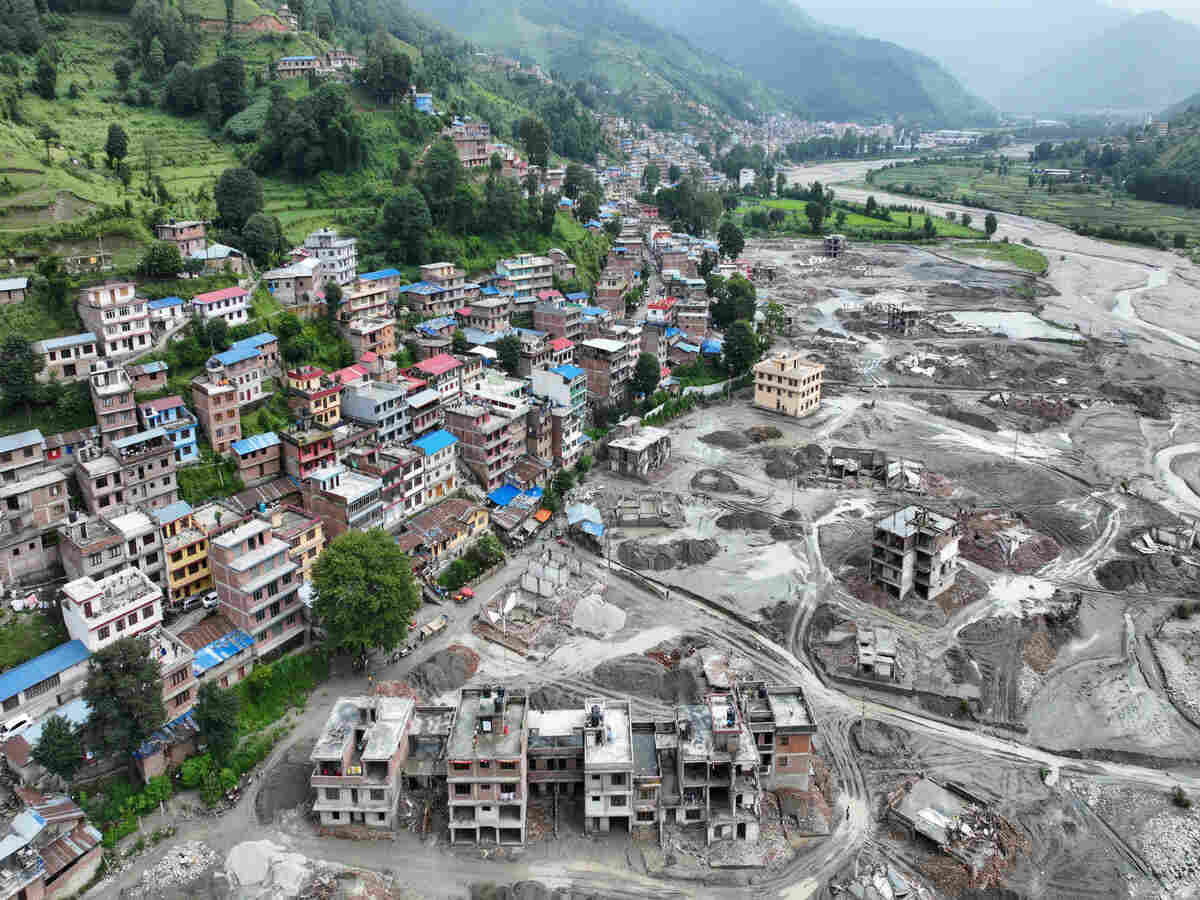
Image generated with Ai
Canada intensifies travel aid amid Nepal-China border crisis that sees Canadians still missing. Canada has increased its efforts to assist its travelers in the wake of a crisis affecting Nepal and the area along the Nepal-China border, as officials work to ascertain the location and welfare of Canadians and permanent residents. According to the Global Affairs Canada, one of the Canadians who had gone missing earlier has now been found and is in good health, while there are about 29 other Canadians and permanent residents still unaccounted for.
The developing situation has brought together Canadian consular officials, Nepalese and Chinese authorities, emergency responders and affected families, while Canada is also providing humanitarian assistance to Nepal. Difficult terrain, damaged infrastructure, communications outages and restricted access to affected locations are making search operations particularly challenging.
Global Affairs Canada confirmed that consular officials successfully established contact with one Canadian citizen who had previously been reported missing.
The individual was found to be safe after communications outages had prevented earlier contact. Canadian officials remain in regular communication with the person and continue to provide consular assistance while supporting families waiting for information about relatives whose whereabouts remain unknown.
Advertisement
Advertisement
The development provides some relief during an emergency in which communication failures have made it difficult to distinguish between travellers who cannot be contacted and those who may require assistance.
Global Affairs Canada is aware of approximately 29 Canadian citizens and permanent residents in Nepal and the Tibet Autonomous Region whose whereabouts and well-being have not yet been confirmed.
The Canadian government has cautioned that this number could fluctuate. Officials may receive new reports from families while other people could be removed from the list once authorities establish contact with them.
This uncertainty makes reliable communications particularly important for travellers and families. In remote Himalayan areas, damage to telecommunications and transport infrastructure can significantly slow the process of confirming whether an individual is safe.
Authorities in both Nepal and China have confirmed that search operations remain active, with significant resources being dedicated to locating missing people.
The work is complicated by challenging terrain, damaged infrastructure and difficult access conditions. The Himalayan geography around the Nepal–China border can create major logistical problems for emergency personnel even under normal circumstances, while damaged roads and communications infrastructure can further restrict movements during an emergency.
For the travel sector, the situation highlights the additional vulnerabilities associated with journeys through remote mountain regions where access to communications, transportation and emergency services can quickly become limited.
Nepal Police have taken an additional step to support the search for missing people by requesting telephone information from their families.
Families have been asked to provide Canadian, foreign or local telephone numbers used by their missing loved ones. The information could support operational efforts through geolocation and potentially help authorities determine where individuals were located.
Global Affairs Canada has communicated this request to affected family members.
The initiative illustrates how digital information can become an important part of emergency search operations, particularly when travellers cannot directly communicate with authorities or relatives.
Canadian authorities are also helping affected families prepare to provide DNA samples if these are eventually required for identification purposes.
Information about the procedure and subsequent steps will be provided directly to the people concerned where applicable.
This element of the operation underlines the seriousness of the ongoing emergency. However, the preparation of DNA samples does not itself establish the condition of an individual whose whereabouts remain unknown.
Search and rescue efforts continue, and authorities are still attempting to establish contact with people in affected areas.
A dedicated group of Canadian consular officials has been assigned as the primary point of contact for affected families.
Their responsibilities include providing new information as it becomes available, coordinating with relevant government authorities and helping families receive consistent information throughout the search process.
Canada maintains consular representation in Kathmandu, while its wider diplomatic relationship with Nepal is managed through the Canadian High Commission in New Delhi. Canadian diplomatic representation in China also covers the Tibet Autonomous Region.
During large-scale international emergencies, Global Affairs Canada coordinates Canadian consular responses and works with foreign governments and international partners to assist affected Canadians.
Canada’s response extends beyond assistance to its own citizens.
The country is sending more than 18,000 emergency relief supply items to Nepal from Canadian emergency stockpiles managed by the Canadian Red Cross.
The supplies include shelter kits and tools, hygiene items and solar lights, providing practical assistance for communities facing disruption following the emergency.
Shelter equipment can help people displaced from damaged or inaccessible areas, while hygiene supplies become particularly important when normal water, sanitation and community infrastructure have been disrupted. Solar lighting can also provide an independent source of illumination where electricity networks are unavailable.
The deployment represents a substantial physical humanitarian contribution alongside Canada’s financial assistance.
Canada has also provided $5 million in humanitarian assistance funding to support emergency relief efforts in Nepal.
The financial commitment complements the thousands of emergency items being dispatched to the country and broadens Canada’s response from consular assistance into humanitarian support for communities affected by the disaster.
Together, the funding and emergency supplies demonstrate a multi-layered Canadian response: locating and supporting Canadians, working with affected families, cooperating with local authorities and assisting Nepal’s wider emergency response.
The situation has significant implications for travel and tourism, particularly journeys involving remote areas of Nepal and the wider Himalayan region.
Nepal attracts international travellers for trekking, mountaineering, cultural tourism, religious journeys and Himalayan expeditions. Border areas and mountain corridors can involve long journeys through terrain where alternative roads and communications networks are limited.
When infrastructure is damaged, the consequences can therefore extend beyond the immediate disaster zone. Road access can become unreliable, communications can disappear and travellers may struggle to update relatives or diplomatic authorities about their location.
For international visitors, maintaining emergency contacts and keeping relatives informed about itineraries can become especially important when travelling into remote areas.
The Canadian case also demonstrates why the number of people initially considered missing during a major natural disaster can change.
At least one Canadian previously reported missing was subsequently located safely once officials were able to establish contact. This shows how communications failures can temporarily prevent authorities and families from confirming a traveller’s condition.
Restoring contact can consequently become almost as important as physical search operations during the early stages of an emergency.
For governments managing citizens overseas, determining who was actually in an affected location, where they travelled and whether they have subsequently moved somewhere safe can require coordination between families, local authorities and consular officials.
The emergency also reinforces the importance of checking government travel information before and during international journeys, particularly when travelling through areas vulnerable to severe weather, landslides, flooding or other natural hazards.
Canada’s official travel information for Nepal advises travellers to exercise a high degree of caution, with regional advisories applying. Canadian travellers can also use the Registration of Canadians Abroad service, which can help the government communicate important information during emergencies.
Travellers already in an affected region should prioritise instructions from local emergency authorities and maintain communication with relatives whenever networks allow.
Canada’s stepped-up response to the Nepal–China border flood crisis has now developed into a combined consular, search-support and humanitarian operation. One previously missing Canadian citizen has been located safely, but approximately 29 Canadian citizens and permanent residents in Nepal and the Tibet Autonomous Region still have not had their whereabouts and well-being confirmed.
Nepalese and Chinese authorities continue their operations despite damaged infrastructure, difficult access and challenging terrain, while Nepal Police are seeking telephone information that could assist geolocation efforts. Canadian officials are meanwhile supporting families, facilitating potential DNA identification procedures and maintaining coordination with relevant authorities.
Beyond consular operations, Canada’s commitment of $5 million in humanitarian assistance and more than 18,000 emergency relief items significantly expands its involvement in Nepal’s response.
Travel assistance is ramped up by Canada as the Nepal–China border stand-off sees some Canadians missing due to continuing searches.
In terms of the travel and tourism industry in general, this emergency highlights how quickly things can shift in international destinations that are not well traveled and how communication and itinerary updates are vital.
Advertisement
Advertisement
Advertisement













Thursday, September 3, 2026

Thursday, September 3, 2026

Thursday, September 3, 2026

Thursday, September 3, 2026

Thursday, September 3, 2026

Wednesday, September 2, 2026

Thursday, September 3, 2026

Thursday, September 3, 2026


