
A New Silk Road Railway Is Taking Shape as Central Asia Opens the Door to Faster Future Travel Connections

Published
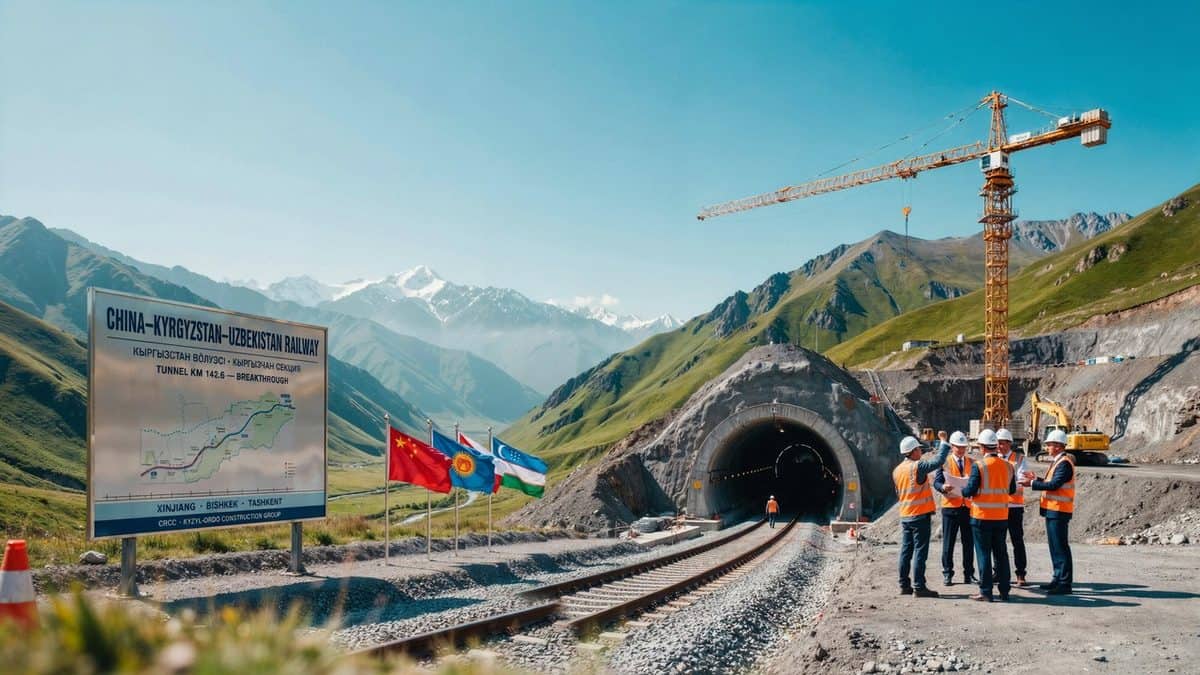
Image generated with Ai
The China Kyrgyzstan Uzbekistan Railway has made significant progress in its construction after the engineers successfully broke through the first tunnel of the cross-border railway at the Kyrgyz section of the rail link project. This is a huge step for future travel and commerce across a vital transportation route from China through Central Asia linking Kashgar, located in Xinjiang province of China to Jalalabad, Kyrgyzstan and Andijan, Uzbekistan.
The feat has been announced by the China-Kyrgyzstan-Uzbekistan Railway Company, a joint venture created by companies authorized by the respective government authorities of all three countries participating in the project. Construction on the Kyrgyz section started in June 2025, and since then construction has been going on at tunnels, bridges, roadbeds and railway stations.
Advertisement
Advertisement
The rail link is part of an important infrastructure project under the Belt and Road Initiative.
What Has Changed With the China Kyrgyzstan Uzbekistan Railway Project?
The latest breakthrough took place on the Kyrgyz section of the railway, where the first tunnel was successfully drilled through.
Advertisement
Advertisement
The completed tunnel represents a key engineering achievement because the Kyrgyz section passes through challenging mountainous terrain requiring extensive tunnel and bridge construction.
Advertisement
Advertisement
First Tunnel Milestone Achieved in Kyrgyzstan
| Project Feature | Details |
|---|---|
| Tunnel name | Kosh Dobo North No. 2 Tunnel |
| Location | Kyrgyz section of the railway |
| Tunnel length | 209.6 metres |
| Construction start | June 2025 |
| Achievement | First tunnel breakthrough on Kyrgyz section |
The completion of the tunnel marks progress from early construction activities towards the creation of a functioning international railway corridor.
Why This Matters for Travellers
The China Kyrgyzstan Uzbekistan Railway is primarily an infrastructure and transport project, but its long-term impact could extend to tourism and passenger mobility.
Central Asia has become increasingly attractive to international travellers because of its historic cities, mountain landscapes, cultural heritage and adventure tourism opportunities. However, travel across the region can currently involve complicated connections and limited transport choices.
Advertisement
Advertisement
A new railway connection could make multi-country journeys easier and create new travel experiences.
How Future Travellers Could Benefit
- Easier movement between China, Kyrgyzstan and Uzbekistan.
- Potential future passenger rail journeys across Central Asia.
- Improved access to lesser-known destinations.
- More sustainable transport options for regional exploration.
- New opportunities for cultural and heritage tourism.
Although passenger services have not yet been announced, improved infrastructure could eventually support tourism growth across the region.
Advertisement
Advertisement
How the New Railway Will Connect China and Central Asia
The railway will create a new route connecting western China with Central Asian markets and destinations.
The planned corridor will begin in Kashgar, located in northwest China’s Xinjiang Uygur Autonomous Region, and pass through Kyrgyzstan before reaching Uzbekistan.
Planned Route of the Railway
| Country | Key Location |
|---|---|
| China | Kashgar, Xinjiang Uygur Autonomous Region |
| Kyrgyzstan | Jalalabad |
| Uzbekistan | Andijan |
The route will establish a direct connection between three countries that have historically been connected through regional trade and cultural exchanges.
What Travellers Should Know About the Future Rail Link
The railway remains under construction, meaning travellers cannot yet purchase tickets or plan journeys on the route.
Operational details, passenger schedules and service types will be announced after construction is completed and railway operations begin.
Advertisement
Advertisement
Before Planning Future Journeys
- Eligibility: Passenger travel rules will depend on future railway operations.
- Booking conditions: Ticket sales have not started.
- Destinations: The planned route connects China, Kyrgyzstan and Uzbekistan.
- Availability: The railway is currently under construction.
- Official advice: Travellers should wait for future announcements regarding passenger services.
The project represents a future travel opportunity rather than an immediate transport option.
Construction Progress Shows the Scale of the Railway Project
Since construction began, work has expanded across multiple sections of the Kyrgyz route.
The project requires extensive infrastructure because of the region’s difficult geography.
Current Infrastructure Development Progress
| Infrastructure | Construction Progress |
|---|---|
| Tunnels | 27 tunnels under construction |
| Bridges | 43 bridges under construction |
| Roadbed sections | 88 sections under development |
| Railway stations | Construction underway for 20 stations |
The scale of development highlights the complexity of building an international railway through mountainous Central Asia.
Why Engineering Progress in Kyrgyzstan Is Significant
Kyrgyzstan’s geography presents some of the biggest construction challenges on the railway route.
Advertisement
Advertisement
The country is known for mountainous landscapes, meaning engineers must overcome difficult terrain while creating a reliable rail connection.
Major Engineering Requirements
- Construction of multiple tunnels.
- Development of bridges across difficult landscapes.
- Preparation of railway foundations.
- Building supporting railway infrastructure.
- Coordinating cross-border construction standards.
The breakthrough of the Kosh Dobo North No. 2 Tunnel demonstrates progress in overcoming these challenges.
Railway Length and Route Scale
The completed railway will become one of the most significant transport links connecting China with Central Asia.
The total railway length will exceed 500 kilometres.
Railway Distance Overview
| Section | Distance |
|---|---|
| Total railway length | More than 500 km |
| Kyrgyzstan section | 304.84 km |
| Route connection | China–Kyrgyzstan–Uzbekistan |
The Kyrgyz section represents a major part of the overall project, requiring extensive infrastructure development.
Advertisement
Advertisement
Industry Impact of the New Central Asia Rail Corridor
The railway could have a significant impact beyond passenger movement.
Improved connectivity can support tourism, trade, logistics and economic cooperation between participating countries.
Wider Benefits of the Railway Development
- Strengthens regional transport links.
- Supports cross-border economic activity.
- Improves access between Asian markets.
- Encourages tourism development.
- Creates new opportunities for businesses and communities.
For the travel industry, better rail infrastructure can open destinations that were previously harder to access.
How the Railway Could Transform Central Asia Tourism
Central Asia has become increasingly popular among travellers seeking unique cultural and natural experiences.
The region offers:
Advertisement
Advertisement
- Ancient Silk Road cities.
- Mountain landscapes.
- Traditional cultures.
- Historic architecture.
- Adventure tourism opportunities.
A stronger rail network could encourage more travellers to explore multiple countries in one journey.
Potential Tourism Growth Areas
| Tourism Opportunity | Possible Impact |
|---|---|
| Multi-country rail trips | Easier regional itineraries |
| Cultural tourism | More access to historic destinations |
| Adventure travel | Improved access to remote areas |
| Sustainable tourism | Greater use of rail transport |
The railway could support a new generation of overland travel experiences across Central Asia.
Role of the Railway Under the Belt and Road Initiative
The China–Kyrgyzstan–Uzbekistan Railway is being developed as a major project connected to the Belt and Road Initiative.
The initiative focuses on improving infrastructure and connectivity between regions.
Strategic Importance
- Connects China with Central Asian countries.
- Creates new transport links.
- Supports regional cooperation.
- Strengthens economic connections.
- Improves long-term mobility options.
The railway represents a major infrastructure investment designed to improve regional integration.
Advertisement
Advertisement
Frequently Asked Questions
What is the China Kyrgyzstan Uzbekistan Railway?
It is a cross-border railway project connecting China, Kyrgyzstan and Uzbekistan through a new Central Asian transport corridor.
What milestone has the project achieved?
The first tunnel on the Kyrgyz section, the 209.6-metre Kosh Dobo North No. 2 Tunnel, has been successfully drilled through.
When did construction begin?
Construction on the Kyrgyz section began in June 2025.
How long will the railway be?
The railway will exceed 500 kilometres in total length, including 304.84 kilometres inside Kyrgyzstan.
Can travellers use the railway now?
No. The railway is still under construction, and passenger service details have not yet been announced.
Advertisement
Advertisement
Closing Update
The completion of the very first tunnel in Kyrgyzstan along the China-Kyrgyzstan-Uzbekistan Railway can be considered as the beginning of the development of a completely new transport route in Central Asia. Although the development of the railway itself is not likely to start transporting passengers in several years, its future importance may go way beyond just building an infrastructure.
Improvement of the connection between China, Kyrgyzstan, and Uzbekistan may lead to many possibilities of developing tourism and exploring the region for its travelers.
Advertisement
